
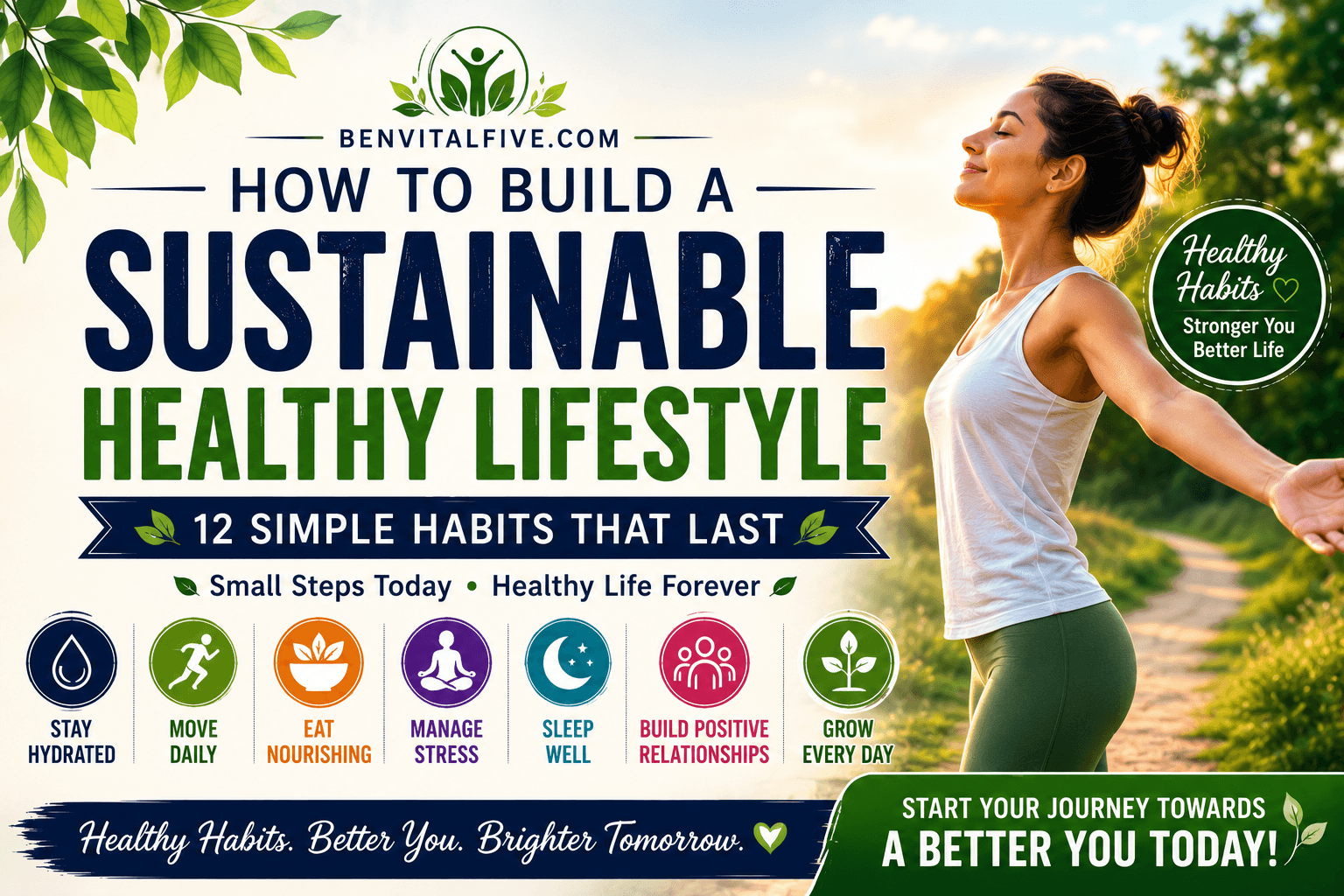
Sustainable Healthy Lifestyle: 12 Simple Habits That Create Lasting Wellness

Introduction: The Small Changes That Changed Everything
Have you ever promised yourself that this time would be different?
Perhaps you joined a gym on New Year’s Day, started a strict diet, or downloaded the latest fitness app. For a few days or even weeks, everything seemed to be going well. Then work became busy. Family responsibilities increased. Stress returned. Slowly, those healthy habits disappeared, and old routines took their place.
If this sounds familiar, you are not alone.
Many people believe they fail because they lack discipline or motivation. In reality, the problem is often the plan itself. Extreme diets, exhausting workout schedules, and unrealistic expectations are difficult to maintain in everyday life. When a routine feels like a burden, it rarely lasts.
One of the biggest lessons I have learned while studying wellness and writing for BenVitalFive is that lasting health is usually built through small, repeatable actions rather than dramatic transformations. People who enjoy long-term wellness often focus on simple habits they can maintain day after day. Over time, those habits become part of who they are.
That idea lies at the heart of a sustainable, healthy lifestyle.
Instead of chasing quick fixes, this approach encourages realistic daily choices that support your body, mind, and emotional well-being. Drinking enough water, taking a short walk, practicing mindfulness, getting quality sleep, and eating nourishing foods may seem like small actions. Yet when repeated consistently, they can make a meaningful difference over months and years.
Health experts support this long-term perspective. The World Health Organization recommends regular physical activity, balanced nutrition, adequate sleep, and stress management as essential foundations for lifelong health. Likewise, Harvard Medical School emphasizes that sustainable lifestyle habits often have a greater impact on long-term well-being than short-lived health trends.
A sustainable healthy lifestyle is not about being perfect every day.
It is about making better choices more often than not.
It means accepting that life will sometimes interrupt your plans. Missing one workout or enjoying your favorite dessert does not erase your progress. What matters most is returning to your healthy habits with patience and consistency.
In this guide, you will discover twelve practical habits that can help you build a healthier, happier, and more balanced life. None of them require expensive equipment or dramatic lifestyle changes. Together, they create a strong foundation for lifelong wellness.
A Personal Reflection: What Rural Life Taught Me About Lasting Wellness
My understanding of wellness did not begin with a fitness trend or a popular diet. It grew gradually through years of observing the everyday lives of rural communities in Tamil Nadu, where I worked closely with people whose lifestyles were simple, active, and closely connected to nature.
Many of the healthiest people I met did not talk about “wellness” as a goal. They simply lived it. Their days began early. Physical activity was a natural part of work rather than a scheduled exercise session. Meals were prepared from fresh, local ingredients. Evenings were often quieter, with time spent talking with family, reading, praying, or enjoying the peace of nature instead of constantly looking at screens.
One lesson stayed with me more than any other: lasting health is built through small, consistent habits rather than dramatic changes.
Inspired by what I observed, I began making simple changes in my own daily routine. I started each morning with a glass of water, followed by a few minutes of gentle yoga and quiet meditation before beginning my work. I also made time every day to read books that broadened my understanding of health, humanity, and personal growth. These habits did not transform my life overnight, but over time they helped me feel calmer, more focused, and better prepared to face the challenges of each day.
Those experiences became the foundation of BenVitalFive. The five pillars—yoga, meditation, regular physical exercise, lifelong reading, and healthy nutrition—are not based on quick fixes or unrealistic expectations. They are practical habits that anyone can adapt to their own circumstances, regardless of age or fitness level.
Today, I continue to believe that true wellness is not measured by perfection but by consistency. Every small step we take toward caring for our body, mind, and spirit is an investment in a healthier and more meaningful life.
What Is a Sustainable Healthy Lifestyle?
A sustainable healthy lifestyle is a realistic, long-term approach to health that focuses on habits you can maintain throughout your life rather than temporary changes that quickly fade.
Instead of relying on strict diets or intense exercise programs, it encourages simple daily practices that support every aspect of your well-being.
A sustainable lifestyle helps improve:
- Physical health
- Mental well-being
- Emotional resilience
- Quality sleep
- Healthy nutrition
- Stress management
- Personal growth
- Positive relationships
The goal is not perfection. The goal is consistency.
When healthy actions become part of your daily routine, they require less willpower and begin to feel natural.
Suggested Internal Link: How to Start a Health and Wellness Journey (Link to your related BenVitalFive article.)
Why Sustainable Habits Work Better Than Quick Fixes
Quick results can be exciting, but they rarely last.
Crash diets may help you lose weight quickly, while intense fitness challenges may boost motivation for a short period. However, many people return to their previous habits because the changes were too difficult to maintain.
Healthy living is more like planting a tree than building a sandcastle.
A tree grows slowly through daily nourishment. Strong roots develop over time, allowing it to withstand storms. Likewise, small daily habits create lasting improvements in physical and mental health.
Research from the Centers for Disease Control and Prevention consistently shows that regular physical activity, healthy eating, quality sleep, and avoiding harmful habits contribute significantly to reducing the risk of chronic diseases.
Instead of asking,
“How can I change everything this month?”
Ask yourself,
“What healthy habit can I continue for the next five years?”
That simple shift in thinking changes everything.
1. Start Every Morning With Water
Your body loses water while you sleep.
Even if you don’t feel thirsty, several hours without drinking fluids can leave you mildly dehydrated. Beginning your morning with one or two glasses of water is one of the easiest healthy habits you can adopt.
Hydration supports many important body functions, including regulating body temperature, transporting nutrients, and helping your organs function efficiently. According to the Harvard Medical School, staying well hydrated also supports concentration and overall physical performance.
Many people immediately reach for coffee after waking. While coffee can certainly be part of a healthy lifestyle, drinking water first helps replenish the fluids your body has lost overnight.
You can make this habit easier by:
- Keep a reusable water bottle beside your bed.
- Drinking water before checking your phone.
- Adding a slice of lemon or cucumber for natural flavor.
- Refill your bottle before leaving home.
The beauty of this habit lies in its simplicity. It takes less than a minute, costs almost nothing, and sets a positive tone for the rest of the day.
Benefits
- Supports healthy hydration
- Helps establish a positive morning routine
- May improve alertness after waking
- Encourages healthier choices throughout the day
Affiliate Recommendation
A high-quality stainless steel reusable water bottle helps you stay hydrated whether you are at home, work, or outdoors.
Suggested Internal Link: The Role of Hydration in Diet and Body Health
2. Move Your Body Every Day
When people think about exercise, they often imagine long gym sessions or exhausting workouts.
In reality, movement doesn’t have to be intense to improve your health.
Walking around your neighborhood, practicing yoga, stretching for ten minutes, dancing to your favorite music, gardening, or cycling can all contribute to a sustainable healthy lifestyle.
The World Health Organization recommends that adults aim for at least 150 minutes of moderate physical activity each week. That works out to about 20–30 minutes a day, a goal that is achievable for many people.
Regular movement offers benefits beyond physical fitness. It supports heart health, strengthens muscles and bones, improves mood, reduces stress, and helps maintain mobility as we age.
The secret is consistency.
A twenty-minute walk every day is often more beneficial over the long term than an exhausting workout completed only once a month.
Choose activities that you genuinely enjoy. When movement feels rewarding rather than like a punishment, it becomes much easier to maintain.
Ideas to stay active
- Walk after dinner.
- Practice yoga in the morning.
- Stretch during work breaks.
- Take the stairs whenever possible.
- Enjoy family bike rides on weekends.
Benefits
- Supports heart health
- Improves mood and energy
- Helps maintain a healthy weight
- Strengthens muscles and joints
- Reduces stress
Affiliate Recommendation
A quality fitness tracker can motivate you by helping you monitor daily steps, activity levels, heart rate, and sleep patterns.
Suggested Internal Links:
- Simple Workouts You Can Do at Home Without Equipment
- Benefits of Walking Every Day
- Yoga for Beginners
3. Eat Mostly Whole Foods
Healthy eating doesn’t require complicated meal plans or expensive superfoods.
One of the simplest ways to improve your diet is to eat foods that are as close to their natural state as possible.
Whole foods include:
- Fresh vegetables
- Fruits
- Whole grains
- Beans and legumes
- Nuts and seeds
- Lean proteins
- Healthy fats such as olive oil and avocado
These foods provide vitamins, minerals, fiber, and other nutrients your body needs to function well.
Highly processed foods often contain added sugars, excess sodium, and unhealthy fats. Enjoying them occasionally is perfectly normal, but making whole foods the foundation of your meals supports long-term health.
Instead of trying to completely eliminate your favorite foods, aim for balance. Filling half your plate with colorful vegetables, choosing whole grains more often, and preparing meals at home when possible are realistic changes that can last.
Healthy eating is not about restriction.
It is about nourishment.
Benefits
- Supports digestive health
- Helps maintain stable energy levels
- Provides essential nutrients
- Supports long-term wellness
Affiliate Recommendation
A healthy recipe book or meal-planning journal can make preparing nutritious meals easier and more enjoyable.
Suggested Internal Links:
- Healthy Eating Habits for Long-Term Wellness
- How to Build a Balanced Diet
- Natural Foods That Support Immunity
4. Practice Mindfulness Every Day
Modern life is full of distractions.
Notifications, deadlines, and constant multitasking can leave us feeling mentally exhausted. Practicing mindfulness offers an opportunity to slow down and reconnect with the present moment.
Mindfulness simply means paying attention to your thoughts, feelings, and surroundings without judging them.
It doesn’t require hours of meditation.
Even five or ten minutes each day can help create a greater sense of calm.
Simple mindfulness practices include:
- Deep breathing
- Guided meditation
- Gratitude journaling
- Quiet reflection
- Mindful walking
- Spending a few minutes observing nature
Research continues to show that mindfulness practices can help reduce stress and improve emotional well-being. Many healthcare professionals now recommend mindfulness as part of a comprehensive approach to managing everyday stress.
Think of mindfulness as exercise for your mind.
Just as your muscles become stronger through regular movement, your ability to remain calm and focused grows through consistent practice.
Benefits
- Supports emotional balance
- Helps manage stress
- Improves concentration
- Encourages self-awareness
Affiliate Recommendation
A comfortable meditation cushion or a guided gratitude journal can help establish a consistent mindfulness practice.
Suggested Internal Links:
- The Science of Mindfulness and Brain Health
- Meditation for Beginners
- Natural Ways to Reduce Stress and Improve Mental Wellness
5. Prioritize Consistent, Quality Sleep
Sleep is often the first thing people sacrifice when life becomes busy. Yet it is one of the most important pillars of a sustainable healthy lifestyle. During sleep, your body repairs tissues, strengthens the immune system, regulates hormones, and consolidates memories. Poor sleep, on the other hand, can affect your mood, concentration, appetite, and overall health.
The National Sleep Foundation recommends that most adults aim for 7–9 hours of quality sleep each night. Research from Harvard Medical School also highlights the connection between consistent sleep and better physical and mental well-being.
Rather than focusing only on the number of hours you sleep, pay attention to the quality of your sleep. A regular bedtime routine helps signal to your body that it is time to rest.
Simple ways to improve sleep include:
- Go to bed and wake up at the same time every day.
- Avoid heavy meals close to bedtime.
- Reduce screen time during the last hour before sleep.
- Keep your bedroom cool, quiet, and dark.
- Read a book or practice gentle breathing before bed.
Small improvements in sleep can positively influence many other healthy habits. When you wake up feeling refreshed, you are more likely to exercise, prepare nutritious meals, and manage stress effectively.
Benefits
- Supports brain function
- Improves mood and focus
- Helps regulate appetite
- Strengthens the immune system
- Supports recovery after exercise
Affiliate Recommendation
A comfortable sleep mask, supportive pillow, or white-noise machine can help create a relaxing bedtime environment.
Suggested Internal Link: How Better Sleep Improves Your Overall Wellness
6. Spend More Time Outdoors
Nature has a remarkable ability to calm the mind and refresh the body.
Whether you live in a busy city or a quiet village, spending time outdoors encourages movement, reduces stress, and provides a welcome break from digital screens. Even a short walk in a nearby park or garden can leave you feeling more energized.
Exposure to natural daylight also helps regulate your body’s internal clock, making it easier to maintain healthy sleep patterns.
You don’t need a weekend hiking trip to enjoy the benefits of nature. Consider these simple ideas:
- Take a morning walk.
- Eat lunch outdoors.
- Care for a small garden.
- Read a book under a tree.
- Watch the sunrise or sunset.
- Enjoy gentle stretching in fresh air.
Nature reminds us to slow down. It encourages mindfulness without requiring any special equipment or training.
Benefits
- Reduces stress
- Encourages physical activity
- Supports healthy sleep
- Improves mood
- Offers a refreshing break from screens
Suggested Internal Links
- Benefits of Morning Walking
- Simple Outdoor Activities for Better Health
7. Reduce Screen Time Mindfully
Technology makes our lives easier, but constant screen exposure can leave us mentally tired and distracted.
Many people spend hours switching between emails, social media, videos, and messages without realizing how much time has passed. Excessive screen time may contribute to eye strain, reduced physical activity, and difficulty falling asleep.
The goal is not to eliminate technology but to use it intentionally.
Healthy habits include:
- Avoid checking your phone immediately after waking.
- Schedule short breaks during work.
- Turn off unnecessary notifications.
- Keep devices away from the dining table.
- Avoid screens at least one hour before bedtime.
Replacing even thirty minutes of scrolling with reading, walking, or meaningful conversation can significantly improve your daily routine.
Benefits
- Improves focus
- Reduces mental fatigue
- Supports better sleep
- Creates more time for meaningful activities
Suggested Internal Link
- Digital Detox and Wellness: How Reducing Screen Time Improved My Sleep, Focus, and Mood
8. Build Positive Relationships
Good health is not only physical.
Strong relationships contribute greatly to emotional well-being.
Spending time with family, trusted friends, neighbors, or supportive communities provides encouragement during difficult times and helps us celebrate life’s successes.
Healthy relationships do not require large social circles. Even a few meaningful connections can make a positive difference.
Ways to strengthen relationships include:
- Listen without distractions.
- Share meals together.
- Call an old friend.
- Express appreciation.
- Offer help when someone needs support.
Research consistently shows that social connections are linked to improved mental health and greater life satisfaction.
Benefits
- Reduces feelings of loneliness
- Improves emotional resilience
- Encourages healthier habits
- Increases happiness
Suggested Internal Link
- How Community Supports Mental Wellness
9. Never Stop Learning
A healthy lifestyle includes caring for your mind as well as your body.
Learning keeps the brain active, stimulates curiosity, and supports personal growth throughout life.
You don’t need to enroll in university to continue learning. Small daily habits can make a lasting difference.
Ideas include:
- Read books regularly.
- Listen to educational podcasts.
- Learn a new language.
- Practice a musical instrument.
- Explore healthy recipes.
- Develop a creative hobby.
Reading has always been one of the most rewarding wellness habits because it encourages reflection, patience, and lifelong curiosity.
Even twenty minutes each day can broaden your knowledge and inspire positive changes.
Benefits
- Keeps the mind active
- Improves concentration
- Encourages creativity
- Supports lifelong learning
Affiliate Recommendation
Recommend books on wellness, personal growth, or healthy cooking that align with the BenVitalFive philosophy.
Suggested Internal Links:
- Benefits of Daily Book Reading for Intellectual Growth
- Books That Inspire Healthy Living
10. Practice Gratitude Every Day
Gratitude helps shift attention from what is missing to what is already present.
This does not mean ignoring life’s challenges. Instead, it encourages us to recognize the good things that often go unnoticed.
One simple habit is to write down three things you are grateful for each evening.
They don’t have to be extraordinary.
Perhaps you enjoyed a peaceful walk, shared a meaningful conversation, or prepared a healthy meal.
Over time, gratitude helps cultivate optimism and resilience.
Benefits
- Encourages positive thinking
- Supports emotional balance
- Reduces everyday stress
- Improves overall well-being
Affiliate Recommendation
A beautifully designed gratitude journal makes this habit enjoyable and easy to maintain.
Suggested Internal Link
- The Power of Gratitude for Mental Wellness
11. Be Flexible, Not Perfect
One of the biggest obstacles to lasting wellness is perfectionism.
Many people believe they have failed after missing one workout or eating an unhealthy meal.
The truth is very different.
A sustainable healthy lifestyle allows room for life’s unexpected moments.
Vacations, celebrations, illness, work deadlines, and family responsibilities will occasionally interrupt your routine.
Instead of giving up, simply return to your healthy habits at the next opportunity.
Remember:
One unhealthy meal does not ruin a healthy lifestyle.
One missed workout does not erase months of progress.
Consistency over months and years matters far more than perfection on any single day.
Benefits
- Reduces guilt
- Improves long-term consistency
- Encourages resilience
- Makes healthy living enjoyable
12. Celebrate Every Small Win
Progress deserves recognition.
Many people wait until they achieve a major goal before celebrating, but lasting motivation grows from acknowledging small victories along the way.
Celebrate achievements such as:
- Drinking more water
- Walking every day
- Sleeping better
- Preparing healthy meals
- Reading regularly
- Practicing mindfulness consistently
Each positive choice strengthens your confidence and reinforces healthy habits.
Success is built one small step at a time.
A Sample Sustainable Daily Routine
Healthy living does not require a complicated schedule. The following routine demonstrates how simple habits can fit naturally into a busy day.
Morning
- Wake up at a consistent time.
- Drink one or two glasses of water.
- Stretch or practice yoga for 10–15 minutes.
- Enjoy a balanced breakfast with whole foods.
- Spend a few minutes in natural sunlight.
Afternoon
- Eat a nutritious lunch.
- Take a short walk after eating.
- Stay hydrated throughout the day.
- Take brief screen breaks every hour.
- Practice mindful breathing during stressful moments.
Evening
- Eat a light, balanced dinner.
- Spend quality time with family or friends.
- Read a book or write in a gratitude journal.
- Avoid screens before bedtime.
- Follow a relaxing sleep routine.
Remember, this routine is only an example. Adapt it to your work schedule, family commitments, and personal preferences. The best routine is one you can realistically maintain.
Common Mistakes to Avoid
Trying to Change Everything at Once
Attempting to transform your entire lifestyle overnight often leads to frustration. Start with one or two habits and gradually build from there.
Chasing Quick Results
Sustainable wellness develops slowly. Focus on creating habits rather than expecting immediate outcomes.
Comparing Yourself with Others
Every person’s health journey is unique. Compare today’s version of yourself with yesterday’s, not with someone else’s social media highlights.
Ignoring Rest and Recovery
Rest is not laziness.
Recovery allows your body and mind to recharge, making healthy habits easier to maintain over the long term.
Giving Up After One Setback
Everyone experiences difficult days.
Missing one healthy habit is not failure. Return to your routine with patience and self-compassion.
Conclusion: Small Habits Create Extraordinary Results
A sustainable healthy lifestyle is not built through perfection, expensive programs, or dramatic transformations.
It is built through the small choices you make every day.
Drinking enough water, moving your body, eating nourishing foods, practicing mindfulness, sleeping well, spending time in nature, building meaningful relationships, continuing to learn, and showing gratitude may seem like simple actions. Yet together, they create a strong foundation for lifelong health.
Remember that lasting wellness is a journey rather than a destination. Some days will feel easier than others, and that is perfectly normal. What matters most is your willingness to return to healthy habits again and again.
Every healthy choice you make today is an investment in the person you will become tomorrow.
Take one small step today.
Your future self will thank you for it.
Join the BenVitalFive Wellness Community
Which of these twelve habits will you begin today?
Share your thoughts and experiences in the comments below. Your story may inspire someone else who is starting their own wellness journey.
If you found this guide helpful, explore more practical wellness resources on BenVitalFive, where you’ll discover evidence-based articles on yoga, mindfulness, healthy nutrition, natural remedies, fitness, and lifelong learning.
Don’t forget to subscribe to the BenVitalFive Newsletter for weekly wellness tips, healthy lifestyle inspiration, practical guides, and carefully selected product recommendations that support your journey toward better health.
Together, let’s build healthier habits—one day, one choice, and one step at a time.

