Healthy Evening Routine for Better Sleep and Wellness

Have you ever climbed into bed feeling physically exhausted, only to find your mind racing with unfinished tasks, tomorrow’s plans, or endless thoughts? You’re not alone. In today’s fast-paced world, quality sleep has become increasingly difficult to achieve. Long workdays, constant notifications, irregular schedules, stress, and excessive screen time often leave us feeling tired yet unable to truly rest.Many people invest time in creating productive morning routines but overlook the importance of what happens during the final hours of the day. The truth is that a
healthy evening routine for better sleep can have just as much impact on your overall health as your morning habits.A peaceful evening does more than help you fall asleep. It allows your body to recover, your mind to relax, and your emotions to settle. Over time, these simple habits can improve your energy, mood, focus, immune function, and overall well-being.At
BenVitalFive, we believe lasting wellness is built on five interconnected pillars:
- Yoga
- Meditation
- Physical activity
- Reading
- Healthy nutrition
When these habits become part of your daily lifestyle, they naturally support restful sleep and a healthier, happier life.In this guide, you’ll discover practical, science-backed strategies to build an evening routine that helps you sleep better, reduce stress, and wake up feeling refreshed.
What Is a Healthy Evening Routine?
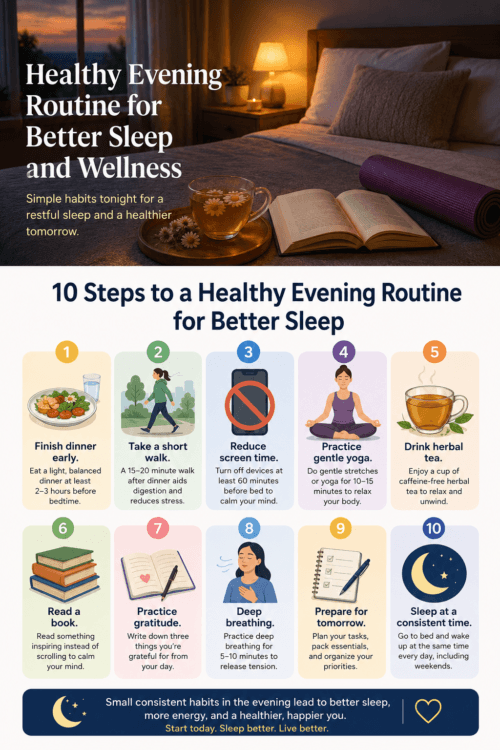
A healthy evening routine is a series of calming, intentional habits that prepare your body and mind for restful sleep. Instead of rushing from work directly into bed, an evening routine creates a gradual transition from activity to relaxation.An effective bedtime routine may include:
- Reducing screen time
- Eating a light, nutritious dinner
- Gentle movement or yoga
- Meditation or deep breathing
- Reading a book
- Practicing gratitude
- Going to bed at the same time each night
These habits support your body’s natural sleep-wake cycle, often called your circadian rhythm.
Quick Answer: A healthy evening routine for better sleep is a consistent set of relaxing habits practiced before bedtime that help your body unwind, improve sleep quality, reduce stress, and support long-term wellness.
Why an Evening Routine Matters
Our bodies thrive on consistency. Just as children benefit from bedtime rituals, adults also respond positively to predictable evening habits.When you repeat calming activities at the same time each evening, your brain begins to recognize these signals as preparation for sleep. This helps regulate the production of melatonin—the hormone that supports healthy sleep.Research has shown that maintaining good sleep habits contributes to improved physical and mental health. Learn more from
Harvard Health Publishing’s guide to healthy sleep and the
National Sleep Foundation’s sleep health resources.Some of the benefits of a healthy evening routine include:- Better sleep quality
- Reduced stress and anxiety
- Improved concentration
- Greater emotional balance
- More daytime energy
- Stronger immune function
- Faster physical recovery
- Better long-term health
The quality of your tomorrow often begins with how you spend your evening today.
A Personal Lesson from the BenVitalFive Journey
One lesson I’ve learned over the years is that wellness rarely comes from dramatic changes. Instead, it grows through small, consistent habits practiced every day.During my work with rural communities, I noticed something remarkable. Many older adults followed simple evening rituals without calling them “wellness routines.” After finishing their daily work, they would take a leisurely walk, enjoy a light homemade meal, spend time talking with family, read or reflect quietly, and retire early. Their evenings were calm, free from constant digital distractions.Inspired by these observations, I gradually changed my own evenings. Rather than ending the day by scrolling through my phone, I began taking a short walk, drinking a cup of herbal tea, reading a few pages of an inspiring book, and practicing a few minutes of deep breathing before bed.The changes weren’t immediate, but within a few weeks I noticed I fell asleep more easily, woke with greater energy, and felt calmer throughout the day.That experience reinforced one of the core beliefs behind
BenVitalFive: true wellness is built through simple daily practices rooted in yoga, mindful movement, meditation, reading, and healthy living.
1. Limit Screen Time Before Bed
One of the most effective ways to improve sleep naturally is to reduce your exposure to digital screens during the hour before bedtime.Smartphones, tablets, televisions, and laptops stimulate the brain with endless information. More importantly, the blue light emitted from these devices can suppress melatonin production, making it harder to feel sleepy.Studies suggest that minimizing screen exposure before bed can help improve sleep quality and support your body’s natural sleep cycle. You can read more through
Harvard Health Publishing’s article on blue light and sleep.Simple Ways to Reduce Screen Time- Turn off electronic devices at least 60 minutes before bedtime.
- Switch to warm, dim lighting in your home during the evening.
- Keep your phone outside the bedroom whenever possible.
- Replace social media scrolling with reading or quiet conversation.
- Silence unnecessary notifications to reduce distractions.
Instead of viewing this as giving something up, think of it as creating space for genuine relaxation.If you’re interested in reducing digital overload, you may also enjoy
Digital Detox and Wellness: How Reducing Screen Time Improved My Sleep, Focus, and Mood, where we explore practical ways to create healthier technology habits.
2. Enjoy a Gentle Evening Walk
Walking is one of the simplest forms of exercise, yet it offers remarkable benefits for both physical and mental wellness.A relaxed 15–20 minute walk after dinner can become an enjoyable family tradition while helping your body transition toward rest.Benefits of an evening walk include:
- Supporting healthy digestion
- Improving circulation
- Releasing physical tension
- Reducing stress hormones
- Providing quiet time for reflection
- Encouraging mindful breathing
Unlike intense exercise late at night, a leisurely walk allows your nervous system to gradually settle.At BenVitalFive, we believe physical activity doesn’t always require a gym membership. Consistent, moderate movement often has a greater long-term impact than occasional intense workouts.If you’re looking for more simple ways to stay active, explore
Simple Workouts You Can Do at Home Without Equipment for beginner-friendly ideas that fit into any lifestyle.
3. Practice Gentle Evening Yoga
Yoga has been practiced for centuries as a way to harmonize the body, breath, and mind. Gentle evening yoga is especially helpful because it releases physical tension accumulated throughout the day without overstimulating the body.Unlike vigorous workouts, bedtime yoga focuses on slow, mindful movements that encourage relaxation and prepare you for restful sleep.
Some beginner-friendly poses include:Child’s Pose (Balasana)
This restful posture gently stretches the lower back and hips while encouraging slow, deep breathing.
Cat-Cow Stretch
Moving slowly between these two poses improves spinal flexibility and relieves stiffness caused by prolonged sitting.
Seated Forward Fold
A gentle forward bend helps relax the back, hamstrings, and shoulders while promoting mental calmness.
Legs-Up-the-Wall Pose
One of the most relaxing yoga poses, this simple inversion can help reduce leg fatigue and encourage deep relaxation after a busy day.Spend just 10–15 minutes moving slowly, breathing deeply, and allowing your body to release the day’s tension.For readers interested in building a consistent yoga practice, don’t miss
Yoga and Functional Fitness for Everyday Wellness, where you’ll find practical routines suitable for all experience levels.
4. Practice Meditation and Deep Breathing
After a busy day, your body may feel tired, but your mind can remain active with thoughts about work, family, or tomorrow’s responsibilities. This mental activity often makes it difficult to fall asleep, even when you’re physically exhausted.One of the most effective ways to quiet the mind and prepare for restful sleep is through
meditation and mindful breathing. Together, these simple practices help calm the nervous system, reduce stress, and create a peaceful transition from the demands of the day to a restorative night’s sleep.At
BenVitalFive, meditation is one of our five pillars of lifelong wellness because it nurtures emotional balance, improves self-awareness, and supports both mental and physical health. When combined with slow, intentional breathing, meditation becomes an even more powerful tool for improving sleep quality.Research suggests that mindfulness meditation can reduce stress, ease anxiety, and improve sleep quality. Likewise, slow breathing activates the
parasympathetic nervous system—often called the body’s “rest and digest” response—which helps lower your heart rate, relax tense muscles, and prepare your body for sleep. Learn more from the
National Center for Complementary and Integrative Health (NCCIH) on meditation and the
American Psychological Association’s mindfulness resources.
A Simple Five-Minute Meditation and Breathing Practice
You don’t need any special equipment or previous experience. Find a quiet place where you can sit comfortably or lie on your bed.Follow these simple steps:
- Close your eyes and relax your shoulders.
- Inhale slowly through your nose for 4 seconds.
- Hold your breath gently for 1–2 seconds.
- Exhale slowly through your mouth for 6 seconds.
- Focus your attention on the natural rhythm of your breathing.
- Continue for 5–10 minutes, gently returning your focus to your breath whenever your mind wanders.
As you breathe, imagine releasing the day’s worries with every exhale and welcoming a sense of calm with every inhale.Remember, meditation isn’t about stopping your thoughts completely. It’s about observing them without judgment and gently returning your attention to the present moment.
Benefits of Meditation and Mindful Breathing Before Bed
Making this practice part of your healthy evening routine can help you:
- Calm a busy mind
- Reduce stress and anxiety
- Relax tight muscles
- Slow your heart rate naturally
- Improve sleep quality
- Increase emotional resilience
- Wake up feeling more refreshed and energized
Even if you begin with just five minutes each evening, consistency is more important than duration. Over time, this simple habit can become one of the most rewarding parts of your bedtime routine.If you’d like to deepen your mindfulness practice, be sure to read
Natural Ways to Reduce Stress and Improve Mental Wellness, where you’ll find additional breathing techniques, meditation tips, and practical strategies for creating a calmer, healthier lifestyle.
5. Eat a Light, Nourishing Evening Meal
Nutrition plays a much bigger role in sleep than many people realize.Eating a heavy, spicy, or overly processed dinner shortly before bedtime can interfere with digestion and make it difficult to sleep comfortably.Instead, choose a balanced evening meal that satisfies your hunger without leaving you feeling overly full.At
BenVitalFive, healthy nutrition is one of the essential foundations of holistic wellness. The foods you eat during the evening don’t just affect your digestion—they influence your sleep quality, energy levels, and overall health.
Foods That Support Better SleepConsider including foods naturally rich in nutrients that support relaxation, such as:
- Leafy green vegetables
- Whole grains
- Oats
- Almonds
- Walnuts
- Bananas
- Kiwi
- Yogurt
- Lentils
- Pumpkin seeds
These foods provide vitamins and minerals that contribute to healthy body function and may support restful sleep as part of a balanced diet.
Foods to Limit Before BedTry to avoid:
- Heavy fried foods
- Large portions
- Sugary desserts
- Energy drinks
- Excess caffeine
- Excess alcohol
Eating at least two to three hours before bedtime often gives your body enough time to begin digestion before you sleep.For more nutrition ideas, read
10 Science-Backed Eating Habits for Long-Term Wellness and
The Role of Hydration in Diet and Body Health.
6. Enjoy a Calming Herbal Tea
One of the simplest bedtime rituals is enjoying a warm cup of herbal tea.Unlike caffeinated beverages, many herbal teas offer a soothing experience that encourages relaxation and helps create a consistent evening routine.Popular choices include:
Chamomile TeaPerhaps the best-known bedtime tea, chamomile has traditionally been used to promote relaxation.
Tulsi (Holy Basil) TeaTulsi is widely appreciated for its calming properties and has been used in traditional wellness practices for centuries.
Peppermint TeaPeppermint can provide a refreshing, caffeine-free option that many people find comforting after dinner.
Lemon Balm TeaThis gentle herbal tea is another popular choice for evening relaxation.Remember to choose naturally caffeine-free herbal teas if your goal is better sleep.A warm mug held in your hands also becomes a mindful signal that the day is coming to a peaceful close.
7. Read a Book Instead of Scrolling
Reading is one of the most overlooked habits for improving sleep.Replacing thirty minutes of social media with thirty minutes of reading creates a dramatic difference in how your brain winds down.Reading slows mental activity, encourages imagination, and reduces the constant stimulation caused by digital devices.At
BenVitalFive, reading is much more than entertainment. It is one of the five pillars of personal growth because books expand our knowledge, reduce stress, strengthen memory, and cultivate emotional resilience.Reading before bed offers many benefits:
- Reduces stress
- Improves focus
- Encourages lifelong learning
- Supports emotional well-being
- Replaces blue-light exposure
- Creates a relaxing bedtime ritual
Choose books that inspire rather than overstimulate.Some excellent evening reading options include:
- Personal development
- Wellness
- Spiritual reflection
- Nature writing
- Inspirational biographies
- Positive psychology
If you’d like more ideas, explore
Book Reading for Intellectual Growth and Wellness for recommendations that nourish both the mind and the soul.
8. Practice Gratitude Before Sleeping
Gratitude is a surprisingly powerful habit.Instead of ending your day by focusing on problems, gratitude helps redirect your attention toward positive experiences.Research suggests that gratitude journaling may contribute to improved emotional well-being and better sleep by reducing negative thought patterns.You can read more through
Greater Good Science Center at the University of California, Berkeley, which shares extensive research on gratitude and happiness.
A Simple Gratitude ExerciseKeep a notebook beside your bed.Every evening, write down three things you appreciated that day.For example:
- A delicious homemade meal.
- A meaningful conversation.
- Completing an important task.
- A peaceful evening walk.
- Watching a beautiful sunset.
- Spending time with family.
Don’t worry about writing long paragraphs.Even one sentence is enough.Over time, this simple practice trains your mind to notice life’s blessings rather than dwelling on its frustrations.
9. Prepare for Tomorrow Without Worry
One common reason people struggle to sleep is that tomorrow feels overwhelming.Instead of carrying unfinished thoughts into bed, spend five minutes organizing the next day.Simple preparation includes:
- Writing tomorrow’s three most important tasks.
- Preparing your clothes.
- Packing your work bag.
- Filling your water bottle.
- Organizing your desk.
- Setting realistic priorities.
Once everything is written down, give yourself permission to stop thinking about tomorrow.Your notebook becomes your memory so your mind doesn’t have to keep rehearsing tomorrow’s schedule all night.This simple habit reduces mental clutter and creates a sense of calm before bedtime.
Building the BenVitalFive Evening Ritual
At BenVitalFive, we encourage readers to think of wellness as a collection of small daily choices rather than dramatic lifestyle changes.A balanced evening often includes all five wellness pillars:
Yoga helps release physical tension.
Meditation quiets the mind.
Physical activity, such as a gentle walk, supports recovery and digestion.
Reading nourishes the mind while replacing digital distractions.
Healthy nutrition provides your body with the nourishment it needs to repair and recover overnight.When these habits become part of your evening, sleep becomes a natural outcome rather than something you have to chase.Remember, perfection isn’t the goal.Consistency is.Even adding one new healthy habit each week can create meaningful improvements over time.
10. Create a Sleep-Friendly Environment
Your bedroom should be a place where your body naturally associates the surroundings with rest and relaxation. Even the healthiest bedtime habits can be less effective if your sleeping environment is uncomfortable or distracting.
Keep Your Bedroom CoolMost people sleep better in a slightly cool room. A comfortable temperature helps your body lower its core temperature, which is part of the natural sleep process.
Make the Room DarkDarkness signals your brain to produce melatonin, the hormone that regulates sleep. Consider blackout curtains or an eye mask if outside light is a problem.
Reduce NoiseIf outside sounds regularly disturb your sleep, consider using earplugs, a fan, or a white-noise machine to create a quieter environment.
Choose Comfortable BeddingA supportive mattress and comfortable pillows can make a significant difference in sleep quality. Soft, breathable bedding also helps you stay comfortable throughout the night.
Keep the Bedroom Clutter-FreeA tidy bedroom promotes a calmer state of mind. Spending just a few minutes organizing your room before bed can help create a more peaceful atmosphere.For more healthy lifestyle ideas, explore
Healthy Living: Simple Habits for Lifelong Wellness.
11. Maintain a Consistent Sleep Schedule
One of the most powerful ways to improve sleep is surprisingly simple—go to bed and wake up at roughly the same time every day.A consistent sleep schedule helps regulate your body’s internal clock, making it easier to fall asleep naturally and wake up feeling refreshed.Try to:
- Go to bed at the same time each night.
- Wake up at a consistent time, even on weekends.
- Avoid sleeping in for long periods after late nights.
- Develop a relaxing bedtime routine that signals it’s time for sleep.
Consistency is often more important than perfection. If your schedule changes occasionally, simply return to your usual routine as soon as possible.The
Centers for Disease Control and Prevention (CDC) Healthy Sleep resources offer practical information about the importance of maintaining regular sleep habits.
A Sample Healthy Evening Routine
You don’t need to follow an exact schedule. The example below simply illustrates how several healthy habits can fit naturally into your evening.
| Time | Activity |
|---|
| 7:00 PM | Enjoy a light, balanced dinner. |
| 7:30 PM | Take a relaxing 15–20 minute walk. |
| 8:00 PM | Spend quality time with family or enjoy a quiet hobby. |
| 8:30 PM | Drink a cup of caffeine-free herbal tea. |
| 8:45 PM | Practice 10 minutes of gentle yoga or stretching. |
| 9:00 PM | Read an inspiring book instead of using your phone. |
| 9:30 PM | Practice meditation, deep breathing, and gratitude journaling. |
| 10:00 PM | Turn off the lights and go to bed. |
Adapt this schedule to your lifestyle. The key is consistency rather than following specific times.
Common Evening Routine Mistakes to Avoid
Even healthy habits can be undermined by a few common mistakes.
Using Electronic Devices Until Bedtime
Late-night scrolling keeps the brain alert and may interfere with the body’s natural preparation for sleep.
Eating Heavy Meals Too Late
Large meals shortly before bedtime can make it harder to sleep comfortably.
Drinking Too Much Caffeine
Coffee, strong tea, energy drinks, and some soft drinks consumed late in the day may affect sleep quality.
Ignoring Stress
Trying to “push through” stress without taking time to relax often results in restless nights. Gentle breathing, meditation, journaling, or reading can help ease mental tension.
Exercising Too Intensely Before Bed
While regular exercise supports good sleep, vigorous workouts immediately before bedtime may leave some people feeling too energized to fall asleep easily.
How the BenVitalFive Philosophy Supports Better Sleep
At BenVitalFive, we believe wellness isn’t built through quick fixes or overnight transformations. Instead, it grows through consistent daily choices that nourish both body and mind.Our five wellness pillars work together to create a healthier lifestyle:
Yoga
Gentle evening yoga helps release physical tension and encourages relaxation.
Meditation
Mindfulness and breathing exercises calm the mind and reduce stress before bedtime.
Physical Activity
Regular movement, including walking, supports better sleep, healthier digestion, and improved energy levels.
Reading
Reading meaningful books encourages lifelong learning while replacing stimulating screen time.
Healthy Nutrition
Balanced meals and mindful eating provide your body with the nutrients needed for overnight recovery and overall wellness.When these five pillars become part of your daily routine, better sleep often follows naturally.
Frequently Asked Questions
What is the best healthy evening routine for better sleep?
A healthy evening routine includes reducing screen time, eating a light dinner, taking a gentle walk, practicing yoga or meditation, reading a book, expressing gratitude, and maintaining a consistent bedtime.
How long before bed should I stop using my phone?
Many sleep experts recommend avoiding phones, tablets, and other digital devices at least 60 minutes before bedtime.
Can evening yoga improve sleep?
Yes. Gentle yoga helps reduce muscle tension, encourages relaxation, and prepares both the body and mind for restful sleep.
Is reading before bed better than watching television?
For many people, yes. Reading a physical book reduces exposure to blue light and creates a calmer transition into sleep.
Which herbal teas are good before bedtime?
Popular caffeine-free options include chamomile, tulsi, peppermint, and lemon balm tea.
Does gratitude journaling really help?
Many people find that gratitude journaling reduces stress, encourages positive thinking, and helps quiet the mind before sleep.
How many hours of sleep do adults generally need?
Most adults benefit from approximately seven to nine hours of quality sleep each night, although individual needs may vary.
Final Thoughts
A healthy evening routine for better sleep isn’t about following a perfect checklist every night. It’s about creating small, meaningful habits that help your body and mind slow down after a busy day.You don’t need to change everything at once.Start by choosing one habit—perhaps a short evening walk, reading a few pages of a book, or practicing five minutes of mindful breathing. Once that habit becomes part of your routine, add another.Over time, these small choices become powerful daily rituals.At
BenVitalFive, we believe that lasting wellness is built through the simple practices of yoga, meditation, regular movement, reading, and healthy nutrition. Together, these five pillars create a strong foundation for better sleep, greater energy, emotional balance, and a healthier life.Remember, tomorrow’s energy begins with tonight’s choices. Create an evening routine that brings you peace, supports restful sleep, and helps you wake each morning ready to embrace a healthier, more mindful life.

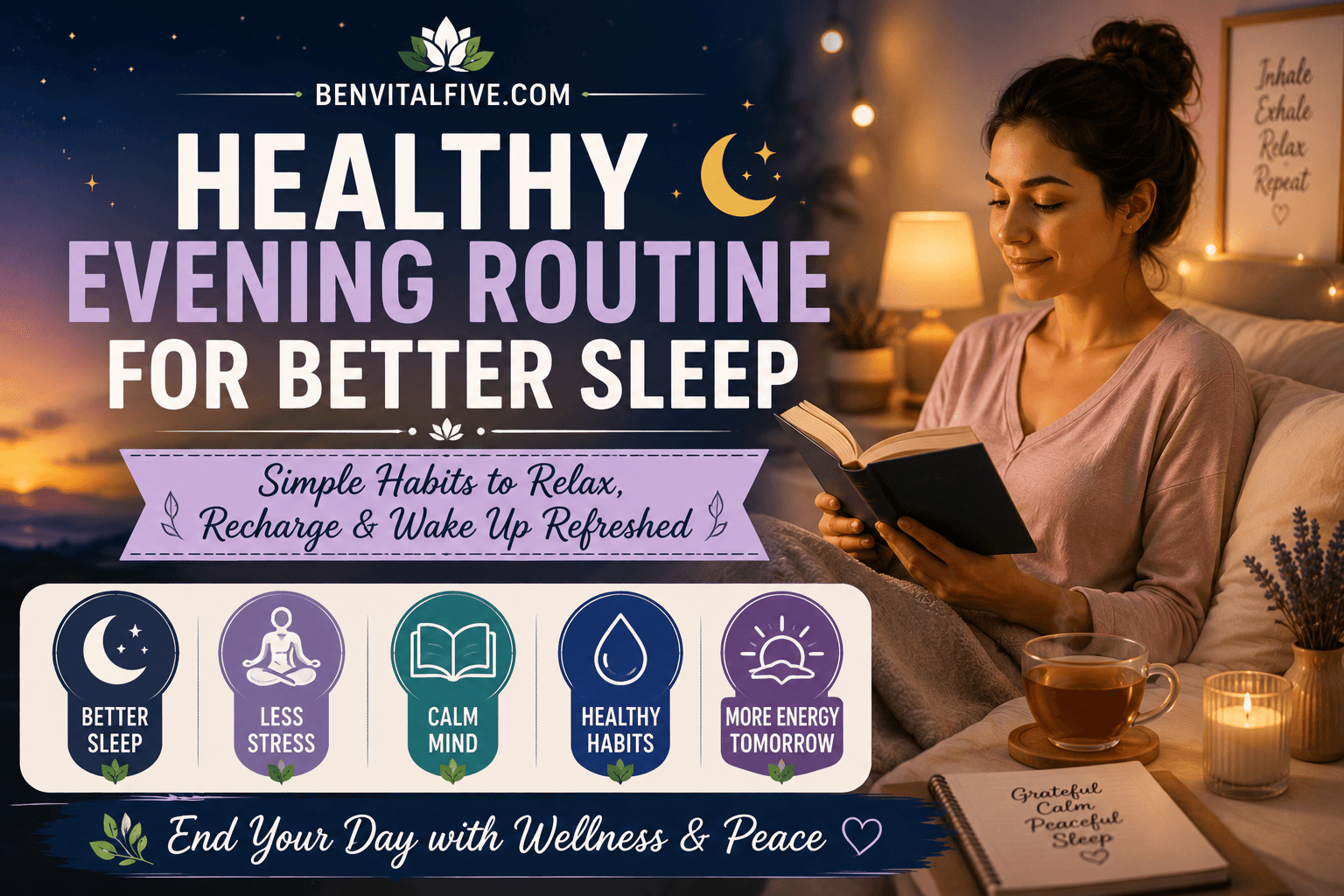
 Have you ever climbed into bed feeling physically exhausted, only to find your mind racing with unfinished tasks, tomorrow’s plans, or endless thoughts? You’re not alone. In today’s fast-paced world, quality sleep has become increasingly difficult to achieve. Long workdays, constant notifications, irregular schedules, stress, and excessive screen time often leave us feeling tired yet unable to truly rest.Many people invest time in creating productive morning routines but overlook the importance of what happens during the final hours of the day. The truth is that a healthy evening routine for better sleep can have just as much impact on your overall health as your morning habits.A peaceful evening does more than help you fall asleep. It allows your body to recover, your mind to relax, and your emotions to settle. Over time, these simple habits can improve your energy, mood, focus, immune function, and overall well-being.At BenVitalFive, we believe lasting wellness is built on five interconnected pillars:
