
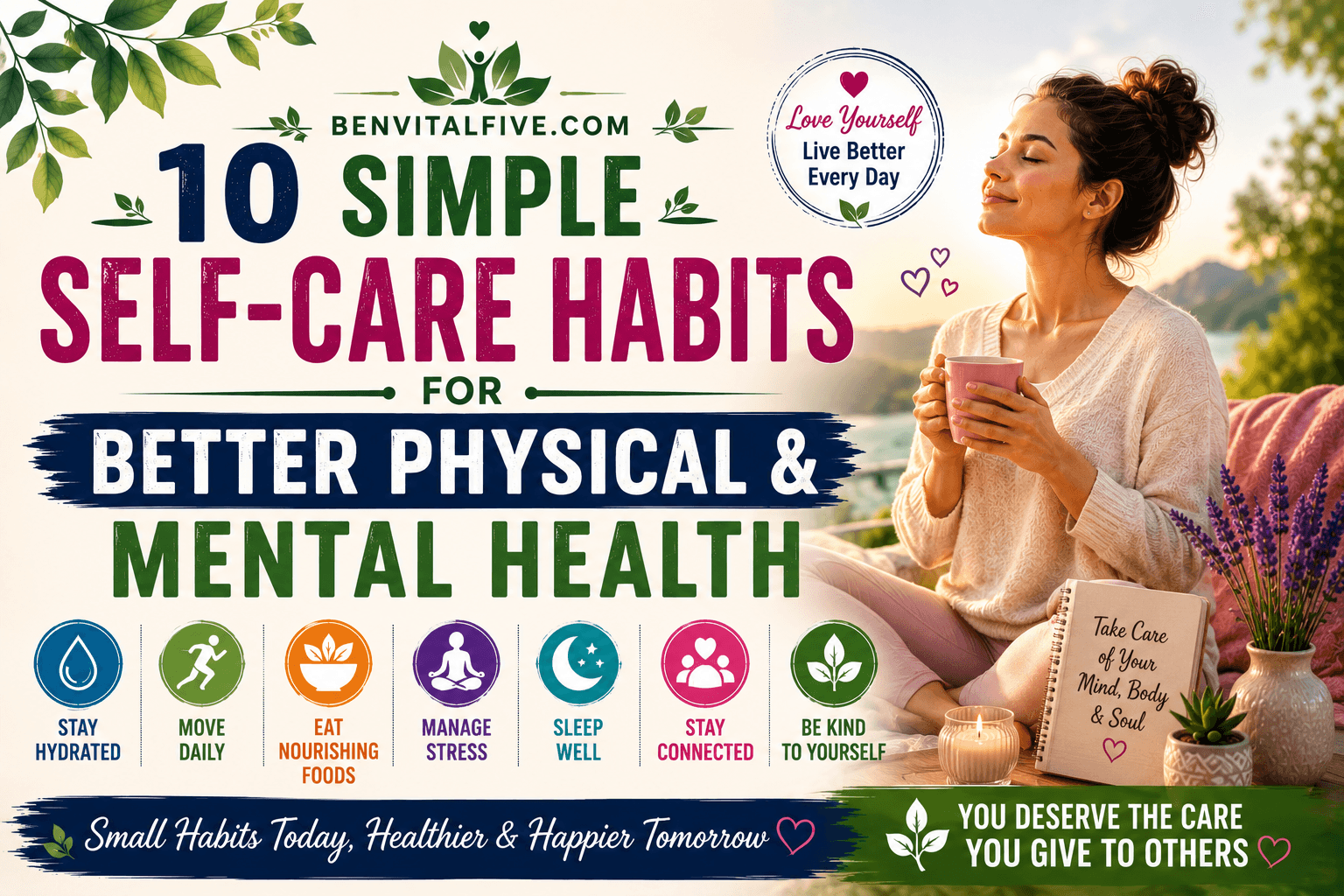
Simple Self-Care Habits: 10 Daily Practices for a Healthier and Happier Life
Introduction
Life can become busy before we even realize it. Between work, family responsibilities, endless notifications, and daily commitments, it is easy to put everyone else’s needs ahead of our own. Many people only think about self-care when they feel exhausted, overwhelmed, or burned out. By then, both the body and mind are already asking for rest.
The truth is that self-care is not a luxury reserved for weekends, holidays, or expensive spa visits. It is a collection of small, intentional choices that help you stay healthy, manage stress, and enjoy life more fully. These simple actions, repeated consistently, can improve your physical health, strengthen emotional resilience, and support long-term well-being.
Whether you are beginning your wellness journey or looking to build healthier routines, simple self-care habits can make a meaningful difference. You do not need expensive equipment, a perfect schedule, or hours of free time. Even a few minutes each day can help you create lasting positive change.
In this guide, you will learn what self-care really means, why it matters more than ever, and how caring for your body, mind, and emotions lays the foundation for a healthier and happier life.
What Is Self-Care?
Self-care is the practice of intentionally looking after your physical, mental, and emotional well-being through healthy daily habits. It includes the choices you make to nourish your body, calm your mind, build healthy relationships, and recover from the demands of everyday life.
At its heart, self-care is about prevention rather than repair. Instead of waiting until stress, fatigue, or illness takes over, you develop routines that help you stay balanced and resilient.
Self-care can include simple activities such as:
Drinking enough water throughout the day.
Eating balanced and nourishing meals.
Getting regular physical activity.
Sleeping well each night.
Practicing mindfulness or meditation.
Reading a good book.
Spending time outdoors.
Connecting with supportive family and friends.
Taking short breaks during busy days.
Setting healthy boundaries to protect your time and energy.
These actions may seem small, but together they create a strong foundation for lifelong wellness.
Self-Care Is Not Selfish
Many people feel guilty about taking time for themselves. They worry that caring for their own needs means neglecting others. In reality, the opposite is often true.
When you are physically healthy, emotionally balanced, and mentally refreshed, you are better able to care for your family, perform well at work, and support the people around you.
Think of it this way: Think of self-care as maintaining a vehicle. A car that receives regular maintenance performs better and lasts longer. Your body and mind deserve the same consistent care.
Why Self-Care Matters More Than Ever
Modern life presents challenges that previous generations experienced far less frequently. Constant digital connectivity, demanding work schedules, information overload, and social media comparisons can leave many people feeling mentally exhausted.
Even positive responsibilities, such as raising a family or building a career, can become overwhelming without adequate rest and recovery.
Ignoring your well-being for long periods may contribute to:
Persistent stress
Low energy
Poor sleep quality
Reduced concentration
Irritability
Emotional exhaustion
Difficulty maintaining healthy habits
Fortunately, self-care does not require dramatic lifestyle changes. Small daily habits often produce the greatest long-term results because they are easier to maintain.
Imagine two people with similar schedules. One spends ten minutes each morning stretching, drinks enough water, and takes a short walk during lunch. The other skips breakfast, remains seated for hours, and rarely pauses to recharge.
Over weeks and months, these small differences can influence energy levels, mood, productivity, and overall health. Consistency, rather than perfection, is what makes self-care effective.
The Three Pillars of Self-Care
Many people think self-care only involves relaxing activities, but true wellness is built on three interconnected areas: physical, mental, and emotional well-being. When one area is neglected, the others are often affected as well.
| Pillar | What It Includes | Everyday Examples |
| Physical Self-Care | Caring for your body’s health | Exercise, healthy eating, hydration, quality sleep, regular medical check-ups |
| Mental Self-Care | Keeping your mind active and focused | Reading, learning new skills, mindfulness, reducing digital distractions, solving puzzles |
| Emotional Self-Care | Understanding and managing emotions | Gratitude, journaling, talking with trusted friends, setting boundaries, practicing self-compassion |
Physical Self-Care
Physical self-care provides the energy needed to enjoy daily life. Nutritious food fuels your body, movement strengthens muscles and joints, and quality sleep allows your body to repair itself. Simple habits such as taking a daily walk, choosing balanced meals, or stretching after long periods of sitting can improve your physical well-being over time.
Mental Self-Care
Your mind benefits from regular exercise just as much as your body does. Reading books, learning new ideas, practicing meditation, and taking breaks from constant digital stimulation help improve focus and mental clarity. For readers of BenVitalFive, developing a daily reading habit is an excellent form of mental self-care because it supports lifelong learning while reducing mindless screen time.
Emotional Self-Care
Everyone experiences stress, disappointment, and uncertainty. Emotional self-care helps you respond to these challenges in healthy ways instead of simply reacting to them. Simple practices such as expressing gratitude, speaking kindly to yourself, maintaining supportive relationships, and accepting that perfection is impossible can strengthen emotional resilience.
Remember that emotional self-care does not mean avoiding difficult feelings. It means acknowledging them, learning from them, and responding with patience and compassion.
Self-Care Begins with Small Daily Choices
Many people postpone self-care because they believe they need more time, money, or motivation. In reality, lasting wellness usually begins with small actions that fit naturally into everyday life.
Choosing water instead of another sugary drink, taking the stairs instead of the elevator, reading a few pages before bed, or spending five quiet minutes in meditation may seem insignificant on their own. Yet repeated every day, these simple habits gradually shape a healthier lifestyle.
Instead of trying to transform your entire routine overnight, focus on one manageable habit at a time. Small, consistent improvements are easier to maintain and often lead to lasting change.
In the next section, we’ll explore ten practical self-care habits that you can begin today to improve your physical health, mental clarity, and emotional well-being—without spending a fortune or completely changing your lifestyle.
Self-Care Myths vs. Reality
Self-care has become a popular topic, but it is also surrounded by misconceptions. Social media often portrays self-care as luxury holidays, expensive skincare products, or spa treatments. While these activities can be enjoyable, they are only a small part of what self-care truly means.
Real self-care is about making consistent choices that support your long-term health and well-being. It is not about being perfect or spending money. It is about creating healthy habits that help you live with more energy, balance, and resilience.
| Myth | Reality |
| Self-care is selfish. | Taking care of yourself helps you care for others more effectively. |
| Self-care is expensive. | Many of the best self-care habits, such as walking, drinking water, reading, and meditation, cost little or nothing. |
| Self-care takes hours every day. | Even 10 to 15 minutes of intentional self-care can make a positive difference. |
| Self-care means avoiding responsibilities. | Good self-care helps you manage responsibilities with greater focus and resilience. |
| Self-care is only for people who are stressed. | Everyone benefits from regular self-care because it helps prevent stress and supports overall wellness. |
1. Start Your Day with Hydration
One of the simplest ways to care for your body is to drink water soon after waking up. During sleep, your body continues to lose water through breathing and perspiration. By morning, you may already be mildly dehydrated. Drinking one or two glasses of water helps replenish lost fluids and prepares your body for the day ahead.
Why Hydration Matters
Water supports almost every important function in the body. It helps regulate body temperature, transports nutrients, lubricates joints, and supports healthy digestion. Staying well hydrated may also help improve concentration, maintain energy levels, and reduce feelings of fatigue during the day.
Easy Ways to Drink More Water
Keep a reusable water bottle nearby.
Drink a glass of water before your morning coffee or tea.
Add slices of lemon, cucumber, or mint if you enjoy flavored water.
Eat water-rich foods such as watermelon, cucumber, oranges, and tomatoes.
Common Mistake
Many people wait until they feel thirsty before drinking water. Thirst is often a sign that your body already needs fluids. Making hydration a regular habit throughout the day is usually more effective than drinking large amounts all at once.
Quick Tip: Place a glass or bottle of water beside your bed each night so it is the first thing you see in the morning.
2. Move Your Body Every Day
You do not need an expensive gym membership or intense workout program to enjoy the benefits of regular physical activity. Daily movement keeps your body strong, improves circulation, supports heart health, and helps maintain flexibility. It also releases endorphins, natural chemicals that contribute to a positive mood. The best exercise is often the one you enjoy and can continue consistently.
Simple Ways to Stay Active
Take a 20- to 30-minute walk.
Practice yoga in the morning.
Stretch during work breaks.
Ride a bicycle.
Dance to your favorite music.
Use the stairs instead of the elevator.
Spend time gardening.
Even short periods of movement throughout the day are valuable. If you work at a desk, standing up and stretching every hour helps reduce stiffness and refresh your mind.
Make Movement Part of Your Routine
Instead of thinking about exercise as another task on your to-do list, find ways to include movement naturally. For example:
Walk while talking on the phone.
Park a little farther from your destination.
Take an evening walk after dinner.
Do five minutes of stretching before bedtime.
These small habits are easier to maintain than occasional intense workouts.
3. Eat Nourishing Foods
Food is more than fuel. The choices you make at each meal influence your energy, mood, concentration, and long-term health. A balanced diet provides the nutrients your body needs to function well. Rather than following restrictive diets, focus on eating a wide variety of wholesome foods most of the time.
Build a Balanced Plate
Aim to include:
Colourful vegetables
Fresh fruits
Whole grains
Lean protein
Healthy fats
Plenty of water
Choosing whole foods more often than highly processed foods helps support overall wellness. Healthy eating is about balance, not perfection.
Practical Tips
Prepare healthy snacks in advance.
Cook more meals at home.
Read food labels carefully.
Eat slowly and enjoy your meals without distractions.
Listen to your body’s hunger and fullness signals.
4. Practice Mindfulness Every Day
Modern life keeps many of us constantly busy. We move from one task to another without giving ourselves time to slow down.
Mindfulness is the practice of paying attention to the present moment without judgment. It helps quiet mental chatter and allows you to become more aware of your thoughts, emotions, and surroundings. Research suggests that regular mindfulness practice may help reduce stress, improve emotional well-being, and support better focus.
Simple Mindfulness Practices
You do not need special equipment or hours of free time. You can begin with:
Five minutes of deep breathing.
Guided meditation.
Gratitude journaling.
Quiet reflection.
Mindful walking.
Observing nature without distractions.
A Simple Exercise
Pause for one minute. Take a slow breath in through your nose. Hold it briefly. Exhale gently. Repeat five times while focusing only on your breathing. This simple practice can help calm your mind during a busy day.
5. Prioritise Quality Sleep
Sleep is one of the most overlooked forms of self-care. While you sleep, your body repairs tissues, supports immune function, consolidates memories, and restores energy for the next day. Poor sleep can affect mood, concentration, productivity, and overall health.
Build a Healthy Bedtime Routine
Good sleep often begins long before bedtime. Consider these habits:
Go to bed and wake up at the same time every day.
Reduce screen time at least one hour before bed.
Keep your bedroom cool, dark, and quiet.
Avoid large meals and excessive caffeine late in the evening.
Read a book or practice gentle stretching before sleeping.
Sleep Is an Investment
Many people see sleep as time lost. In reality, quality sleep improves performance, decision-making, emotional resilience, and physical recovery. Protecting your sleep is one of the most valuable investments you can make in your overall well-being.
6. Spend Time Outdoors
Modern life keeps many of us indoors for long hours. Whether you work in an office, study at home, or spend time on digital devices, it is easy to lose touch with nature. Yet spending time outdoors is one of the simplest and most effective forms of self-care.
Fresh air, natural light, and green spaces can help you feel calmer and more refreshed. Even a short walk outside can provide a welcome break from screens and daily pressures.
Benefits of Spending Time in Nature
Making time for nature may help you:
Feel more relaxed after a stressful day.
Improve your mood and mental clarity.
Stay physically active through walking or gardening.
Enjoy a healthy break from digital distractions.
Develop a greater appreciation for your surroundings.
Easy Ways to Spend More Time Outside
Take a morning walk around your neighbourhood.
Sit in your garden or on your balcony with a cup of tea.
Read a book in a local park.
Grow herbs or flowers at home.
Eat lunch outdoors whenever possible.
Watch the sunrise or sunset a few times each week.
If your schedule is busy, aim for 15 to 20 minutes outdoors each day. Small, regular moments in nature are often easier to maintain than occasional long outings.
7. Set Healthy Boundaries
One of the most overlooked forms of self-care is protecting your time and energy. Many people feel pressured to say “yes” to every request, attend every event, or answer every message immediately. Over time, this can lead to stress, exhaustion, and resentment. Healthy boundaries allow you to care for others without neglecting yourself.
What Are Healthy Boundaries?
Boundaries are the limits you set to protect your physical, emotional, and mental well-being. Examples include:
Saying no to unnecessary commitments.
Limiting work outside office hours.
Protecting time for family and personal interests.
Reducing exposure to negative conversations.
Choosing relationships that are supportive and respectful.
Setting boundaries is not about being selfish. It is about recognising that your energy is limited and deserves to be used wisely.
Practical Tips
If saying “no” feels uncomfortable, begin with polite and respectful responses such as:
“Thank you for thinking of me, but I can’t commit right now.”
“I need some time to focus on my current priorities.”
“I appreciate the invitation, but I’ll have to decline.”
The more you practice setting healthy boundaries, the easier it becomes to maintain a balanced lifestyle.
8. Stay Connected with Others
Humans are naturally social. Meaningful relationships contribute to emotional well-being and help us navigate life’s challenges. Self-care is often seen as a personal activity, but healthy relationships are just as important as healthy habits. Spending time with supportive people can reduce feelings of loneliness and provide encouragement during difficult times.
Ways to Strengthen Relationships
You do not need large social gatherings to stay connected. Simple ideas include:
Calling a family member.
Meeting a friend for a walk.
Sharing a meal together.
Joining a local community group.
Volunteering for a meaningful cause.
Participating in a hobby or book club.
The quality of your relationships matters more than the number of people you know. Spend more time with people who encourage your growth and less time with relationships that consistently leave you feeling drained. Remember that asking for help when you need it is also a form of self-care.
9. Limit Digital Overload
Technology has transformed the way we work, learn, and communicate. While digital tools offer many benefits, constant notifications and endless scrolling can also affect our focus and well-being. Many people reach for their phones without thinking, often interrupting conversations, meals, work, and even sleep. Creating healthier digital habits is an important part of modern self-care.
Signs of Digital Overload
You may benefit from reducing screen time if you often:
Check your phone every few minutes.
Feel anxious without your device.
Struggle to concentrate on one task.
Stay up late scrolling through social media.
Find it difficult to relax without a screen.
Simple Digital Wellness Habits
Turn off non-essential notifications.
Schedule regular screen breaks.
Keep your phone away during meals.
Create technology-free time before bed.
Replace some screen time with reading, walking, or meditation.
Digital balance is not about eliminating technology. It is about using it intentionally instead of allowing it to control your attention.
10. Celebrate Small Wins
Many people focus only on major achievements while overlooking the small steps that make success possible. In reality, lasting change is built through consistent daily progress. Celebrating small wins helps maintain motivation and reminds you that every positive choice matters.
What Counts as a Small Win?
Drinking enough water.
Completing your daily walk.
Preparing a healthy meal.
Going to bed on time.
Reading ten pages of a book.
Practising meditation for five minutes.
Choosing fruit instead of a sugary snack.
Keep Track of Your Progress
A simple notebook or habit tracker can help you stay motivated. At the end of each day, write down three positive choices you made. For example:
Walked for 30 minutes.
Drank eight glasses of water.
Practised gratitude before bed.
Seeing your progress over time builds confidence and encourages you to keep going. One missed workout or one unhealthy meal does not undo weeks of healthy choices. Avoid the “all or nothing” mindset. Consistency—not perfection—is the foundation of lasting self-care.
A Simple Daily Self-Care Routine
Building a self-care routine does not mean filling every hour of your day with wellness activities. Use this sample routine as a starting point and adjust it to suit your lifestyle
Morning
| Habit | Time |
| Drink one or two glasses of water | 2 minutes |
| Stretch or practice gentle yoga | 10 minutes |
| Eat a balanced breakfast | 15–20 minutes |
| Spend five minutes practicing gratitude or deep breathing | 5 minutes |
Afternoon
| Habit | Time |
| Eat a nutritious lunch | 20–30 minutes |
| Take a short walk outdoors | 15–20 minutes |
| Drink water regularly | Throughout the day |
| Take a brief screen break every hour | 2–5 minutes |
Evening
| Habit | Time |
| Enjoy a healthy dinner | — |
| Read a book instead of scrolling on your phone | 20 minutes |
| Reflect on three positive moments from the day | 5 minutes |
| Follow a relaxing bedtime routine | 30–60 minutes before sleep |
Weekly Self-Care Checklist
Use this checklist to monitor your progress throughout the week. The goal is steady progress over time, not checking every box every single day.
| Self-Care Habit | Mon | Tue | Wed | Thu | Fri | Sat | Sun |
| Drank enough water | □ | □ | □ | □ | □ | □ | □ |
| Exercised or walked | □ | □ | □ | □ | □ | □ | □ |
| Ate balanced meals | □ | □ | □ | □ | □ | □ | □ |
| Practiced mindfulness | □ | □ | □ | □ | □ | □ | □ |
| Slept 7–9 hours | □ | □ | □ | □ | □ | □ | □ |
| Spent time outdoors | □ | □ | □ | □ | □ | □ | □ |
| Connected with family/friends | □ | □ | □ | □ | □ | □ | □ |
| Limit unnecessary screen time | □ | □ | □ | □ | □ | □ | □ |
Benefits of Practicing Self-Care Every Day
When practiced consistently, simple self-care habits can improve many areas of your life.
Physical Benefits
Supports healthy energy levels.
Encourages better sleep.
Promotes regular physical activity.
Helps maintain a balanced diet.
Supports overall health and wellness.
Mental Benefits
Improves concentration and focus.
Encourages lifelong learning.
Helps reduce mental fatigue.
Supports clearer thinking.
Emotional Benefits
Builds resilience during stressful periods.
Encourages a more positive outlook.
Strengthens self-confidence.
Supports healthier relationships.
Common Self-Care Mistakes to Avoid
Waiting Until You Feel Burned Out: Self-care works best as a daily practice, not as an emergency solution.
Trying to Change Everything at Once: Making too many changes can become overwhelming. Start with one or two habits and build from there.
Comparing Yourself with Others: Your wellness journey is unique. Focus on your own progress instead of comparing it with someone else’s routine.
Expecting Perfection: Everyone has busy days and occasional setbacks. Missing one day does not mean you have failed.
Summary
What are simple self-care habits?
Simple self-care habits are small daily actions that support your physical, mental, and emotional well-being. They include staying hydrated, eating nutritious foods, exercising regularly, practicing mindfulness, getting enough sleep, spending time outdoors, maintaining healthy relationships, setting boundaries, limiting screen time, and celebrating small achievements.
Frequently Asked Questions
What is the easiest self-care habit to start?
Drinking more water is one of the easiest habits to begin. It requires little effort and supports many important functions in the body.
How much time should I spend on self-care each day?
Even 15 to 30 minutes of intentional self-care can make a positive difference. Consistency is more important than spending hours each day.
Can self-care improve mental health?
Self-care supports mental well-being by helping you manage stress, improve sleep, stay active, and maintain healthy relationships. It complements, but does not replace, professional mental health care when needed.
Is self-care expensive?
No. Many effective self-care activities are free or low-cost, including walking, stretching, meditation, reading, journaling, and spending time in nature.
Your Wellness Journey Starts Today
You have now explored ten practical self-care habits that can easily become part of your daily life. None of these habits require expensive equipment or dramatic lifestyle changes. Instead, they focus on small, intentional actions that improve your physical health, strengthen your emotional resilience, and support your mental well-being.
The most important step is not choosing every habit at once. It is choosing one habit that you can begin today and practising it consistently until it becomes part of your routine. Every healthy choice, no matter how small, brings you one step closer to a healthier and happier life.
Join the Conversation!
Building a sustainable self-care routine is a personal journey, and you don’t have to do it alone.
Which of these 10 habits are you going to focus on today?
Drop a comment below and share your experience, or let us know your favorite way to hit pause and reset!
If you found this guide helpful, don’t forget to save the Weekly Self-Care Checklist above and share this post with a friend who needs a gentle reminder to prioritize themselves this week.

