
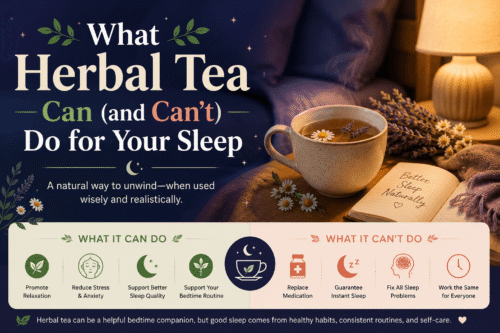
Introduction: The modern evening wellness aesthetic—steaming mugs and the promise of rest.
Scroll through any social media feed dedicated to mindfulness or self-care, and you will eventually run into a highly specific visual archetype: a dimly lit room, a softly textured blanket, and a steaming ceramic mug held in two hands. In the modern lexicon of wellness, a warm cup of herbal tea has become the ultimate shorthand for rest. It is a beautiful, peaceful image, and it promises something many of us desperately crave at the end of a chaotic day—an immediate, natural off-switch for a racing mind.
However, this comforting aesthetic creates a subtle misunderstanding. We often credit the liquid inside the mug with doing all the heavy lifting, assuming the plant molecules are doing standard pharmaceutical work to knock us out. In reality, there is a fascinating tension between the psychological comfort of the routine and the actual biochemical power of the herbs themselves. While some botanical compounds do interact directly with our brain chemistry, their physiological impact is naturally gentle and cumulative. Expecting a single, casually brewed tea bag to instantly override a high-stress workday or two hours of blue-light exposure right before bed is asking more of a plant than it can possibly deliver.
This does not mean your nightly brew is a placebo. On the contrary, using herbal tea for better sleep is a deeply valid, evidence-backed practice—but its true power lies in pairing the right high-potency, properly steeped herbs with strict behavioural conditioning. The tea is not a magic cure; it is a chemical and psychological anchor for a broader wind-down ritual. To truly quiet a racing mind, you can explore how evening mindfulness complements your bedtime routine in layering conscious mental relaxation over your botanical habits. By understanding exactly how these plants function, pairing them with proactive stress relief, and maximizing their active ingredients, you can transform a simple aesthetic trend into a highly effective sleep routine.
Our Top 3 Recommended Sleep Teas
| Product | Best For | Key Herb | Highlight |
| Traditional Medicinals Nighty Night Extra | Deep Relaxation | Valerian Root | High-potency, traditional medicinal-grade blend for stubborn restlessness. |
| Yogi Tea Bedtime | Stress Relief | Chamomile & Passionflower | A gentle, highly palatable blend formulated to soothe a racing mind. |
| Frontier Co-op Organic Chamomile | Loose-Leaf Enthusiasts | Chamomile Flowers | Whole, high-grade flowers offering maximum control over steeping potency. |
How Herbal Tea Affects the Brain
To understand how these plants actually help us drift off, we have to look past the cozy marketing and look directly at our neurobiology. The human brain relies on a delicate balance of chemical messengers, or neurotransmitters, to regulate wakefulness and rest. When we are stressed, anxious, or working late, our brains are flooded with excitatory chemicals like cortisol and glutamate, keeping our central nervous system on high alert.
To counteract this alertness, the brain utilizes a crucial inhibitory neurotransmitter called GABA (gamma-aminobutyric acid). Think of GABA as the brain’s internal braking system; it binds to specific receptors, slows down racing neuronal activity, and signals the body that it is safe to relax.
This is exactly where high-quality sleep teas step in. Rather than acting as heavy-handed sedatives that force the brain into unconsciousness, the active phytochemicals (plant compounds) in specific herbs act as gentle modulators. Once consumed, these microscopic compounds—such as flavonoids and terpenes—are absorbed into the bloodstream and cross the blood-brain barrier. There, they interact directly with your GABA receptors, either mimicking the effects of GABA or preventing its breakdown, effectively helping your nervous system shift from a state of high-alert “fight or flight” into the restorative “rest and digest” mode.
However, managing expectations here is key. Pharmaceutical sleep aids act like a sledgehammer, forcibly shutting down brain activity, which often leads to morning grogginess or dependency. The phytochemical approach of herbal tea is entirely different: it gently nudges the bedroom door open rather than breaking it down. Because these plant compounds work via subtle, cumulative pathways, they are designed to support and enhance your body’s natural biological transition into sleep, rather than forcing it.
This biochemical subtlety is precisely why the quality of your tea matters. To get a therapeutic dose of these GABA-boosting compounds, you cannot rely on low-grade, powdery tea dust. You need high-potency, properly sourced botanicals that retain their active essential oils—which is exactly what we will break down in the next section.
Herbs with the Strongest Evidence & Recommendations
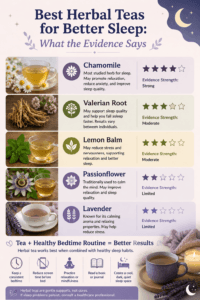
When evaluating herbal tea for better sleep, it is vital to separate wellness folklore from clinical reality. While dozens of plants are marketed as sleep aids, only a handful have undergone rigorous scientific scrutiny. To hit a therapeutic threshold that truly supports your neurobiology, you need to understand the active compounds within these plants and choose brands that preserve them.
Here is the deep dive into the three herbal interventions backed by the strongest clinical evidence, along with the specific product formulations required to achieve real results.
A. Chamomile (Matricaria chamomilla)
Chamomile is the undisputed matriarch of sleep botany, boasting the longest and most consistent research trail. The secret to its efficacy lies in a potent, naturally occurring antioxidant flavonoid called apigenin.
The Science
Unlike pharmaceutical interventions that forcefully alter brain chemistry, apigenin takes a remarkably precise path: it selectively binds to benzodiazepine receptors in the brain. By interacting with these specific sites, apigenin exerts a mild, highly targeted anti-anxiety effect that calms central nervous system hyper-arousal without causing structural changes to your sleep architecture.
A landmark study published in the Journal of Advanced Nursing put this mechanism to the test by evaluating postpartum women—a demographic notorious for severe sleep disruption. The clinical trials revealed that those who drank chamomile tea daily for two weeks reported significantly lower levels of sleep inefficiency and fewer symptoms of depression compared to the control group. The researchers noted a clear, measurable improvement in the ease of falling asleep, proving that chamomile’s chemical profile offers real, therapeutic support.
High-Potency Chamomile
To get a therapeutic dose of apigenin, standard grocery store tea bags filled with powdery dust will not suffice. The active flavonoids are concentrated in the whole flower heads.
Loose-Leaf Choice: Frontier Co-op Organic Whole Chamomile Flowers. Buying in bulk allows you to see the intact, vibrant yellow heads, ensuring the delicate essential oils haven’t degraded.
Convenient Tea Bag Choice: Traditional Medicinals Organic Chamomile. This brand utilizes medicinal-grade pharmacopoeial standards, ensuring each bag delivers a reliable dose of active botanical compounds.
B. Valerian Root (Valeriana officinalis)
If chamomile is a gentle nudge toward sleep, valerian root is the heavy artillery of the herbal world. Used since ancient Greek and Roman times, it is the most common herbal ingredient found in high-strength sleep supplements.
The Science
Valerian root operates via a fundamentally different biochemical mechanism than chamomile. It contains an array of active constituents, most notably valerenic acid and various iridoids. These compounds actively inhibit the enzyme responsible for breaking down GABA in the brain. By halting this breakdown, valerian leaves more GABA available in the synaptic clefts, significantly increasing the brain’s internal “braking system” and inducing a distinct sedative effect.
However, the scientific literature on valerian is famously nuanced. A comprehensive review by the National Center for Complementary and Integrative Health (NCCIH) pointed out a fascinating paradox: while numerous meta-analyses show that participants self-report dramatic improvements in their sleep quality, objective sleep studies (using polysomnography to measure brain waves) show highly variable, mixed results. The scientific consensus indicates that valerian is safe and highly effective for certain individuals, but its exact efficacy depends heavily on the user’s personal biochemistry and the consistency of use over several weeks.
Targeted Valerian Blends
Valerian root has a notoriously pungent, earthy odour and an intensely bitter taste that can be off-putting to beginners. The best way to consume a therapeutic dose without an unpleasant experience is through expertly crafted blends that mask the flavour with comforting spices.
Top Blend Choice: Traditional Medicinals Nighty Night Extra. This formulation pairs a robust dose of medicinal-grade valerian root with organic peppermint and sweet orange peel, perfectly balancing potency with palatability.
Alternative Choice: Yogi Tea Bedtime. A highly accessible, deeply soothing blend that rounds out the sharp notes of valerian root with licorice, cardamom, and cinnamon.
C. Passionflower (Passiflora incarnata) & Lemon Balm (Melissa officinalis)
While often utilized as standalone remedies, passionflower and lemon balm are increasingly studied together due to a powerful phenomenon known as botanical synergy—where the combined effect of the herbs is significantly greater than the sum of their individual parts.
The Science
Passionflower works by increasing intracellular GABA levels, specifically targetting the physical restlessness and muscle tension that accompanies an overactive mind. Lemon balm, a fragrant member of the mint family, contains rosmarinic acid, which acts as a potent inhibitor of GABA transaminase (the enzyme that destroys GABA).
When these two botanicals are combined, they tackle sleep onset from two distinct angles: passionflower floods the system with relaxation signals, while lemon balm prevents those signals from being destroyed. Double-blind, placebo-controlled clinical trials focusing on mild sleep disorders have shown that this specific combination significantly improves sleep quality metrics, tracking a marked reduction in nighttime awakenings and a substantial increase in morning alertness.
Affiliate Recommendation: Synergistic Nighttime Blends
When looking for a passionflower and lemon balm combination, prioritize brands that do not dilute their products with filler ingredients.
Premium Choice: The Republic of Tea Get Some ZZZ’s. This blend combines passionflower and lemon balm with a touch of chamomile, creating a comprehensive, multi-targeted approach to evening relaxation.
Organic Alternative: Pukka Herbs Night Time Tea. A luxurious, broad-spectrum blend featuring organic oat flower, lavender, lemon balm, and valerian, specifically designed to ease an anxious nervous system into deep rest.
The Thermodynamics and Psychology of the Ritual
While the plant chemistry we just explored handles the internal biology, there is an equally powerful external force at play when you drink herbal tea for better sleep: the physics of heat transfer and the psychology of behavioral conditioning.
To understand why a hot mug works so well, we have to look at the circadian rhythms governing our core body temperature. Throughout the day, your internal temperature fluctuates in a predictable wave. To initiate deep sleep, your body must drop its core temperature by approximately 1 to 2 degrees Fahrenheit. This cooling process is a primary biological trigger for the release of melatonin, the hormone responsible for sleep regulation.
Drinking a hot liquid right before bed leverages a physiological phenomenon known as vasodilation.
When the warm tea hits your mouth and stomach, your internal thermal sensors signal the brain that the body is overheating. In response, your autonomic nervous system opens up, or dilates, the tiny blood vessels in your extremities—specifically your hands and feet. If you have ever noticed your hands feeling flushed or warm while holding a hot mug, you are experiencing vasodilation in real time. This rapid blood flow to the skin allows metabolic heat to radiate out into the room, causing your core body temperature to plunge immediately afterward. By consuming a warm beverage, you are essentially mimicking and accelerating the natural cooling process your brain requires to cross the threshold into sleep.
[Hot Liquid Consumption]
          │
          ▼
[Vasodilation (Blood vessels dilate in hands/feet)]
          │
          ▼
[Rapid Radiation of Core Body Heat]
          │
          ▼
[Drop in Core Body Temperature] ──► [Melatonin Release & Sleep Onset]
Beyond the thermodynamics, the evening tea routine acts as a powerful psychological anchor. Human brains are pattern-recognition machines that thrive on behavioral conditioning—a concept known as a Pavlovian response. When you repeat the exact same sequence of events every single evening, your brain stops viewing those actions as isolated events and begins treating them as an explicit cue that the day is over. By consistently pairing the unique aroma of chamomile or the earthy taste of valerian with the act of winding down, you construct a neurological pathway that automatically initiates relaxation the moment you take your first sip.
Furthermore, this ritual forces a critical structural barrier between you and your digital life. The 10 to 15 minutes required to properly brew and steep a medicinal herbal tea provides a mandatory, built-in transition buffer zone. You cannot easily type on a phone or answer emails while managing a hot, steaming mug. This natural pause forces you to step away from high-stimulus blue screens, allowing your nervous system to fully disengage from the high-alert “still awake” mode.
Affiliate Recommendation: Elevating the Sleep Environment
To fully maximize this psychological anchor, the tools you use to craft the ritual matter just as much as the tea itself. Upgrading your evening environment sends a clear signal to your brain that your rest is high priority.
The Ambient Lighting Upgrade: THREO Amber Book Light or Hooga Blue Light Blocking Reading Lamps. Swapping out harsh overhead lights for warm, amber bulbs during your 10-minute steep prevents blue light from suppressing your natural melatonin production.
The Tactile Anchor: Sweese Porcelain Tea Mug with Infuser and Lid. A heavy, high-quality ceramic mug that retains heat serves two purposes: it accelerates vasodilation through your hands and includes a built-in lid to trap the essential medicinal vapors we will discuss in the next section.
The Chemistry of a Perfect Steep
Most people prepare herbal tea incorrectly, resulting in a comforting cup of warm water that is completely stripped of its therapeutic potential. When it comes to herbal tea for better sleep, you are not engaging in a culinary pastime; you are performing a delicate chemical extraction.
The active, sleep-promoting compounds in botanicals like chamomile, passionflower, and lemon balm are locked within volatile essential oils and fragile plant tissues. If you treat a medicinal sleep tea like a basic black tea bag—dunking it in boiling water for two minutes while leaving the mug open to the air—those precious, active molecules will evaporate right out of the cup via the steam.
To maximize your phytochemical intake and ensure your nervous system receives a standardized, therapeutic dose, you must follow a strict, science-backed brewing protocol:
1. Precise Temperature Control: Never pour boiling water (212°F) directly over delicate herbs, as excessive heat can scorch fragile flavonoids like apigenin. Instead, bring your water to a boil and let it sit for 60 seconds to drop to roughly 200°F (93°C) before pouring.
2. The Covered Steep (Non-Negotiable): You must trap the steam. Placing a saucer, lid, or plate over your mug acts as a condensation trap. As the volatile medicinal oils rise, they hit the lid, condense, and drip back down into your brew rather than escaping into the room.
3. The Extended Duration: Culinary teas are steeped for 3 minutes to avoid bitterness. For a sleep tea, you want to leave it covered for 10 to 15 minutes. This extended window is required to fully break down the tough plant walls of roots (like valerian) and thoroughly extract the active compounds into the water.
Affiliate Recommendation: Precision Brewing Gear
Taking the guesswork out of this chemical extraction can completely transform the potency of your nightly brew.
The Temperature Master: The Fellow Stagg EKG Electric Gooseneck Kettle allows you to dial in the exact target temperature of 200°F to protect your herbs, holding it there with flawless precision.
The Ultimate Extraction Vessel: The Hiware Glass Teapot with Removable Stainless Steel Infuser features a tightly sealed lid that locks in medicinal vapors, while giving loose-leaf chamomile and valerian root plenty of physical room to expand and release their active essential oils.
The ‘Herbal Doesn’t Mean Harmless’ Audit
One of the most pervasive and potentially hazardous myths in the wellness industry is the idea that “natural” automatically equates to “harmless.” When utilizing herbal tea for better sleep, it is vital to treat these botanicals with the same respect as over-the-counter medications. Plants are complex chemical factories; because they contain highly active compounds that interact directly with our central nervous system, they carry real risks of side effects, contraindications, and drug interactions.
Valerian root requires the highest level of vigilance. Because valerian actively alters the GABA pathway to slow down brain activity, it can dangerously amplify the effects of central nervous system depressants. You should never consume valerian tea if you are taking prescription sedatives, muscle relaxants, anti-anxiety medications (such as benzodiazepines), or if you have consumed alcohol, as the combined sedating effects can cause severe lethargy or respiratory depression.
Furthermore, vulnerable populations must exercise extreme caution. Pregnant or breastfeeding individuals should strictly consult their healthcare provider before introducing any sleep herbs into their nightly routine. Even a seemingly gentle option like chamomile can act as a mild uterine stimulant when consumed in high, concentrated doses, and many complex nighttime blends contain unstudied botanicals that may pass through breast milk.
Finally, it is crucial to recognize the boundary between occasional restlessness and chronic medical conditions. Herbal tea is an excellent tool for easing a stressful day or a brief bout of acute sleeplessness. However, if your sleep disturbances have persisted for more than two to four weeks, it is time to put down the mug and consult a physician. Chronic insomnia is often a clinical symptom of underlying issues—such as sleep apnea, severe nutritional deficiencies, or clinical anxiety disorders—that require comprehensive medical intervention rather than a warm, botanical drink.
Conclusion:
When it comes to mastering your sleep, a cup of herbal tea should never be viewed as a standalone miracle cure or a quick fix for a chaotic lifestyle. Instead, the science shows that it is an exceptionally powerful, evidence-backed supportive teammate. By choosing the right high-potency plant profiles—whether that is the apigenin-rich relaxation of chamomile or the heavy-hitting GABA support of valerian root—and pairing them with a dedicated, screen-free evening routine, you create a dual chemical and psychological pathway that guides your body into deep, restorative rest.
The Final Verdict: Our Top Picks
If you are ready to upgrade your evening wind-down routine, here is how to choose the right option for your nightstand:
For Stubborn Restlessness: Go with Traditional Medicinals Nighty Night Extra. Its medicinal-grade valerian profile delivers a potent, reliable knockout punch to racing thoughts.
For Daily Stress & Anxiety: Opt for Yogi Tea Bedtime. The balanced blend of chamomile and passionflower offers a highly palatable, gentle entry point for nighttime calm.
For the Purist: Invest in Frontier Co-op Organic Whole Chamomile Flowers paired with a covered Hiware Glass Teapot. Controlling the raw botanical material and locking in the steam ensures you get the maximum therapeutic extraction every single night.
Protect your peace, steep your herbs correctly, and let your nightly mug serve as the ultimate boundary protecting your rest.

