Somewhere in the last century, “drink eight glasses of water a day” became one of those rules nobody questions, repeated so often it stopped sounding like advice and started sounding like biology. It’s neither. Nobody can trace the number to a specific study, and the more researchers have looked into hydration, the less that flat, one-size number holds up.
Where the Number Actually Came From
The closest thing to an origin is a 1945 recommendation from the U.S. Food and Nutrition Board, which suggested about 2.5 liters of water a day — and then, in the same sentence most people never quote, noted that much of this amount is already contained in prepared food. Somewhere between 1945 and now, that qualifier got dropped, and “eight glasses” calcified into gospel.
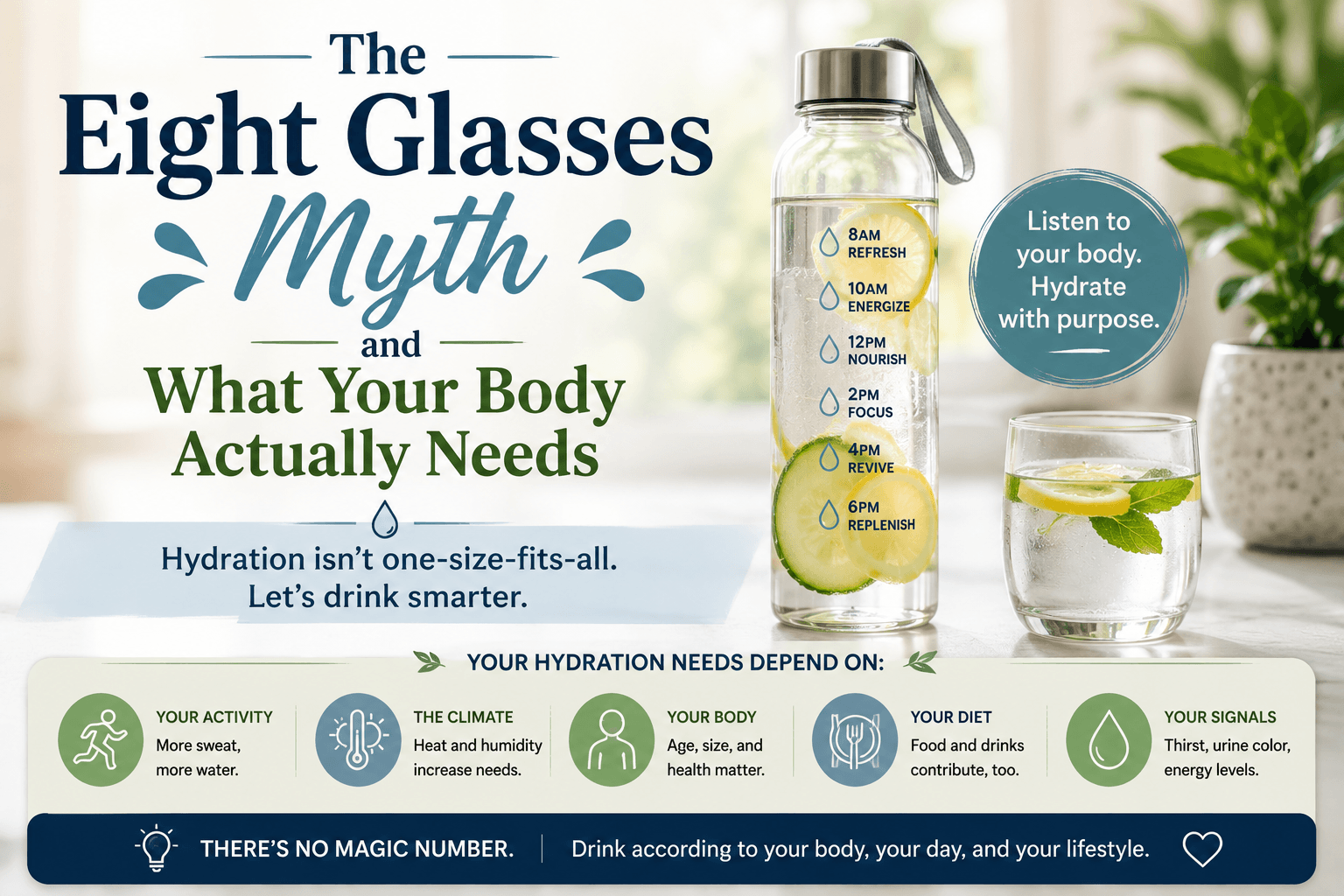
Actual hydration needs vary by body size, activity level, climate, and even diet, since foods like watermelon, cucumber, and soup contribute real water intake that a glass count doesn’t account for. The National Academies of Sciences, Engineering, and Medicine sets adequate intake at roughly 3.7 liters a day for men and 2.7 liters for women, from all fluids and food combined — a figure that includes coffee, tea, and the water inside your meals, not just what comes from a water bottle.
Signs That Are More Useful Than a Number
Rather than tracking ounces, your own body gives out reasonably reliable signals if you know what to watch for. Urine color is the simplest one: pale yellow generally signals adequate hydration, while a darker, more concentrated color suggests you could use more fluid — though certain vitamins and medications can shift this, so it’s a guide, not a diagnosis.
Thirst itself, contrary to old advice that told people to drink before they felt thirsty, is a fairly accurate mechanism in most healthy adults. Research on this has walked back the once-popular idea that thirst lags dangerously behind actual need. For most people, without underlying health conditions, thirst shows up early enough to act on.
Fatigue and headache can also be hydration-related, though they’re nonspecific enough that they shouldn’t be your only clue — plenty of things cause tiredness that have nothing to do with water intake.
Where the Real Risk Sits
Overhydration is rare but not impossible, and pushing water intake far beyond what your body’s asking for — chasing an arbitrary number out of anxiety about “not drinking enough” — can, in extreme cases, dilute sodium levels dangerously. This mostly shows up in endurance athletes drinking aggressively during long events, not in an office worker sipping water through the day, but it’s worth knowing the eight-glasses rule isn’t a floor you need to hit no matter what.
The people who genuinely need to think more carefully about hydration are older adults, whose thirst signal weakens with age, and anyone in hot climates or doing intense physical activity, where fluid loss through sweat climbs fast.
For most of us, the honest, slightly less catchy advice is this: drink when you’re thirsty, eat foods with real water content, keep an eye on urine color, and let go of the idea that a specific glass count is either a magic threshold or a moral obligation. Your body has been managing this since long before anyone invented the number eight.

