
Introduction—The Healing Power of Keerai
In every Tamil kitchen I grew up in, there was one thing you could always find—a pot of steaming keerai masiyal bubbling on the stove. My grandmother used to say, “Keerai saapidra naal la doctor vendam”—if you eat greens daily, you won’t need a doctor.
And now, science agrees. These humble greens, or keerai as we call them, are packed with nutrients that modern supplements can’t quite match—natural iron, calcium, vitamins, antioxidants, and fiber.
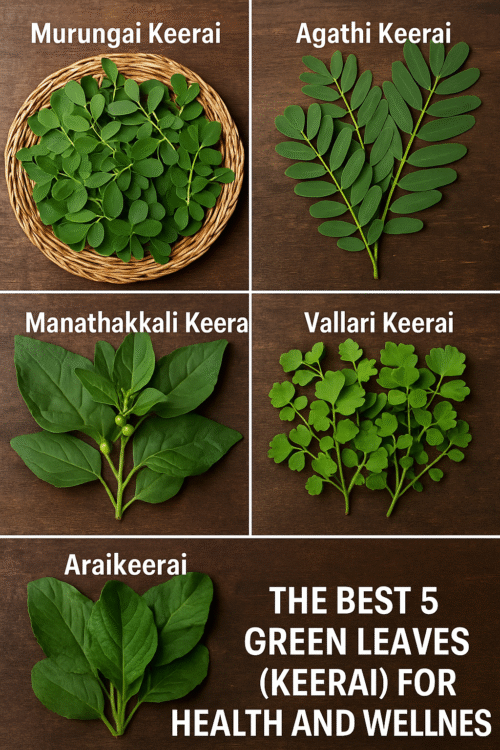
In this article, I’m sharing the five most powerful and time-tested keerai varieties for overall health and wellness—along with their nutritional values, scientific backing, and a few traditional tips from my own kitchen.
Related blog post :Organic Yoga mats;
1. Murungai Keerai (Drumstick Leaves)

Murungai Keerai (Drumstick Leaves), also known by their scientific name Moringa oleifera, are an invaluable source of nutrients and should form part of a regular diet. Not only do drumstick leaves nourish your body, but they can also offer numerous health benefits that boost iron levels while contributing to overall wellness.
The Best Core Exercises for Daily Energy
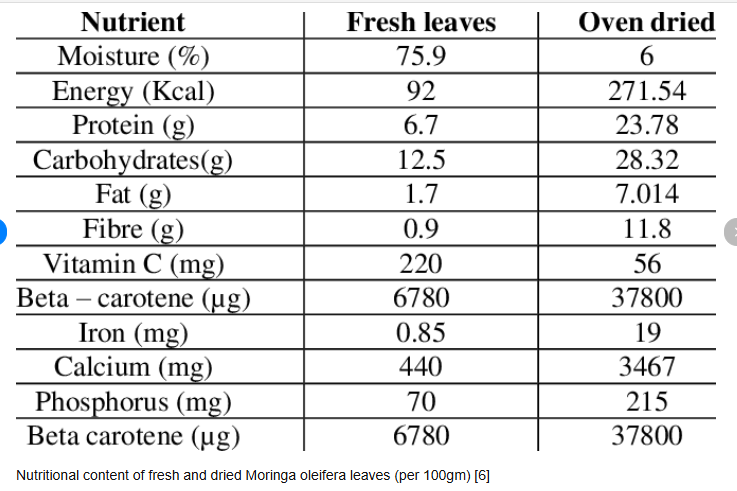
Nutritional Components (per 100g)
Benefits
Murungai Keerai is packed with nutrients, earning it the nickname the Miracle Tree. This remarkable plant promotes healthy digestion, strengthens bones, boosts immunity, and provides natural treatments for anemia, like iron and vitamin C; additionally, its antioxidants offer protection to cells.
Pros and Cons of Murungai Keerai (Drumstick Leaves)
Pros
- Great for energy and stamina
- Safe for daily consumption
- Supports hormonal balance
Cons
- Bitter taste; best eaten cooked
- Excessive raw use may cause mild stomach discomfort
Best Ways to Use
When in season, I like adding it to Murungai Keerai Soup; its spicy, soothing, and warming qualities provide the perfect atmosphere. Coconut and garlic make for delicious poriyal dishes, or adding it to dosa batter is another tasty possibility for the use of turmeric root.
Scientific Results
Modern studies have proven the benefits of moringa leaves. Review articles published in Frontiers of Pharmacology, Journal of Food Science, and Frontiers of Pharmacology document these advantages as rich sources of antioxidants, anti-inflammatory compounds, natural iron content and other essential vitamins and nutrients.
Ayurveda Insight focuses on balancing vata, kapha and ojas.
2 Manathakkali Leaves (Black Nightshade Leaves).
Manathakkali Keerai, more scientifically known as Solanum Nigra, is an edible leafy green that boasts medicinal value and is commonly used in traditional Tamil cuisine. Also referred to as Black Nightshade in English language cuisine, and known for its distinctive taste as well as its ability to treat various illnesses naturally.
Nutritional Components per 100g .
Nutritive Value of S. nigrum Seed and Leaves
- Virginicum leaves and seeds
- Vitamins Composition (Mg- Composition (Mg-/100g) of Leaves /100g) of Seeds
- Vitamin A 4.66±0.02 1.71±0,03
- Vitamin B1 17.14±0.01 10.91±0.01
- Vitamin C 35.18±0.02 23.38±0.01
- Folic acid 11.61±0.01 8.13±0.02
- Vitamin E 9.72±0.02 5.71±0.01
- Values are mean ± S.D of triplicate determinatio
Benefits
Manathakkali Rasam is well known for its cooling, soothing effects. It can help relieve mouth ulcers, stomach ulcers and gastritis as well as detoxify the liver. When someone in my family complained of acidity, my grandmother would always prepare Manathakkali Rasam as a remedy – and it worked wonders.
Pros and cons of Manathakkali Leaves (Black Nightshade Leaves).
| Pros | Cons |
| Effective for liver and ulcer health Cooling effect on Body Heat. Easy digestion.. | Unripe or raw parts of fruit may be harmful; always cook them thoroughly before consumption Overuse may lead to drowsiness; |
Use Manathakkali Keerai Kootu alongside light rasam or moong dal as part of an effective stomach healer for daily consumption.
Scientific Results
Recent research published in Phytotherapy and Complementary Medicine and BMC Complementary Medicine supports the anti-ulcer and hepatoprotective properties of Solanum nigrum. Animal studies demonstrate its efficacy against stomach ulceration while protecting liver cells against toxin-induced damage, making traditional diets such as Indian rasayana popular choices after illness or injury.
Ayurvedic insight: Appropriate treatment to balance excessive pitta while soothing internal inflammation.
3 Agathi Keerai or Hummingbird Tree Leaves [Sesbania grandiflora]
Agathi Keerai in Tamil refers to this plant, often referred to as Hummingbird Tree or Flamingo Bill due to its distinctive floral appearance. This fast-growing tree requires plenty of sunlight in order to thrive.
Agathi Keerai is packed with all essential amino acids. It boasts strong antimicrobial and antibacterial qualities to detoxify your system and can even be used to treat diarrhea, dysentery and inflammation. Ayurveda states that these leaves are perfect for bones and immunity!
Sesbania Grandiflora seeds are packed with essential nutrients and can be consumed directly, while their flowers and bark have also been widely utilized as ingredients in numerous cuisines. Flowers from this species have also been utilized as remedies
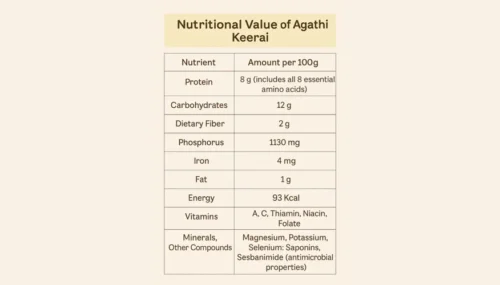
Nutritional Components Agathi Keerai per 100g
Agathi Keerai’s cleansing and detoxifying properties are well-recognized. It soothes the body while aiding digestion, traditionally consumed on Dwadasi to reset one’s stomach after fasting.
Pros and Cons of Agathi Keerai
| Pros | Cons |
| Cleanses the stomach and liver. Strengthen bones and eyesight Excellent antioxidant Consume once or twice monthly | Overuse may result in mild nausea. |
How to Use:
Please make sure that all items needed for consumption have been provided before consumption of any product containing Probiotics. Afterward, take one tablespoon directly with food each day until you reach the desired effect (maximum three). Ultimately, take three capsules twice per month in water after meals to maintain optimal digestive health and eyesight.
This leaf can be lightly sauteed with garlic and moong dal, or turned into Agathi Keerai poriyal using coconut.
The Best Nutritious Foods for Healthy Kidneys”
Researchers publishing in the Asian Pacific Journal of Tropical Biomedicine report that Sesbania grandiflora displays significant antibacterial and antioxidant activity, with animal models supporting its cleansing effects by demonstrating anti-inflammatory and liver-protective effects.
Ayurved insight: Detoxifying Pita and Kapha to restore lightness and clarity.
4. Vallari Keerai (Indian Pennywort/Gotu Kola)
Vallari Keerai (Indian Pennywort/Gotu Kola) is an extremely popular, green leafy vegetable used extensively in South Indian cuisine. Centella asiatica, also referred to as Vallari Keerai or Indian Pennywort/Gotu Kola, is commonly referred to as Indian Pennywort/Gotu Kola or spadeleaf or coinwort.
The entire plant is used medicinally. It’s widely utilized as a blood cleanser, to treat high blood pressure, and to improve memory retention. Furthermore, CA is considered an indispensable herb in Ayurveda for rejuvenating nerves and brain cells.
“Ancient Indian Memory-Boosting Techniques”
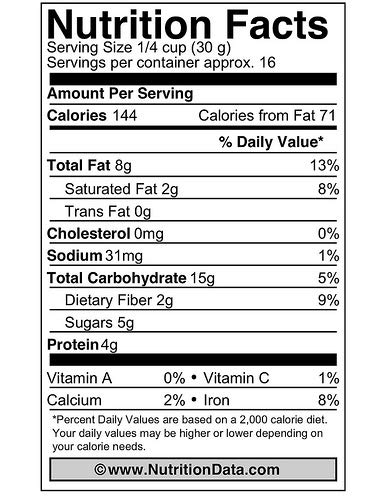
Nutritional Components of Vallarai Keerai
Vallari Keerai has long been my go-to green for mental clarity. It relieves anxiety while improving skin conditions – plus, you can blend it up with garlic and coconut for an enjoyable chutney!
Pros and Cons of Vallarai Keerai
| Pros | Cons |
| Improves memory and concentration. Calms stress, reduces anxiety , promotes blood flow supports good overall health. | Slightly Bitter. Overuse may cause mild sedation |
How to Use
For an ideal morning tonic, combine Vallari Keerai Thuvaiyal with honey in equal portions and consume immediately upon rising.
Scientific Results
Recent evidence-based CAM studies demonstrate the efficacy of Centella Asiatica extracts on relieving anxiety and improving cognitive performance for adults, with another RCT showing improved mood and memory for older participants over 60 days.
Ayurved insight: Reducing vata and pitta levels to promote relaxation while strengthening memory.
5. Amaranthus Dubius
Arai Keerai (also referred to as amaranth) is a leafy green vegetable commonly used in South Indian cooking, packed with minerals and vitamins (iron, calcium and potassium) (A, C & K). You can incorporate Arai Keerai into stir fries, stews or even mashed dishes such as masieyal. The leaves possess mild earthy notes while helping with weight management, hair growth, digestion, and cholesterol regulation.
Nutritional Components of Arai keerai in 100g
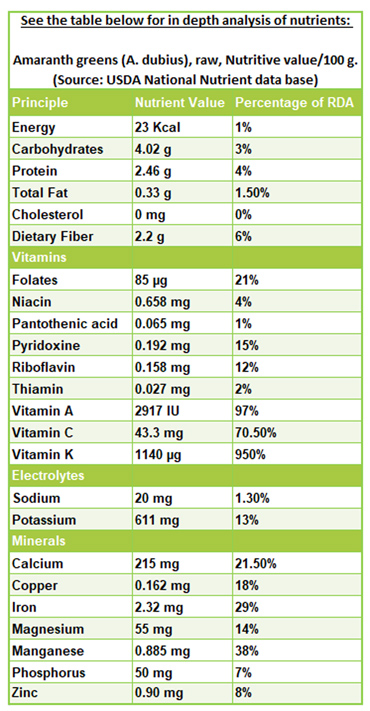
Benefits
Arai Keerai, one of the most versatile greens, is widely used in cooking. This versatile ingredient increases blood flow, supports hair and skin health, builds strength, and has comforting food qualities – I make Arai Keerai Masiyal regularly with Dal to meet these goals!
Pros and Cons of Arai Keerai
| Pros | Cons |
| Ideal for everyday consumption Gentle on digestion An excellent source of Iron from plants. | Must be washed well before cooking to remove grit Overcooking can destroy nutrients |
How to Use
Arai Keerai Masiyal or Poriyal pairs perfectly with ghee-steamed rice – nutritious yet straightforward and delectable!
Scientific Results
Amaranthus leaves are packed with essential vitamins and antioxidants, according to studies published in Food Chemistry and Journal of Nutrition and Food Science. When added as part of regular diets, human trials show improved hemoglobin levels and micronutrient intake.
Ayurvedic Wisdom: Balancing all three doshas gradually is key to overall strength.
Shop Trusted Organic Keerai Powders for Daily Wellness
| Product | Main Benefit | Organic Certification | |
|---|---|---|---|
| High in iron & antioxidants for immunity | USDA / India Organic | Buy Now |
| Manathakkali (Black Nightshade) Dried Leaves | Helps ulcers, liver & digestion | Locally sourced organic | Buy Now |
| Agathi Leaf Powder | Natural detox & cooling green | Non-GMO, sun-dried | Buy Now |
| Vallari (Gotu Kola) Powder | Supports memory & focus | Wild-crafted | Buy Now |
| Amaranth Leaf (Arai Keerai) Powder | Iron & calcium for strength | Certified organic | Buy Now |
Disclosure: As an affiliate partner, we may earn a small commission if you purchase through these links—at no extra cost to you. It helps us keep sharing free health and wellness content.
Conclusion—Eat Green and Live Clean
Keerai is an affordable superfood I started including in my diet three times every week and noticed subtle yet profound improvements: better digestion, increased energy levels and a peaceful night’s rest. These greens don’t need to be expensive—nature provides us with vitamins right in our own backyards!
Add fresh keerai to your meals this week according to an old Tamil proverb: “Keerai Dhan Kaadu Kaapathu”—it adds depth, character, and sweetness.

