
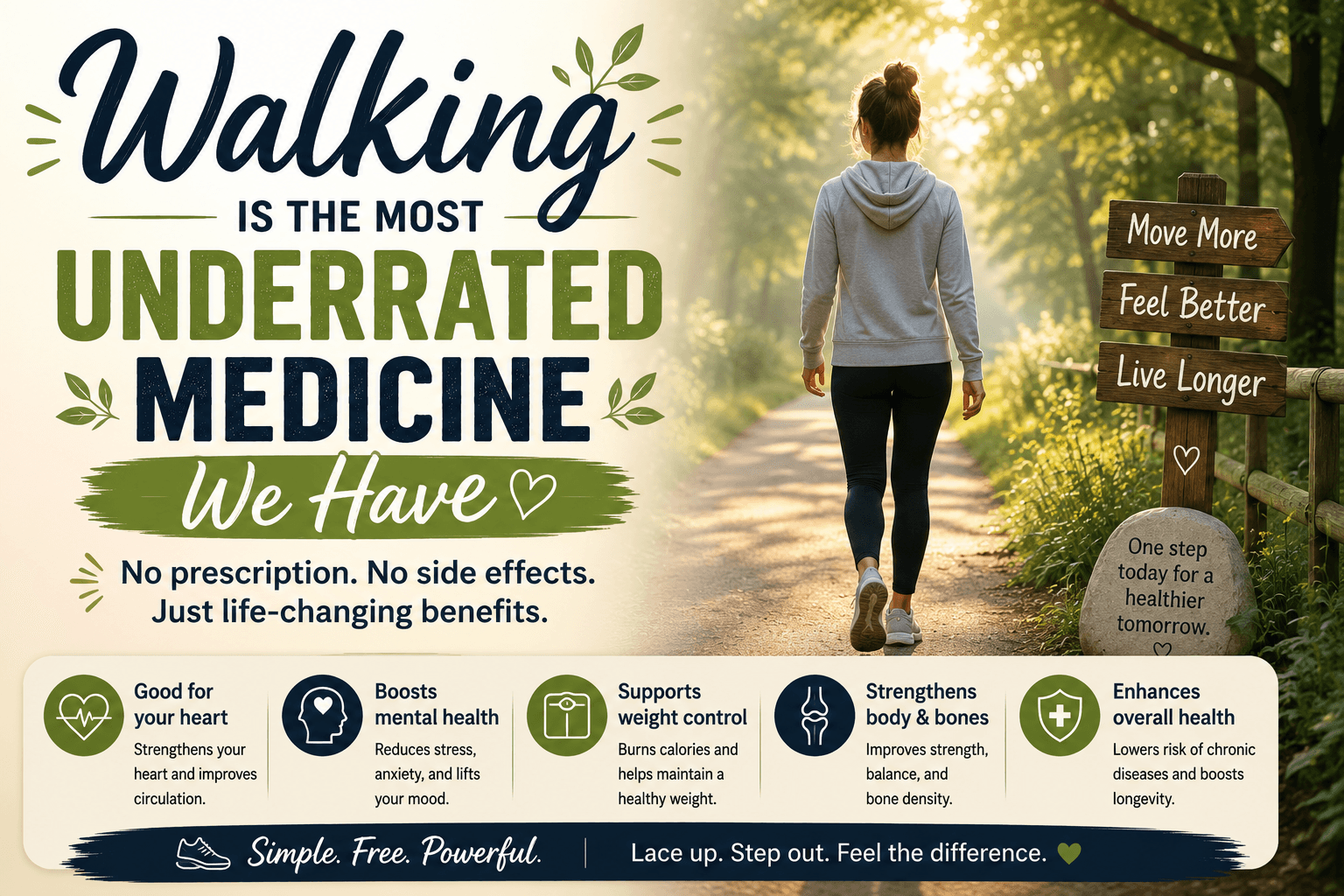
Fitness culture tends to skip straight past walking, as if it’s too plain to count — the thing you do between the activities that actually matter. That instinct is backwards, and the research on walking is quietly some of the most compelling evidence in all of preventive health.
What the Numbers Actually Show
A widely cited study published in JAMA Internal Medicine, tracking over 16,000 older women, found that mortality risk dropped substantially as daily step count rose, with benefits continuing up to roughly 7,500 steps a day, after which the curve flattened. Notably, the pace of walking didn’t matter nearly as much as simply doing it — a finding that undercuts the idea that only vigorous exercise counts.
A separate meta-analysis in The Lancet Public Health, pulling data from studies across several countries, found that people walking around 4,000 steps a day already showed a meaningfully lower risk of death from any cause compared to those walking far less, with the benefit continuing to climb as step counts increased. This matters because the popular “10,000 steps” target — itself the product of a 1960s Japanese pedometer marketing campaign rather than any clinical study — has quietly discouraged people who can’t hit that number from bothering at all.
What’s Happening Beneath the Surface
Walking is a strange kind of exercise in that its benefits reach further than the muscles involved. It improves insulin sensitivity, meaning your body handles blood sugar more efficiently after a walk than it would sitting still. It supports cardiovascular health by keeping blood vessels flexible and lowering resting blood pressure over time. And a study out of Stanford found that walking — indoors or outdoors — boosted creative output in the majority of participants tested, with the effect persisting for a short while even after they sat back down.
There’s a mental health angle too, one that often gets treated as an afterthought but shouldn’t be. A brisk twenty- or thirty-minute walk triggers the release of endorphins and reduces circulating levels of stress hormones, which is part of why a walk can genuinely shift a bad mood in a way that scrolling through a phone rarely does.
Making It Actually Happen
The obstacle for most people isn’t belief — almost everyone agrees walking is good for them — it’s that walking rarely feels urgent enough to prioritize over everything else competing for the same twenty minutes. A few things tend to help.
Attaching a walk to an existing habit works better than scheduling it as a standalone task: a walk after lunch, a walk during a phone call instead of sitting through it, a walk to a coffee shop instead of driving. The walk becomes a container for something you were doing anyway, rather than one more item competing for willpower.
Tracking steps helps some people and backfires for others, turning a pleasant habit into another number to obsess over. If a step counter motivates you, use it. If it makes walking feel like a chore, ditch it and just notice how you feel afterward instead.
And it’s worth remembering that a short walk still counts. Ten minutes isn’t nothing, even if it isn’t 7,500 steps. The evidence consistently favors people who walk regularly over people who walk perfectly, and that’s a fairly forgiving bar to clear.

