

Eating Dinner Before Sunset: The Science-Backed Benefits for Better Sleep, Digestion & Natural Energy
“This isn’t about calorie timing, macronutrient ratios, or the latest biohacking trend filling your social media feed.“
Modern life has changed the way we eat. Bright lights, late-night work, entertainment, and food delivery apps have slowly pushed dinner closer to bedtime. An ancient habit, followed for generations—eating dinner before sunset—is getting new attention from modern research.
This isn’t about a strict diet rule, counting calories, or following another wellness trend. It is about understanding a simple relationship our ancestors respected deeply: the connection between food, sunlight, and the body’s natural rhythm.
For most of human history, sunset created a natural boundary. When daylight disappeared, outdoor work slowed down, the fire burned low, and the body naturally prepared for rest. Food was mainly consumed during active daylight hours.
I decided to test this traditional wisdom for myself.
For thirty days, I committed to finishing my final meal before sunset or at least two to three hours before sleep. Some evenings, my dinner finished around 6:30 PM; other days it was closer to 7:15 PM, depending on the season.
I did not change my diet dramatically. I simply changed when I ate.
The results surprised me. My sleep felt deeper, mornings became easier, digestion felt lighter, and my energy throughout the day became more stable.
Here is what I discovered—and how both ancient wisdom and modern science explain this simple lifestyle shift.
What Does Eating Before Sunset Mean?
Eating dinner before sunset means completing your final major meal of the day. During daylight hours or allowing enough time between dinner and bedtime for digestion.
The purpose is not starvation or extreme fasting.
The goal is simple:
Give your digestive system enough time to complete its major work before your body enters its nighttime recovery phase.
For many people, this means:
- Finishing dinner around 6–7 PM
- Avoiding heavy meals within 2–3 hours of sleep
- Eating a larger breakfast or lunch
- Choosing lighter evening foods
This practice is closely related to modern ideas like circadian rhythm, eating, and early time-restricted eating. Where meal timing is aligned with the body’s natural biological clock. However, eating before sunset is only one part of a complete wellness approach. To create lasting health, it works best alongside mindful movement, balanced nutrition, quality sleep, and stress management. You can start your wellness journey with simple daily habits.
These habits support mindful movement, balanced nutrition, and stress-free living.
They help you build lifelong well-being.
The Science Behind Eating Before Sunset: Understanding Your Body Clock
Your body does not operate randomly. Almost every biological process follows a daily rhythm known as the circadian rhythm.
This internal 24-hour clock influences the following:
- Sleep hormones
- Digestion
- Body temperature
- Metabolism
- Energy levels
- Cellular repair
The main clock in the brain is called the suprachiasmatic nucleus (SCN). It responds strongly to light exposure.
Morning sunlight signals wakefulness.
Darkness signals preparation for rest.
Scientific studies by the National Institutes of Health — Circadian Rhythm and Metabolism Research explore how eating patterns influence metabolic health. Scientists have found that organs like the liver, pancreas, and digestive system have their own internal clocks. These are called peripheral clocks.
While light influences the brain clock, food timing strongly affects these digestive clocks.
When a heavy meal arrives late at night, the body receives mixed signals:
The brain prepares for sleep.
The digestive system prepares for work.
This mismatch may affect how efficiently the body manages digestion, metabolism, and overnight recovery.
External reference:
Scientific studies on circadian biology and meal timing continue to explore how eating patterns influence metabolic health.
Why Late Heavy Dinners May Affect Sleep Quality
Sleep is not simply switching the body off. It is an active recovery period where the body performs important functions that support overall health and well-being.
During deep sleep, your body supports:
- Tissue repair and recovery
- Memory processing and learning
- Hormone regulation
- Immune system function
A very heavy meal close to bedtime may keep digestion active when your body is naturally preparing to slow down and enter a restful state.
Instead of focusing mainly on nighttime recovery, the digestive system continues processing food, which may affect comfort and sleep quality for some people.
Some people notice:
- Restless or interrupted sleep
- Feeling unusually warm at night
- Acid reflux symptoms or digestive discomfort
- A heavy feeling when waking up in the morning
After moving my dinner earlier, the biggest change I noticed was not sleeping longer — it was waking up feeling more refreshed.
My body felt like it had spent the night recovering instead of processing yesterday’s dinner.
Eating earlier is only one part of creating healthier sleep habits. A calming evening routine that includes gentle movement, mindful breathing, meditation, and reducing late-night stimulation can also prepare your body for deeper rest. Learn more about natural ways to improve sleep quality through evening routines and relaxation practices.
My 30-Day Early Dinner Experience
1. My Sleep Became More Restful
During the first week, I noticed fewer nighttime disturbances.
Earlier, I often woke up around 2–3 AM feeling restless. After shifting dinner earlier, my nights gradually became calmer.
Modern sleep science suggests that body temperature regulation, digestion, and sleep quality are closely connected.
Eating earlier gave my body more time to complete digestion before bedtime.
2. Morning Energy Improved Naturally
Before this experiment, my morning usually started with searching for caffeine.
I believed waking up tired was normal.
After a few weeks of early dinners, mornings started feeling different.
I woke up feeling lighter and more prepared for the day.
A possible reason is improved alignment between sleep cycles and the natural cortisol awakening response, the normal rise in alertness hormones after waking.
3. Afternoon Energy Became More Stable
Many people experience the familiar afternoon crash:
Heavy eyes.
Low motivation.
Searching for snacks or another coffee.
While many factors influence afternoon energy, better nighttime recovery can make daytime alertness more stable.
When sleep improved, my afternoon concentration improved too.
Practice to become more stable with simple meditation techniques for better focus and mental clarity.
4. Hunger Signals Became More Natural
Before eating earlier, breakfast often felt forced.
After several days, real morning hunger returned.
This helped me reconnect with my body’s natural signals instead of eating only because of habit or stress.
Ancient Ayurveda Wisdom and Modern Circadian Science
Long before modern laboratories studied biological clocks, traditional cultures observed the connection between sunlight, food, and energy.
In many traditional Indian households, especially rural communities of Tamil Nadu, daily life naturally followed the movement of the sun.
People commonly
- Woke before sunrise
- Worked actively during daylight
- Ate their strongest meal earlier in the day
- Finished a simple dinner before night
This lifestyle was not called a health trend. It was simply a way of living close to nature.
In Ayurveda, digestion is explained through the concept of Agni, often translated as digestive fire.
According to Ayurvedic tradition:
- Agni is strongest when the sun is highest
- Midday is considered ideal for the largest meal
- Evening meals are traditionally lighter
Modern chronobiology explains this differently. Research suggests that insulin sensitivity, digestive activity, and metabolic responses can vary throughout the day.
Although Ayurveda and modern science use different languages, both highlight an important idea:
Our bodies follow daily rhythms.
Supporting those rhythms may support overall wellness.
Best Indian Foods for an Early Dinner
An early dinner does not mean eating less. It means choosing foods that satisfy without making digestion difficult before sleep.
Traditional Indian meals offer excellent options.

Learn more. Discover how fermented foods boost gut health and immunity. Learn how they improve digestion and balance the gut microbiome. See how they strengthen your immune system. Explore traditional foods that support digestion and gut health naturally.
How to Start Eating Dinner Earlier
Do not suddenly move dinner from 10 PM to 6 PM.
Your body needs adjustment.
Try this:
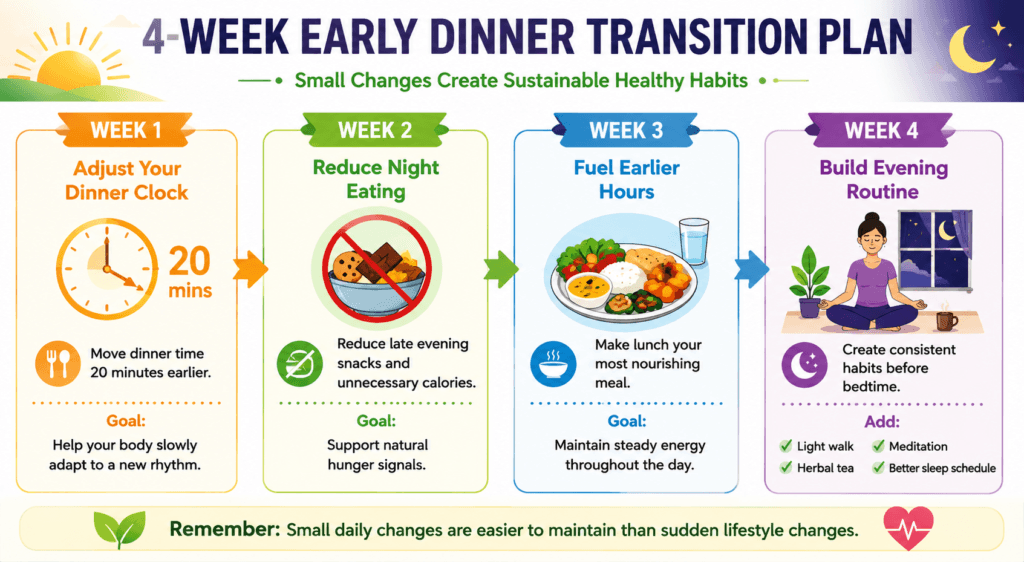
Remember:
Small daily changes are easier to maintain
than sudden lifestyle changes.
After-Dinner Habit: Gentle Evening Walking
Many traditional cultures practiced slow walking after meals.
A gentle 10–15 minute walk after dinner may support comfort and digestion.
Avoid intense exercise immediately after meals.
Final Thoughts: Returning to a Natural Rhythm
Eating dinner before sunset taught me an important lesson:
Sometimes improving health does not require adding something new.
Sometimes it means returning to something simple.
Our ancestors naturally respected cycles of light, food, movement, and rest.
Modern life has changed our environment, but our biology still follows ancient rhythms.
Try it for thirty days.
Eat earlier.
Rest better.
Observe your energy.
Your body may appreciate the quiet evening it has been waiting for.
Medical note:
This article is for educational purposes only and is based on personal experience and general wellness information. People with diabetes, pregnancy, medical conditions, or special dietary needs should consult a qualified healthcare professional before making major dietary changes.

