
Guided Meditation for Beginners: Benefits, Techniques & How to Start
Introduction
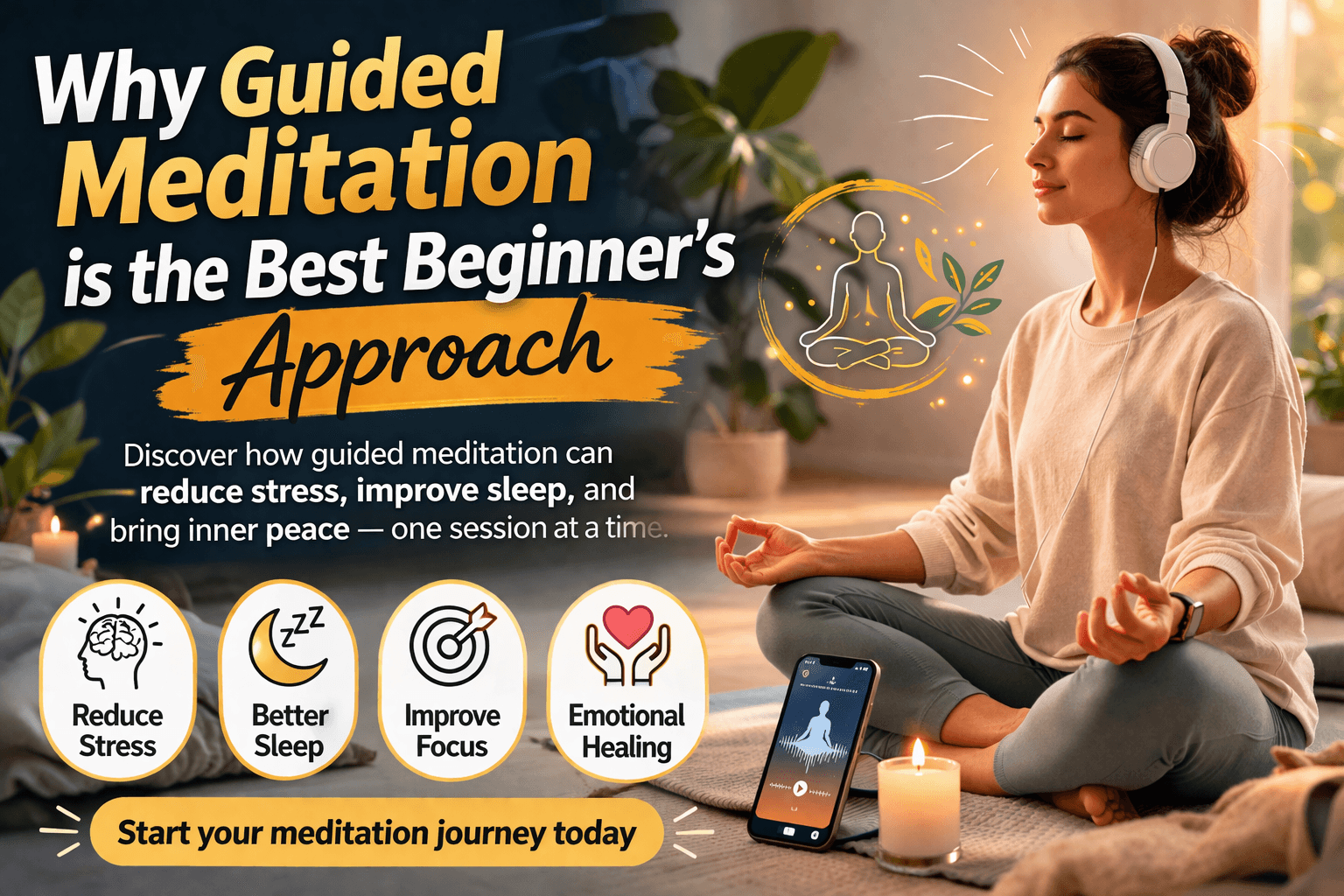
Starting meditation can feel overwhelming for beginners. Sitting quietly with your thoughts is not always easy, especially in today’s fast-paced world. Guided meditation facilitates your focus, being calm, and being in the present the process.
Whether your goal is stress relief, better sleep, emotional balance, improved focus, or spiritual growth, guided meditation offers one of the easiest ways to begin building a mindfulness practice. Instead of struggling to “empty your mind,” you follow a calming voice that gently directs your breathing, awareness, and thoughts throughout the session.
In this guide, you’ll learn what guided meditation is, how it works, its benefits, different styles, and practical tips for beginners.
If you’re completely new to wellness practices, you may also enjoy our related guides:
- Vipassana Meditation: What It Is, How It Works & What to Expect
- A Beginner’s Guide to Starting a Wellness Journey Without Feeling Overwhelmed
- The Five Pillars of Wellness: A Simple Path to a Healthier Life
What Is Guided Meditation?

Guided meditation is a type of meditation where a teacher, narrator, or audio recording guides you through the practice. The guided meditation includes breathing exercises, relaxation techniques, mindfulness prompts, visualizations, and body awareness practices. These are designed to help you enter a calm and focused mental state.
Unlike silent meditation, where practitioners maintain focus independently, guided meditation provides continuous direction. This makes it especially helpful for beginners who may find it difficult to stay focused or relaxed during meditation.
Guided sessions can be experienced:
- In-person with a meditation teacher
- Through mobile apps
- Via YouTube videos
- Through podcasts or audio recordings
- In wellness classes or retreats
Many experienced meditators use guided meditation to explore new techniques and deepen relaxation- sound sleep, healing, or stress reduction.
How Guided Meditation Works
Guided meditation gently directs your attention away from stress and mental distractions toward a calmer and more mindful state. The guide’s voice acts as an anchor, helping the brain stay engaged and focused throughout the session.
Most guided meditations follow a simple structure:
- Settling the body and breath
- Relaxing physical tension
- Directing awareness inward
- Using mindfulness or visualization techniques
- Returning attention to the present moment
Research suggests meditation helps regulate the nervous system, reduce cortisol levels, and support emotional well-being when practiced consistently.
For many beginners, guided meditation removes the uncertainty of “doing it correctly.” It is also making the practice feel far more approachable and effective.
Benefits of Guided Meditation
Guided meditation offers a wide range of mental, emotional, and physical wellness benefits.
1. Reduces Stress and Anxiety
One of the most common reasons people start meditation is stress relief. Guided sessions help calm racing thoughts, regulate breathing, and activate the body’s relaxation response.
Mindfulness-based meditation practices have been associated with improvements in anxiety symptoms and emotional regulation.
2. Improves Sleep Quality
Sleep-focused guided meditations help quiet the mind before bedtime. Many sessions combine:
- Gentle breathing exercises
- Progressive muscle relaxation
- Slow visualizations
- Calming background sounds
This can make it easier to fall asleep and improve sleep quality over time.
3. Enhances Focus and Mental Clarity
Meditation trains attention and awareness. With regular practice, many people report:
- Improved concentration
- Better emotional control
- Increased productivity
- Greater mental clarity
This is particularly useful for busy professionals, students, and entrepreneurs.
4. Supports Emotional Healing
Guided meditation can create a safe mental space for processing emotions such as grief, frustration, fear, or overwhelm. Compassion-focused and mindfulness-based practices are often used to support emotional resilience and self-awareness.
5. Makes Meditation Easier for Beginners
Perhaps the greatest benefit is accessibility. Guided meditation removes much of the confusion beginners experience when trying meditation for the first time.
Instead of wondering what to do next, you simply follow the instructions and stay present.
Popular Types of Guided Meditation
Guided meditation includes many different styles and techniques. Exploring different approaches can help you discover what works best for your personality and goals.
Body Scan Meditation
Body scan meditation systematically guides awareness through different areas of the body. The goal is to release tension, improve body awareness, and encourage deep relaxation.
This style is especially effective for:
- Stress reduction
- Physical tension
- Sleep preparation
- Mind-body awareness
Visualization Meditation
Visualization meditation uses mental imagery to create calming or empowering experiences. You may be guided to imagine:
- Walking through a peaceful forest
- Floating on water
- Healing light moving through the body
- Achieving a personal goal
Visualization practices are commonly used for relaxation, confidence, emotional healing, and performance enhancement.
Sleep Meditation
Sleep meditations are specifically designed to help the body and mind transition into restful sleep. These sessions often use:
- Slower speech patterns
- Gentle music
- Breath awareness
- Progressive relaxation
Many people use sleep meditation nightly as part of a healthy bedtime routine.
Loving-Kindness Meditation
Also known as “Metta meditation,” loving-kindness meditation focuses on developing compassion toward yourself and others.
Practitioners silently repeat phrases such as:
- “May I be happy.”
- “May I be healthy.”
- “May others be safe and peaceful.”
This practice may help increase empathy, emotional balance, and positive thinking.
Chakra Meditation
Chakra meditation focuses on the body’s energy centers using breathwork, visualization, colors, and sound frequencies. While rooted in ancient spiritual traditions, many people use chakra meditation today for relaxation, self-awareness, and emotional balance.

