
Table of Contents
ToggleStronger Years Begin With Intentional Habits: A Practical Guide to Healthy Ageing
Written by: Jesu Raj Athisayam, Founder & Editor, BenVitalFive
Growing older is a natural part of life. Yet, how we experience aging can be influenced by the choices we make throughout our lives.
Our movement habits, nutrition, sleep, recovery, and approach to stress all contribute to our overall well-being. These habits may appear small when considered individually, but their cumulative influence can be meaningful over time.
Over several decades, I have had the opportunity to observe how lifestyles have changed in Tamil Nadu and in rural communities.
I remember a time when everyday life naturally involved considerable physical activity. People walked to their fields, worked outdoors, cultivated vegetables, performed household activities, and participated in community gatherings. Children played traditional outdoor games, while adults remained physically engaged through their occupations and daily responsibilities.
Food habits were also closely connected with local agriculture. Families prepared meals using vegetables, pulses, keerai, millets such as ragi and kambu, and other locally available ingredients. Home cooking was an important part of everyday life.
I remember community gatherings under neem trees, where farmers and neighbours exchanged experiences, discussed their work, and maintained social connections. Traditional games such as Kabaddi and martial arts practices such as Silambam also encouraged physical movement, coordination, and discipline.
My father followed a particularly active morning routine. He would wake up early, walk to the fields and begin his day with the responsibilities of rural life.
These observations have molded my understanding of healthy living.
Today, our circumstances are different. Technology has made many activities easier, transportation has reduced walking, and desk-based occupations have increased sedentary time. Convenience foods and irregular schedules have also become more common.
However, we should not romanticise the past. Earlier generations also experienced health challenges, physically demanding work and limited access to medical care. Modern healthcare, scientific knowledge, and improved nutrition offer important advantages.
The lesson is not to return completely to the past. It is to identify valuable everyday practices and adapt them to modern life.
We cannot stop the passage of time, but we can make thoughtful choices about how we live through it.
1. Understanding Healthy Ageing: It Is More Than Living Longer
Healthy ageing is not simply about reaching an advanced age. It is about maintaining the ability to live with independence, dignity, confidence and purpose.
According to the World Health Organization (WHO), healthy ageing involves developing and maintaining the functional ability that enables well-being in older age.
This includes the ability to:
Meet everyday personal needs.
Walk and move with confidence.
Learn, make decisions and remain mentally engaged.
Maintain meaningful relationships.
Participate in family and community life.
Continue doing activities that bring satisfaction and purpose.
Healthy ageing does not mean living without medical conditions. Many older adults live meaningful and active lives while managing chronic health conditions with appropriate care.
Nutritional needs naturally evolve as our metabolism slows and our muscle-maintenance needs change over time. Combining local staples like ragi, keerai, and dal provides a sustainable, nutrient-dense foundation without relying on expensive supplements. See practical meal combinations tailored for long-term independence in our feature on everyday Indian foods that support strength and bone health.
The important objective is to preserve functional ability and improve quality of life.
2. Movement Matters: Make Physical Activity a Daily Priority
One of the most valuable habits for healthy ageing is regular physical activity.
Our bodies are designed to move. However, modern routines often involve prolonged sitting, screen time and limited opportunities for movement.
Regular physical activity supports cardiovascular fitness, muscle strength, mobility, bone health and mental well-being. For a deeper dive into this topic, explore the generic movement tips to structured, age-appropriate guidelines.
Walking: A Simple Habit With Lasting Value
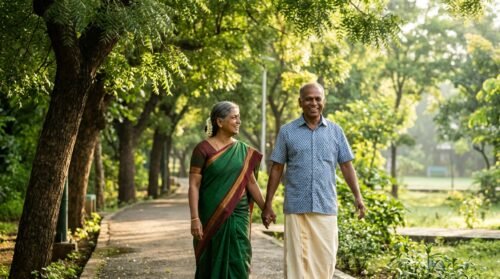
Walking is one of the most accessible ways to introduce movement into everyday life.
You do not necessarily need expensive equipment or a gym membership.
Consider practical activities such as:
Taking a morning or evening walk.
Walking to nearby shops when practical.
Using stairs when safe and appropriate.
Gardening and light household activities.
Walking with family members or friends.
Start with a comfortable duration and gradually increase it.
People who have been inactive for a long time should not suddenly begin strenuous exercise. Consistency and gradual progress are more important.
Strength Training: Maintain Muscle as You Age
Muscle strength becomes increasingly important as we grow older.
Stronger muscles support everyday activities such as climbing stairs, carrying groceries, getting up from a chair and maintaining balance.
Suitable strength exercises may include:
Chair sit-to-stand movements.
Wall push-ups.
Resistance-band exercises.
Light weight training.
Supported heel raises.
The intensity should match individual fitness and health conditions.
What Do Physical Activity Guidelines Recommend?
WHO recommends that older adults aim for:
150–300 minutes of moderate-intensity aerobic physical activity each week, or an equivalent amount of vigorous activity.
Muscle-strengthening activities involving major muscle groups on at least two days each week.
Balance-focused multicomponent activity on three or more days weekly for older adults with poor mobility, to help prevent falls.
These are general targets, not starting requirements. People should work towards them according to their abilities and health circumstances.
Remember: Some physical activity is better than none.
3. Yoga: Supporting Mobility, Balance, and Mind-Body Well-Being
Yoga is a valuable complementary practice for people seeking a balanced approach to healthy ageing.
It combines physical postures, breathing techniques, concentration and relaxation.
With appropriate modifications, yoga can help support flexibility, balance, posture, body awareness and relaxation.
How Can Yoga Support Healthy Ageing?
A suitable yoga routine may help people:
Maintain joint mobility and flexibility.
Develop better body awareness.
Practise balance and coordination.
Improve movement confidence.
Develop relaxation and breathing awareness.
Establish a regular mind-body wellness routine.
Beginner-Friendly Yoga Practices
Depending on individual ability, some suitable practices include:
Tadasana (Mountain Pose): Encourages upright posture and body awareness.
Supported Vrikshasana (Tree Pose): A modified balance practice performed near a wall or sturdy support.
Gentle seated stretches: Help maintain comfortable mobility.
Modified Marjariasana (Cat-Cow): May support gentle spinal movement when appropriate.
Relaxation and breathing practices: Encourage calmness and mindful awareness.
Beginners should learn the correct technique from a qualified yoga instructor. For safe routines, refer to simple yoga poses for bone health. Yoga and Bone Health: Understanding Its Limitations
Yoga should not be presented as a treatment for osteoporosis or a proven substitute for bone-strengthening exercise. Some yoga practices may support balance, posture and mobility. However, people with osteoporosis, particularly those with previous spinal fractures, require special attention.
Deep forward bending, forceful twisting and movements that place excessive stress on the spine may be unsuitable for some individuals.
A qualified healthcare professional or physiotherapist should help determine safe modifications.
The message is simple: practise yoga with awareness, not competition.
4. Bone Health: Protecting Your Strength as You Age
Bone health deserves attention throughout adulthood. Bones provide structural support, protect internal organs, and work together with muscles to enable movement. As people age, changes in bone density and structure can increase fracture risk.
Understanding Osteopenia and Osteoporosis
Osteopenia refers to bone mineral density that is lower than normal but does not meet the diagnostic threshold for osteoporosis.
Osteoporosis is a condition characterised by reduced bone strength and increased susceptibility to fractures. One challenge is that osteoporosis may develop without obvious symptoms until a fracture occurs. Risk assessment and appropriate medical evaluation are therefore important.
What Influences Bone Health?
Several factors may influence bone health:
Increasing age.
Hormonal changes, particularly after menopause.
Inadequate calcium and vitamin D.
Low physical activity.
Certain medical conditions.
Long-term use of some medications.
Smoking and excessive alcohol consumption.
Everyday Habits That Support Bone Health
A comprehensive approach includes:
1. Appropriate weight-bearing physical activity.
2. Progressive muscle-strengthening exercises.
3. Adequate calcium intake.
4. Sufficient vitamin D.
5. Balanced nutrition with adequate protein.
6. Fall-prevention practices.
People with osteoporosis or a previous fragility fracture should receive individualised exercise advice.
A healthcare professional may recommend a bone density assessment, such as a DXA scan, depending on age and individual risk factors.
5. Nutrition: Build Stronger Years Through Everyday Indian Foods
Good nutrition is an essential part of healthy ageing.
As we grow older, our nutritional needs may change. Maintaining a varied, balanced diet helps provide the nutrients required for muscles, bones, immunity and general health.
The ICMR–National Institute of Nutrition’s Dietary Guidelines for Indians (2024) provide an important evidence-based foundation for making appropriate food choices. For further reading, browse The Healthy Kitchen: 15 Simple Changes That Make Healthy Eating Easier
Calcium-Rich Foods for Bone Health
Calcium is essential for maintaining healthy bones.
Indian food choices include:
Ragi (finger millet).
Milk.
Curd.
Paneer.
Sesame seeds (ellu).
Suitable green leafy vegetables.
Calcium-fortified foods.
For people who do not consume dairy products, other calcium-containing foods can be included according to their nutritional requirements.
Protein for Maintaining Muscle Strength
Protein is needed for maintaining and repairing body tissues, including muscles.
Useful Indian food choices include:
Vegetarian sources:
Toor dal.
Green gram.
Black gram.
Bengal gram.
Chickpeas.
Cowpeas.
Soybeans and tofu.
Milk and curd.
Nuts and seeds.
Non-vegetarian sources:
Eggs.
Fish.
Chicken.
Other suitable lean protein foods.
Combining cereals and pulses is a practical way to improve the quality of plant-based protein.
For example, idli with sambar, rice with dal, and chapati with chana provide combinations of cereals and pulses.
Most people can obtain sufficient protein from a varied diet. Protein supplements are not automatically necessary. People with kidney disease or other medical conditions should seek individualised dietary advice.
Vitamin D: An Important Nutrient for Bone Health
Vitamin D supports calcium absorption and normal bone function.
Sunlight exposure contributes to vitamin D production in the skin, but individual requirements vary with skin characteristics, age, location, clothing, season and other factors.
Dietary sources include fatty fish, egg yolks and fortified foods.
If deficiency is suspected, a healthcare professional can advise whether testing and supplementation are appropriate.
Avoid taking high-dose vitamin D supplements without medical guidance.
Fruits, Vegetables and Whole Grains
A balanced Indian diet should include a variety of:
Seasonal fruits such as guava, papaya, banana and oranges.
Vegetables such as carrot, beans, pumpkin and gourds.
Green leafy vegetables such as murungai keerai and arai keerai.
Whole grains and millets.
Pulses and legumes.
Nuts and seeds.
Different foods provide different nutrients. Variety is more useful than relying on a single so-called superfood.
Traditional Indian Food Habits Worth Revisiting
Some traditional food practices offer valuable lessons, deeply rooted in $\mathbf{[Balanced\ nutrition\ for\ everyday\ health](#)}$.
For example:
Breakfast: Idli with sambar, vegetable dosa, or ragi porridge accompanied by an appropriate protein-rich food.
Lunch: Rice or millet, sambar or dal, keerai, seasonal vegetables and curd.
Evening: Sundal, fruit or a small portion of nuts.
Dinner: Chapati with vegetable dal, or a balanced meal containing rice, vegetables and pulses.
These are examples rather than fixed meal prescriptions. Portions and food choices should be adjusted for individual nutritional needs, diabetes, kidney disease and other medical conditions.
The objective is not to follow an expensive diet. It is to make everyday meals more balanced and nourishing.
6. Sleep and Recovery: Give Your Body Time to Restore
Sleep is an important part of physical and mental well-being.
Our bodies need adequate rest to recover from daily activities and maintain normal functioning.
However, irregular work schedules, excessive screen time, stress and late-night habits can interfere with sleep.
Practical Sleep Habits
Maintain regular sleeping and waking times.
Create a comfortable and quiet sleeping environment.
Reduce screen exposure before bedtime.
Avoid heavy meals close to bedtime if they disturb your sleep.
Maintain regular daytime physical activity.
Develop a relaxing evening routine.
Persistent sleep difficulties, loud snoring or excessive daytime sleepiness deserve medical attention.
Do not consider poor sleep an unavoidable part of ageing.
7. Managing Stress: Strengthen Your Mental Well-Being
Healthy ageing includes emotional and psychological well-being.
Work responsibilities, financial concerns, family changes, loneliness and health challenges can contribute to stress. Learning to manage everyday stress is therefore an important lifestyle habit.
Simple Practices That Can Help
Meditation: Spend a few minutes observing your breathing and bringing your attention to the present moment.
Pranayama: Learn gentle, suitable breathing techniques from a qualified instructor (explore $\mathbf{[Traditional\ pranayama\ techniques\ for\ stress\ management](#)}$).
Reading: Develop a regular reading habit to encourage learning and mental engagement.
Nature: Spend time outdoors in a comfortable and safe environment.
Meaningful relationships: Maintain communication with family members and friends.
Enjoyable activities: Gardening, music, creative hobbies and community participation can add meaning to everyday life.
These practices can support well-being, but they are not substitutes for professional mental healthcare when someone experiences persistent anxiety, depression or other significant symptoms.
8. Social Connection and Purpose: The Overlooked Side of Healthy Ageing
Health is not determined by food and exercise alone.
Social relationships and meaningful activities also contribute to a person’s overall well-being. As we transition $\mathbf{[From\ Village\ Calm\ to\ Digital\ Chaos](#)}$, preserving community ties becomes vital.
In earlier community life, neighbours often met regularly, shared responsibilities and participated in local events.
Modern lifestyles can sometimes reduce these opportunities for interaction.
We can consciously rebuild meaningful connections through:
Spending quality time with family.
Meeting friends regularly.
Participating in community activities.
Volunteering.
Teaching traditional skills to younger generations.
Reading groups and learning activities.
Gardening and shared hobbies.
Older adults have valuable experience and knowledge to contribute to families and communities.
Healthy ageing should encourage participation rather than isolation.
9. How to Build Intentional Habits That Last
One of the biggest mistakes people make when improving their health is attempting to change everything immediately. They may begin a demanding exercise programme, follow a restrictive diet and introduce several new routines simultaneously. Such changes can be difficult to maintain.
A more practical approach is to begin with manageable habits.
Consider these principles:
Start small: A comfortable 10-minute walk can be a useful beginning.
Be consistent: Repeat manageable activities regularly.
Choose enjoyable activities: Walking, gardening, yoga and cycling are more sustainable when they suit your interests.
Eat mindfully: Focus on balanced meals rather than extreme dietary restrictions.
Respect your limitations: Adjust activities according to age, fitness and medical conditions.
Review your progress: Notice improvements in energy, mobility, sleep and everyday confidence.
Remember that healthy habits should support your life, not become another source of pressure.
10. A Simple Seven-Day Healthy Ageing Starter Plan
Here is a practical example to begin:
| Day | Suggested Habit |
| Monday | Begin with a comfortable morning walk |
| Tuesday | Include calcium-rich foods in meals |
| Wednesday | Practise suitable beginner-friendly yoga |
| Thursday | Introduce appropriate strength exercises |
| Friday | Establish a consistent bedtime routine |
| Saturday | Practise meditation or mindful breathing |
| Sunday | Spend meaningful time with family or friends |
This is a habit-building example, not a complete exercise prescription. Adjust the activities to your health, ability and professional advice.
The goal is to create a routine that can continue beyond seven days.
11. Common Mistakes to Avoid When Trying to Age Healthily
While developing healthy habits, avoid these common mistakes:
Depending on yoga alone for bone health.
Ignoring muscle-strengthening activities.
Following restrictive diets without nutritional guidance.
Taking supplements without understanding individual requirements.
Exercising beyond your physical capacity.
Ignoring persistent pain or mobility difficulties.
Neglecting sleep and emotional well-being.
Assuming that ageing automatically means becoming inactive.
Healthy ageing requires a balanced and realistic approach.
12. Frequently Asked Questions About Healthy Ageing
1. What are the most important habits for healthy ageing?
Regular physical activity, balanced nutrition, adequate sleep, stress management, social connection and appropriate preventive healthcare are important foundations.
2. How can I stay physically active after 40?
Begin with regular walking, suitable strength exercises and mobility activities. Increase activity gradually and maintain consistency.
3. Is yoga good for healthy ageing?
Yoga can support flexibility, balance, posture, body awareness and relaxation. It should be adapted to individual abilities and medical conditions.
4. Can yoga improve bone density?
Yoga may support balance and functional movement, but it should not be considered a proven treatment for osteoporosis or a replacement for appropriate weight-bearing and resistance exercise.
5. What Indian foods help support bone health?
Ragi, milk, curd, sesame seeds, suitable green leafy vegetables and other calcium-containing foods can contribute to calcium intake. Vitamin D and protein are also important.
6. How can older adults maintain muscle strength?
Appropriate resistance exercises, adequate nutrition and regular physical activity can help maintain muscle strength.
7. How much physical activity do older adults need?
WHO recommends 150–300 minutes of moderate aerobic activity weekly, together with muscle-strengthening exercises on at least two days. Older adults with poor mobility should also include appropriate balance-focused activities.
8. Why are sleep and stress management important?
Sleep supports normal physical and mental functioning, while stress-management practices can contribute to emotional well-being and a balanced lifestyle.
9. Can lifestyle changes help people with osteopenia?
Appropriate exercise, balanced nutrition and medical monitoring can form part of bone-health management. Individual recommendations depend on fracture risk and clinical assessment.
10. How can I maintain independence as I grow older?
Maintain physical strength, mobility, balance, social connections and mental engagement. Seek appropriate healthcare and make your home environment safer as your needs change.
Conclusion: Stronger Years Are Built One Habit at a Time
Ageing is not something we need to fear. It is a natural stage of life that deserves preparation, awareness and thoughtful daily choices.
We may not be able to control every aspect of ageing, but we can take meaningful steps towards maintaining our strength, mobility, nutrition, emotional well-being and independence.
The important thing is to begin.
Walk a little more. Eat balanced meals. Practise suitable yoga. Develop muscle strength. Give importance to sleep. Make time for family and meaningful activities.
Do not wait for a health problem to remind you of the importance of healthy living.
Start today. Build one habit at a time. Make healthy living a lifelong commitment.
Creating an organised kitchen environment does far more than streamline your evening routine—it builds the foundation for long-term vitality. Adjusting your daily meal preparation works hand-in-hand with functional movement, restful sleep, and regular mobility. To see how kitchen setup fits into a broader lifetime routine, explore our complete guide on intentional habits for healthy ageing.
At BenVitalFive, we believe that “Your Health Is More Than Food, Calories, and Weight Loss“. It is about physical strength, mental well-being, meaningful relationships and the ability to live with confidence and purpose.
Age with strength. Move with confidence. Live with purpose.
What is one healthy habit you are committed to maintaining as you grow older? Share your thoughts and inspire someone else to begin their journey.
Author & Review Team
Written by:Jesu Raj Athisayam, Founder & Editor, BenVitalFive
Proposed professional review:
Nutrition: Dt. Poojitha L. Acharya, Senior Clinical Dietitian
Yoga and general well-being: Dr. Visalam Ramanathan
Bone-health clinical review:Additional review by an appropriately qualified bone-health specialist recommended.
Editorial status:Draft prepared for professional review.
Authoritative External References
1. WHO – Healthy Ageing and Functional Ability: [Read WHO guidance](https://www.who.int/news-room/fact-sheets/detail/ageing-and-health).
2. WHO – Physical Activity: [Physical activity recommendations](https://www.who.int/news-room/fact-sheets/detail/physical-activity).
3. ICMR–National Institute of Nutrition – Dietary Guidelines for Indians, 2024: [Read the official dietary guidelines](https://www.nin.res.in/).
4. International Osteoporosis Foundation – Exercise for Individuals with Osteoporosis: [Read exercise safety recommendations](https://www.osteoporosis.foundation/).
5. International Osteoporosis Foundation – Exercise: [Bone-health exercise guidance](https://www.osteoporosis.foundation/).

