
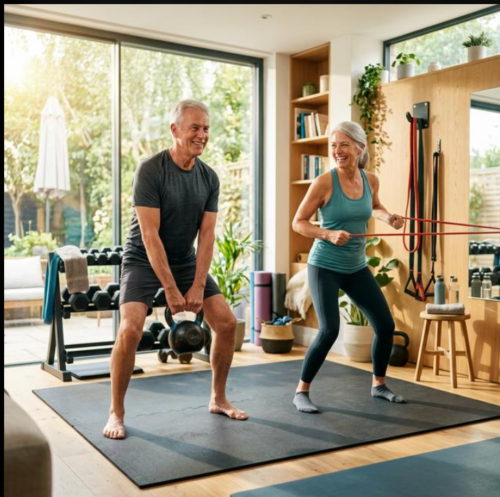
Strength Training After 40: A Beginner’s Guide to Building Strength, Staying Active, and Aging Well
Author: Jesuraj.
Reviewed by: Dr. C. Sebastian Antony Selvan. M.Sc., M.Phil., Ph.D.
Introduction: Your Strength Today Shapes Your Freedom Tomorrow
Have you ever noticed how everyday activities become more challenging after spending years sitting for long hours, traveling by vehicle, and relying on technology for tasks that once required physical effort?
Climbing stairs, carrying heavy grocery bags, standing up from a low chair, or lifting luggage may seem like ordinary actions. Yet each depends on something we often take for granted: muscle strength.
After 40, many people begin thinking more seriously about their health. We pay attention to blood pressure, diet, sleep, and body weight. But there is another crucial question worth asking: Am I doing enough to preserve my strength for the years ahead?
Strength training after 40 is one of the most effective ways to answer that question.
It does not require spending hours in a gym, lifting extremely heavy weights, or trying to build a bodybuilder physique. It simply means training your muscles so that everyday movements remain manageable, your body becomes resilient, and you can continue enjoying the activities that make life meaningful.
Scientific research consistently supports this approach. A systematic review published in the Journal of the American Geriatrics Society found that progressive resistance training improves muscle strength and enhances physical function in older adults.
The encouraging message is simple: You do not have to be young to become stronger. You only need an appropriate starting point, regular practice, and patience.
At BenVitalFive, we believe healthy living is not about chasing perfection. It is about building small, consistent habits that support physical health, mental well-being, and long-term independence.
Let us explore how to begin safely.
What Happens to Our Muscles After 40?
Our bodies naturally evolve over time. Muscle strength, muscle mass, recovery capacity, and overall physical performance are shaped by age, activity levels, nutrition, sleep, hormones, and underlying health conditions. Age alone, however, does not dictate how strong you can become.
One natural condition associated with aging is sarcopenia—a gradual, progressive loss of muscle mass and strength. Sarcopenia does not suddenly appear on your 40th birthday, nor does it affect everyone equally.
Prolonged inactivity plays a primary role in declining strength. When muscles are rarely challenged, the body sheds unnecessary muscle tissue to conserve energy.
Consider two people of the exact same age:
Person A walks regularly, performs basic resistance exercises, and handles daily active tasks.
Person B spends most of the day sitting and rarely challenges their muscles.
Their physical capabilities and functional health will differ dramatically, despite sharing the same birth year.
The good news is that muscle tissue adapts to exercise well into older age. Research involving adults in their 70s and 80s demonstrates substantial improvements in muscle strength following targeted resistance training.
Starting at 40, 50, 60, or beyond is entirely worthwhile. The goal is not to reverse aging completely but to optimize what you can control.
Why Strength Training After 40 Matters
Strength training provides deep health benefits that go far beyond aesthetics.
Preserve Functional Ability
Standing up from a deep chair without pushing off with your hands, carrying heavy bags from the car, or walking up stairs comfortably all depend on muscular power. Exercises that target the legs, hips, core, back, and upper body prepare your frame for the demands of daily life.
Support Bone Density
Bones respond directly to mechanical loading. A 2022 systematic review and meta-analysis found that progressive resistance training improved both muscle strength and bone mineral density (BMD) in the hip and femur among older adults studied. (Note: Because results vary across skeletal sites, exercise should complement, not replace, medical treatment for osteoporosis.)
Enhance Functional Fitness
Functional fitness focuses on training movement patterns, not isolated muscles:
- Squats strengthen the muscles needed to stand up smoothly.
- Rows build the pulling power needed to lift or haul objects.
- Carries challenge grip strength and core stability.
Promote Healthy Aging and Independence
Maintaining physical capacity helps you stay active in family life, travel, work, and community events. The World Health Organization (WHO) recommends that adults perform muscle-strengthening activities involving major muscle groups at least two days per week, alongside regular aerobic activity.
Lessons From Traditional Community Life
In reflecting on community life and modern health habits, physical activity was once naturally woven into daily life.
In traditional rural communities, people walked everywhere, worked in gardens, carried water and goods, and completed manual chores without calling it “exercise.” Many older adults began their day with quiet breathing, gentle stretching, or morning walks before starting their tasks—a principle explored further in our guide on The First 20 Minutes of the Day: How a Simple Morning Routine Resets Your Day.
While physically demanding work could sometimes cause joint wear, the underlying habit offers a vital lesson: our bodies thrive when movement is integrated into daily life rather than treated as an occasional event.
Modern conveniences save time, but extended sitting gradually reduces our physical capacity. The goal is not to reject technology, but to blend modern convenience with purposeful daily movement—combining short morning walks, regular strength practice, balanced nutrition, and mindful breathing into a sustainable routine.
How to Start Strength Training After 40
If you are new to strength training, start with bodyweight exercises performed with control and proper technique. You do not need expensive gym equipment or memberships to build a solid foundation.
If you struggle with overall body stiffness or joint mobility before beginning, pairing strength exercises with an accessible routine like our Beginner Yoga Guide: Why You Don’t Need Flexibility can help prepare your muscles and improve movement control.
Step 1: Master Bodyweight Movements
Bodyweight exercises use your frame as resistance and can easily be modified:
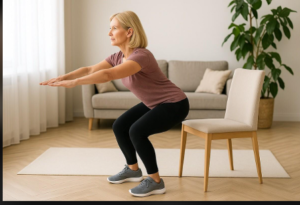
- Chair squats (legs & glutes)
- Wall push-ups (Chest & Shoulders)
- Supported calf raises (ankles & lower legs)
- Glute bridges (hips & posterior chain)
- Standing hip hinges (hamstrings & lower back)
- Bird dogs (Core & Balance)
Step 2: Introduce Resistance Gradually
Once bodyweight movements feel comfortable, introduce resistance bands or light dumbbells. Choose a weight that makes the last few repetitions challenging while maintaining form.
Step 3: Always Warm Up
Spend 5–10 minutes preparing your joints and heart rate with gentle marching in place, easy walking, or shoulder circles before starting.
Step 4: Prioritize Consistency Over Intensity
Two non-consecutive full-body sessions per week are ideal for beginners. A modest workout completed consistently yields far better results than an intense session that leaves you sore for two weeks.
- Seven Beginner-Friendly Strength Exercises
Choose 4–5 exercises to start. Focus on form rather than doing high repetitions.
- Chair Squats
Target: Thighs, hips, and glutes.
Stand in front of a sturdy chair with feet hip-width apart. Lower your hips back and down until you lightly touch the seat, then press through your heels to stand.
Tip: Do not plop down heavily. Keep the movement slow and controlled.
Wall Push-Ups
Target: Chest, shoulders, and triceps.
Place your hands shoulder-width apart against a wall. Bend your elbows to lower your chest toward the wall, then press back out.
Tip: Keep your head, spine, and hips aligned in a straight line.
Resistance-Band Rows
Target: Upper back and posture muscles.
Anchor a resistance band securely. Hold the handles, pull your elbows back, and squeeze your shoulder blades gently together. Slowly release.
Tip: Keep shoulders down away from your ears.
Glute Bridges
Target: Glutes, hamstrings, and lower back.
Lie on your back with knees bent and feet flat on the floor. Tighten your core and lift your hips until your body forms a straight line from knees to shoulders. Pause, then lower.
Tip: Avoid over-arching your lower back at the top.
Standing Hip Hinges
Target: Hips, hamstrings, and lower back.
Stand tall with a slight bend in your knees. Push your hips back while keeping your back flat, hinging at the waist. Push hips forward to return to your standing.
Tip: Think of pushing your hips back to touch a wall behind you.
Supported Calf Raises
Target: Calves and ankle stability.
Hold onto the back of a sturdy chair for balance. Rise onto the balls of your feet, hold for a second, and slowly lower down.
Tip: Focus on a controlled 2-second descent.
Bird Dogs
Target: Core stability and cross-body coordination.
On hands and knees, extend your right arm forward and left leg backward until parallel to the floor. Hold briefly, return, and alternate sides.
Tip: Keep your hips level—do not rotate your torso.
A Simple Weekly Strength Plan
Here is a practical, beginner-friendly schedule designed for functional fitness:
| Day | Activity Type | Focus |
| Monday | Full-Body Strength | 4–6 basic exercises (1–2 sets of 8–12 reps) |
| Tuesday | Active Recovery | 20–30 minute walk + light mobility |
| Wednesday | Rest | Complete rest or gentle stretching |
| Thursday | Full-Body Strength | 4–6 basic exercises (1–2 sets of 8–12 reps) |
| Friday | Aerobic Activity | Brisk walking, cycling, or swimming |
| Saturday | Light Movement | Balance exercises or light outdoor walking |
| Sunday | Rest | Recovery and relaxation |
What is progressive overload?
When you can complete 12 repetitions comfortably with clean form, make one small adjustment: add 1–2 repetitions, slightly increase resistance, or slow down your tempo. This gradual increase in challenge is called progressive overload, which signals your muscles to grow stronger over time.
- Nutrition: Fueling Strength and Recovery

Exercise provides the signal for strength, but proper nutrition provides the building blocks.
Emphasize Quality Protein Sources
Protein requirement increases as we age to prevent muscle loss and support tissue repair. For a deep dive into daily requirements and dietary protein sources, read Protein After 40: Why It Matters and How to Get Enough From Food.
- Legumes & Pulses: Dal, lentils, chickpeas, kidney beans (rajma)
- Dairy & Soy: Milk, curd, paneer, tofu, soybeans
- Animal Proteins: Eggs, fish, and lean poultry
Build Balanced Meals
A practical, balanced plate should combine protein, complex carbohydrates, healthy fats, and fiber. If you want to make healthy meal prep simpler without drastically changing your cooking style, check out The Healthy Kitchen: 15 Simple Changes That Make Healthy Eating Easier.
Example: Whole grain rice or millets + dal/paneer/fish + cooked vegetables + curd.
Maintain Proper Hydration
Drink water consistently throughout the day. Dehydration reduces muscle performance and increases joint discomfort during exercise.
- Recovery, Sleep, and Breathing
Muscles grow stronger during rest, not during the workout itself. Adequate sleep (7–8 hours) and rest days are non-negotiable parts of training.
Mindful Slow Breathing for Recovery
ncorporating slow, diaphragmatic breathing after a session supports autonomic nervous system balance by stimulating parasympathetic (rest-and-digest) activity.
If you find it difficult to unwind after exercise or sit quietly during cool-downs, our article on Meditation for People Who Can’t Sit Still provides practical, accessible mental recovery tools.
Post-Workout Breathing Practice: Sit comfortably for 2 minutes. Inhale slowly through your nose for 4 seconds, and exhale gently for 6 seconds. Allow your shoulders to drop and relax.
Note: Always breathe continuously during strength training—never hold your breath during exertion, as this can elevate blood pressure.
- Common Mistakes to Avoid After 40
- Lifting Too Much, Too Soon: Prioritize movement quality over weight.
- Ignoring Joint Pain: Muscle burning is normal; sharp joint pain is a signal to stop.
- Skipping Rest Days: Daily heavy exertion prevents muscle recovery.
- Neglecting Sleep and Food: Exercise without adequate food and rest leads to fatigue, not strength.
- Comparing Yourself to Others: Track progress against your own baseline, not someone else’s.
Frequently Asked Questions
1. Can you build muscle after 40?
Yes. Studies consistently show that men and women in their 40s, 50s, 60s, and beyond can build muscle mass and increase strength through regular resistance training and adequate protein intake.
- How many days a week should a beginner lift weights?
Two full-body sessions per week (spaced 48 to 72 hours apart) offer the ideal balance of stimulus and recovery for beginners.
3. Is walking enough for fitness after 40?
Walking is a cornerstone of daily physical health—it supports cardiovascular fitness, blood sugar regulation, joint mobility, and mental clarity. However, walking alone does not provide sufficient mechanical load to stimulate bone density or build significant muscle strength to reverse sarcopenia.
Rather than replacing walking, strength training complements it: walking keeps your heart, lungs, and metabolism healthy, while strength training protects your muscles, bones, and joint integrity. Combining regular walking with just two short strength sessions per week creates a well-rounded foundation for lifelong vitality.
.
- Do I need protein powder to gain strength?
No. Whole foods like eggs, lentils, paneer, curd, fish, or chicken provide all the essential amino acids necessary for muscle recovery. Supplements are optional conveniences, not requirements.
Conclusion: Build Strength Today, Preserve Freedom Tomorrow
Strength training after 40 is not about chasing youth—it is about preserving independence, staying vibrant, and protecting your freedom of movement for decades to come.
Choose two days this week, start with a few simple bodyweight movements, and let consistency do its work.
About the Author
Jesu Raj Athisayam is the founder of BenVitalFive, a wellness platform dedicated to practical health habits and functional movement for healthy aging. Drawing on years of community development experience, Jesu advocates for long-term vitality built on five core pillars: Yoga, Meditation, Physical Fitness, Reflective Reading, and Balanced Nutrition.
Health Disclaimer: This article is for educational purposes only and does not constitute medical advice. Always consult a qualified physician or physical therapist before beginning any new exercise program, especially if you have existing health conditions or injuries.
References and Further Reading
- Latham et al. — Progressive resistance strength training for improving physical function in older adults, systematic review (PubMed).
- O’Bryan et al. — Progressive resistance training and bone mineral density in older adults, systematic review and meta-analysis (2022).
- Laborde et al. — Effects of voluntary slow breathing on heart rate and heart rate variability, systematic review and meta-analysis (PubMed).
- World Health Organization — Physical activity recommendations.

