
9 Habits for Healthy Living: Simple Daily Practices for a Healthier, Happier and More Meaningful Life
Written by: Jesu Raj Athisayam | Founder & Editor, BenVitalFive
A practical guide inspired by everyday wisdom, traditional Indian lifestyles and modern health science
Introduction: Healthy Living Begins with Everyday Habits
Healthy living is often presented as something complicated. We hear about strict diets, expensive fitness programmes, supplements, calorie counting and elaborate wellness routines. However, a healthy lifestyle does not necessarily begin with expensive products or dramatic changes. It begins with the small decisions we make every day.
What we eat, how much we move, how well we sleep, how we manage stress, and how we maintain relationships all influence our overall well-being.
Health is more than food, calories or body weight. It includes physical fitness, mental and emotional well-being, meaningful relationships and the ability to participate actively in everyday life.
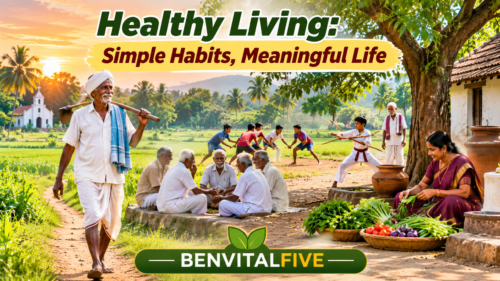
When I look back at my childhood, I remember a way of life that was very different from what many people experience today. My father followed a disciplined daily routine. My mother prepared meals using vegetables and pulses cultivated in our fields. Children played Kabaddi and throwball, while experienced village practitioners taught us traditional Silambam.
These were not activities organised under a modern health or fitness programme. They were simply part of our everyday life.
Of course, earlier generations also faced hardships, and traditional lifestyles were not free from health problems. Modern medicine, scientific knowledge and improved healthcare have brought enormous benefits. Nevertheless, I believe there are valuable lessons in some of the simple habits we have gradually moved away from.
This article explores nine practical habits that can help us build a healthier and more meaningful life.
Lessons from My Childhood: What Earlier Generations Can Teach Us
My Father’s Daily Routine: Discipline, Activity and Community
When I look back at my childhood and family life, I remember how my father followed a disciplined daily routine without thinking of it as a health or fitness programme.
He would wake up at around 4 a.m. After completing his morning routine, he drank the water left over from the previous day’s cooked rice and went to church. On returning, he would take his agricultural tools to our field, which was about five kilometres from our home. By 7 a.m., he would have his breakfast, usually fermented rice prepared the previous day in clay pots, accompanied by vegetables.
He would return home from the fields around 11 a.m., take a bath and wash the clothes he had worn while working. After lunch, farmers in our community would often gather under a neem tree, sharing their happiness, difficulties and everyday experiences.
Looking back, I realise that his ordinary day brought together physical activity, simple traditional food, spiritual practice, personal discipline and meaningful social connections. Nobody called these activities a wellness routine, yet they formed an integral part of everyday life.
Food Habits in My Childhood: A Different Relationship with Food
I also remember how food was prepared and shared in our farming community. My mother and many other women prepared lunch using vegetables and pulses cultivated in our own fields. Keerai (traditional leafy greens) was a regular part of our meals.
Non-vegetarian food, particularly fish and chicken, was generally prepared on Sundays and during village festivals. Many households raised their own chickens.
Two or three times a week, we had ragi or kambu koozh (finger millet or pearl millet porridge) for breakfast, accompanied by salted dried chillies and dried vegetables. These were familiar parts of our everyday food culture.
During my childhood, I hardly came across the packaged snacks, junk foods and bakery items that are now so common. Today, I notice a considerable change, even in my own village. More people, both young and old, increasingly depend on hotels for lunch and dinner, while bakery products and packaged snacks have become common choices for children.
This change makes me reflect on how much our food culture has transformed. We have gained convenience, but perhaps we should also make an effort to preserve the practical value of home cooking, locally grown vegetables, pulses, millets and leafy greens.
Village Games and Silambam: Fitness Beyond the Gym
During school holidays, we spent much of our free time playing traditional games such as Kabaddi and throwball. These games brought children together, encouraged teamwork and kept us physically active.
I also have fond memories of the experienced Silambam practitioners in our village, whom we knew as Vasthavi. They had mastered different attacking techniques and knew how to defend against and counter them.
In the evenings, they freely trained us in Silambam, helping each child develop their abilities and prepare to demonstrate their skills during village festivals in front of the deity and the local community.
These occasions were more than cultural performances. They taught us discipline, courage, coordination, confidence and respect for our traditions.
Today, I rarely see such informal Silambam training in villages. Many parents send their children to nearby towns for organised physical exercise and training. Modern facilities have their own value, but I sometimes wonder whether we are losing something precious when children no longer have opportunities to learn traditional skills, play together and develop their talents within their own communities.
These memories have shaped my understanding of healthy living. They also remind me that we do not need to reject modern life to recover some of the beneficial habits of the past.
With that perspective, let us look at nine habits that can support a healthier lifestyle today.
- Eat a Balanced Diet with Natural and Locally Available Foods
Food provides the energy and nutrients our bodies need to function. A balanced diet supports growth, immunity, physical activity and long-term health.
Healthy eating does not require expensive ingredients or fashionable diet plans. Many nutritious foods are already part of Indian food traditions.
Try to include:
- Whole grains and millets: Rice, whole wheat, ragi, kambu, thinai and other millets.
- Pulses and legumes: Toor dal, urad dal, green gram, chickpeas, rajma and cowpeas.
- Vegetables: Seasonal vegetables, gourds, carrots, beans, brinjal and other locally available produce.
- Leafy greens: Murungai keerai, arai keerai, siru keerai and other varieties.
- Fruits: Guava, banana, papaya, orange, seasonal fruits and other locally available choices.
- Protein-rich foods: Pulses, eggs, fish, milk, curd, nuts and other suitable sources.
Practical habits to develop
- Prepare more meals at home when possible.
- Include vegetables and pulses regularly.
- Choose a variety of grains rather than depending on one staple.
- Eat whole fruits instead of frequently choosing sugary drinks.
- Limit foods high in added sugar, salt and unhealthy fats.
- Pay attention to portion sizes and individual nutritional needs.
The ICMR–National Institute of Nutrition’s Dietary Guidelines for Indians 2024 emphasise dietary diversity, vegetables, fruits, pulses, millets and limiting foods high in fat, sugar and salt.
Remember: Traditional foods can be valuable parts of a balanced diet, but no single food is a cure or a substitute for medical treatment.
- Make Physical Activity Part of Your Daily Routine
Our bodies are designed to move. Regular physical activity supports cardiovascular health, muscle strength, bone health, mobility and mental well-being.
Physical activity does not always mean going to a gym. Walking, cycling, gardening, dancing, swimming, household activities and traditional games can all contribute to an active lifestyle.
My father’s agricultural routine reminds me how physical movement was naturally integrated into some people’s working lives. Our childhood games also provided opportunities to run, jump, coordinate and work as a team.
Today, many people spend long hours sitting at desks, travelling in vehicles or using digital devices. We may need to make a conscious effort to include movement in our daily schedules.
Simple ways to become more active
- Walk for 20–30 minutes, according to your ability.
- Use stairs when practical and safe.
- Take short movement breaks during prolonged sitting.
- Practise yoga or suitable stretching exercises.
- Include strength-building exercises.
- Encourage children to play outdoors.
- Explore traditional games and supervised cultural sports such as Silambam.
The World Health Organization recommends that adults aim for at least 150–300 minutes of moderate-intensity aerobic activity per week, or an equivalent combination of moderate and vigorous activity. Adults should also include muscle-strengthening activities on at least two days each week.
Children and adolescents aged 5–17 should average at least 60 minutes of moderate-to-vigorous physical activity daily.
Start gradually, especially if you have been inactive or have a health condition. Choose activities appropriate to your age, ability and medical circumstances.
- Give Importance to Quality Sleep
Sleep is not wasted time. It is essential for physical recovery, emotional regulation, concentration and general health.
Irregular working hours, excessive screen use, late-night entertainment and work-related stress can interfere with sleep.
For most adults, regularly getting at least seven hours of sleep is an important target. Individual needs vary, and children and teenagers generally require more sleep.
Develop better sleep habits
- Maintain a reasonably consistent bedtime and waking time.
- Reduce screen use before bedtime.
- Avoid heavy meals immediately before sleeping.
- Limit caffeine, particularly later in the day.
- Keep the bedroom quiet, comfortable and dark.
- Seek medical advice if you regularly experience insomnia, loud snoring or excessive daytime sleepiness.
A good sleep routine supports the other habits in this article. It is difficult to maintain physical activity, concentration and emotional balance when sleep is consistently inadequate.
- Stay Hydrated Throughout the Day
Water supports digestion, circulation, temperature regulation and many other essential body functions.
Dehydration can affect concentration and physical performance. However, the amount of fluid a person needs varies according to climate, activity, health status, diet and other factors.
In India’s hot climate, people who work outdoors or exercise regularly may need to pay particular attention to fluid intake.
Practical hydration habits
- Drink water regularly throughout the day.
- Carry safe drinking water when travelling.
- Drink more when exercising or working in hot conditions.
- Include water-rich foods such as cucumber, watermelon and other fruits.
- Avoid relying heavily on sugary drinks to satisfy thirst.
There is no single fixed amount of water that is appropriate for everyone. Follow your body’s needs and any fluid restrictions advised by your healthcare professional, particularly if you have kidney, heart or other medical conditions.
- Practise Mindfulness and Manage Everyday Stress
Stress is a natural response to challenging situations. However, prolonged or poorly managed stress can affect sleep, concentration, relationships and general well-being.
Modern life brings many pressures: financial responsibilities, employment, family expectations, academic competition and constant digital communication.
Mindfulness offers a way to pause, observe our thoughts and respond more calmly to everyday challenges.
Simple practices to try
- Spend five to ten minutes in quiet reflection.
- Practise comfortable, gentle breathing.
- Take a short walk outdoors.
- Maintain a gratitude journal.
- Spend time in prayer or meditation if meaningful to you.
- Take breaks from unnecessary digital stimulation.
- Speak with someone you trust when you feel overwhelmed.
Breathing exercises and meditation can support relaxation, but they are not substitutes for professional mental healthcare when symptoms are persistent or severe.
If stress, anxiety or low mood begins to interfere with daily life, seek help from a qualified healthcare professional.
- Build Meaningful Relationships and Stay Connected
Healthy living is not only about what we eat or how much we exercise. Our relationships and social connections also matter.
I remember the farmers in our village gathering under the neem tree after lunch. They shared their happiness, discussed difficulties and listened to one another. These simple conversations created a sense of belonging.
Today, digital communication makes it easier to contact people across the world. However, online communication cannot always replace meaningful face-to-face interaction.
Strengthen your social connections
- Spend quality time with family.
- Visit relatives and friends when possible.
- Make time to speak with elderly people.
- Participate in community activities.
- Share experiences and listen without immediately judging.
- Encourage children to play and interact with others.
Strong, supportive social relationships can contribute to mental and physical well-being. The World Health Organization recognises social connection as an important part of health.
A meaningful conversation, a shared meal or a visit to someone who needs company can be a small but valuable part of everyday well-being.
- Avoid Harmful Habits and Make Healthier Choices
Some habits can gradually undermine our health even when their effects are not immediately visible.
Tobacco use, excessive alcohol consumption, frequent consumption of highly processed foods and prolonged inactivity can increase health risks.
Habits worth reducing or avoiding
- Smoking and chewing tobacco.
- Frequent consumption of sugary drinks.
- Excessive intake of foods high in salt and unhealthy fats.
- Regular overeating.
- Prolonged sitting without movement.
- Excessive screen use that interferes with sleep and activity.
All forms of tobacco use are harmful. If you use tobacco, seek professional support to quit rather than relying only on willpower.
Healthy living is not about achieving perfection. It is about recognising habits that may be harmful and taking practical steps towards better choices.
- Maintain Personal Hygiene and Attend to Preventive Healthcare
Personal hygiene and preventive healthcare are important parts of a healthy lifestyle.
Simple practices such as handwashing, safe food preparation, clean drinking water and appropriate sanitation help reduce the risk of infections.
However, hygiene alone is not enough. Preventive healthcare also includes appropriate medical check-ups, vaccinations and screening based on age, health history and individual risk.
Everyday preventive habits
- Wash hands with soap at appropriate times.
- Wash fruits and vegetables safely.
- Cook and store food at safe temperatures.
- Drink safe, clean water.
- Maintain oral hygiene by brushing regularly.
- Keep vaccinations up to date according to national recommendations and medical advice.
- Discuss appropriate health screenings with a qualified healthcare professional.
Do not wait for symptoms to become severe before seeking medical advice. Early consultation can help identify and manage health concerns.
- Continue Learning, Practise Gratitude and Live with Purpose
A meaningful life is not measured only by professional success, money or possessions. It is also shaped by how we use our time, develop our abilities and contribute to others.
Learning keeps the mind engaged. Gratitude helps us recognise the positive aspects of everyday life. Having a sense of purpose can give direction to our decisions.
These habits do not require expensive programmes or complicated routines.
Small actions that make a difference
- Read a few pages of a useful book each day.
- Learn a new skill.
- Spend time in nature.
- Help someone in your family or community.
- Appreciate the people who support you.
- Reflect on what went well during the day.
- Set realistic goals and work towards them consistently.
We can also encourage children to learn traditional arts, music, games and cultural practices alongside modern education. Such opportunities can help develop confidence, creativity and a sense of belonging.
Healthy living should not become another source of pressure. It should help us live with greater awareness, balance and purpose.
A Simple Daily Framework for Healthy Living
You do not need to change everything in one day. Begin with a few manageable actions and build consistency.
| Time of day | Practical habit |
| Morning | Wake at a consistent time, drink water and begin the day calmly |
| Breakfast | Eat a balanced meal with suitable grains and protein |
| Morning or evening | Walk, practise yoga or participate in another suitable activity |
| Lunch | Include vegetables, pulses and a balanced portion of staple foods |
| Afternoon | Take breaks from prolonged sitting and stay hydrated |
| Evening | Spend time with family, friends or outdoor activities |
| Night | Eat a suitable dinner, reduce screen use and prepare for sleep |
Your routine will depend on your work, family responsibilities, health and personal circumstances. The purpose is not to follow a rigid timetable but to create a sustainable pattern.
How to Build Healthy Habits That Last
Many people begin a new health routine with enthusiasm but struggle to maintain it. The key is to start small.
A practical four-week approach
Week 1: Improve food choices
- Add one extra serving of vegetables or fruit where appropriate.
- Include pulses or another suitable protein source.
- Reduce frequent sugary drinks and highly processed snacks.
Week 2: Increase movement
- Begin with a comfortable daily walk.
- Take regular breaks from sitting.
- Explore an enjoyable physical activity.
Week 3: Improve sleep and stress management
- Establish a consistent sleep schedule.
- Reduce unnecessary screen use before bedtime.
- Practise a few minutes of quiet reflection or relaxation.
Week 4: Strengthen relationships and consistency
- Spend more time with family and friends.
- Participate in a community or recreational activity.
- Review the habits you have developed and identify what you can sustain.
Do not become discouraged if you miss a day. Return to your routine when you can. Consistency over time is more useful than short periods of perfection.
Frequently Asked Questions About Healthy Living
- What are the most important habits for healthy living?
A balanced diet, regular physical activity, sufficient sleep, hydration, stress management, meaningful social connections, avoiding harmful substances, personal hygiene and continued learning are important foundations of healthy living.
- Can I live healthily without going to a gym?
Yes. Walking, cycling, gardening, dancing, household activities, yoga and suitable sports can all contribute to physical activity. What matters is choosing safe activities that help you move regularly.
- Are traditional Indian foods suitable for a healthy diet?
Many traditional foods, including millets, pulses, vegetables, leafy greens and appropriately prepared fermented foods, can contribute to a balanced diet. Their nutritional value depends on ingredients, preparation methods, portion sizes and the overall dietary pattern.
- Is eating home-cooked food always healthier than eating outside?
Home cooking can make it easier to control ingredients, salt, sugar, oil and portion sizes. However, home-cooked food is not automatically healthy. Food quality, preparation and balance matter. Restaurants can also offer nutritious choices.
- How much physical activity do adults need?
WHO recommends 150–300 minutes of moderate-intensity aerobic activity each week, or an equivalent combination of moderate and vigorous activity, together with muscle-strengthening activity on at least two days a week.
- How can busy people develop healthy habits?
Begin with small changes. Walk for a short period, prepare simple balanced meals, maintain a regular sleep schedule and take breaks from sitting. Gradually increase activities as your circumstances allow.
- Why are social relationships important for well-being?
Supportive relationships can provide companionship, emotional support and a sense of belonging. Meaningful interaction with family, friends and the community can contribute to mental and physical well-being.
Final Thoughts: Bring the Best of the Past into the Present
When I remember my father’s daily routine, my mother’s cooking, the traditional foods of our village, the games we played during school holidays and the Silambam practitioners who trained us, I see more than memories of childhood.
I see a way of life in which physical activity, food preparation, community participation, cultural learning and personal discipline were woven into everyday experiences.
Modern life has brought us remarkable opportunities. We have better access to medical care, scientific knowledge, education, communication and many conveniences that earlier generations did not have. We should value these advances.
At the same time, we can make conscious choices to retain some of the simple habits that remain relevant: eating a varied and balanced diet, moving regularly, spending time outdoors, nurturing relationships, learning new skills and making time for rest.
We do not need to return to the past. We need to carry its useful lessons into the present.
Healthy living is not a destination we reach in a single day. It is a lifelong practice built through small, thoughtful and consistent choices.
Let us make those choices not merely to live longer, but to live healthier, happier and more meaningful lives.
Author’s Bio
Jesu Raj Athisayam is the Founder and Editor of BenVitalFive, a health and wellness platform dedicated to sharing reliable, understandable, practical and evidence-informed information. His editorial interests include healthy living, nutrition, yoga, functional fitness, mindfulness, preventive health and personal well-being. Through BenVitalFive, he aims to connect practical everyday experiences with credible health information and encourage readers to make informed lifestyle choices.
Editorial Medical Review & Disclaimer
This article is intended for general educational and informational purposes. It is not a substitute for professional medical advice, diagnosis or treatment.
The personal recollections in this article describe family and village experiences. They are not presented as scientific evidence that earlier lifestyles were healthier or that any traditional food or practice can prevent or cure disease.
Readers with chronic health conditions, mobility limitations, nutritional concerns or other individual healthcare needs should consult appropriately qualified healthcare professionals before making significant changes to their diet or exercise routine.
Suggested medical review: A qualified clinical dietitian or nutrition professional should review the nutrition-related sections. A suitably qualified healthcare professional should review any additional clinical claims or consequential health recommendations before publication.
Editorial review: BenVitalFive Editorial Team.
Review date: To be added after the review is completed.
References and Further Reading
- ICMR–National Institute of Nutrition: Dietary Guidelines for Indians, 2024
- World Health Organization: Healthy Diet
- World Health Organization: Physical Activity
- Centers for Disease Control and Prevention: About Sleep
- World Health Organization: Stress – Questions and Answers
- World Health Organization: Social Connection
- World Health Organization: Tobacco and Nicotine

