
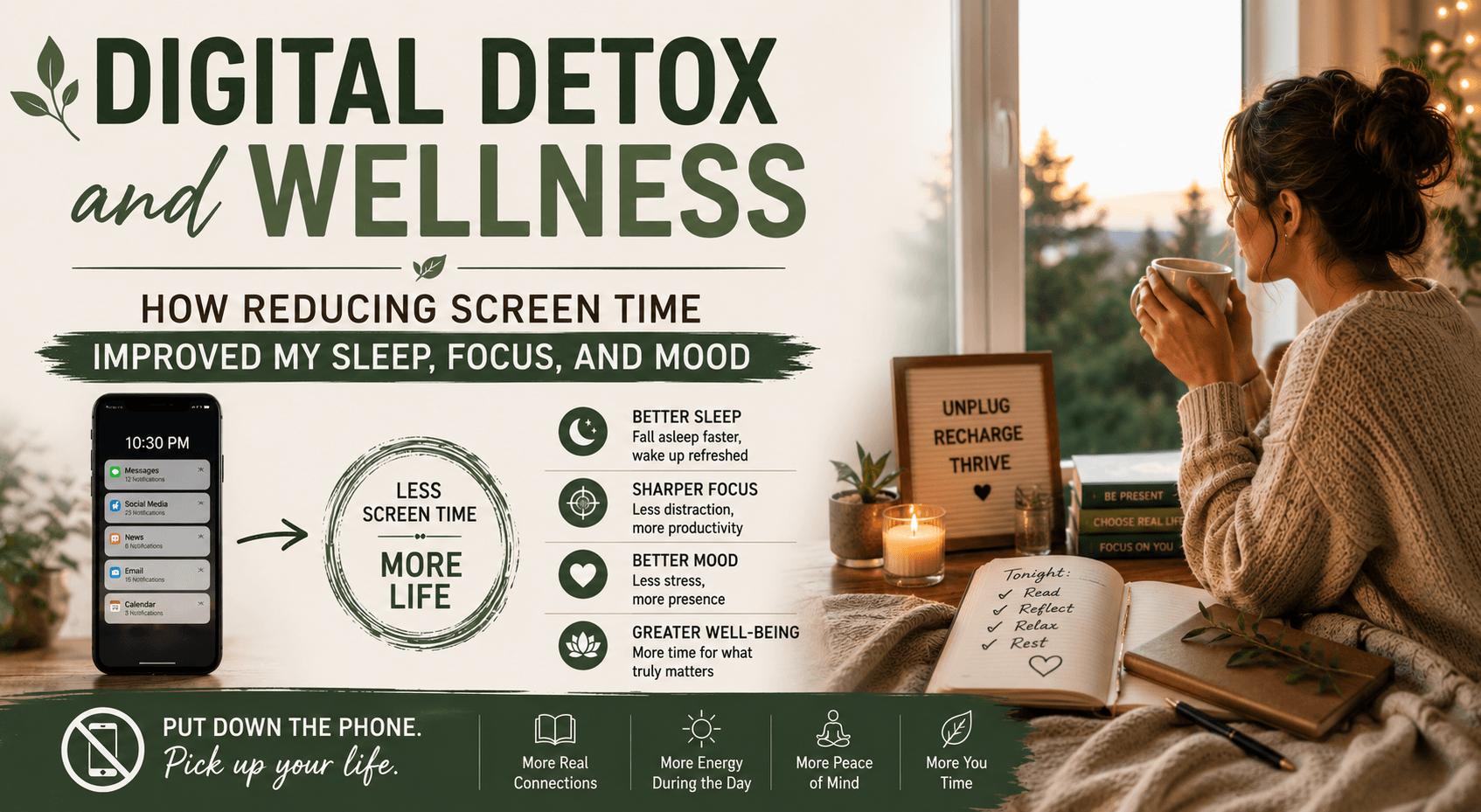
Digital Detox Benefits: How Reducing Screen Time Improves Sleep, Focus, and Mental Wellness
I did not quit my phone. I simply stopped allowing my phone to control my attention.
Today, digital devices have become a normal part of everyday life. Smartphones help us communicate, learn, work, manage finances, and stay connected with people around the world. Technology itself is not the problem. The real challenge begins when screens start deciding where our attention goes every moment of the day.
I am not going to suggest deleting every social media account, throwing away your smartphone, or completely avoiding technology. For most people, that is unrealistic. Instead, I tried something simpler: I started choosing when I used my digital devices instead of responding every time they demanded my attention.
Over three months, I slowly changed my screen habits. I kept my phone away during sleep, reduced unnecessary notifications, created screen-free hours, and replaced evening scrolling with reading.
The results were noticeable. My sleep felt more peaceful, my focus improved, and my mood became calmer. Most importantly, I felt more present in my daily life. This is the real purpose of a digital detox—not rejecting technology, but creating a healthier relationship with it.
What Is a Digital Detox?
A digital detox is a planned reduction or break from excessive use of digital devices such as smartphones, computers, tablets, social media platforms, and online entertainment.
Many people think a digital detox means completely disconnecting from the modern world. That is not true. A healthy digital detox focuses on mindful technology use. It helps you decide when and how you use technology instead of allowing technology to constantly interrupt your life.
The question is simple: “Am I using my device, or is my device controlling my attention?”
When we create better digital boundaries, we create more space for deep thinking, better conversations, quality sleep, physical movement, and reading. Building these boundaries is a foundational step toward adopting mindfulness habits for a calmer lifestyle.
The Problem With Constant Connectivity
The phrase “too much screen time” is often misunderstood. The real issue is not only the number of hours spent looking at screens. The bigger challenge is the repeated interruption pattern created by constant digital connection.
Every notification asks for your immediate attention:
A new message.
A social media update.
A breaking news alert.
An email notification.
Each small interruption may appear harmless. However, frequent switching between tasks can make it harder to maintain deep concentration. Research from the University of California, Irvine, study on attention and digital interruptions found that people often need significant time to return fully to a task after being interrupted.
Constant digital switching may contribute to reduced focus, mental tiredness, difficulty concentrating, and increased feelings of stress. The human mind works best when it has enough space for deep attention, and a digital detox helps protect that space.
My Digital Detox Routine: 4 Simple Changes
1. Removing the Phone From the Bedroom
The first change was simple: my phone stopped sleeping beside me. Instead of keeping it on the nightstand, I placed it outside the bedroom and started using a simple alarm clock.
This small habit changed two important parts of my day: how I ended my night and how I started my morning. Previously, checking the time at night could easily become checking messages or reading updates. A two-minute phone check could quickly turn into twenty minutes of scrolling.
After removing the phone, my bedroom became a place for rest again. Sleep experts from Harvard Health Publishing suggest that relaxing bedtime routines and reducing stimulating activities before sleep can support better sleep habits. The biggest improvement was not only avoiding blue light; it was allowing my mind to slow down before rest. For more natural evening habits, exploring natural ways to improve sleep quality can make a dramatic difference.
2. Creating a Screen-Free First Hour
The second change was avoiding my phone during the first hour after waking. This was harder than expected. Many people automatically reach for their phone before they even get out of bed, meaning the first thoughts of the day become instant reactions: Reply to this. Check that. Read this update.
Instead of beginning the morning with my own thoughts, I was starting with everyone else’s information. My new morning routine became simple and intentional:
Drink water
Sit quietly for a few minutes
Stretch gently
Read and plan important tasks
A peaceful morning creates a completely different mental state. The first hour influences the energy and attention we carry into the rest of the day.
3. Turning Off Unnecessary Notifications
Notifications are designed to capture attention. Every sound or vibration creates a small demand: “Look at me now.”
I decided to remove all unnecessary notifications. I kept important calls and family messages, but turned off random app alerts, social media updates, promotional notifications, and non-urgent emails.
The difference was immediate. My phone became quiet. Instead of apps deciding when I should look, I decided when to check them. This simple shift gave me back control over my attention.
4. Replacing Evening Scrolling With Reading
My next change was replacing 20 to 30 minutes of evening scrolling with reading. This was not because books are morally superior to technology. The reason was practical: the result felt completely different.
After social media scrolling, I often felt mentally restless. After reading, I felt calmer. Books encourage slow, sustained attention, while social media encourages rapid switching. Over time, reading became a daily practice that strengthened my patience and concentration, showcasing the true benefits of daily book reading for intellectual growth.
What Changed After Three Months?
Better Sleep Quality
The first noticeable improvement was sleep. I stopped filling the final moments before bed with endless information, late-night news, or social comparison. My mind arrived at sleep in a quieter condition. Reducing evening screen stimulation created a better transition between activity and rest, supporting a much more peaceful sleep routine.
Improved Focus and Attention
The biggest surprise was an improvement in focus. Reading became easier, writing became easier, and long conversations became easier. The reason is simple: attention works like a habit. If we train our attention to constantly jump between different things, distraction becomes easier. If we practice focusing deeply, concentration becomes stronger. Digital wellness is ultimately attention wellness.
A Calmer Mood
Another change was a greater sense of calm. Social media connects us with others, but passive scrolling can sometimes increase comparison and mental noise. A University of Pennsylvania study on limiting social media suggested that reducing use was associated with clear improvements in emotional well-being.
The important lesson is balance. A healthier digital routine gave me more time for real conversations, reading, reflection, and outdoor activity. These simple habits support natural ways to reduce stress and improve mental wellness.
A Simple Digital Detox Routine for Beginners
You do not need extreme changes to see results. Start small by integrating these habits into your daily schedule:
| Time of Day | Core Habit | Wellness Benefit |
| Morning Digital Detox (First 60 Mins) | Avoid phone checking, drink water, stretch, and read something positive. | Creates a proactive, calm, and intentional mindset for the day. |
| Afternoon Digital Balance (Work Hours) | Turn off unnecessary alerts, batch-check messages, and take short screen breaks. | Protects deep focus and reduces mental fatigue during tasks. |
| Evening Digital Detox (Before Sleep) | Reduce scrolling, keep the phone outside the bedroom, and read a book. | Promotes a peaceful, restorative transition into deep sleep. |
Three Powerful Habits to Start Today
If you only choose three changes to begin with, make it these:
Charge Your Phone Outside the Bedroom: Protect your sleep environment so your brain associates the room with rest, not notifications.
Remove Non-Essential Notifications: Take back control. Check your technology when you choose, not when an app demands it.
Create One Screen-Free Hour Daily: Whether in the morning or evening, one quiet hour every day can completely rebuild your relationship with attention.
My Biggest Lesson From a Digital Detox
The biggest benefit was not simply reducing screen time. It was gaining control over my attention again.
Technology is a wonderful tool. It allows us to learn, communicate, and create. But every tool works best when we decide how to use it. A digital detox is not about living without technology; it is about living with more awareness. Your phone can serve your life, but it does not have to direct it.
Frequently Asked Questions About Digital Detox
How long should a digital detox last?
A digital detox does not need a fixed or extreme timeframe. Even creating one screen-free hour each day can help build healthier, long-term technology habits.
Does reducing screen time improve sleep?
Yes. Reducing stimulating screen activities and blue light before bedtime helps create a calmer evening routine that supports natural, restful sleep.
Can a digital detox improve focus?
Absolutely. By reducing unnecessary digital interruptions, you train your brain to maintain deep attention and concentration on a single task.
Should I completely quit social media?
No. The goal is mindful use, not complete avoidance. Social media is a highly useful tool when used intentionally rather than automatically.
What is the easiest way to start a digital detox?
The easiest way to start is by turning off non-essential notifications and charging your phone outside the bedroom overnight.
Final Thoughts
Digital wellness begins with a simple choice: control your technology before your technology controls your attention. Small daily changes—fewer notifications, more reading, better sleep routines, and mindful screen habits—can create a healthier balance between the digital world and real life.

