
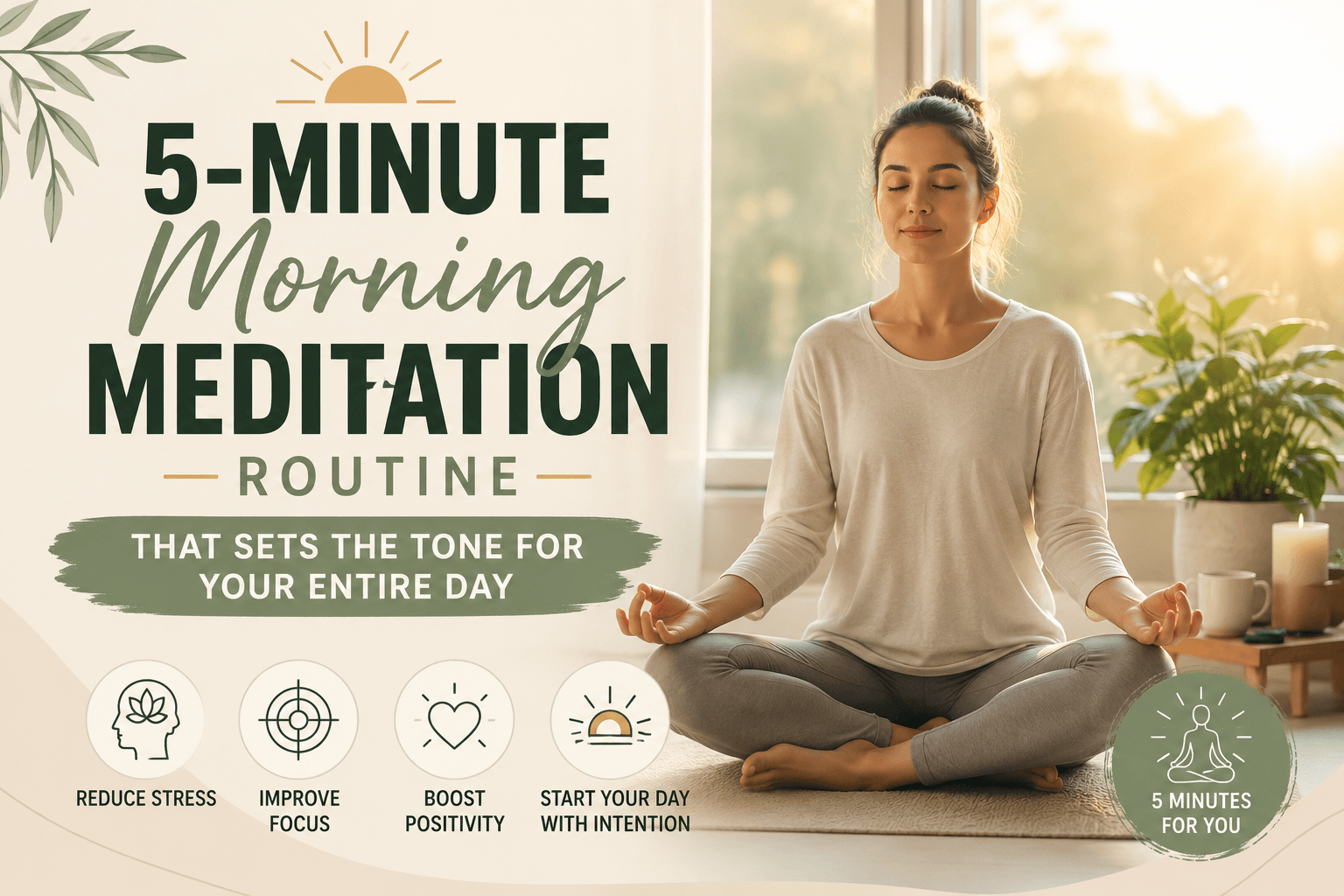
Five minutes before the noise begins. That small window might be the most underestimated time of your day.
There’s a version of morning meditation that most people imagine and then abandon: sitting cross-legged on a cushion for thirty minutes while the world waits. That’s not what this is about.
This is about five minutes. Just five. And not because five minutes is better than thirty — it isn’t — but because five minutes done daily is infinitely more valuable than thirty minutes done occasionally when you feel motivated.
Here’s why those first minutes matter, and exactly how to use them.
What Happens to Your Brain in the Morning
For the first 20–30 minutes after waking, your brain is still transitioning from theta waves (the dreamy, half-conscious state) into the faster beta waves of alert thinking. This window is sometimes called the hypnopompic state, and it’s neurologically significant.
During this transition, your brain is unusually receptive — less defended, less reactive. The mental patterns you engage with during this window tend to anchor themselves more firmly than patterns encountered mid-afternoon.
This is not mysticism. It’s why the first content you consume in the morning (news, social media, anxious planning) can colour the emotional tone of your entire day. It’s also why five minutes of deliberate stillness in this window has an outsized effect on focus, mood, and stress reactivity throughout the day.
The 5-Minute Structure
This routine doesn’t require an app, a cushion, or silence. It requires only that you sit somewhere comfortable before you reach for your phone.
Minute 1 — Just Arrive
Sit. Don’t adjust yourself into a perfect posture. Just sit however your body lands and close your eyes. Take three slow breaths without trying to control them. You’re not meditating yet. You’re simply arriving.
Most people skip this step and jump straight into technique. The arrival matters. It tells your nervous system that this moment is different from the rushing that’s about to begin.
Minutes 2–3 — Follow the Breath
Now bring attention to your breathing. Not to control it — just to notice it. Feel the air at the rim of your nostrils, slightly cooler on the inhale. Feel your chest or belly rise and fall.
When a thought appears (and it will), don’t fight it. Simply notice that you’ve drifted and gently return to the breath. That act of returning — not the uninterrupted focusing — is the actual practice. Every return is a rep.
Minute 4 — One Intention
In the fourth minute, ask yourself one quiet question: How do I want to show up today? Not what do I need to accomplish. Not what’s on the list. How do you want to be — patient, focused, present, kind?
Let one word or phrase settle. Don’t manufacture it. If nothing comes, that’s fine. The question itself does the work.
Minute 5 — Gratitude Anchor
In the final minute, rest your attention on one thing you’re genuinely glad exists. It doesn’t have to be profound. Morning light, coffee, a person, your own breath. Gratitude, when it’s specific and felt rather than performed, shifts the brain’s baseline toward a state that’s more resilient to stress.
Then open your eyes. That’s it.
Why This Sequence Works
Each minute has a distinct neurological purpose. Arrival calms the stress response. Breath-following trains attentional control. Intention-setting activates the prefrontal cortex before the reactive limbic system takes over. Gratitude anchors a positive emotional baseline.
Five minutes is enough to initiate all four of these effects. It won’t transform you overnight. But consistent practice across weeks genuinely reshapes how your default nervous system responds to stress — something that’s been documented in fMRI studies on regular meditators.
Common Problems and What They Mean
“My mind is too busy in the morning.”
That busyness is precisely why the morning matters. You’re not aiming for quiet — you’re practicing the skill of returning to the present moment from distraction. A busy mind is a good training ground, not an obstacle.
“I keep falling back asleep.”
Sit upright, feet on the floor. Don’t meditate in bed for the first few weeks. The posture signals to your body that this is alertness, not rest.
“Five minutes feels pointless.”
Notice how you feel at 11am on days when you did it versus days when you didn’t. Give it two weeks before you judge it.
Making It Stick
Attach the meditation to something you already do. After you turn off the alarm, before you pick up the phone. Before the kettle boils. After brushing your teeth. The habit needs an anchor — a reliable cue that precedes it every day.
The goal is not a perfect five minutes. The goal is a consistent five minutes that gradually changes what your ordinary moments feel like.

