
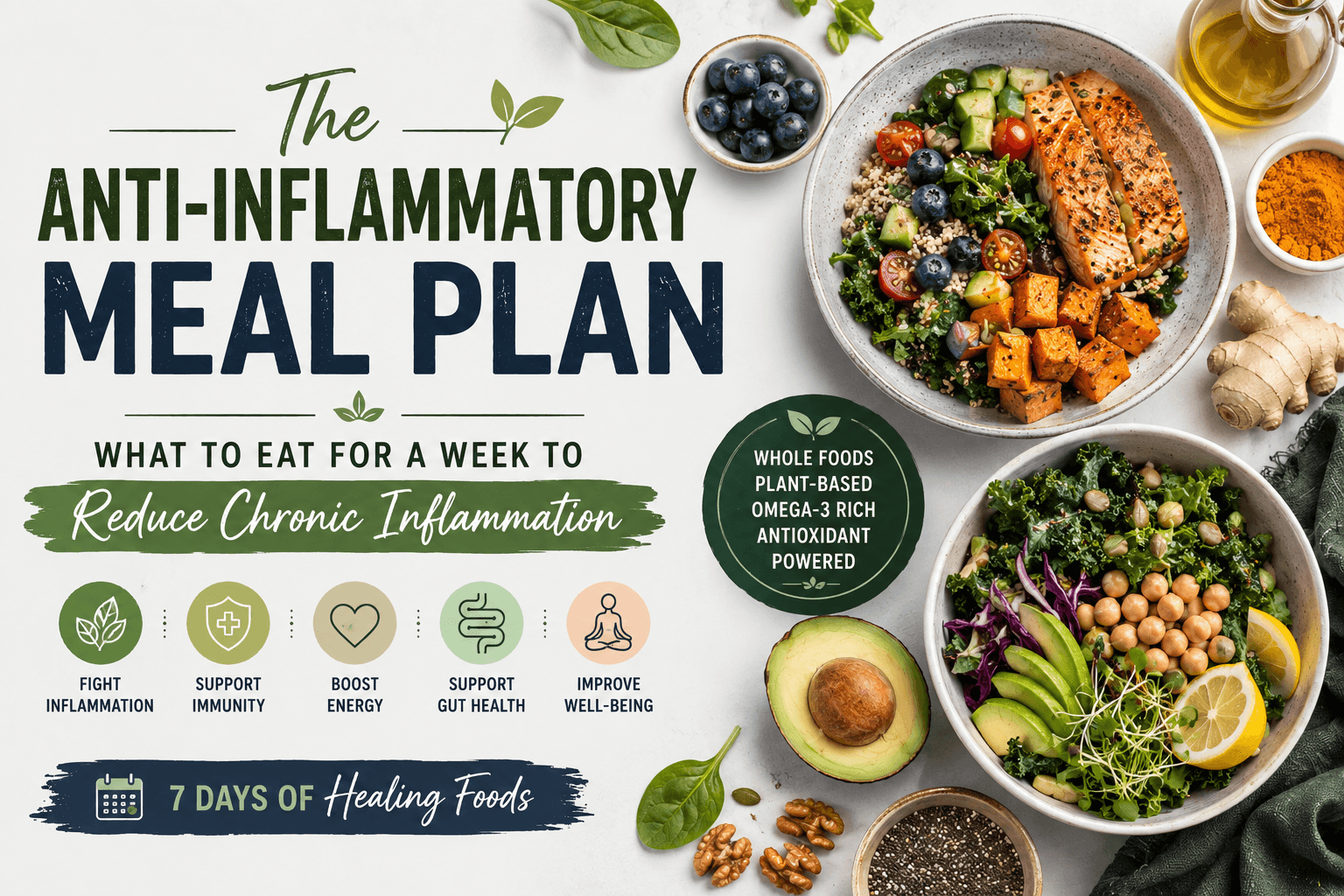
Inflammation is the body’s first line of defence. The problem is when it never turns off.
Chronic low-grade inflammation is behind more of the conditions people live with every day than most people realise. Persistent fatigue, joint stiffness, digestive discomfort, skin flare-ups, brain fog — these are often inflammation expressing itself in different dialects.
The good news: food is one of the most powerful levers you have. Not because a specific ingredient cures inflammation, but because eating patterns — sustained over time — either dampen or amplify the inflammatory response continuously.
This is a practical, real-week meal plan. No supplements required. No unusual ingredients. Just a deliberate shift in what you eat and, crucially, what you reduce.
The Basics: What Drives Inflammation in Food
Before the meal plan, a short primer. The foods that tend to amplify chronic inflammation share common features: they spike blood sugar rapidly (refined carbohydrates, sugary drinks), they contain high amounts of omega-6 fatty acids without balancing omega-3s (refined seed oils, most processed snacks), and they disrupt gut bacteria (ultra-processed foods, artificial additives).
Anti-inflammatory foods do the opposite: they’re rich in antioxidants, fibre, omega-3 fatty acids, and polyphenols — compounds that actively interrupt the inflammatory signalling cycle.
The 7-Day Meal Plan
Day 1 — Reset
Breakfast: Warm oats with blueberries, ground flaxseed, and a drizzle of raw honey
Lunch: Brown rice with dal (lentil curry), sautéed spinach with garlic
Dinner: Grilled salmon with roasted sweet potato and steamed broccoli
Snack: A small handful of walnuts and a cup of green tea
Day 2 — Root Vegetables and Legumes
Breakfast: Turmeric milk (golden milk) with a banana and two boiled eggs
Lunch: Chickpea and vegetable stew with whole grain roti
Dinner: Grilled mackerel with mashed carrots and a side salad with olive oil dressing
Snack: Apple slices with almond butter
Day 3 — Greens Focus
Breakfast: Smoothie: spinach, banana, ginger, coconut milk, and chia seeds
Lunch: Quinoa salad with cucumber, cherry tomatoes, parsley, and lemon-olive oil dressing
Dinner: Mung bean soup with steamed kale and whole grain bread
Snack: A few squares of dark chocolate (70%+) and a small orange
Day 4 — Spice Integration
Breakfast: Whole grain toast with avocado, a poached egg, and black pepper
Lunch: Turmeric-spiced vegetable khichdi with a side of yoghurt
Dinner: Baked cod with roasted cauliflower, cumin, and coriander
Snack: Herbal tea (ginger-tulsi blend) with a handful of pumpkin seeds
Day 5 — Fermented Foods
Breakfast: Homemade idli with sambar and coconut chutney
Lunch: Mixed grain bowl with fermented pickle (traditional), grilled vegetables, tahini dressing
Dinner: Sardines on whole grain toast with a large green salad
Snack: A cup of lassi (unsweetened) or kefir
Day 6 — Colour Day
Breakfast: Papaya with lime juice and a small bowl of mixed nuts
Lunch: Red lentil soup with roasted red pepper and a slice of whole grain bread
Dinner: Stir-fried tofu with broccoli, red cabbage, ginger, and tamari sauce over brown rice
Snack: Green tea with a small handful of almonds
Day 7 — Reflection and Simplicity
Breakfast: Warm lemon water, then overnight oats with pomegranate seeds and cinnamon
Lunch: Simple vegetable soup with whatever’s left in the refrigerator, whole grain bread
Dinner: Grilled chicken with roasted beets, fresh herbs, and olive oil
Snack: A pear and a cup of chamomile tea
What to Reduce (Not Eliminate, Just Reduce)
- Refined sugar and sugary drinks
- White bread, white rice, and processed breakfast cereals
- Fried foods cooked in refined seed oils (sunflower, corn, soybean)
- Ultra-processed packaged snacks
- Excess alcohol
Ingredients Worth Building the Week Around
- Turmeric — curcumin is one of the most studied anti-inflammatory compounds
- Fatty fish (salmon, mackerel, sardines) — rich in omega-3s EPA and DHA
- Leafy greens — high in vitamins K and E, both linked to lower inflammatory markers
- Berries — dense in anthocyanins that inhibit inflammatory enzymes
- Ginger — contains gingerols shown to reduce pro-inflammatory cytokines
- Walnuts — the best plant-based source of omega-3 fatty acids
- Olive oil — oleocanthal has a mechanism similar to ibuprofen at high intake
One Week Won’t Cure Anything. But It Will Show You Something.
Most people who follow an anti-inflammatory eating pattern for seven days don’t experience dramatic transformations. What they do notice: slightly better energy, less afternoon sluggishness, and often a meaningful improvement in digestive comfort.
That feedback is valuable. It shows you that food is talking to your body constantly, whether or not you’re listening. A week like this is less about the seven days and more about building a new baseline for what eating well actually feels like.
You don’t need to be perfect. You need to be consistent enough that your body starts to notice the difference.

