
Yoga for Beginners: A Step-by-Step Guide to Starting Your Practice at Home
How Do You Start Yoga as a Beginner?
To start yoga as a beginner, choose a quiet space at home, get a non-slip yoga mat, and begin with a 10-to-15-minute daily routine. Focus on basic foundation poses like Mountain Pose, Downward-Facing Dog, and Child’s Pose, pairing each movement with slow, controlled breathing through your nose.
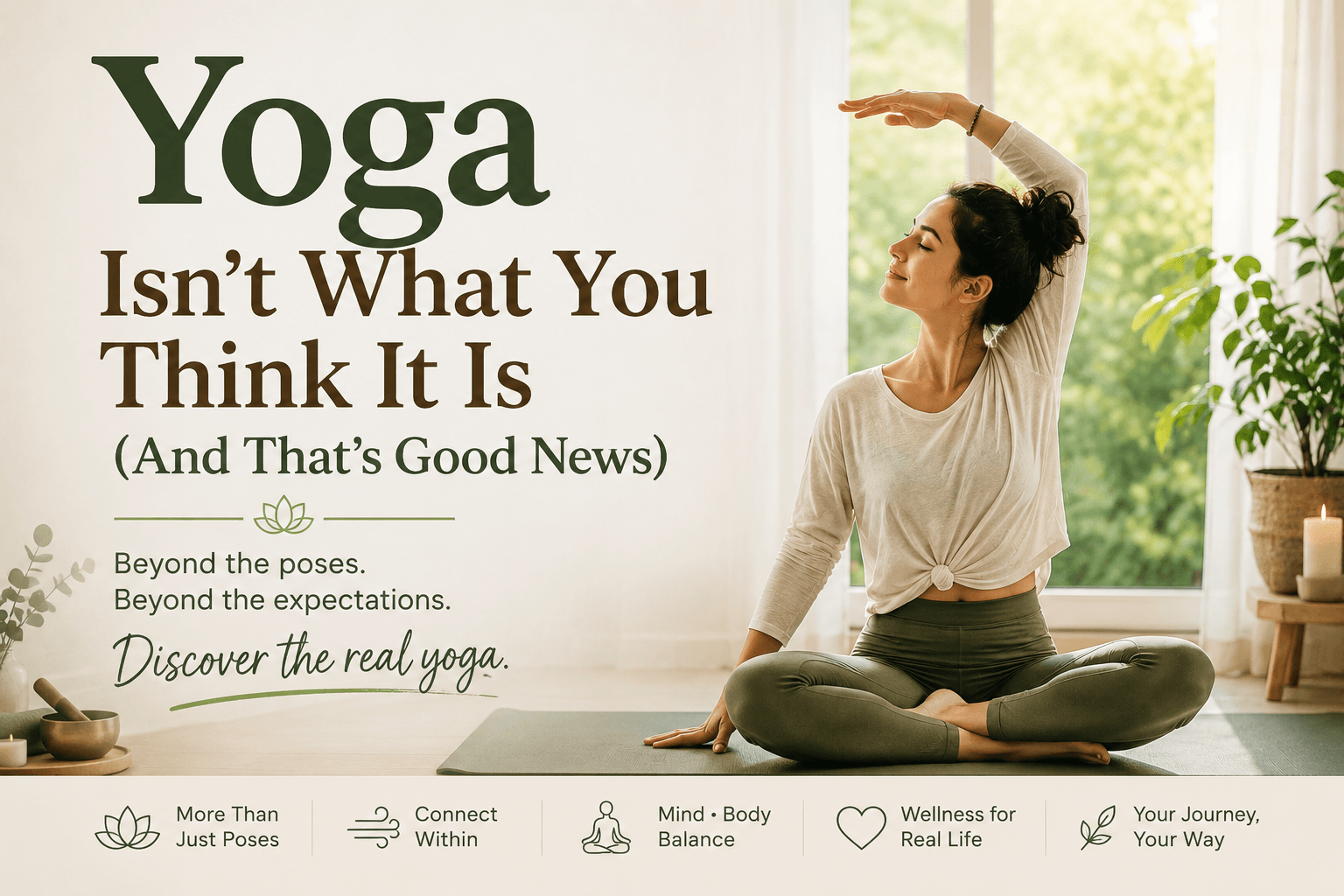
A friend once told me she would never try yoga because she “wasn’t flexible enough.”
I hear some version of this constantly, but it gets the entire logic backward. You don’t need flexibility to start yoga—building flexibility is simply one of the things that happens when you practice.
If you search for yoga online, you mostly see people folded into acrobatic shapes at the peak of a years-long journey. That highlight reel creates a totally unnecessary barrier for newcomers. The reality is that a meaningful, effective yoga practice requires no prior experience, no acrobatic flexibility, and no expensive gear.
This guide breaks down everything you need to know to build a safe, rewarding home practice. You will learn how yoga actually works, master five fundamental poses, pick up simple breathing techniques, avoid common beginner mistakes, and find the style that fits your body best.
What Is Yoga? (Beyond the Social Media Hype)
Yoga is an ancient system of physical, mental, and personal discipline that originated in India thousands of years ago. While modern Western classes often center on physical poses (asanas), those postures were historically just one part of a larger framework that included breath control (pranayama), personal ethics (yamas and niyamas), and meditation (dhyana).
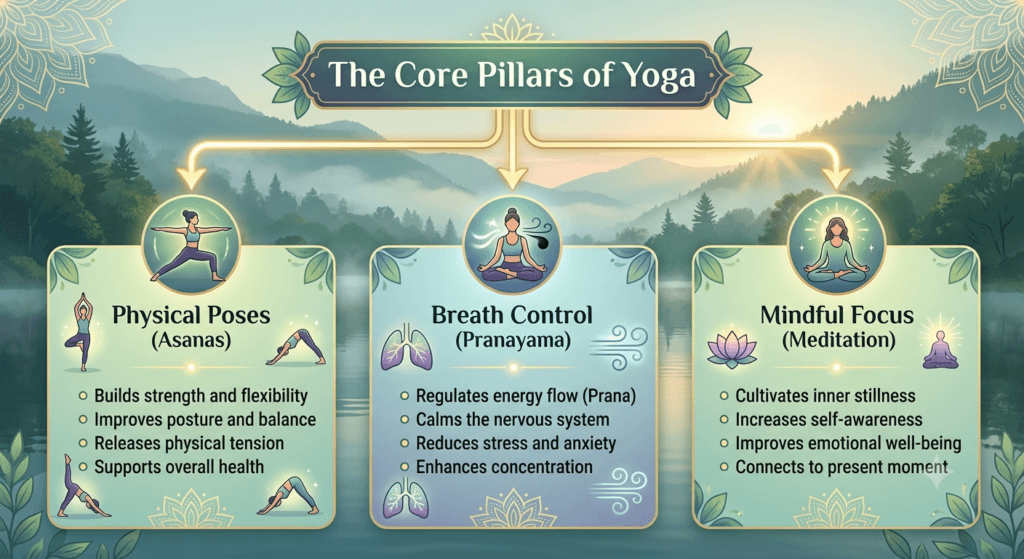
When you strip away the social media aesthetic, yoga is really just a practical way to move better, tune into your body, and calm a racing mind. You don’t need to contort yourself to get the benefits—simply holding basic shapes and breathing with intention is more than enough to make a real difference over time.
4 Proven Health Benefits of a Regular Yoga Practice
Setting aside a few minutes for yoga leads to genuine, research-backed improvements in how your body and mind feel.
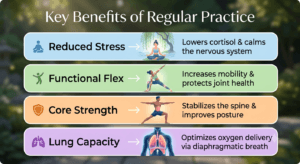
1. Regulates the Stress Response
Studies reviewed by the National Center for Complementary and Integrative Health (NCCIH) consistently show that yoga lowers physical indicators of stress. Slow, steady breathing during movement shifts your nervous system into “rest-and-digest” mode, dropping your heart rate and easing baseline cortisol levels.
2. Increases Functional Mobility and Joint Health
Static stretching relaxes muscles, but yoga builds strength right at the edge of your movement range. That combination stabilizes your joints while lengthening tight muscles, keeping your back, hips, and shoulders moving smoothly.
3. Improves Balance and Core Stability
Many basic standing postures subtly test your balance. This forces the deep stabilizing muscles around your spine and hips to engage, which pays off in better everyday posture and a sturdier foundation as you get older.
4. Enhances Respiratory Efficiency
Yoga trains you to use your diaphragm properly. Over time, taking full, deep breaths increases your lung capacity and delivers oxygen far more efficiently throughout your system.
Essential Beginner Yoga Poses to Master First
You don’t need a massive library of postures to get started. Master these five foundational shapes first to give your practice a solid frame.
                       ┌─────────────────────────┐
                       │ Core Beginner Sequence  │
                       └────────────┬────────────┘
                                    │
    ┌───────────────────────────────┼───────────────────────────────┐
    ▼                               ▼                               ▼
Mountain Pose             Downward-Facing Dog                  Child's Pose
(Posture & Line)          (Full-Body Stretch)                 (Rest & Reset)
| Pose Name (English / Sanskrit) | Primary Target Area | Key Alignment Cue |
| Mountain Pose (Tadasana) | Full-body posture & alignment | Ground down through all four corners of your feet. |
| Downward-Facing Dog (Adho Mukha Svanasana) | Hamstrings, shoulders, calves | Bend knees as much as needed to keep a flat back. |
| Child’s Pose (Balasana) | Hips, lower back, nervous system | Press hips back toward heels and rest forehead on the mat. |
| Cobra Pose (Bhujangasana) | Spine extension, chest opener | Pull shoulders down away from ears; do not push with arm strength. |
| Warrior II (Virabhadrasana II) | Legs, hips, balance | Keep front knee stacked directly over front ankle. |
Step-by-Step Pose Breakdown
1. Mountain Pose (Tadasana)
How to do it: Stand tall with your feet hip-distance apart. Plant your weight evenly across both feet. Engage your thighs, roll your shoulders back and down, and let your arms rest at your sides with your palms facing forward.
Why it matters: It is the benchmark posture for understanding good alignment across every standing pose.
2. Downward-Facing Dog (Adho Mukha Svanasana)
How to do it: Start on your hands and knees. Spread your fingers wide, press firmly into your palms, tuck your toes, and lift your hips toward the ceiling until your body forms an upside-down “V”.
Beginner Tip: A long, straight spine is much more important than straight legs. Keep a soft bend in your knees if your hamstrings feel tight.
3. Child’s Pose (Balasana)
How to do it: Kneel on the floor, bring your big toes together, and open your knees wide. Sink your hips back toward your heels, fold your torso forward between your thighs, and rest your forehead gently on the mat with arms extended.
Why it matters: This is your home base. Whenever a session feels too intense, you can retreat here to reset.
Yoga Breathing (Pranayama) Made Simple
Moving without paying attention to your breath is just an workout. In yoga, the breath anchors your focus and keeps your nervous system steady.
                     ┌──────────────────────────────┐
                     │ Three-Part Breathing Routine │
                     └──────────────┬───────────────┘
                                    │
      1. Inhale                     2. Pause                     3. Exhale
  (Belly → Ribs → Chest)          (1 Second)             (Chest → Ribs → Belly)
Three-Part Breath (Dirga Pranayama)
The cleanest way for beginners to practice conscious breathing is the Three-Part Breath:
Belly Expansion: Inhale slowly through your nose, letting your belly soften and expand.
Ribcage Expansion: Keep drawing air in, feeling your ribs expand outward to the sides.
Chest Expansion: Fill the very top of your chest last.
Smooth Release: Let the air go slowly through your nose in reverse—chest sinks, ribs contract, and belly gently pulls back toward your spine.
Rule of Thumb: Never force your breath during a posture. If you find yourself gasping or holding your breath, ease off the depth of the pose.
How to Match the Right Yoga Style to Your Goals
Different styles of yoga feel completely different underfoot. Picking a style that clashes with what your body needs is the main reason people walk away thinking “yoga isn’t for me.”
                  ┌────────────────────────────────────┐
                  │      Choosing Your Style           │
                  └─────────────────┬──────────────────┘
                                    │
         ┌──────────────────────────┼──────────────────────────┐
         ▼                          ▼                          ▼
   Gentle / Slow             Dynamic / Flow             Deep Stillness
  ┌─────────────┐           ┌─────────────┐            ┌─────────────┐
  │ Hatha Yoga  │           │Vinyasa Flow │            │  Yin Yoga   │
  └─────────────┘           └─────────────┘            └─────────────┘
1. Hatha Yoga (Best for Absolute Beginners)
Pace: Slower and deliberate.
Focus: Holds individual poses for several breaths, giving you time to learn proper alignment.
Best for: Getting comfortable with posture names and building a steady foundation without feeling rushed.
2. Vinyasa Yoga (Best for Fitness-Focused Beginners)
Pace: Fluid and energetic.
Focus: Seamlessly links movement with breath in a continuous, flowing sequence.
Best for: Building cardiovascular endurance, staying active, and keeping an engaged mind moving.
3. Yin / Restorative Yoga (Best for Stress Relief & Tight Muscles)
Pace: Very slow and still.
Focus: Holds passive stretches on the floor for 2 to 5 minutes at a time, often using props for support.
Best for: Targetting tight connective tissue, deep stress relief, and unwinding after a demanding day.
Setting Up Your Home Practice (Equipment & Space)
You don’t need a dedicated home studio to start practicing.
                      ┌────────────────────────────┐
                      │    Home Setup Essentials   │
                      └─────────────┬──────────────┘
                                    │
      ┌─────────────────────────────┼─────────────────────────────┐
      ▼                             ▼                             ▼
  Yoga Mat                    Support Props                   Clear Space
(4-6mm Non-slip)            (Blocks & Strap)              (6x3 ft Clear Area)
Essential Gear
Yoga Mat: Choose a textured, non-slip mat between 4mm and 6mm thick. Thicker mats cushion your joints, while slightly thinner mats give you better stability during balance poses.
Yoga Blocks (2): Foam blocks bring the ground closer to your hands, stopping you from straining when your hips or hamstrings are tight.
Yoga Strap: A simple strap extends your reach during seated leg and shoulder stretches.
Space Preparation
Find a flat spot with roughly 6×3 feet of open floor space—just enough to stretch your arms and legs out in every direction. Clearing away clutter helps keep your mind clear, too.
Common Rookie Mistakes (And How to Avoid Them)
Steer clear of these early missteps to stay safe and enjoy steady progress:
┌──────────────────────────────────┬──────────────────────────────────┐
│ Common Mistake                   │ Corrective Action                │
├──────────────────────────────────┼──────────────────────────────────┤
│ Pushing through sharp pain       │ Stop immediately; rest in Child's│
│                                  │ Pose.                            │
├──────────────────────────────────┼──────────────────────────────────┤
│ Holding breath during hard poses  │ Back off depth; prioritize deep  │
│                                  │ nasal breathing.                 │
├──────────────────────────────────┼──────────────────────────────────┤
│ Comparing flexibility to others  │ Focus on your internal signals   │
│                                  │ and personal progress.           │
├──────────────────────────────────┼──────────────────────────────────┤
│ Skipping final relaxation        │ Always take 3-5 minutes in       │
│ (*Savasana*)                     │ Corpse Pose to integrate work.   │
└──────────────────────────────────┴──────────────────────────────────┘
Confusing Hard Effort with Pain: A mild sensation in your muscles is normal. Sharp, pinching, or electrical joint pain is a stop sign. Listen to those signals immediately.
Comparing Yourself to Others: Skeleton shapes, hip socket angles, and limb lengths differ wildly from person to person. How a posture feels inside your body matters infinitely more than what it looks like on the outside.
Bailing on Savasana (Corpse Pose): Lying flat on your back for a few minutes at the end gives your nervous system time to absorb the effort you just put in. Skipping it means missing out on the deepest calm of the whole session.
Suggested Internal Linking Context
Use foundational mobility routines as anchor text when linking to general home workout guides.
Use stress management techniques as anchor text when linking to mental health and wellness articles.
Use posture correction exercises as anchor text when linking to ergonomics or back pain management resources.
A Few Simple Tools That Can Make Yoga More Comfortable
One of the nice things about yoga is that you don’t need much to begin. Your body, a little bit of floor space, and a willingness to move are enough. That said, a few simple pieces of equipment can make your practice safer, more comfortable, and more enjoyable—especially if you’re just starting out.
A Supportive Yoga Mat
A good yoga mat provides a stable, non-slip surface that helps you feel more confident in standing poses and protects your joints during kneeling or seated movements. Look for a mat with enough cushioning for comfort but enough firmness to maintain balance. If you plan to practice regularly, investing in a durable, high-quality mat is worthwhile.
Yoga Blocks for Extra Support
Many beginners think yoga blocks are only for people who can’t reach the floor. In reality, experienced practitioners use them too. Blocks help bring the floor closer to you, making poses more accessible while encouraging proper alignment. They can reduce unnecessary strain and help you gradually improve flexibility without forcing your body beyond its current range.
A Yoga Strap for Gentle Stretching
If your hands don’t quite reach your feet or your flexibility isn’t there yet, a yoga strap can be incredibly helpful. Rather than pulling harder, the strap extends your reach, allowing you to stretch comfortably while maintaining good posture. Over time, you’ll likely find yourself relying on it less as your mobility naturally improves.
A Comfortable Meditation Cushion
If your yoga practice includes breathing exercises or meditation, sitting comfortably becomes important. A meditation cushion gently elevates your hips, helping you maintain a more natural spinal position and reducing pressure on your knees and lower back. Even a few minutes of comfortable sitting can make mindfulness practice much more enjoyable.
A Foam Roller for Recovery
Yoga strengthens muscles as well as stretches them, and it’s normal to feel some tightness after practicing. A foam roller can help relieve muscle tension, improve circulation, and support recovery between sessions. It isn’t a replacement for stretching, but it can be a useful addition to an overall wellness routine.
Comfortable Yoga Clothing
You don’t need expensive designer outfits to practice yoga. The most important thing is wearing clothing that allows you to move freely without distraction. Breathable fabrics and a comfortable fit let you focus on your breathing and movement instead of constantly adjusting what you’re wearing.
Start Simple
It’s easy to believe that you need a room full of equipment before you begin, but that’s one of the biggest myths surrounding yoga. If you’re purchasing your first items, start with a quality yoga mat. As your practice develops, you can gradually add helpful accessories like blocks, a strap, or a meditation cushion based on your needs. Remember, these tools aren’t shortcuts or signs that you’re doing yoga “wrong”—they’re simply supports that help make the practice more accessible for every body.
The goal has never been to collect equipment. The goal is to create a practice that feels sustainable, comfortable, and enjoyable enough that you’ll want to return to it tomorrow.
Frequently Asked Questions
How often should a beginner do yoga?
Consistency beats duration every time. Spending 10 to 15 minutes on your mat 3 or 4 days a week builds better habits and mobility than trying to power through one long class every couple of weeks.
Can I do yoga at home without an instructor?
Absolutely. You can practice safely on your own by sticking to foundational poses, using yoga blocks whenever you need extra reach, skipping advanced inversions, and paying close attention to what your body tells you.
Is yoga enough on its own for weight loss?
Faster styles like Vinyasa flow help burn calories and build lean muscle tone. That said, yoga works best for body composition when paired with balanced nutrition, daily walking, and basic resistance training.
What should I wear for my first yoga session?
Put on comfortable clothing that lets you stretch and bend freely. Avoid baggy tops that fall over your face when you fold forward. You don’t need shoes or socks—yoga is best practiced barefoot for grip.
Start Small and Stay Consistent
Yoga isn’t about folding yourself in half or mastering party tricks. It’s simply a practical tool to help you feel better, move with ease, and handle daily stress with a bit more room to breathe.
Start small this week. Roll out a mat, spend 10 minutes working through three simple poses, and focus on keeping your breath steady. Everything else comes with time.
What’s stopping you from giving your first short session a try today? Let us know your questions or experiences in the comments!

