
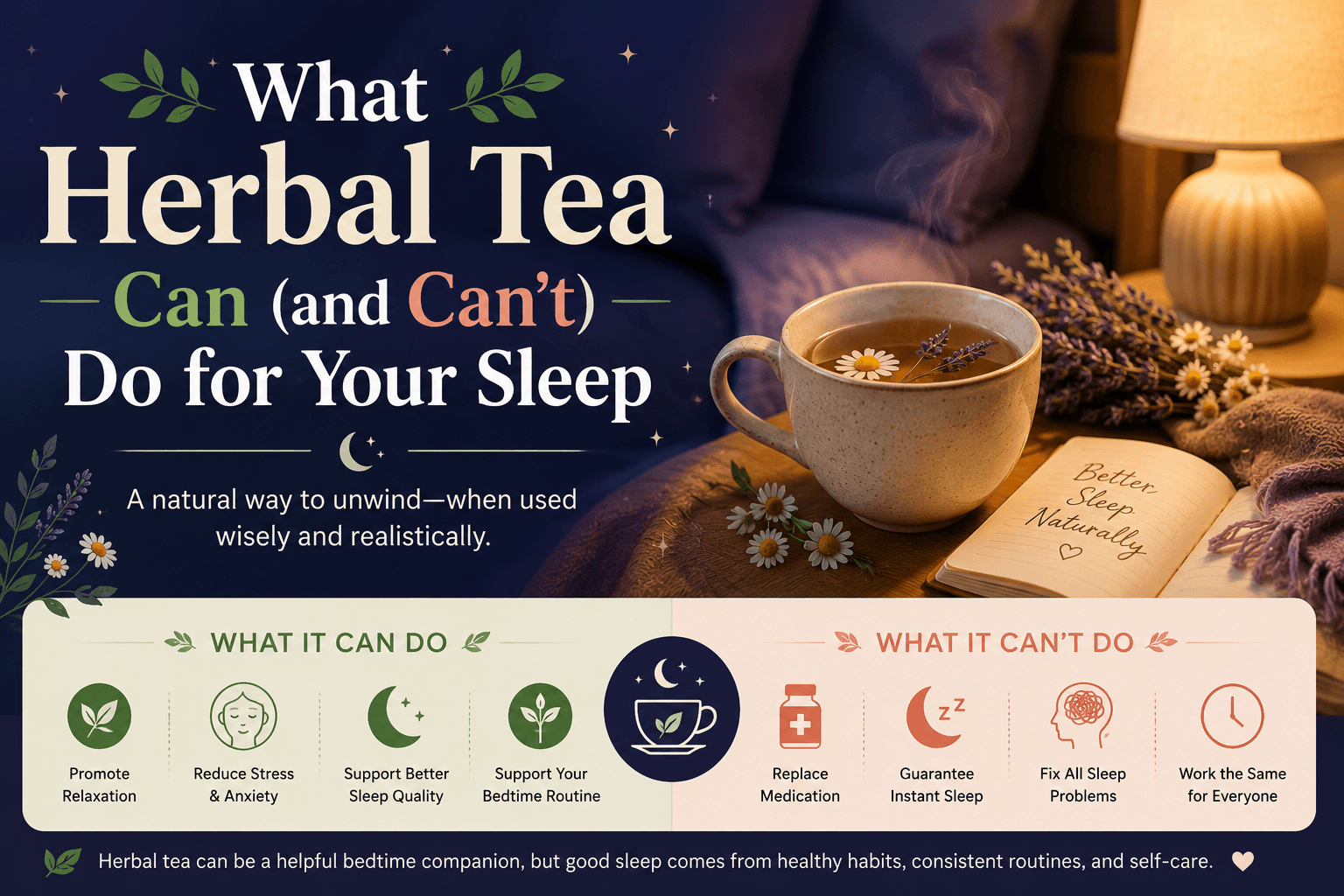
There’s a certain kind of evening ritual that’s become shorthand for wellness itself: a warm mug, a quiet room, the assumption that the tea inside is doing most of the work. I don’t want to take that ritual away from anyone — it’s genuinely lovely — but it’s worth being honest about what’s tea and what’s just… a nice routine that happens to involve tea.
The Herbs With Actual Evidence Behind Them
Chamomile has the longest research trail of the sleep-adjacent herbs. It contains apigenin, a compound that binds to specific receptors in the brain associated with reducing anxiety and promoting drowsiness. A study in the Journal of Advanced Nursing found that postpartum women who drank chamomile tea for two weeks reported better sleep quality than those who didn’t — a modest effect, but a real one, in a population that badly needs modest effects.
Valerian root shows up constantly in sleep supplements, and its evidence is more mixed than chamomile’s. Some trials show improved sleep quality; others show no meaningful difference from a placebo. The honest summary, per a review from the National Center for Complementary and Integrative Health, is that valerian appears to be safe for most people but the research hasn’t settled on how reliably it works.
Lemon balm and passionflower both have smaller bodies of research suggesting mild anti-anxiety effects, often studied in combination with other herbs rather than alone, which makes it hard to credit any single one with the result.
Where the Ritual Does More Than the Herb
Here’s the part that tends to get skipped in articles selling a specific tea blend: a decent chunk of the benefit likely comes from the ritual surrounding the tea, not the tea itself. Dimming the lights, stepping away from a screen, sitting somewhere quiet for the ten minutes it takes a mug to cool — those actions alone reduce the sensory and mental stimulation that keeps a nervous system in “still awake” mode. The warmth itself has a mild physiological effect too; a small rise and subsequent drop in body temperature mimics part of what naturally happens as you fall asleep.
None of this makes the tea meaningless. It means the tea is one ingredient in a habit, not a standalone solution, and expecting a single cup to override a stressful day or a lit-up phone screen right before bed is asking more of a herb than any herb can deliver.
A Few Honest Caveats
Herbal doesn’t automatically mean harmless. Valerian in particular can interact with sedatives, alcohol, and certain medications, and pregnant or breastfeeding people should check with a doctor before adding any new herb to their routine, chamomile included, since even gentle herbs can carry contraindications. If sleep trouble has been going on for weeks rather than the occasional rough night, that’s a conversation worth having with a doctor rather than a habit to solve with tea alone — persistent insomnia sometimes points to something a warm drink genuinely can’t touch.
Used with reasonable expectations, a cup of chamomile in a dim, quiet room an hour before bed is a small, evidence-backed act of care. Just let it be one part of winding down, not the entire plan.

