
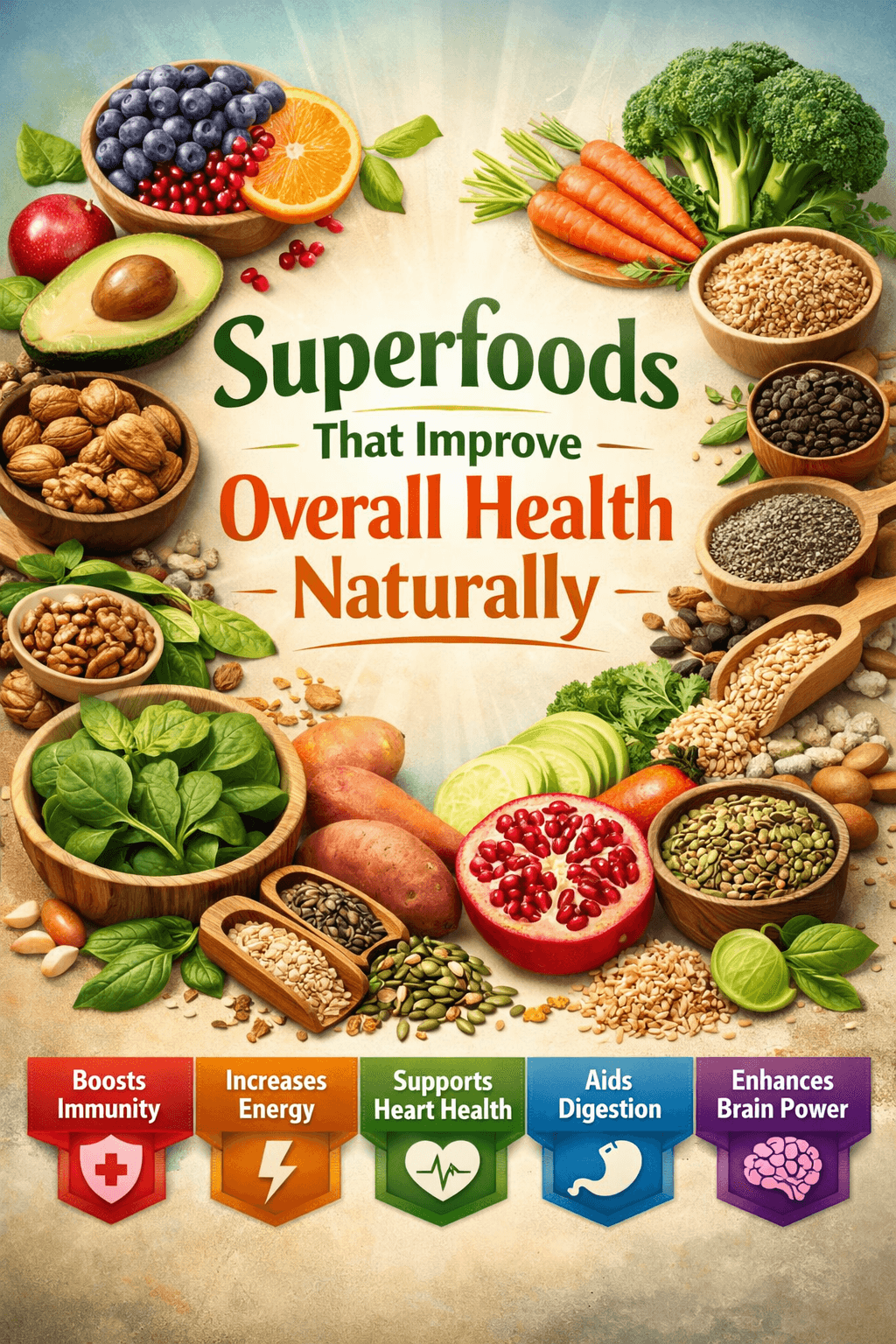
Superfoods That Improve Overall Health Naturally
Medical Disclaimer: The information provided in this article is for educational and informational purposes only and is not intended as medical advice, diagnosis, or treatment. Always consult a qualified healthcare professional before making dietary changes.
Affiliate Disclosure: This post may contain affiliate links. If you purchase through these links, we may earn a small commission at no extra cost to you.
Introduction
Superfoods that improve overall health are nutrient-dense foods that support immunity, heart health, brain function, and digestion. In today’s fast-paced life, with processed foods and chronic stress, adding the best superfoods can restore balance. It can also strengthen the body from within.
These natural foods that boost immunity are rich in antioxidants, fiber, healthy fats, vitamins, and minerals. They help protect against inflammation and long-term lifestyle diseases.
In this guide, you’ll discover:
- What makes a food a “superfood”
- The best superfoods for overall health
- How they support immunity, heart, brain, and digestive health
Simple ways to include them in your daily diet
Build a Strong Foundation with Proper Nutrition
While superfoods play a powerful role, they work best when combined with a well-balanced diet. For a deeper understanding of long-term health, read our complete guide on Nutrition for Health and Wellness: A Complete Guide.
This guide explains how macronutrients, micronutrients, and lifestyle habits work together to support overall health naturally.
What Are Superfoods?
Superfoods are nutrient-dense whole foods that deliver high levels of beneficial compounds relative to their calorie content.
Most superfoods contain:
- Antioxidants (fight free radicals)
- Phytochemicals (plant compounds that support immunity)
- Fiber (improves digestion)
- Healthy fats (support brain and heart health)
- Essential vitamins and minerals
When consumed consistently, superfoods may help:
- Strengthen immune function
- Improve digestion
- Support heart health
- Enhance brain performance
- Reduce inflammation
- Promote healthy skin
Top Superfoods That Improve Overall Health
1. Blueberries – The Brain-Boosting Antioxidant

The National Institutes of Health (NIH) highlights blueberries for their anti-inflammatory and antioxidant benefits. They may also support blood vessel function and healthy blood sugar control. Blueberries may also promote gut health. While more clinical research is needed to confirm their broader public health impact, regular blueberry consumption is widely encouraged. In geriatric nutrition, blueberries are often recommended. They are rich in anthocyanins. These pigments give blueberries their deep colour. They also support many health benefits.
The Science: Research supports the health benefits of blueberries, highlighting their rich phytochemical content, particularly anthocyanins, which contribute significantly to their health effects. These compounds cross the blood-brain barrier to protect neurons from oxidative stress.
Key Benefit: Epidemiological studies associate regular, moderate consumption of blueberries with reduced risks of cardiovascular disease, type 2 diabetes, and improved weight management and neuroprotection.
Expert Tip: Frozen blueberries are often just as nutritious as fresh ones, as they are picked and frozen at peak ripeness.
2. Spinach – The Alkaline Powerhouse
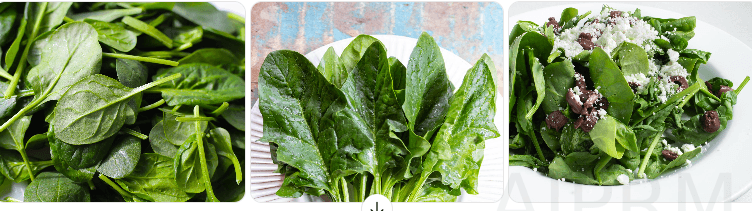
Spinach is a source of nitrates, which help dilate blood vessels and improve blood flow, making it a favorite for cardiovascular health.
The Science: It is exceptionally high in Lutein and Zeaxanthin, two antioxidants essential for protecting the eyes from age-related macular degeneration.
Key Benefit: Enhances muscle efficiency and supports a healthy inflammatory response.
Expert Tip: Eat spinach with a source of Vitamin C (like lemon juice) to increase the absorption of its non-heme iron.
3. Salmon – The Omega-3 Powerhouse

Salmon is widely regarded as one of the most nutrient-dense proteins on the planet. Unlike lean white fish, salmon is oily, meaning it is packed with essential fatty acids that the body cannot produce on its own.
The Science of Omega-3s: It is rich in EPA (eicosapentaenoic acid) and DHA (docosahexaenoic acid). These long-chain fatty acids help keep cell membranes flexible. They also reduce the production of substances that cause inflammation.
Health Benefits:
Cardiovascular Resilience: Helps lower triglycerides and supports healthy blood pressure levels.
Neuroprotection: DHA is a major structural component of the human brain; regular consumption is linked to a lower risk of cognitive decline.
High-Quality Protein: Provides the building blocks for muscle repair and metabolic health.
How to Prepare:
Bake or Grill: Season with lemon, garlic, and herbs to maintain nutrient integrity.
Poach: A gentle cooking method that prevents the delicate fats from oxidizing.
4. Chia Seeds – The Tiny Digestive Giant
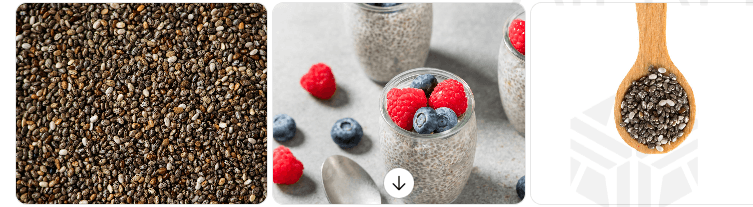
Chia seeds can absorb up to 12 times their weight in water, turning into a gel-like substance that acts as a prebiotic in the gut.
The Science: They are one of the best plant-based sources of Alpha-linolenic acid (ALA), an essential fatty acid.
Key Benefit: The high mucilage content slows down glucose absorption, preventing blood sugar spikes after meals.
Explore :seeds for real health
5. Broccoli – The Master Detoxifier

As a cruciferous vegetable, broccoli contains a sulphur-rich compound called Glucoraphanin, which the body converts into Sulforaphane.
The Science: Sulforaphane activates the Nrf2 pathway, the body’s strongest defence against oxidative stress and chemical toxins.
Key Benefit: Supports the liver’s Phase II detoxification process.
Expert Tip: Do not overcook! Steaming broccoli for 3–4 minutes preserves the enzyme (myrosinase) needed to activate its health properties.
6. Avocado – The Nutrient Booster
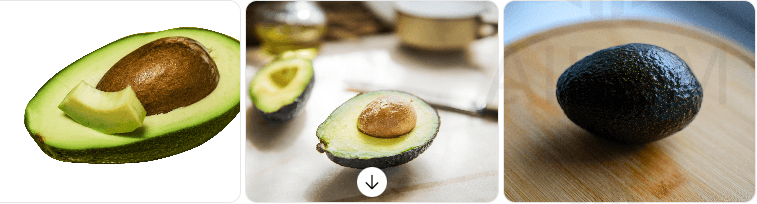
Avocados are unique because they are a fruit high in healthy fats rather than sugar.
The Science: The monounsaturated fats in avocados act as a “nutrient booster” by helping the body absorb fat-soluble vitamins (A, D, E, and K) from other vegetables in your meal.
Key Benefit: High potassium content (more than a banana) helps regulate fluid balance and heart rhythm.
7. Almonds – Brain & Heart Support

Almonds are rich in vitamin E, magnesium, and healthy fats.
Benefits:
Supports cognitive function
Improves cholesterol balance
Promotes skin health
8. Oats – Digestive & Heart Health
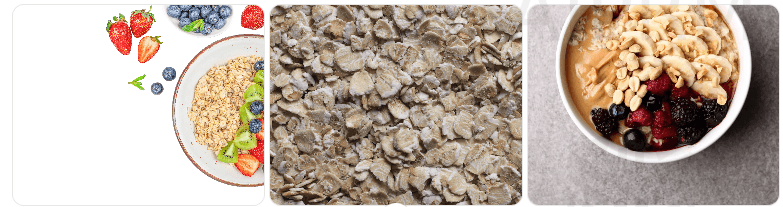
Oats are high in beta-glucan fiber, known for supporting heart health and stable blood sugar levels.
Benefits:
Lowers LDL cholesterol
Improves digestion
Provides sustained energy
The Ultimate Vitality Superfood Smoothie
This recipe is designed to maximize the bioavailability of the nutrients we discussed. It combines antioxidants, healthy fats for brain function, and fiber for digestive health.
Prep time: 5 minutes | Servings: 1
Ingredients
- 1 cup Fresh Spinach:(Rich in Iron and Vitamin K)
- 1/2 cup Frozen Blueberries:(The “Brain Berry” antioxidant boost)
- 1/2 Avocado:(Provides healthy fats to help absorb the spinach’s vitamins)
- 1 tbsp Chia Seeds:(For sustained energy and fiber)
- 1 cup Unsweetened Almond Milk or Water:(Base liquid)
- Optional:A squeeze of lemon juice (The Vitamin C helps you absorb the iron from the spinach).
Instructions
- Layer your greens:Place the spinach in the blender first with the liquid to ensure a smooth consistency without leafy “chunks.”
- Add the bulk:Add the avocado, blueberries, and chia seeds.
- Blend:Pulse on high for 45–60 seconds until creamy.
- Boost:Let the smoothie sit for 2 minutes before drinking; this allows the chia seeds to hydrate, making them easier on your digestive system.
Pro Tip: Avoid adding refined sugars or honey. The natural sweetness from the blueberries is usually enough, keeping the Glycemic Index of this meal low for stable energy levels.
How to Add Superfoods to Your Daily Diet
Morning:
- Oatmeal with berries and chia seeds
- Green smoothie with spinach and flax
Lunch:
- Brown rice with steamed broccoli
- Avocado salad
Snacks:
- Handful of almonds
- Fresh fruit bowl
Dinner:
- Grilled salmon
- Quinoa and mixed vegetables
Consistency is key. Small daily additions produce long-term benefits.
Long-Term Benefits of Superfoods
Regularly consuming nutrient-dense foods may support:
- Stronger immunity
- Reduced inflammation
- Better digestion
- Improved mental clarity
- Healthier skin
When combined with exercise, hydration, and quality sleep, superfoods form the foundation of sustainable wellness.
Integrating Superfoods for a Naturally Healthier Lifestyle
Superfoods are not miracle cures — but they are powerful nutritional allies. By incorporating fruits, vegetables, seeds, nuts, and whole grains into your meals daily, you build a strong foundation for long-term health naturally.
Common Questions – FAQ
Q: Can I eat too many superfoods?
A: While nutrient-dense, balance is key. Focus on variety rather than over-consuming one specific type.
Q: Are frozen superfoods as good as fresh?
A: Yes! Studies show that flash-frozen fruits and vegetables retain most of their vitamin content, sometimes even more than “fresh” produce that has traveled long distances.
- Are superfoods scientifically proven?
A: Many superfoods are supported by clinical studies showing antioxidant, anti-inflammatory, and cardiovascular benefits.
Q:Can superfoods replace medication?
A:No. Superfoods support health but do not replace professional medical treatment.
Q:How often should I eat superfoods?
A:Daily inclusion in balanced portions provides the best long-term benefits.
About the Author:
Jesuraj is a wellness researcher and health optimization specialist focused on the intersection of modern neuroscience and traditional herbalism. Dedicated to evidence-based wellness, Jesuraj spends hundreds of hours auditing clinical trials and third-party lab reports to provide readers with objective, fluff-free analysis. By bridging the gap between ancient botanical wisdom and contemporary brain science, Jesuraj empowers individuals to optimize their mental clarity and vitality through the strategic use of adaptogens and targeted supplementation.References
On Anthocyanins (Blueberries): “Anthocyanins in Cardiovascular Disease,” National Institutes of Health (NIH). [Source: pubmed.ncbi.nlm.nih.gov]
On Omega-3s (Salmon/Chia): “Omega-3 Fatty Acids and Health,” Harvard T.H. Chan School of Public Health. [Source: hsph.harvard.edu]
On Sulforaphane (Broccoli): “Cruciferous Vegetables and Cancer Prevention,” National Cancer Institute. [Source: cancer.gov]
On Brain Health: “Neuroprotective effects of berry fruits on neurodegenerative diseases,” Neural Regeneration Research. [Source: ncbi.nlm.nih.gov]
On Cruciferous Benefits: “Sulforaphane and Its Effects on Cancer and Inflammation,” Journal of Nutrition and Metabolism. [Source: hindawi.com]
On Dietary Fiber: “Health benefits of dietary fiber,” Nutrition Reviews, Oxford Academic. [Source: academic.oup.com]

