
Table of Contents
Toggle7 Seeds for Health: Benefits, Nutrition & Simple Daily Eating Guide.
Introduction: Why Seeds Are Among the Healthiest Foods
If you’re looking for a simple way to improve your nutrition, energy, and digestion, adding seeds to your daily diet is one of the easiest changes you can make.
Many nutrition experts consider seeds to be among the healthiest foods in the world. Even though they are small, seeds contain powerful nutrients like fiber, plant protein, omega-3 fatty acids, vitamins, and minerals.
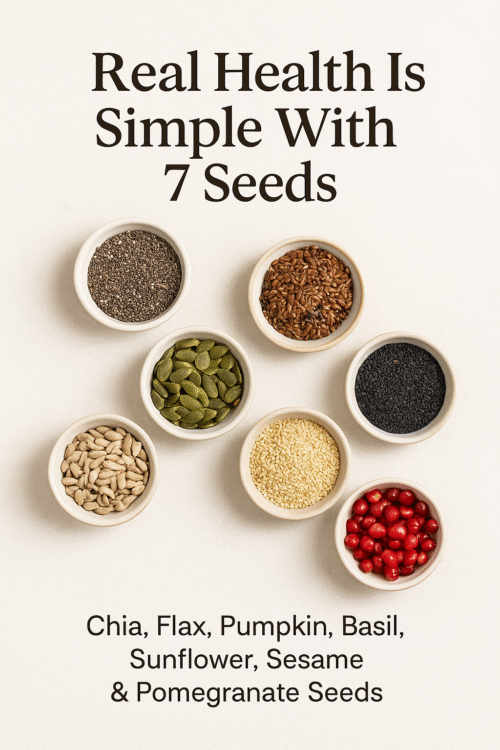
The 7 seeds for health discussed in this guide—chia seeds, flax seeds, pumpkin seeds, basil seeds, sunflower seeds, sesame seeds, and pomegranate seeds—are known for their ability to support digestion, heart health, skin health, and overall wellness.
These seeds are easy to add to everyday meals. You can sprinkle them into yogurt, smoothies, salads, porridge, or even traditional dishes.
In this guide, you will learn:
The nutrition and health benefits of the best seeds for health
How to eat seeds daily for maximum benefit
A simple daily seed routine
Who should avoid or limit certain seeds?
Also, learn the 30 powerful health lessons from farming communities. Learn how rural lifestyle habits support fitness, sleep, and resilience.
What Are the Healthiest Seeds to Eat Daily?
The 7 healthiest seeds for health include:
Chia seeds
Flax seeds
Pumpkin seeds
Basil seeds
Sunflower seeds
Sesame seeds
Pomegranate seeds
These seeds are rich in fiber, omega-3 fatty acids, antioxidants, vitamins, and minerals. These seeds support digestion, heart health, energy levels, and skin health.
Why Seeds Are Powerful Superfoods
Seeds are often called superfoods because they contain highly concentrated nutrition in a tiny portion.
Many of the healthiest seeds to eat daily provide essential nutrients that modern diets often lack.
According to research from the National Institutes of Health, plant foods are rich in fiber, healthy fats, and antioxidants. It supports long-term health and disease prevention.
Here are the key reasons why seeds are so beneficial.
Nutrient-Dense in a Small Portion
Seeds are packed with nutrients such as:
fiber
healthy fats
protein
antioxidants
vitamins and minerals
Just one tablespoon of seeds can deliver significant nutritional benefits.
Support Digestion and Gut Health
Many seeds contain soluble and insoluble fiber, which helps:
improve digestion
feed healthy gut bacteria
regulate bowel movements
reduce bloating
A healthy digestive system is essential for overall wellness.
You can also explore foods that improve digestion in our guide on Foods That Boost Mood & Brain
Healthy Fats for Heart and Brain
Seeds are rich in healthy fats such as omega-3 and omega-6 fatty acids.
These fats support:
heart health
brain function
hormone balance
skin health
The Harvard School of Public Health highlights plant sources of healthy fats. It can reduce inflammation and support cardiovascular health.
Easy to Add to Everyday Meals
One of the biggest advantages of seeds is how simple they are to include in meals.
You can add them to:
yogurt or curd bowls
smoothies
salads
oatmeal or porridge
soups and grain bowls
homemade energy balls
Small daily additions can significantly improve nutrition.
Explore our balanced diet meal guide with simple meal ideas, portion tips, and expert nutrition advice.
Best Seeds for Health and Their Benefits
| Seed | Nutrient Main | Main Benefit |
|---|---|---|
| Chia seeds | Omega-3 + fiber | Digestion & hydration |
| Flax seeds | Lignans | Hormone balance |
| Pumpkin seeds | Zinc & magnesium | Immunity & sleep |
| Basil seeds | Soluble fiber | Cooling digestion |
| Sunflower seeds | Vitamin E | Skin health |
| Sesame seeds | Calcium | Bone strength |
| Pomegranate seeds | Antioxidants | Heart health |
Why Seeds Are Good for Health
Seeds are good for health because they contain:
high dietary fiber
healthy fats
plant protein
antioxidants
essential minerals
These nutrients help support heart health, digestion, hormone balance, and long-lasting energy.
How to Eat Seeds Daily
The easiest ways to eat seeds daily include:
Adding chia seeds to lemon water
Mixing flax seeds into yogurt
Sprinkling pumpkin seeds on salads
Adding sunflower seeds to smoothies
Using sesame seeds in cooking
Eating fresh pomegranate seeds
Most experts recommend 1–2 tablespoons of mixed seeds per day.
7 Best Seeds for Health
Below are the seven healthiest seeds to eat daily, along with their benefits.
Seeds support digestion and gut health. Read our guide on foods that improve gut health.
1. Chia Seeds—Hydration and Fiber Powerhouse
Chia seeds are widely known as one of the best seeds for health because they are extremely high in fiber and omega-3 fatty acids.
Chia Seeds Nutrition
1 tablespoon of chia seeds provides approximately:
5 grams of fiber
2 grams of protein
omega-3 fatty acids
calcium
magnesium
antioxidants
According to the USDA nutrition database, chia seeds are one of the richest plant sources of fiber
Health Benefits of Chia Seeds
Chia seeds are one of the best seeds for health. They contain high amounts of fiber, omega-3 fatty acids, and antioxidants.
Improve digestion
Support heart health
Maintain stable energy levels
Help hydration
Support weight management
Chia seeds are best consumed soaked.
How to Eat Chia Seeds
Chia seeds are best consumed soaked.
Simple ways to eat chia seeds:
Chia lemon water
Chia pudding
Mixed into smoothies
Added to yogurt or oatmeal
Sprinkled over fruit bowls
Soak chia seeds for 20–30 minutes before eating.
2. Flax Seeds—Powerful Seeds for Hormone and Heart Health
Flaxseed is one of the most studied seeds in nutrition research.
They contain plant compounds called lignans, which support hormone balance and heart health.
Flax Seeds Nutrition
Flax seeds contain:
omega-3 fatty acids (ALA)
fiber
plant protein
magnesium
antioxidants
Health Benefits of Flax Seeds
Flax seeds may help support:
hormone balance
cholesterol management
digestion
reduced inflammation
weight management
How to Eat Flax Seeds
Flax seeds should be ground before eating because whole seeds may pass through the digestive system without being absorbed.
Ways to eat flax seeds:
mixed into yogurt
added to smoothies
sprinkled over oatmeal
mixed into pancake batter or chapati dough
Store ground flax seeds in an airtight container.
3. Pumpkin Seeds—Mineral-Rich Energy Seeds
Pumpkin seeds are known for their high mineral content, particularly magnesium and zinc.
These nutrients support immunity, sleep, and muscle function.
Pumpkin Seeds Nutrition
Pumpkin seeds provide:
magnesium
zinc
iron
protein
healthy fats
vitamin E
Health Benefits of Pumpkin Seeds
Pumpkin seeds may support:
immune health
sleep quality
energy levels
heart health
prostate health
How to Eat Pumpkin Seeds
Pumpkin seeds can be eaten:
raw
lightly roasted
mixed into salads
added to granola
blended into smoothies
They also make a great healthy snack.
4. Basil Seeds—Cooling Seeds for Digestion
Basil seeds (also called sabja seeds) are commonly used in traditional drinks and desserts.
When soaked, they form a gel similar to chia seeds.
Basil Seeds Nutrition
Basil seeds contain:
soluble fiber
calcium
iron
plant protein
Health Benefits of Basil Seeds
Basil seeds may help with:
digestion
body cooling
appetite control
blood sugar balance
mild constipation relief
How to Eat Basil Seeds
Always soak basil seeds before eating.
Popular ways to use them:
lemon water
buttermilk
fruit drinks
smoothies
falooda
Soak them for about 10–15 minutes before use.
5. Sunflower Seeds – Vitamin E and Skin Support
Sunflower seeds are one of the best for skin health because they are rich in vitamin E.
Vitamin E acts as an antioxidant that protects cells from damage.
Sunflower Seeds Nutrition
Sunflower seeds provide:
vitamin E
B vitamins
magnesium
healthy fats
selenium
Health Benefits of Sunflower Seeds
Sunflower seeds may support:
skin health
hair strength
brain function
heart health
immune support
How to Eat Sunflower Seeds
Sunflower seeds can be added to:
granola
yogurt bowls
salads
smoothies
trail mix
They are delicious both raw and roasted.
6. Sesame Seeds—Ancient Seeds for Bone Strength
Sesame seeds have been used in traditional nutrition systems for thousands of years.
They are especially known for supporting bone health and energy levels.
Sesame Seeds Nutrition
Sesame seeds are rich in:
calcium
iron
zinc
protein
healthy fats
They also contain powerful antioxidants called sesamin and sesamol.
Health Benefits of Sesame Seeds
Sesame seeds may support:
bone health
hormone balance
skin elasticity
heart health
digestion
How to Eat Sesame Seeds
Sesame seeds can be eaten:
lightly roasted
mixed into chutney
sprinkled over vegetables
added to stir-fries
blended into tahini
7. Pomegranate Seeds—Antioxidant-Rich Fruit Seeds
Pomegranate seeds are unique because they combine fiber with powerful antioxidants.
They support heart health and skin health.
Pomegranate Seeds Nutrition
Pomegranate seeds contain:
vitamin C
fiber
potassium
folate
antioxidants
Research shows that pomegranate contains plant compounds that help reduce inflammation.
Health Benefits of Pomegranate Seeds
Pomegranate seeds may help support:
heart health
healthy skin
digestion
immune system
blood circulation
How to Eat Pomegranate Seeds
Pomegranate seeds are best eaten fresh.
Ways to enjoy them:
fruit bowls
yogurt bowls
salads
smoothies
grain bowls
Read our guide to the top superfoods for better health. Featuring fruits, vegetables, seeds, nuts, and grains that strengthen immunity and increase energy.
Simple Daily Seed Routine
You do not need large amounts of seeds to get benefits.
Even 1–2 tablespoons per day can improve nutrition.
Example routine:
Morning
Chia or basil seeds in lemon water
Breakfast
Flax seeds in yogurt or oatmeal
Lunch
Pumpkin and sunflower seeds in salad
Evening
Small handful of mixed seeds
Dinner
Sesame seeds added to vegetables
Dessert
Fresh pomegranate seeds
Who Should Avoid Certain Seeds
Seeds are generally safe, but some people should consume them in moderation.
Limit or avoid if:
You have seed allergies
You are taking blood-thinning medications
You have digestive sensitivity
You are pregnant (limit basil seeds)
You have kidney stone concerns
Start with small amounts and increase gradually.
Conclusion: Small Seeds Can Transform Your Health
The 7 seeds for health discussed in this guide show how simple foods can deliver powerful nutrition.
Chia, flax, pumpkin, basil, sunflower, sesame, and pomegranate seeds provide fiber, healthy fats, antioxidants, vitamins, and minerals that support many aspects of health.
Adding just a spoonful of seeds to your daily meals can improve digestion, energy levels, skin health, and overall nutrition.
Healthy living does not always require complicated diets. Sometimes the most powerful foods are also the simplest.
Nutrition for health and wellness—made simple to build a balanced diet, choose nutrient-rich foods, support your immune system, stay hydrated, and develop healthy habits for a stronger body and mind.
Frequently Asked Questions
What are the healthiest seeds to eat daily?
The healthiest seeds include chia seeds, flax seeds, pumpkin seeds, sunflower seeds, sesame seeds, basil seeds, and pomegranate seeds because they provide fiber, omega-3 fats, and essential minerals.
How many seeds should you eat daily?
Most nutrition experts recommend 1–2 tablespoons of mixed seeds per day.
Are soaked seeds better than raw seeds?
Some seeds such as chia and basil seeds should be soaked before eating because soaking improves digestion.
Can seeds help with weight management?
Yes. Seeds contain fiber and protein, which help increase fullness and reduce hunger.
Can children eat seeds?
Yes, but seeds should be given in small amounts and preferably soaked or ground for easier digestion.

