
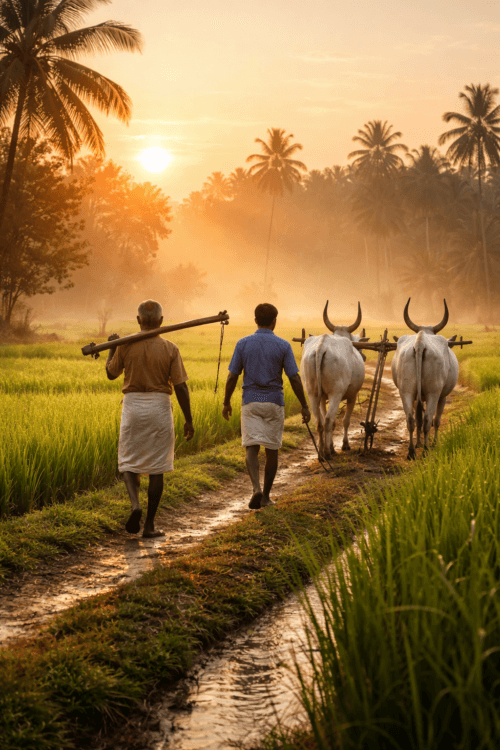
Introduction: Health Beyond Gyms, Gadgets, and Wellness Trends
To understand sustainable well-being, we can learn invaluable lessons from farming communities that modern society commonly overlooks. For many people today, staying healthy has become another item on a busy schedule. We set reminders to exercise, buy devices to monitor our sleep, search for the latest diet, and spend money on products promising more energy, better immunity, or a longer life.
Yet many of the most meaningful health lessons from farming communities are much simpler. They involve how we move, what we eat, when we rest, how we relate to others, and how we organise our daily lives.
I began to appreciate these connections through my own community development experience. Between 1983 and 1985, I worked as a research assistant with the CDRA organisation in Tiruchirappalli, studying the lives of brick-kiln workers in and around the Lalgudi area. From 1987, I worked as a Rural Development Organiser with Madurai Multi-purpose Social Service Society in Ramanathapuram district. Living among farming and Dalit communities gave me opportunities to observe the practical realities of rural life. I also helped organise medical camps for children and the general public with government doctors.
These experiences shaped my understanding of health as something connected to everyday living, work, food, family, community, and access to care. I saw how daily responsibilities brought people together and how many activities were woven into the rhythm of the day. Food preparation, agricultural work, household duties, conversations with neighbours, and seasonal changes all influenced how people lived.
But I also saw an important truth: rural life was not free from illness, hardship, or unequal access to healthcare. Physical labour could be exhausting. Agricultural work could expose people to heat, dust, injuries, and financial uncertainty. Access to medical services was not always easy, and traditional practices did not eliminate the need for modern medicine.
I would therefore not claim that farming communities were automatically healthier than urban communities. Nor can personal observations establish that a particular lifestyle caused better health outcomes. Instead, these experiences encouraged me to ask a more useful question:
Which health lessons from farming communities can modern households adapt safely and realistically today?
This article explores 30 core health lessons from farming communities from that practical perspective. Personal observations are identified as observations, while scientific explanations are based on published research and established health guidance. The aim is not to romanticise the past; it is to recognise useful practices, understand their limitations, and adapt them thoughtfully to modern life.
Part I: Daily Rhythm and the Natural Environment
Lesson 1: Begin the Day with a Consistent Routine
One of the foundational health lessons from farming communities is starting the morning with a structured routine. In many farming households, daily activities were organised around agricultural responsibilities, daylight, weather, and family needs.
What I observed: Daily life often followed a recognisable pattern. People knew which tasks needed attention first, and the morning had a practical purpose. This did not mean everyone woke at the same time or followed an ideal sleep schedule, as work demands and seasons varied.
What science tells us: Regular sleep and wake times help support the body’s circadian rhythms. Light exposure, meal timing, and daily activity also influence these rhythms. Waking before sunrise is not essential for good health; getting sufficient sleep and maintaining a consistent routine are far more important.
What you can adapt today:
Choose a realistic wake-up time that allows adequate sleep.
Begin with a simple activity, such as drinking water, preparing breakfast, or taking a short walk.
Avoid turning your morning routine into another source of pressure.
The lesson is consistency, not competition over who wakes earliest.
Lesson 2: Get Natural Daylight During the Morning
Outdoor work brought many rural residents into daylight early in the day, offering another essential health lesson from farming communities.
What I learned: Daily responsibilities created opportunities to be outdoors naturally, without requiring a separate “wellness routine.”
What science tells us: Light reaching the eyes helps regulate circadian timing and alertness. Appropriate daytime light exposure supports sleep-wake patterns, though morning daylight alone does not treat severe sleep disorders or depression.
What you can adapt today: Spend a little time outdoors in the morning if your schedule and environment allow. Walk along a safe route, sit on a balcony, or have breakfast near a bright window. Protect your skin and eyes appropriately, especially in hot weather.
Lesson 3: Give the Morning a Purpose
Many people in rural communities begin the day with responsibilities rather than waiting to feel motivated.
What I observed: Agricultural and household tasks gave structure to the day. There was often a clear connection between an action and its immediate purpose. However, this did not mean rural workers never felt tired, anxious, or discouraged.
What science tells us: Structured activity and purposeful engagement are key components of psychological approaches like behavioural activation. While ordinary chores are not equivalent to therapy, purposeful tasks can support mood regulation.
What you can adapt today: Choose one achievable morning task—such as preparing a meal, watering plants, organising your workspace, or checking on someone who needs your attention. Purpose does not need to be grand; small actions give shape to the day.
Lesson 4: Respect the Rhythm of the Seasons
Agricultural work changes dynamically with planting, growing, harvesting, rainfall, and local climate.
What I observed: Farming families had to pay close attention to weather and seasonal demands. The year was not experienced as a series of identical, static weeks.
What science tells us: Seasonal conditions influence temperature, daylight, food availability, physical activity, and health risks.
What you can adapt today:
Choose fruits and vegetables that are locally available and in season.
Adjust outdoor exercise according to heat, rain, and air quality.
Change meal preparation and hydration habits based on seasonal weather.
Allow flexibility in your routine when seasonal demands or personal energy change.
Lesson 5: Make Room for Outdoor Time
Rural life frequently involved time spent outside, offering practical mental health lessons from farming communities.
What I learned: Outdoor time was built into ordinary work and social life rather than treated as a special weekend event.
What science tells us: Contact with natural environments can support psychological wellbeing and stress management. However, safe access to quality green space varies, and not all rural environments have clean air.
What you can adapt today: Visit a nearby park, care for a few plants, sit outdoors with family, or take a short walk in a safe area. Focus on spending time in clean, safe outdoor spaces regardless of whether you live in a city or a village.
Part II: Movement, Strength, and Physical Function
Lesson 6: Make Walking Part of Everyday Life
When looking at physical health lessons from farming communities, regular walking stands out. Walking between homes, fields, shops, and community spaces was a routine part of daily living.
What I observed: Everyday journeys involved functional movement that modern lifestyles often replace with motorized transport.
What science tells us: The World Health Organization recommends that adults aim for 150–300 minutes of moderate-intensity aerobic activity per week (or an equivalent amount of vigorous activity), along with muscle-strengthening activities on at least two days a week.
What you can adapt today: Walk to nearby destinations when safe and practical. Take short walking breaks during work, or walk with a friend after a meal. Start small and build your activity gradually.
Lesson 7: Recognise the Value of Everyday Movement
Farming and household tasks involved a wide variety of movement: bending, carrying, reaching, standing, and walking.
What I learned: Physical activity did not always require a separate gym session—movement was integrated into daily living. However, heavy manual labour can also lead to exhaustion and pain, so it should not be idealized as a perfect fitness plan.
What science tells us: Regular movement supports cardiovascular health and physical function. The benefits depend on intensity, duration, recovery, and individual health.
What you can adapt today: Break up long periods of sitting. Stand to stretch, walk while taking phone calls, or complete a few household tasks between work sessions. Everyday movement complements planned exercise; it does not replace the need for aerobic and strength training.
Lesson 8: Build Strength Safely
Carrying objects, working with manual tools, and managing household duties required practical muscular strength.
What I observed: Physical work was task-oriented and functional. However, repetitive movements and heavy loads without proper form frequently led to musculoskeletal injuries.
What science tells us: Resistance training helps maintain muscle mass, bone density, and functional independence. Grip strength is often associated with positive health outcomes in population studies, though it is not a standalone measure of lifespan.
What you can adapt today: Include resistance exercises like chair squats, wall push-ups, resistance band routines, or weight training into your weekly routine. Focus on safe technique, avoid sudden heavy workloads, and prioritize recovery.
Lesson 9: Balance Activity with Recovery
Hard work does not become healthier simply because it is tiring.
What I observed: Daily responsibilities required people to adjust their pace according to the weather, workload, and physical endurance. Rest was a practical necessity.
What science tells us: Adequate recovery is essential for muscle repair, injury prevention, and fatigue management. Excessive physical strain without rest increases injury risk and health complications.
What you can adapt today: Alternate demanding activities with lighter tasks. Take brief breaks during prolonged work, and listen to persistent pain or unusual fatigue instead of pushing through it.
Lesson 10: Avoid Long, Uninterrupted Periods of Sitting
Many contemporary jobs require extended sitting in front of screens or during commutes.
What I learned from comparing daily routines: When natural movement is removed from daily tasks, exercise becomes an extra obligation easily postponed to the end of a long day.
What science tells us: High amounts of sedentary time are linked to adverse health outcomes. Interrupting long periods of sitting with brief activity breaks helps manage these risks.
What you can adapt today:
Stand or stretch briefly between meetings or long desk sessions.
Take short walking breaks throughout the day.
Place frequently used items where you must occasionally stand up to reach them.
Use an ergonomic workstation setup that encourages regular posture changes.
Part III: Traditional Food and Everyday Nutrition
Lesson 11: Value Simple, Balanced Meals
Among the key nutritional health lessons from farming communities is reliance on simple, seasonal whole foods. Many rural households prepared meals using locally available staples, pulses, vegetables, and affordable ingredients.
What I observed: Meals were tied to seasonal resources and culinary traditions rather than rapidly shifting dietary trends. (Note: Food insecurity and limited dietary variety also affected some rural communities.)
What science tells us: A varied dietary pattern providing adequate energy, protein, fibre, vitamins, and minerals supports overall health.
What you can adapt today: Build meals around accessible whole foods. A balanced South Indian meal, for example, might include rice or millet, sambar or dal, a side of vegetables, and curd. You do not need expensive “superfoods” to improve basic nutrition.
Lesson 12: Include Pulses and Other Protein Sources
Pulses such as lentils, chickpeas, and beans have long served as nutritional staples in traditional food cultures.
What I learned: Everyday ingredients offer reliable nutrition without needing heavily processed or commercial protein products.
What science tells us: Pulses are rich in plant protein, dietary fibre, and essential micronutrients. Other effective protein sources include eggs, dairy, fish, poultry, meat, and tofu.
What you can adapt today: Keep cooked lentils or beans on hand for easy meals. Add dal to rice, prepare chickpea sundal, or include legumes in soups and stews. Protein requirements vary by age, activity, and health status.
Lesson 13: Eat Vegetables and Fruit Regularly
Fresh produce choices were often driven by seasonal availability and local agricultural output.
What I observed: Families ate what was locally available and affordable, though drought and poverty could sometimes limit fresh produce availability.
What science tells us: Vegetables and fruits provide crucial fibre, antioxidants, and vitamins essential for metabolic and cardiovascular health.
What you can adapt today: Buy vegetables and fruits that your household enjoys and will consistently eat. Frozen vegetables are also a convenient, nutritious, and cost-effective option. Variety matters far more than following dietary trends.
Lesson 14: Understand Fermented Foods Without Exaggerating Their Benefits
Fermented foods—such as fermented rice dishes made from leftover cooked rice—are deeply rooted in traditional diets.
What I observed: Traditional preparation was shaped by practical routines, affordability, taste, and preventing food waste.
What science tells us: Fermentation alters food texture, flavor, and microbial composition. A 2021 study published in Cell noted that diets rich in certain fermented foods increased gut-microbiota diversity and modulated immune markers. However, specific health benefits vary depending on the food and individual gut microbiome.
What you can adapt today: Enjoy fermented foods like idli, dosa, curd, or buttermilk as part of a balanced diet. If storing cooked rice or other items for fermentation, practice proper hygiene and refrigeration to prevent the growth of harmful bacteria.
Lesson 15: Prefer Water Over Sugary Drinks Most of the Time
Water was the primary beverage for everyday hydration in rural households.
What I learned: Hydration is a basic physiological need, not a wellness trend.
What science tells us: Choosing clean water over sugar-sweetened beverages reduces excessive added sugar intake and supports overall health. Fluid needs depend on climate, activity, and personal health conditions.
What you can adapt today: Keep clean, safe drinking water easily accessible. Carry a water bottle during outdoor work or warm weather. Ensure municipal or groundwater sources are properly filtered or boiled for safety.
Part IV: Rest, Heat, and Environmental Safety
Lesson 16: Treat Rest as a Health Need
Working outdoors in hot weather demands periodic rest to prevent exhaustion and heat illness—a vital practical health lesson from farming communities.
What I observed: Work and rest were dictated by practical conditions like temperature and field demands. Rest was an absolute necessity, though economic pressure sometimes compromised it.
What science tells us: Planned rest stops fatigue and prevents heat-related disorders such as heat cramps, exhaustion, and stroke.
What you can adapt today: Schedule rest breaks during heavy physical or mental tasks. In hot conditions, seek shade, hydrate regularly, and avoid direct sun exposure during peak afternoon hours. Treat confusion, dizziness, or severe fatigue as medical emergencies.
Lesson 17: Do Not Assume Natural Water Is Safe for Bathing
Ponds, rivers, and lakes are often used for washing or cooling off in rural regions.
What I observed: Bathing in natural water bodies is traditional, but it carries unaddressed environmental risks.
What science tells us: Natural water bodies can contain harmful parasites, bacteria, and agricultural runoff. Cold water immersion also carries cardiac risks for certain individuals.
What you can adapt today: Use safe, clean water facilities for bathing. If you enjoy open-water swimming, select monitored sites with verified water quality. Cleanliness and safety should take priority over novelty.
Lesson 18: Protect Yourself from Heat and Sun Exposure
Outdoor agricultural labour requires long hours in sunlight and high temperatures.
What I learned: Outdoor exposure requires proactive protection; exposure alone is not inherently beneficial.
What science tells us: Controlled daylight regulates biological clocks, but excessive ultraviolet (UV) radiation damages skin cells and increases skin cancer risks.
What you can adapt today:
Wear lightweight, protective long-sleeved clothing and a wide-brimmed hat outdoors.
Apply sunscreen to exposed skin when working outside.
Rest in shaded areas during peak UV hours.
Stay well-hydrated throughout the day.
Lesson 19: Recognise the Importance of Clean Air
Rural environments are often assumed to have pristine air, but this is not always true.
What I learned: Rural residents face unique respiratory hazards, including agricultural dust, smoke from biomass cooking fuels, pesticide drift, and crop-residue burning.
What science tells us: Fine particulate matter ($PM_{2.5}$) and airborne toxins impair respiratory and cardiovascular function regardless of whether they occur in urban or rural settings.
What you can adapt today: Improve indoor ventilation, reduce indoor smoke source exposure, avoid burning household waste, and use protective masks when working in dusty or polluted conditions.
Lesson 20: Keep Household and Food Hygiene in Perspective
Traditional domestic practices involve distinct ways of handling, storing, and preparing meals.
What I learned: Everyday hygiene habits matter deeply, but tradition alone does not guarantee microbiological safety.
What science tells us: Consistent handwashing, clean food preparation surfaces, safe water usage, and proper temperature controls significantly lower foodborne illness risks.
What you can adapt today: Wash hands thoroughly before cooking and eating. Keep raw meats separate from cooked foods, refrigerate perishable items promptly, and discard food of questionable freshness. Combine traditional cooking with modern food safety standards.
Part V: Relationships, Purpose, and Mental Wellbeing
Lesson 21: Value Neighbourly Support
Working in farming and Dalit communities highlighted social health lessons from farming communities, particularly the vital role of mutual aid and inter-family reliance.
What I observed: Neighbours regularly shared tools, assisted during harvest, helped organize community events, and supported families in distress. (Though social dynamics could also involve conflict or social stratification.)
What science tells us: Social connectedness is associated with increased resilience, better mental health outcomes, and longer life expectancy.
What you can adapt today: Get to know your neighbours, offer help during difficult moments, check in on elderly community members, or participate in local civic groups. Healthy community support relies on mutual care and real-world connections.
Lesson 22: Make Space for Conversation
Daily social interactions offered regular opportunities for conversation during work breaks and evenings.
What I observed: Shared daily tasks naturally created spaces for discussion, story-sharing, and advice.
What science tells us: Meaningful interpersonal communication reduces loneliness and buffers psychological stress. However, professional care remains essential for clinical mental health conditions.
What you can adapt today: Dedicate undistracted time each day to talk with friends, family, or colleagues. Practice active listening without rushing to offer advice. If someone experiences severe emotional distress, support them in seeking medical or professional help.
Lesson 23: Connect Work with a Sense of Contribution
Agricultural and domestic work yields immediate, visible outcomes: crops are harvested, repairs are completed, and meals are served.
What I learned: Tasks feel meaningful when individuals can see how their effort directly supports their household or community.
What science tells us: Experiencing a sense of purpose is linked to higher life satisfaction and better psychological wellbeing.
What you can adapt today: Focus on tasks that provide tangible benefit to your household or workplace. Value the practical contribution of your effort, whether it is preparing a meal, organizing a shared space, or solving a problem for a colleague.
Lesson 24: Make Room for Shared Enjoyment
Community festivals, local gatherings, storytelling, and shared meals play a central role in rural social life.
What I learned: Life requires structured balance between hard work and collective leisure.
What science tells us: Shared positive experiences reinforce social bonds, elevate mood, and alleviate everyday stress.
What you can adapt today: Organize simple, affordable gatherings with family or friends—share a meal, play games, or attend community events. Enjoyable social interactions do not need to be elaborate or expensive to be beneficial.
Lesson 25: Do Not Romanticise Rural Resilience
Resourcefulness under hardship is admirable, but structural neglect should not be overlooked.
What I observed: Community development work highlighted the severe lack of local medical access. Medical camps were essential because self-reliance and traditional habits could not treat severe illness or emergencies.
What science tells us: Individual lifestyle choices operate within broader social determinants of health, including economic stability, healthcare access, living conditions, and environment.
What you can adapt today: Build personal wellness habits while advocating for accessible healthcare and safe living environments. Recognize when self-care is insufficient and seek professional healthcare when problems arise.
Part VI: Traditional Knowledge and Responsible Wellness
Lesson 26: Learn from Traditional Plant Knowledge—Carefully
Rural communities maintain deep contextual knowledge regarding botanical uses in food and regional remedies.
What I learned: Local botanical knowledge offers rich cultural insight, but traditional usage alone does not guarantee clinical efficacy or complete safety.
What science tells us: Plant compounds (like curcumin in turmeric, gingerol in ginger, or bioactives in tulsi and neem) exhibit biological activity in studies, but isolated laboratory results do not directly translate to cures for human disease.
What you can adapt today: Enjoy herbs and spices as culinary ingredients. Consult a healthcare professional before using concentrated herbal extracts or supplements, especially if you take prescription medications or have existing health conditions.
Lesson 27: Distinguish Food from Medicine
Traditional culinary practices blur the line between daily meals and health supportive preparations.
What I learned: Whole foods provide essential nutrition; expecting individual spices to act as immediate medical remedies creates unrealistic expectations.
What science tells us: Nutrient-dense diets support metabolic health and disease prevention, but whole foods do not replace targeted medical therapies for established illnesses.
What you can adapt today: View whole foods as long-term foundational nourishment rather than rapid medical cures. Take prescribed medications as directed by qualified doctors, and discuss any dietary supplements with them first.
Lesson 28: Respect Sleep Without Imposing One Ideal Schedule
Sleeping habits in rural settings were largely influenced by daylight, climate, and daily physical demands.
What I observed: Rest routines were pragmatic responses to work requirements rather than calculated health optimizations. Sleep quality was also frequently disrupted by heat, noise, or financial stress.
What science tells us: Most adults require 7 to 9 hours of quality sleep per night. Maintaining consistent sleep and wake timing supports internal biological clocks.
What you can adapt today: Create a quiet, comfortable sleeping space and maintain a steady sleep schedule that fits your daily commitments. Focus on consistent, restorative rest rather than chasing a rigid or idealized early-rising schedule.
Lesson 29: Build Small Periods of Quiet into the Day
Rural daily life offers natural breaks from continuous digital stimulation and constant artificial notifications.
What I learned: Routine manual tasks allow space for mental focus and quiet contemplation without continuous distraction.
What science tells us: Pausing digital stimulation lowers sensory overload, reduces stress markers, and helps maintain cognitive focus.
What you can adapt today: Set aside dedicated periods each day without phone notifications. Spend a few quiet minutes walking, reading, or resting without multi-tasking or screen exposure.
Lesson 30: Integrate Health into Everyday Life
The final and most important of all health lessons from farming communities is that health is not an isolated set of tasks—it is woven directly into daily living.
What I learned through community experience: Physical movement, food preparation, social connection, and rest naturally intersect in daily routines. Health habits are sustainable when they fit smoothly into real-world living.
What science tells us: Health is shaped by the interplay of physical activity, nutrition, sleep, mental wellbeing, social connections, and environment. No single habit operates in isolation.
What you can adapt today: Instead of trying to change everything at once, pick one small, sustainable practice from these health lessons from farming communities. Give it time to settle into your routine before adding another. Health is not a perfectionist project to be completed; it is an ongoing practice of living sensibly, moving purposefully, and supporting one another along the way.

