
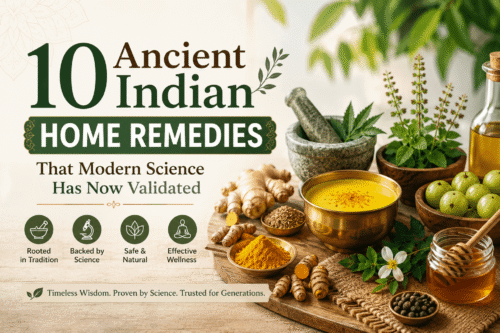
Ancient Wisdom Meets Modern Research:
Understanding the Connection Between Ayurveda, Folk Traditions, and Science
Long before modern laboratories and advanced medical technology, people learned about health by observing nature, food, seasons, and the human body. Across India, many wellness practices were shaped through thousands of years of experience, careful observation, and knowledge passed from one generation to another.
Today, modern research is beginning to explore many of these traditional practices — not to replace science, but to understand why certain natural ingredients may support health.
Ayurveda: India’s Traditional Science of Life
Ayurveda, one of the world’s oldest traditional health systems, originated in India thousands of years ago. The word “Ayurveda” comes from Sanskrit: “Ayur” meaning life and “Veda” meaning knowledge or science.
Unlike an approach that only focuses on illness, Ayurveda traditionally emphasizes balance and prevention through:
- Food and nutrition
- Daily lifestyle habits
- Herbal preparations
- Physical activity
- Mental wellbeing
- Harmony with natural rhythms
Common ingredients such as turmeric, ginger, amla, tulsi, and triphala have been used in Ayurvedic traditions for generations. Modern studies now examine these plants to identify their active compounds and understand their possible effects on inflammation, digestion, immunity, and overall wellness.
For example, researchers study curcumin from turmeric, gingerols from ginger, and antioxidants from amla to understand how these natural compounds interact with the body.
However, Ayurveda and modern medicine use different methods of evaluation. Traditional use provides valuable historical knowledge, while scientific studies help test safety, effectiveness, dosage, and biological mechanisms.
Folk Traditions: The Wisdom Preserved in Everyday Life
Beyond classical Ayurveda, India has a rich history of folk healing traditions practiced in homes and communities.
Many familiar remedies came from everyday experience:
- Turmeric milk prepared by grandparents during seasonal discomfort
- Ginger tea used after heavy meals
- Ajwain water given for digestive comfort
- Tulsi leaves used in traditional preparations
- Sesame oil practices for oral care
These traditions were often developed through generations of observation. Families noticed patterns — which foods supported digestion, which herbs provided comfort, and which practices helped maintain wellbeing.
This traditional wisdom represents cultural knowledge built over centuries. While every practice may not have scientific confirmation, many natural ingredients used in Indian homes have become subjects of modern research.
Modern Studies: Understanding the Science Behind Traditional Remedies
Modern science studies traditional remedies by asking important questions:
- What active compounds are present?
- How do they work inside the body?
- Are they safe?
- What amount may be effective?
- What are their limitations?
Researchers use laboratory studies, clinical trials, and systematic reviews to examine traditional ingredients.
For example:
- Turmeric is studied for its curcumin compounds and potential anti-inflammatory effects.
- Ginger has been researched for nausea and digestive support.
- Fenugreek is studied for its relationship with blood sugar regulation.
- Amla is examined for antioxidant properties.
Science does not prove that every traditional remedy works exactly as believed in the past. Instead, research helps separate promising practices from unsupported claims and provides a deeper understanding of how natural compounds may contribute to health.
The meeting point between ancient wisdom and modern research is not a competition. It is a conversation — where traditional knowledge offers centuries of observation, and science provides tools to investigate, measure, and understand.
When used responsibly, this combination can help us appreciate natural wellness practices while making informed health decisions.
Important Safety Notes
Traditional Indian remedies such as turmeric, ginger, tulsi, amla, and other natural ingredients have been valued for generations as part of everyday wellness practices. Modern research continues to explore many of these ingredients and their potential health-supporting properties.
However, natural remedies are not a replacement for professional medical advice, diagnosis, or treatment. Their effects may vary depending on a person’s age, health condition, dosage, and individual response.
People who are pregnant, breastfeeding, managing chronic conditions, taking regular medications, or experiencing serious symptoms should consult a qualified healthcare professional before using concentrated herbal preparations or supplements.
The best approach is to respect traditional wisdom while using modern knowledge to make safe and informed health choices.
10 Ancient Indian Home Remedies Supported by Science
For generations, these remedies lived in kitchens and in the memories of grandparents. Long before modern research methods, families observed how certain foods, herbs, and daily practices supported wellbeing.
Today, research has explored the potential benefits of many of these traditional remedies. Science helps us understand the natural compounds behind these practices while respecting the wisdom passed down through generations.
1. Turmeric in Warm Milk for Healthy Inflammatory Balance
Haldi doodh — turmeric milk — has been one of India’s most loved traditional preparations. For generations, families prepared warm turmeric milk as part of seasonal wellness routines and after physically demanding days.
Modern studies have focused on curcumin, the main active compound found in turmeric. Curcumin has been researched for its potential role in supporting a healthy inflammatory response in the body.
Scientists have studied how curcumin interacts with different biological pathways related to inflammation and oxidative stress. However, curcumin naturally has low absorption, which is why traditional recipes often combine turmeric with black pepper. Piperine, a natural compound in black pepper, may improve curcumin availability.
Turmeric works best as part of a balanced diet and healthy lifestyle rather than as a replacement for medical treatment. Exploring the anti-inflammatory foods for healthy living
Discover 30 powerful health lessons from farming communities. Learn how rural lifestyle habits support fitness, sleep, and resilience.
2. Ginger for Occasional Nausea and Digestive Comfort
Adrak, or ginger, has been valued in Indian kitchens for centuries. Ginger tea and warm ginger preparations are commonly used after meals and during times of digestive discomfort.
Modern research has studied ginger for its ability to help manage occasional nausea, including motion-related discomfort and pregnancy-associated nausea.
The natural compounds gingerols and shogaols are believed to influence digestive activity and communication between the gut and nervous system.
While ginger is a common food ingredient, very high amounts may not be suitable for everyone, especially people taking certain medications.
3. Honey and Tulsi for Throat Comfort and Seasonal Wellness
The combination of honey and tulsi (holy basil) is deeply connected with traditional Indian household care.
Honey may help soothe the throat and support comfort during occasional coughs. Its texture creates a soothing effect, and researchers have studied honey for its natural antimicrobial properties.
Tulsi contains plant compounds such as eugenol and rosmarinic acid that have been studied for their immune-supporting and antioxidant properties.
This traditional combination represents how simple kitchen ingredients have long been used to support everyday wellness.
Note: Honey should not be given to children below one year of age.
4. Sesame Oil Pulling for Oral Hygiene Support
Oil pulling, traditionally known as kavala, involves gently swishing sesame or coconut oil in the mouth.
This Ayurvedic practice has been used for generations as part of oral care routines.
Modern research suggests that oil pulling may help support oral hygiene when combined with regular brushing, flossing, and dental care.
Studies have explored its possible role in reducing certain oral bacteria and supporting gum cleanliness.
Oil pulling should be considered an additional practice, not a replacement for professional dental care.
5. Castor Oil for Traditional Joint Comfort Practices
Castor oil, known as arandi ka tel, has traditionally been applied externally in Indian households for body comfort and relaxation.
The main compound in castor oil, ricinoleic acid, has attracted scientific interest because of its potential biological effects.
Early research explores how castor oil preparations may influence comfort and inflammatory pathways, but more high-quality studies are needed.
Traditional external use should be practiced carefully, especially for people with sensitive skin.
6. Triphala for Digestive and Antioxidant Support
Triphala is one of Ayurveda’s most respected traditional formulations. It combines three fruits:
- Amla
- Bibhitaki
- Haritaki
For generations, it has been associated with digestive balance and overall wellness.
Modern research shows that Triphala contains plant compounds such as polyphenols and antioxidants. These compounds are being studied for digestive support, gut bacteria balance, and protection against oxidative stress.
Along with traditional herbs, everyday foods also play an important role in maintaining digestive wellness. Fermented foods like yogurt, kefir, kimchi, sauerkraut, and traditional Indian fermented foods provide helpful microorganisms. These microorganisms may support gut balance.
Rather than viewing Triphala as a “detox cure,” it is better understood as a traditional preparation with nutrients and compounds that may support digestive wellness.
7. Neem for Skin Wellness
Neem has a long history in Indian traditional practices. Leaves, extracts, and oils from the neem tree have been used externally for skin care and hygiene.
Neem contains natural compounds such as nimbin and nimbidin that researchers have studied for antimicrobial and antioxidant properties.
Modern studies continue to explore neem’s potential applications in skincare.
Neem oil and concentrated products should be used carefully and should not be consumed unless recommended by a qualified professional.
8. Ajwain (Carom Seeds) for Digestive Support
Ajwain has been a trusted kitchen ingredient in Indian homes for generations.
Many families traditionally used ajwain water or roasted ajwain after meals to support digestive comfort.
The main natural compound in ajwain, thymol, has been studied for its relationship with digestive enzyme activity and gut function.
Ajwain remains an example of how everyday spices may contribute to traditional wellness practices.
9. Fenugreek Seeds for Healthy Blood Sugar Support
Methi, or fenugreek seeds, have long been used in traditional Indian diets.
Modern studies have examined fenugreek for its potential role in supporting healthy blood sugar management when combined with balanced eating habits and an active lifestyle.
Fenugreek contains soluble fibre and natural plant compounds that may influence digestion and glucose absorption.
People taking diabetes medications should consult a healthcare professional before using concentrated fenugreek preparations.
10. Amla (Indian Gooseberry) for Overall Wellness
Amla holds a special place in Ayurveda and traditional Indian food culture. For generations, this small green fruit has been valued as part of daily wellness practices.
Amla is naturally rich in vitamin C, antioxidants, and protective plant compounds such as polyphenols. Modern research continues to study amla for its antioxidant properties and its role in supporting general health and wellbeing.
However, a strong immune system does not depend on a single superfood. It develops through a combination of balanced nutrition, regular movement, quality sleep, stress management, and healthy daily routines.
Learning simple nutrition habits for strong immunity helps you see how foods, vitamins, minerals, and lifestyle choices work together. It supports the body’s natural defense system.
Rather than seeing amla as an instant immunity booster, it is better appreciated as a nutrient-rich traditional food that can be included as part of a balanced and healthy lifestyle.
The Balance Between Ancient Wisdom and Modern Understanding
Traditional Indian remedies represent generations of observation, connection with nature, and everyday wellness practices.
Modern research provides new tools to study these traditions, understand their active compounds, and identify safe ways to use them.
The future of wellness may not depend on choosing between ancient wisdom and science — but learning how both can respectfully work together.
How to Use Traditional Remedies Safely: Respect Nature, But Use Wisdom
Natural remedies have been part of Indian households for generations. Ingredients like turmeric, ginger, tulsi, amla, and fenugreek are familiar foods that connect us with traditional wellness practices.
However, “natural” does not always mean suitable for everyone or safe in every amount. Ancient wisdom works best when combined with modern understanding, careful use, and awareness of individual health needs.
Here are three important things to remember before using traditional remedies.
1. Quality Matters: Choose Pure and Safe Ingredients
The effectiveness and safety of any natural remedy depend greatly on the quality of the ingredients used.
Traditional households often relied on fresh herbs, locally grown foods, and simple preparations. Today, many products travel through long supply chains, making quality more important.
When choosing natural ingredients:
- Use fresh herbs and spices whenever possible
- Buy from trusted sources
- Check labels carefully on packaged herbal products
- Avoid products with unnecessary additives
- Store spices and herbs properly to maintain freshness
For example, good-quality turmeric contains natural curcuminoids, while fresh ginger provides beneficial plant compounds like gingerols.
Choosing clean, authentic ingredients helps preserve the value of traditional remedies.
2. Dosage Matters: More Is Not Always Better
One common misunderstanding about natural remedies is believing that larger amounts create better results.
Traditional healing systems usually focused on balance — using the right ingredient, in the right amount, at the right time.
A small amount of ginger in tea or turmeric in cooking may support general wellness, but highly concentrated extracts or supplements can have stronger effects on the body.
Excessive intake of certain herbs may cause unwanted effects. For example:
- Too much ginger may cause digestive discomfort in some people
- High amounts of fenugreek may affect blood sugar levels
- Concentrated herbal preparations may interact with medicines
Natural remedies should be used with patience and moderation rather than expecting quick results.
3. Medical Conditions Matter: Every Body Is Different
A remedy that works well for one person may not be suitable for another. Age, health conditions, allergies, pregnancy, and medications can influence how the body responds.
Extra care is needed for people with:
- Diabetes
- Heart conditions
- Kidney or liver problems
- Pregnancy or breastfeeding
- Long-term medication use
- Known allergies
For example, fenugreek may influence blood sugar, and some herbs may interact with prescribed medicines.
If you have a medical condition or are taking regular medication, it is always wise to speak with a qualified healthcare professional before using herbal supplements or strong traditional preparations.
Finding Balance Between Tradition and Science
Traditional Indian remedies are a beautiful reminder of the relationship between humans and nature. They carry generations of observation, cultural experience, and practical wisdom.
Modern research adds another layer by helping us understand safety, active compounds, and possible benefits.
The goal is not to choose between ancient wisdom and modern science — but to bring them together thoughtfully.
When used responsibly, traditional remedies can remain a valuable part of a balanced and healthy lifestyle.
“This article explores traditional wellness practices and current scientific research. It is intended for educational purposes and encourages readers to combine cultural wisdom with evidence-based health decisions.”
FAQ
- Are Indian home remedies scientifically proven?
Some traditional Indian remedies have been studied by modern researchers, and certain ingredients like turmeric, ginger, and amla show promising health-supporting properties. However, results depend on preparation, dosage, and individual health conditions.
2. Can Ayurvedic remedies replace medicine?
No. Traditional remedies can support general wellness but should not replace prescribed medical treatment.
3. Which Indian home remedy has the strongest scientific support?
Turmeric, ginger, honey, and fenugreek are among the most researched traditional ingredients.
About the Author
“Jesu Raj, founder of BenVitalFive, explores natural wellness traditions, mindful living, nutrition, and evidence-informed healthy habits inspired by decades of observing community health practices.”

