

Motivation vs Discipline: Why Discipline Is the Real Secret to Lasting Success.
Introduction: The Difference Between Starting and Finishing
Have you ever felt inspired to change your life after watching a motivational video, reading an uplifting quote, or listening to a successful person speak? You decide that tomorrow will be different. You plan to wake up early, exercise, eat healthier, read more books, and finally pursue your goals.
For a few days, everything goes well.
Then life happens. You wake up tired. Work becomes busy. The weather isn’t pleasant. The excitement fades. Suddenly, the habits you were determined to build begin to disappear.
If this sounds familiar, you’re not alone.
A powerful quote captures this reality perfectly:
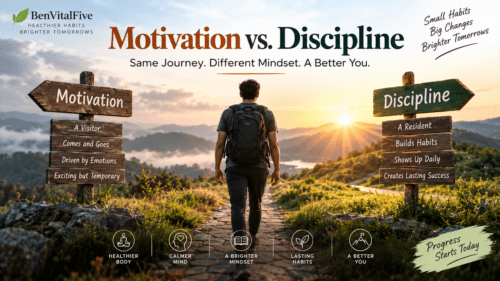
“Motivation gets you started. Discipline keeps you growing. Motivation is a visitor, but discipline is a resident.”
This simple statement reveals one of the greatest truths about personal growth. Motivation is an emotion. It comes and goes like the weather. Discipline, however, becomes part of who you are. It quietly guides your actions even when you don’t feel inspired.
Whether your goal is improving your health, practicing yoga, meditating daily, reading more books, or living a longer and healthier life, discipline—not motivation—is what makes lasting success possible.
At BenVitalFive, we believe that lasting wellness is built through small, consistent daily habits rather than occasional bursts of enthusiasm. Those daily habits become the foundation of a healthier body, a calmer mind, and a more meaningful life.
What Is Motivation?
Motivation is the internal desire that encourages us to take action. It often begins with a powerful emotion:
- A doctor’s advice inspires you to become healthier.
- A friend’s success motivates you to start exercising.
- A motivational book encourages you to learn new skills.
- A beautiful sunrise inspires you to begin practicing yoga.
Motivation is valuable because it helps us begin.
Without motivation, many people would never take the first step toward positive change.
Psychologists describe motivation as the process that directs and energizes goal-oriented behavior. It influences why we start a task, how much effort we invest, and whether we continue despite obstacles. Research from the American Psychological Association explains that motivation can be driven by both internal satisfaction (intrinsic motivation) and external rewards (extrinsic motivation).
The problem is that motivation is closely tied to emotions.
Emotions naturally rise and fall.
Why Motivation Alone Isn’t Enough
Think about New Year’s resolutions.
Every January, millions of people promise themselves they will:
- Lose weight
- Exercise regularly
- Eat healthier
- Read more books
- Save money
- Meditate every day
Yet studies consistently show that many of these resolutions are abandoned within the first few months of the year. Initial excitement fades, and daily routines return. This pattern highlights why enthusiasm alone rarely creates lasting change.
The reason isn’t laziness.
The reason is that motivation depends on feelings.
Feelings change.
Imagine waiting until you “feel motivated” before brushing your teeth. Most people don’t do that. They brush because it has become a habit. The same principle applies to walking, yoga, healthy eating, reading, or meditation. When these behaviors become disciplined routines, they require much less mental effort.
This idea is supported by research on habit formation. Scientists have found that repeating a behavior consistently in the same context helps it become more automatic over time. The exact number of days varies from person to person, but consistency matters far more than perfection.
The Science Behind Discipline and Habits
Modern neuroscience provides an encouraging message.
Your brain is designed to adapt.
This ability, known as neuroplasticity, means that repeated behaviors strengthen the neural pathways associated with those actions. Every time you repeat a healthy habit, your brain becomes slightly more efficient at performing it again.
Research supported by the National Institutes of Health shows that the brain continually changes in response to learning and repeated experiences. Healthy routines can gradually become easier because your brain is literally adapting to them.
This explains why disciplined people don’t necessarily have stronger willpower.
Instead, they often rely on routines that reduce the need for constant decision-making.
The more often you choose healthy behaviors, the more natural they become.
What Is Discipline?
Discipline is the ability to do what needs to be done, even when you don’t feel like doing it.
Unlike motivation, discipline is not based on emotion.
It is based on commitment.
A disciplined person doesn’t wait for perfect conditions.
They act because they have decided that their long-term goals are more important than their temporary feelings.
For example:
- A disciplined reader opens a book every evening, even after a busy day.
- A disciplined walker takes a morning walk whether the sky is sunny or cloudy.
- A disciplined meditator spends ten quiet minutes each day instead of waiting for the “perfect mood.”
- A disciplined eater chooses nourishing foods most of the time instead of relying on willpower alone.
Notice something important.
None of these actions are extraordinary.
They are simple.
The secret is repeating them consistently.
Motivation vs. Discipline: A Simple Comparison
| Motivation | Discipline |
|---|---|
| Emotional | Intentional |
| Temporary | Lasting |
| Starts the journey | Sustains the journey |
| Depends on feelings | Depends on commitment |
| Comes and goes | Grows stronger with practice |
This is why successful people often appear consistent rather than constantly inspired.
They have learned to trust their routines instead of their emotions.
A Lesson from Nature
Nature offers a beautiful reminder of how discipline works.
The sun rises every morning.
It doesn’t wait to feel inspired.
A tree grows slowly, adding one ring at a time. It doesn’t become a mighty tree overnight. Year after year, through sunshine and storms, it keeps growing.
A river shapes valleys not because of one powerful wave but because of continuous flow over many years.
Human growth follows the same principle.
Small, consistent actions may seem insignificant today, but over months and years they create remarkable transformation.
As the ancient philosopher Aristotle wisely observed:
“We are what we repeatedly do. Excellence, then, is not an act but a habit.”
That timeless insight remains just as relevant today.
Naturally Related Articles to Explore
As you begin building discipline, you may also enjoy these articles on BenVitalFive:
- The First 20 Minutes After You Wake Up – Discover how a simple morning routine sets the tone for your entire day.
- Yoga Isn’t What You Think It Is—Learn why yoga is about consistency, not flexibility.
- A Beginner’s Guide to Meditation—Build a daily meditation practice one step at a time.
- The Daily Habit of Reading – Explore how reading strengthens your mind and supports lifelong learning.
These habits work together. Each small improvement reinforces the others, creating a healthier and more balanced lifestyle.
Why Discipline Is the Foundation of Long-Term Success
Have you ever wondered why two people with similar talents achieve completely different results?
One person reaches their goals, while the other keeps starting over.
The difference is rarely intelligence, talent, or luck. More often, it is consistency.
Discipline allows ordinary people to achieve extraordinary results by repeating small actions over time. Every healthy meal, every page you read, every yoga session, every meditation practice, and every early morning walk may seem insignificant on its own. But together, they create a lifestyle that leads to lasting success.
James Clear, author of Atomic Habits, explains this idea beautifully: small improvements, repeated consistently, produce remarkable long-term results. Success is rarely the result of one big decision; it is the outcome of thousands of small, disciplined choices.
At BenVitalFive, we encourage readers to focus on progress rather than perfection. Missing one workout or one meditation session doesn’t define you. What matters is returning to your routine the next day.
The Hidden Benefits of Self-Discipline
Discipline influences nearly every area of life.
Better Physical Health
People who follow consistent routines are more likely to:
- Exercise regularly.
- Eat nutritious meals.
- Maintain a healthy weight.
- Sleep better.
- Reduce the risk of lifestyle-related diseases.
The World Health Organization recommends regular physical activity because it lowers the risk of heart disease, diabetes, certain cancers, and depression. These benefits come from consistent habits, not occasional bursts of exercise.
If you’re looking for a simple place to begin, read “The First 20 Minutes After You Wake Up” on BenVitalFive. A healthy morning routine can make disciplined choices easier throughout the day.
Greater Mental Clarity
Daily meditation, reading, and mindfulness improve focus and emotional balance.
Research suggests that regular mindfulness practice can reduce stress and improve attention. Scientists have observed measurable changes in brain regions associated with learning, emotional regulation, and memory after consistent meditation practice.
If you haven’t started yet, our Beginner’s Guide to Meditation can help you build a simple daily practice.
Increased Confidence
Confidence doesn’t come from positive thinking alone.
It comes from keeping promises you make to yourself.
Every time you complete a planned walk, finish a chapter of a book, or choose a healthy meal instead of junk food, you strengthen self-trust.
Over time, disciplined actions become evidence that you are capable of achieving your goals.
Seven Daily Habits That Build Discipline
You don’t become disciplined overnight.
You become disciplined by repeating simple habits until they become part of your identity.
1. Wake Up at the Same Time
A consistent wake-up time helps regulate your body’s internal clock.
Rather than checking your phone immediately, spend your first few minutes drinking water, stretching, or simply enjoying a few moments of quiet.
This simple habit creates a calm and intentional start to the day.
2. Move Your Body Every Day
You don’t need an intense workout.
Walking, yoga, cycling, or gentle stretching for 20–30 minutes is enough to build consistency.
If you’re new to yoga, explore our article “Yoga Isn’t What You Think It Is.” You’ll discover that yoga is less about flexibility and more about showing up regularly.
3. Read Every Day
Reading expands knowledge, improves concentration, and stimulates creative thinking.
Even ten pages a day can become more than a dozen books in a year.
Consistency matters far more than speed.
4. Practice Meditation
Meditation trains your attention.
Begin with just five minutes.
Focus on your breathing.
When your mind wanders, gently bring your attention back without judging yourself.
Like physical exercise, meditation becomes easier through regular practice.
5. Eat Healthy Most of the Time
Discipline isn’t about never enjoying your favorite foods.
It’s about making healthy choices consistently.
Fill your plate with fruits, vegetables, whole grains, legumes, healthy fats, and adequate protein.
Healthy eating becomes easier when nutritious foods are readily available at home.
6. Limit Digital Distractions
Modern technology is designed to capture attention.
Try these simple strategies:
- Turn off unnecessary notifications.
- Schedule dedicated reading time.
- Avoid checking your phone during meals.
- Keep your phone away during meditation.
- Create technology-free periods before bedtime.
Small changes can significantly improve your ability to stay focused.
7. Reflect Before Sleeping
Spend five minutes each evening asking yourself:
- What went well today?
- What could I improve tomorrow?
- Which healthy habit did I complete?
- What am I grateful for?
This simple reflection strengthens awareness and helps maintain consistency.
The Biggest Obstacles to Discipline
Even disciplined people face challenges.
The difference is that they prepare for them.
Waiting to Feel Motivated
This is perhaps the most common mistake.
If you only exercise when you feel energetic, you’ll exercise less often.
Instead, schedule healthy habits like important appointments.
Action often creates motivation—not the other way around.
Trying to Change Everything at Once
Many people attempt to transform their entire lifestyle overnight.
They begin exercising every day, eliminate sugar completely, meditate for thirty minutes, read two books a week, and wake up at 5 a.m.
Within days, they become exhausted.
A better approach is to improve one habit at a time.
Small wins build lasting confidence.
Fear of Imperfection
Perfection is the enemy of consistency.
Missing one day doesn’t erase your progress.
The important thing is to return the next day.
Think of discipline as a long journey rather than a perfect streak.
Real-Life Examples of Discipline
History is filled with people whose success was built on disciplined routines.
- Athletes become champions through years of consistent training—not because they feel motivated every day.
- Musicians master their instruments through daily practice.
- Writers complete books by writing page after page, even on difficult days.
- Farmers plant seeds, water crops, and patiently wait for harvest. Nature itself teaches that lasting growth takes time.
Their achievements remind us that great success is usually the result of ordinary actions performed consistently over many years.
A Simple Challenge for This Week
Instead of making ten promises to yourself, choose one small habit.
For example:
- Walk for 20 minutes every morning.
- Read ten pages before bed.
- Practice five minutes of meditation.
- Drink a glass of water after waking up.
- Write three things you’re grateful for every evening.
Repeat that one habit every day for the next seven days.
Small actions repeated consistently become the foundation of lifelong
Make Discipline Part of Your Identity
Many people say:
- “I want to exercise.”
- “I want to meditate.”
- “I want to read more books.”
These are good goals, but they focus on what you want to do rather than who you want to become.
Lasting change begins when you shift your identity.
Instead of saying:
- “I want to exercise.”
Say:
- “I am a person who takes care of my health.”
Instead of saying:
- “I want to read.”
Say:
- “I am a lifelong learner.”
Instead of saying:
- “I want to meditate.”
Say:
- “I am someone who values inner peace.”
Your actions gradually begin to match your identity.
Every healthy meal, every morning walk, every page you read, and every meditation session becomes a vote for the person you want to become.
That is the true power of discipline.
Five Practical Strategies to Stay Disciplined
Even disciplined people experience difficult days. The secret is not avoiding challenges but preparing for them.
1. Start Small
Don’t aim for perfection.
Aim for consistency.
A five-minute walk is better than skipping exercise.
Reading one page is better than reading nothing.
Meditating for three minutes is better than waiting for thirty perfect minutes.
Small actions maintain momentum.
2. Build Your Environment
Your surroundings influence your habits more than you realize.
Make healthy choices easier.
For example:
- Keep fresh fruits on the kitchen counter.
- Leave your yoga mat where you can see it.
- Place a book beside your bed.
- Keep a reusable water bottle on your desk.
When healthy habits are visible, you’re more likely to practice them.
3. Track Your Progress
Use a notebook, calendar, or habit tracker.
Mark every successful day.
Watching your progress grow becomes motivating in itself.
Remember, don’t aim for a perfect record.
Aim to never miss twice.
4. Find an Accountability Partner
Sharing your goals with a trusted friend or family member increases commitment.
Encourage each other.
Celebrate progress together.
Healthy habits are often easier when they are shared.
5. Celebrate Small Victories
Don’t wait until you’ve lost 20 kilograms or finished 50 books.
Celebrate today’s success.
Each disciplined action deserves recognition because every small step contributes to long-term growth.
Discipline and the Five Pillars of BenVitalFive
At BenVitalFive, we believe true wellness is built through consistent daily habits across five important areas of life.
Healthy Living
Healthy living isn’t about occasional dieting.
It’s about making nourishing choices every day.
Explore:
Healthy Living articles on BenVitalFive.
Yoga & Functional Fitness
Yoga teaches patience, balance, and consistency.
One session won’t transform your body.
Months of regular practice will.
Read:
Yoga Isn’t What You Think It Is (And That’s Good News)
Mindfulness & Meditation
Inner peace develops through regular practice.
Even five mindful minutes every day can strengthen your ability to manage stress and improve emotional well-being.
Read:
A Beginner’s Guide to Meditation
Reading for Intellectual Growth
Books expand your thinking.
Ten pages every day becomes more than 3,500 pages a year.
That’s the power of discipline.
Read:
Why Reading Every Day Changes Your Life
Natural Remedies & Healthy Nutrition
Good nutrition isn’t about finding a miracle food.
It’s about consistently choosing wholesome foods that nourish your body over time.
Explore:
Healthy Nutrition & Natural Remedies
Final Thoughts
Success rarely arrives overnight.
Most meaningful achievements are built quietly, one disciplined day at a time.
Motivation is exciting.
It inspires us to begin.
But motivation is temporary.
Some mornings you’ll wake up energized.
Other mornings you’ll feel tired.
Some days you’ll be enthusiastic.
Other days you’ll struggle.
If you rely only on motivation, your progress will rise and fall with your emotions.
Discipline is different.
Discipline shows up on ordinary days.
It helps you take a walk when you’d rather stay on the couch.
It encourages you to read one more page before sleeping.
It reminds you to meditate, prepare a healthy meal, and choose progress over excuses.
Years from now, your life will not be shaped by occasional moments of inspiration.
It will be shaped by the habits you practiced consistently.
As Aristotle wisely said,
“We are what we repeatedly do. Excellence, then, is not an act but a habit.”
So don’t ask yourself,
“Do I feel motivated today?”
Instead ask,
“What is one disciplined action I can take today?”
That single question has the power to change your life.
Key Takeaways
- Motivation helps you start.
- Discipline helps you continue.
- Small habits create remarkable results over time.
- Consistency matters more than perfection.
- Your identity is shaped by what you repeatedly do.
- Every disciplined choice brings you one step closer to lasting health and success.
Frequently Asked Questions
Is discipline more important than motivation?
Yes. Motivation is useful for getting started, but discipline keeps you moving forward when motivation fades. Long-term success depends on consistent action rather than temporary emotions
Can discipline be learned?
Absolutely.
Like any skill, discipline improves with practice. Starting with small, repeatable habits makes it easier to develop self-discipline over time.
How long does it take to build a habit?
There is no single number that applies to everyone. Research published in the European Journal of Social Psychology found that habits become automatic at different rates depending on the person, the behavior, and the situation. The important lesson is to focus on consistency rather than counting days.
What is the easiest way to become more disciplined?
Begin with one small habit.
Practice it every day.
When it becomes part of your routine, add another healthy habit.
Small steps lead to lasting transformation.
Is discipline important for healthy living?
Yes.
Regular exercise, healthy eating, meditation, quality sleep, and lifelong learning all depend on discipline. These consistent behaviors are the foundation of long-term physical and mental well-being.
Call to Action
Discipline isn’t about being perfect—it’s about showing up, one day at a time.
What’s one small habit you’ll commit to today?
Share your answer in the comments below. Your commitment might inspire someone else to begin their own journey toward a healthier, happier, and more disciplined life.

