
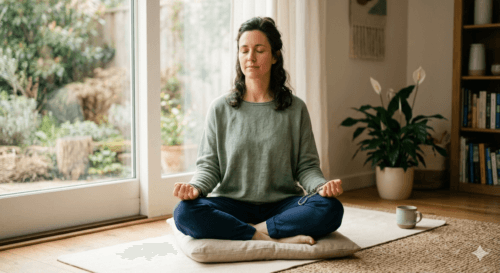
Heartfulness Meditation: A Science-Backed Guide to Reduce Stress, Calm the Mind, and Overcome Overthinking
INTRODUCTION
In today’s hyper-connected world, stress, anxiety, and constant overthinking have become the default state for many. We are bombarded by notifications, deadlines, and a relentless “mental chatter” that makes it nearly impossible to find true quiet.
Many people are searching for a meditation for beginners that is simple, effective, and offers a way to experience inner peace—without requiring complex rituals or spiritual overload.
One method that stands out for its clinical efficiency is Heartfulness Meditation. Practiced globally for over a century, this heart-centered meditation technique offers a practical way to reduce mental noise, improve emotional balance, and develop a deep sense of inner awareness.
In this comprehensive guide, we will explore:
- A simple step-by-step meditation technique for daily use.
- The neuroscience behind meditation and how it rewires the brain.
- Evidence-based benefits for mental health and anxiety reduction.
How to achieve mental clarity by mastering your internal focus.
What Is Heartfulness Meditation?
Heartfulness meditation is a gentle, awareness-based practice where attention is intentionally shifted from the mind to the heart. While many traditional practices focus on the breath or a specific mantra, this technique suggests that the heart is the natural center of our being and the most effective anchor for stillness.
Unlike other mindfulness meditation benefits you might have read about, Heartfulness:
Does not require visualization: You aren’t creating mental images.
Does not involve chanting: It is a silent, internal process.
Is highly accessible: It is an ideal meditation for beginners but offers enough depth for lifelong practitioners.
The core philosophy is simple: When our attention rests in the heart, the “fight-or-flight” activity of the brain begins to subside, allowing the mind to quiet down naturally rather than through forced concentration.
Heartfulness Meditation is a simple, heart-centered relaxation technique that focuses on the subtle feeling of light within the heart to achieve mental clarity. Unlike traditional mindfulness, it prioritizes “feeling” over “concentration,” helping to reduce activity in the Default Mode Network (DMN), lower stress, and effectively stop overthinking through a natural, effortless process.
How to Practice Heartfulness Meditation (Step-by-Step)
To get the most out of meditation for stress relief, consistency and posture are key. Follow these steps to begin your journey toward mental clarity.
The Method
Find Your Space: Sit comfortably in a relaxed posture. You can sit on a chair or the floor; the goal is to be alert yet physically at ease.
Close Your Eyes: Gently close your eyes to withdraw your senses from the external world.
Center Your Attention: Bring your focus to your heart. Do not try to locate the physical organ; simply focus on the general area of the chest.
The “Felt Sense” of Light: Gently suggest to yourself that there is a source of light or peace already present within your heart.
Note: Do not visualize light. This is not an exercise in imagination. Simply rest your attention on the idea or the feeling of light.
Wait and Observe: If your mind wanders—which it will—simply notice the thought and gently return your attention to the heart. Do not judge yourself or fight the thoughts.
Duration & Consistency
Beginners: Start with 15–20 minutes daily, preferably in the morning.
Advanced: Gradually increase your sessions to 30–60 minutes as your capacity for stillness grows.
Pro-Tip: The goal is effortlessness. If you find yourself straining to concentrate, take a deep breath and “drop” back into the feeling of the heart.
How to Deal with Overthinking During Meditation
The biggest hurdle for most people is how to stop overthinking. We often believe that meditation means having a “blank mind,” but that is a common misconception.
Instead of trying to suppress your thoughts, use these mental clarity techniques:
The Cloud Analogy: View your thoughts as clouds passing through a vast sky. You are the sky, not the clouds.
The Traffic Analogy: Imagine thoughts as cars driving past on a road. You are simply a stationary observer on the sidewalk; you don’t need to hop into every car that passes.
Non-Engagement: When a thought arises about work, chores, or past events, acknowledge it and say, “Not now.” This is a form of cognitive defusion, a core tenet of Acceptance and Commitment Therapy (ACT).
The Science Behind Heartfulness Meditation
As a wellness researcher, I believe it is vital to understand the “why” behind the “how.” Modern neuroscience provides compelling evidence that heart-centred meditation creates physical changes in the brain and nervous system.
For deeper practice, explore kundalini yoga techniques to awaken inner energy, as detailed in Kundalini Yoga: Benefits, Techniques, Meditation & Beginner’s Guide.
These techniques also help connect the mind and body in a similar way.
1. Reducing Activity in the Default Mode Network (DMN)
The DMN is the “wandering mind” part of the brain. It is active when we are ruminating on the past or worrying about the future. Studies indicate that meditation deactivates this network, leading to a significant reduction in anxiety and overthinking. One of the most important scientific explanations behind meditation is the default mode network regulation. Research on how meditation reduces activity in the default mode network shows a direct link between meditation and reduced overthinking.
Additionally, 10 Simple Mindfulness Exercises for Busy Professionals (2026 Guide) can help reduce mind-wandering in everyday life.
2. Boosting Heart–Brain Coherence
Focusing on the heart influences the vagus nerve, which acts as the “information highway” between the heart and the brain. Increasing heart rate variability (HRV) through this focus leads to better emotional balance and resilience. Research demonstrates a direct link between increased HRV and emotional balance and resilience, highlighting the benefits of heart-focused meditation in improving heart–brain coherence.
This mind–body synchronization is also supported by physical practices like Iyengar yoga. Explore Iyengar Yoga: The Complete Guide to Precision, Alignment, and Healing, which improves awareness and internal stability.
3. Activating the Parasympathetic Nervous System
By shifting from “fight-or-flight” to “rest-and-digest,” this practice helps reduce anxiety naturally. It lowers cortisol levels (the stress hormone) and slows the heart rate, providing immediate stress relief.
Reference: Benson, H. (1975). The relaxation response. Psychiatry.
Why This Technique Works for Modern Life
Heartfulness meditation is uniquely suited for our busy lives because it is:
- Simple: No complex mantras or equipment needed.
- Natural: It leverages the body’s own biological centers (the heart) to calm the mind.
- Scalable: It fits into a 15-minute morning routine or a deep hour-long weekend practice.
Integrating Meditation Into Daily Life
To fully experience these benefits, consistency is essential.
You can build a simple daily habit by following how to build a daily wellness routine for mental clarity. How to Build a Daily Wellness Routine Using the Five Pillars.
This will help you include meditation easily in your everyday life.
My 10-Year Journey with Heartfulness
After a decade of daily practice, the most profound shift I’ve noticed isn’t that my thoughts stopped—it’s that they lost their power. By using these mental clarity techniques, I’ve gained:
- A dramatic reduction in daily overthinking.
- The ability to remain calm under high-pressure work environments.
- There should be a “baseline” of peace that persists even when life becomes chaotic.
Common Mistakes to Avoid
- Forcing the Mind: The more you fight a thought, the stronger it gets.
- Seeking “Visions”: Remember, this is about feeling, not seeing.
- Inconsistency: 15 minutes every day is far more effective than two hours once a week.
Final Thoughts: A Simple Path to Inner Peace
You don’t need to travel to a mountaintop or spend thousands on “guru” courses to find quiet. Heartfulness meditation proves that the most powerful tool for stress relief is already beating inside your chest.
By learning to sit, observe, and gently return to the heart, you discover a profound truth: Peace was always there—you just had to stop chasing thoughts to notice it.
Frequently Asked Questions
1. How is Heartfulness different from mindfulness?
While both practices aim for mental clarity, mindfulness usually involves observing thoughts, breath, or bodily sensations with active awareness. Heartfulness Meditation shifts the focus specifically to the heart, prioritizing a “felt sense” over mental observation. It is often described as more effortless because it uses the heart’s natural calming influence to quiet the mind, rather than using the mind to watch itself.
2. Can beginners practice Heartfulness meditation?
Yes, Heartfulness is an ideal meditation for beginners because it does not require complex visualizations, chanting, or difficult breathing techniques. The core instruction is simply to sit comfortably and rest your attention on the heart. Because it doesn’t force concentration, many beginners find it easier to maintain as a daily meditation habit compared to more rigid methods.
3. How long does it take to see results with heartfulness?
Most practitioners report a sense of stress relief and “lightness” after their very first session. However, to stop overthinking and see lasting changes in emotional regulation, consistency is key. Research suggests that 15–20 minutes of daily practice over two weeks leads to noticeable improvements in focus, reduced anxiety, and better heart-brain coherence.
About the Author:
Jesuraj is a wellness researcher and health optimization specialist focused on the intersection of modern neuroscience and traditional herbalism. Dedicated to evidence-based wellness, Jesuraj spends hundreds of hours auditing clinical trials and third-party lab reports to provide readers with objective, fluff-free analysis. By bridging the gap between ancient botanical wisdom and contemporary brain science, Jesuraj empowers individuals to optimize their mental clarity and vitality through the strategic use of adaptogens and targeted supplementation.Everything is written clearly, professionally, and suitable for an affiliate + health-focused website.
References
Benson, H. (1975). The relaxation response. Psychiatry.
Brewer, J. A. et al. (2011). Meditation and DMN activity. PNAS.
Hayes, S. C. et al. (2006). ACT model. Behaviour Research and Therapy.
Lazar, S. W. et al. (2005). Cortical thickness and meditation. NeuroReport.
McCraty, R. et al. (2009). Heart–brain coherence. Integral Review.

