
Philosophy doesn’t fix problems. It changes the person standing in front of them.
Stoicism is having a cultural moment, and that’s both good and slightly misleading. The version that circulates most widely — pithy quotes on social media, the suggestion to “control what you can control” — captures something true but misses the depth that makes the actual practice transformative.
The books below aren’t quick reads. They’re not meant to be. They work slowly, the way any genuine shift in perspective does. Read one and it might feel interesting. Return to it six months later, at a different point in life, and find it speaking directly to something you’re going through.
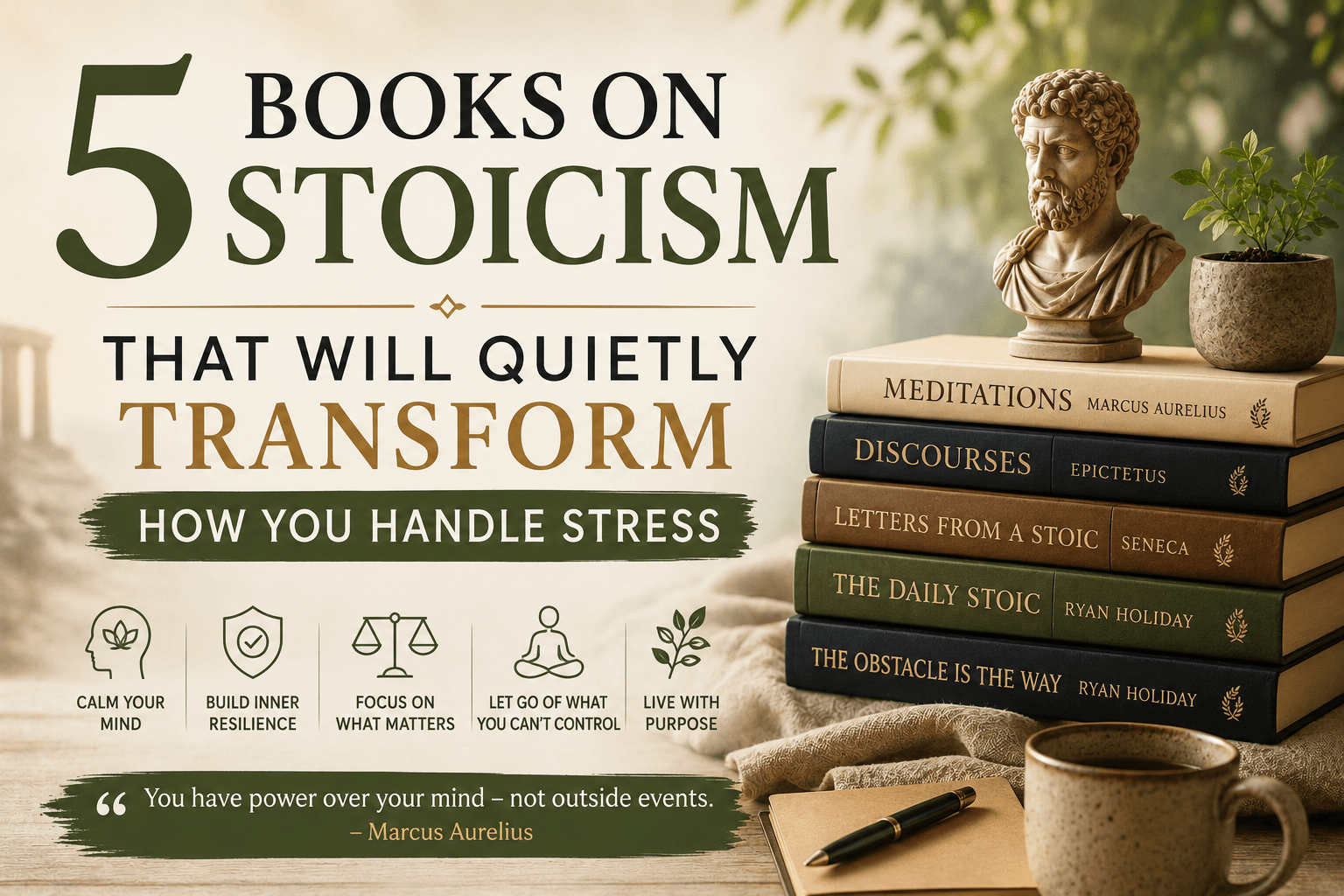
1. Meditations — Marcus Aurelius
The most remarkable thing about Meditations is that it was never meant to be read. Marcus Aurelius — emperor of Rome, arguably the most powerful person in the world during his reign — wrote these notes to himself as a private practice of self-examination. They were never polished for publication.
This makes them unusually honest. He writes about his irritation with people. About his fatigue. About the temptation to complain. And then, in the same breath, he redirects himself toward what he can actually control.
The book doesn’t read as ancient philosophy. It reads as someone trying, in real time, to live better. That’s what makes it last.
What to do with it: Keep it by the bed. Read one or two entries in the morning. Not as inspiration — as calibration.
2. Letters from a Stoic — Seneca
Seneca was a statesman, a playwright, and a man of enormous contradictions — he wrote about the dangers of excessive wealth while being one of the richest men in Rome. That tension makes his writing more interesting, not less.
The Letters are correspondence to a younger man named Lucilius, and they cover everything from how to handle the fear of death to the quality of attention you give to the present moment. Seneca writes with warmth and occasional humour, and he’s particularly insightful on anxiety — on the tendency to suffer in anticipation of things that may never arrive.
Best read when: You’re in a period of uncertainty or pre-emptive worry.
3. A Guide to the Good Life — William Irvine
If the primary texts feel too dense as a starting point, Irvine’s book is the most accessible and practical modern introduction to Stoic practice. He translates ancient teachings into contemporary life — how to apply negative visualisation at the dinner table, how to practise voluntary discomfort, how to handle insults.
Irvine also addresses the common objection that Stoicism leads to passivity or emotional numbness. His argument — that Stoicism creates engagement rather than detachment — is one of the best articulations of why the practice matters for modern people living full, complicated lives.
Best read when: You’re new to Stoicism and want both the philosophy and the practical application.
4. The Obstacle Is the Way — Ryan Holiday
This is the book that brought Stoicism to the widest recent audience, and its reach is deserved. Holiday’s central thesis draws from Marcus Aurelius: the impediment to action advances action. What stands in the way becomes the way.
What distinguishes this book is its use of historical examples — athletes, generals, writers, entrepreneurs — to show Stoic principles operating in concrete situations. It’s less philosophical treatise and more case studies in how adversity can be used rather than merely endured.
Best read when: You’re facing a specific obstacle and need to shift how you’re holding it.
5. Enchiridion — Epictetus
Epictetus was a former slave. He had no political power, no wealth, no imperial title. What he did have was a clarity about the distinction between what is “up to us” and what is not — a distinction he considered the beginning and end of philosophy.
The Enchiridion (which means “handbook”) is short. You can read it in a single sitting. But it condenses more practical wisdom per page than almost anything else in this genre. It’s blunt, occasionally demanding, and completely unconcerned with making you comfortable.
Best read when: You want the core philosophy without elaboration. Return to it once a year.
A Note on How to Read These Books
Don’t read Stoic philosophy the way you’d read a novel. Read a small section, then sit with it. Ask yourself where it applies to something actual in your life right now. The philosophy is only useful if it changes how you respond to the specific circumstances you’re in.
All five books share a central insight: most suffering is self-generated, maintained by judgments and stories we apply to circumstances rather than by the circumstances themselves. That idea, consistently examined and consistently applied, is genuinely life-altering. Not dramatic, not sudden — but real.

