
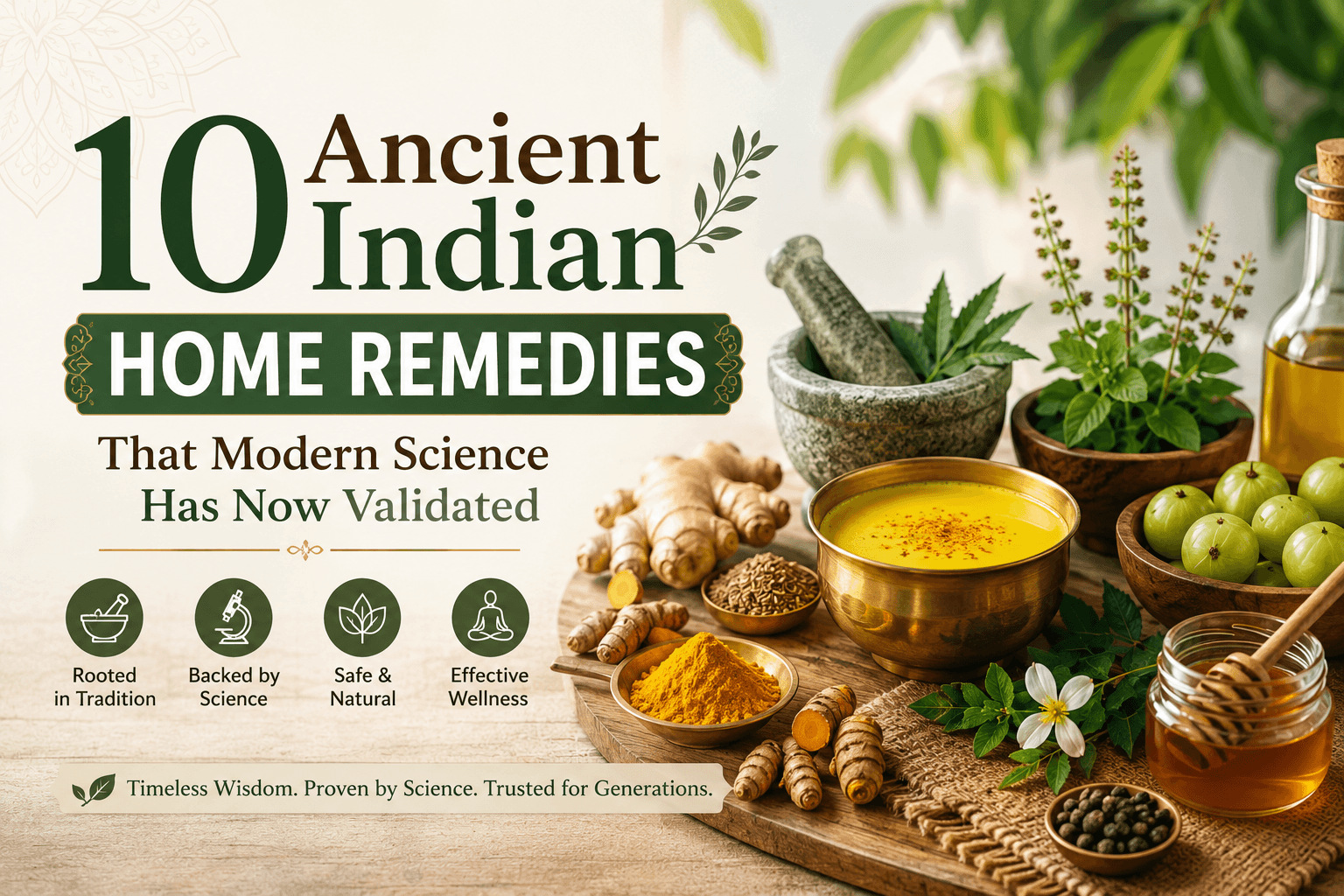
For generations, these remedies lived in kitchens and in grandmothers’ memory. Science took its time, but it arrived.
There’s a particular satisfaction in watching modern research confirm what traditional knowledge held quietly for centuries. Not as a triumph over scepticism, but as a recognition that careful observation over generations is a form of evidence — not the same as randomised controlled trials, but not nothing either.
Here are ten traditional Indian remedies with deep roots in Ayurvedic and folk practice that have now accumulated meaningful scientific support.
1. Turmeric in Warm Milk for Inflammation
Haldi doodh — turmeric milk — was the default response to injury, cold symptoms, and pain in most Indian households. The active compound, curcumin, is now one of the most studied natural anti-inflammatory agents in biomedical research.
A 2016 systematic review in the Journal of Medicinal Food found that curcumin inhibits NF-κB, a key regulator of inflammatory gene expression. The challenge is absorption — curcumin alone is poorly bioavailable. The traditional addition of black pepper (piperine) increases absorption by up to 2000%, which is exactly why many traditional recipes include it.
2. Ginger for Nausea and Digestion
Adrak — ginger — was given to children for upset stomachs, to pregnant women for morning sickness, to travellers for motion sickness. The mechanism is now well understood: gingerols and shogaols block serotonin receptors in the gut that trigger nausea.
A 2014 meta-analysis in Nutrition Journal confirmed ginger’s efficacy for pregnancy-induced nausea. A separate review in the European Journal of Gastroenterology found that ginger accelerates gastric emptying, reducing bloating and discomfort.
3. Honey and Tulsi for Coughs and Upper Respiratory Infections
The combination of raw honey and tulsi (holy basil) leaves for coughs and colds is one of the most common home remedies across South Asia. Both work independently. Together, they’re synergistic.
Honey’s antimicrobial properties are attributable to its hydrogen peroxide content and low pH. A 2012 study in the British Medical Journal found honey more effective than most over-the-counter cough suppressants in children.
Tulsi contains eugenol and rosmarinic acid, both of which have demonstrated antiviral and anti-inflammatory properties. Tulsi extracts have shown activity against common respiratory pathogens in laboratory studies.
4. Sesame Oil Pulling for Oral Health
Kavala (oil pulling) — swishing sesame or coconut oil in the mouth for 10–20 minutes — has been practised in Ayurveda for millennia as a way to reduce oral bacteria and support gum health.
A 2016 randomised controlled trial in the Journal of Clinical and Diagnostic Research found that sesame oil pulling reduced Streptococcus mutans (a major cavity-causing bacterium) as effectively as chlorhexidine mouthwash. It also reduced plaque and gingivitis scores significantly.
5. Castor Oil Packs for Joint Pain
Applied topically, castor oil (arandi ka tel) has been used for joint inflammation and pain relief in traditional medicine. The active component, ricinoleic acid, has been shown to have significant anti-inflammatory and analgesic properties.
A 2009 study in Phytotherapy Research compared castor oil to diclofenac sodium (an anti-inflammatory drug) for knee osteoarthritis and found comparable effectiveness for pain reduction over four weeks.
6. Triphala for Gut Health
Triphala — a combination of three fruits (amalaki, bibhitaki, and haritaki) — is probably Ayurveda’s most versatile formulation. It has been used for digestive regulation, detoxification, and general rejuvenation.
Modern research has found that Triphala is a rich source of polyphenols and gallic acid, both potent antioxidants. It also exhibits prebiotic properties — a 2017 study in the Journal of Evidence-Based Integrative Medicine found that Triphala selectively promoted the growth of beneficial gut bacteria.
7. Neem for Skin Infections
Neem (Azadirachta indica) leaves, bark, and oil have been used topically for skin conditions, infections, and wound healing for over 4,000 years. The plant contains over 130 biologically active compounds.
Nimbidin and nimbin (neem’s primary active compounds) have demonstrated antibacterial activity against both gram-positive and gram-negative bacteria, including Staphylococcus aureus, in multiple laboratory studies. Clinical applications for acne and dermatitis have shown promising results.
8. Ajwain (Carom Seeds) for Bloating
Ajwain — those tiny seeds whose smell is unmistakable — were the go-to remedy for gas, bloating, and indigestion. The active compound thymol is a powerful digestive stimulant.
Research has shown that thymol inhibits the growth of bacteria that produce gas in the gut and stimulates the secretion of digestive enzymes. A 2015 study in Evidence-Based Complementary and Alternative Medicine confirmed ajwain’s efficacy for irritable bowel syndrome symptoms.
9. Fenugreek Seeds for Blood Sugar Regulation
Methi (fenugreek) seeds soaked overnight and consumed in the morning have been used in Indian households for generations as a tonic for people with blood sugar concerns. The seeds contain a high proportion of soluble fibre and a unique amino acid called 4-hydroxyisoleucine.
A systematic review in Nutrition Research found that fenugreek supplementation significantly reduced fasting blood glucose in people with type 2 diabetes. The mechanism involves slowing glucose absorption in the gut and improving insulin sensitivity.
10. Amla (Indian Gooseberry) for Immunity
Amla is the most important single ingredient in Ayurvedic medicine — used in over 50% of traditional formulations. Its vitamin C content is among the highest of any food (600–700mg per 100g, compared to 50mg in oranges), and it survives cooking and drying better than most vitamin C sources.
Research has confirmed amla’s immunomodulatory, hepatoprotective, and antioxidant properties. A 2011 study in the Journal of Medicinal Food found that amla extract reduced oxidative stress markers as effectively as pharmaceutical antioxidants.
These remedies didn’t need validation to be true. But validation gives them a new language — one that travels beyond the kitchen and into a wider conversation about what healing can look like when it begins with the earth.

