
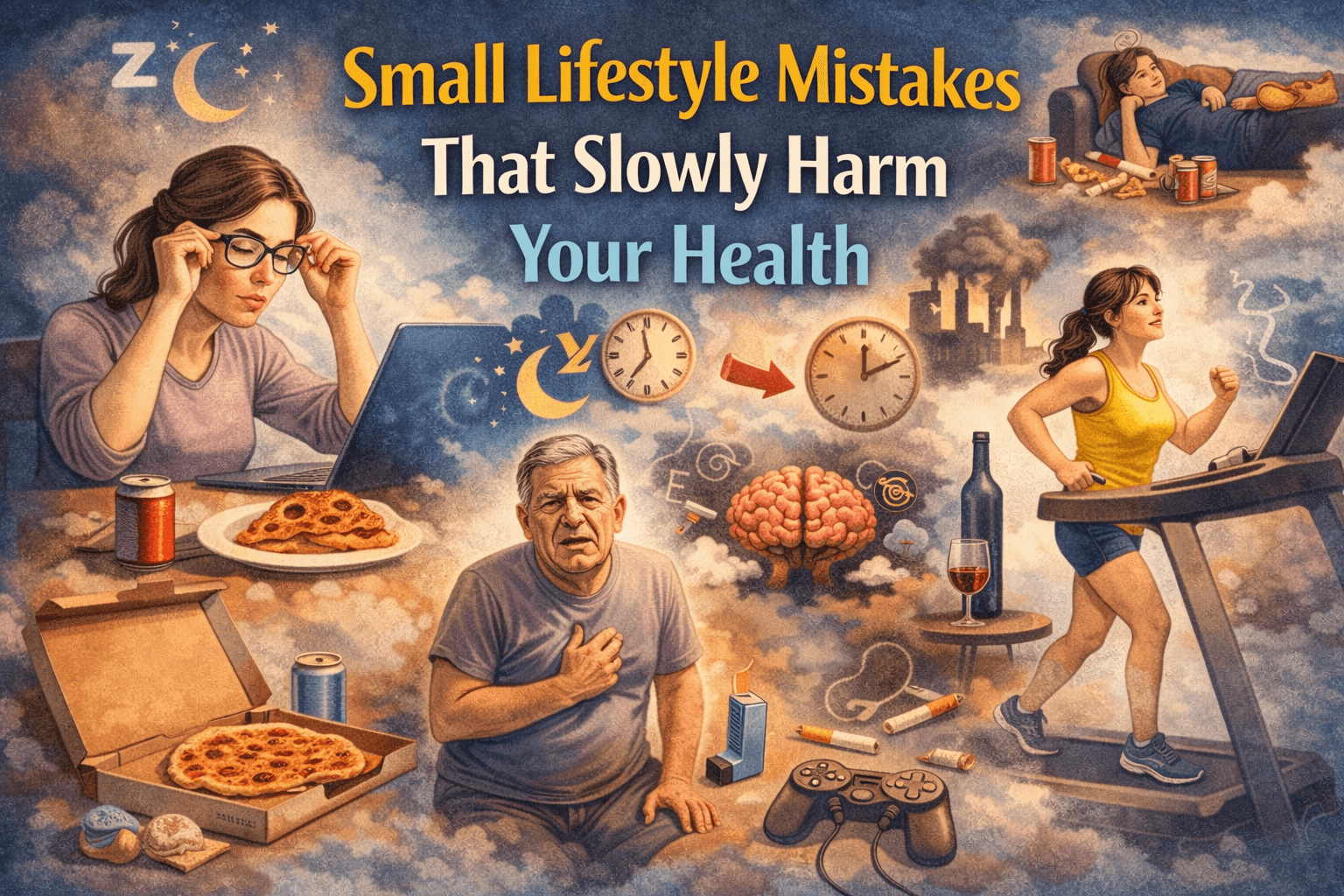
Small Lifestyle Mistakes-That Slowly Harm Your Health

Introduction
Many serious health problems don’t develop overnight. Instead, they build slowly through small daily habits that often go unnoticed. These lifestyle choices may seem harmless at the beginning, but over time they can negatively affect both your physical and mental well-being.
Simple habits such as skipping meals, sitting for long periods, not drinking enough water, or ignoring stress can slowly weaken your body. Because these habits are part of everyday routines, many people don’t realize the long-term impact they can have.
The encouraging news is that small lifestyle mistakes are usually easy to fix once you become aware of them. Making a few simple adjustments to your daily routine can improve your energy levels, strengthen your immune system, and protect your overall health.
As the saying goes:
“Take care of your body. It’s the only place you have to live.”
Understanding and correcting these small habits today can lead to a healthier and more balanced life in the future.
Why Small Lifestyle Habits Matter
Your daily habits play a major role in shaping your long-term health. While occasional unhealthy choices may not cause immediate problems, repeating them every day can gradually damage your body.
Many people believe that maintaining good health requires strict diets or intense exercise routines. Health experts stress consistent small habits, like practicing yoga. Yoga improves mental health by reducing stress, anxiety, and emotional fatigue
For example, regularly staying up late, sitting for long hours, or eating irregular meals may seem minor. But over time, these behaviors can lead to several health problems.
Some common effects of unhealthy daily habits include:
Low energy and constant fatigue
Weak immune system
Weight gain and poor digestion
Increased stress and mental burnout
Difficulty concentrating
Higher risk of lifestyle-related diseases
Research shows that modern lifestyles, especially those involving long hours of screen time and reduced physical activity, contribute significantly to health issues such as obesity, heart disease, and sleep disorders.
The key to preventing these problems is becoming aware of small habits that slowly harm your health and replacing them with healthier routines.
1. Skipping Breakfast Regularly
Breakfast is often called the most important meal of the day, yet many people skip it due to busy schedules or lack of appetite in the morning.
Skipping breakfast may seem like a simple time-saving habit, but it can negatively affect your metabolism and energy levels throughout the day.
When you skip breakfast, your body remains in a fasting state for a longer period. This can lead to lower blood sugar levels, making you feel tired, irritable, and unable to concentrate.
Some common effects of skipping breakfast include:
Reduced energy levels
Difficulty focusing at work or school
Increased cravings for unhealthy snacks
Overeating later in the day
People who skip breakfast often consume larger meals later, which can contribute to weight gain and digestive discomfort.
Eating a balanced breakfast that includes protein, fiber, and healthy carbohydrates helps fuel your body and mind for the day ahead.
Examples of healthy breakfast options include:
Oatmeal with fruits and nuts
Whole-grain toast with eggs
Yogurt with seeds and berries
Smoothies with fruits and protein sources
Starting your day with a nutritious meal helps maintain steady energy levels and supports healthy metabolism.
2. Sitting for Long Hours Without Movement
Modern work and lifestyle habits often require people to sit for long periods. Whether working on a computer, watching television, or using smartphones, many individuals spend several hours each day sitting.
While sitting itself is not harmful, prolonged sitting without movement can negatively impact your health.
A sedentary lifestyle is associated with various health risks, including poor circulation, muscle stiffness, and increased risk of heart disease.
Some potential health effects of sitting for long periods include:
Poor posture and back pain
Reduced blood circulation
Increased risk of obesity
Muscle weakness
Higher risk of metabolic diseases
Studies suggest that sitting for extended periods can slow down metabolism, making it harder for the body to regulate blood sugar and burn calories efficiently. Health experts recommend regular movement throughout the day. The Centres for Disease Control and Prevention (CDC) explains that physical activity helps reduce the risk of heart disease and improves overall health.
Fortunately, small changes can help reduce the negative effects of prolonged sitting.
Simple ways to stay active include:
Standing up and stretching every hour
Taking short walks during breaks
Using stairs instead of elevators
Doing light exercises at home or work
Even a few minutes of movement throughout the day can improve circulation and support overall health.
3. Not Drinking Enough Water
Water is essential for nearly every function in the human body. Despite this, many people do not drink enough water during the day.
Dehydration can occur gradually and often goes unnoticed until symptoms appear. Even mild dehydration can affect energy levels, digestion, and concentration.
Water helps the body perform several important functions, including:
Regulating body temperature
Supporting digestion
Transporting nutrients
Removing toxins from the body
Maintaining healthy skin
When the body lacks sufficient hydration, it may cause symptoms such as:
Headaches
Fatigue
Dry skin
Poor digestion
Reduced concentration
Sometimes people mistake thirst for hunger, which can lead to unnecessary snacking.
Health experts generally recommend drinking around 2 to 3 litres of water per day. Although individual needs may vary depending on activity levels and climate. Drinking enough water is essential for proper body function. According to the World Health Organization, staying hydrated helps maintain body temperature and supports digestion.
Simple ways to stay hydrated include:
Keeping a water bottle nearby
Drinking water before meals
Adding lemon or fruit to water for flavour
Replacing sugary drinks with water
Proper hydration plays a vital role in maintaining overall health and energy levels.
4. Poor Sleep Routine
Sleep is one of the most important yet often neglected aspects of health. Many people sacrifice sleep due to work, social activities, or excessive screen use.
However, poor sleep habits can have serious long-term effects on both physical and mental health.
Adults generally need 7 to 9 hours of sleep per night for optimal functioning. Lack of quality sleep can disrupt the body’s natural recovery processes. Quality sleep plays an important role in maintaining good health. Research from Harvard Medical School highlights how sleep supports brain function and emotional well-being.
Some common consequences of poor sleep include:
Weak immune system
Increased stress levels
Poor concentration and memory
Mood changes and irritability
Increased risk of weight gain
Sleep plays a crucial role in restoring energy, repairing cells, and maintaining brain function.
To improve sleep quality, consider the following habits:
Maintain a consistent sleep schedule
Avoid screens before bedtime
Reduce caffeine intake in the evening
Create a calm and comfortable sleeping environment
Developing a regular sleep routine can significantly improve overall health and daily productivity.
5. Excessive Screen Time
Technology has become an essential part of modern life. While smartphones, computers, and televisions provide convenience and entertainment, excessive screen time can negatively affect health.
Many people spend several hours each day looking at screens for work, social media, or entertainment.
Extended screen exposure can cause both physical and mental health problems.
Common effects of excessive screen time include:
Eye strain and dry eyes
Headaches
Neck and shoulder pain
Mental fatigue
Disrupted sleep patterns
One major issue associated with screen use is exposure to blue light, which can interfere with the body’s natural sleep cycle.
To reduce the negative effects of screen time, you can try the following:
Follow the 20-20-20 rule (look away from the screen every 20 minutes for 20 seconds)
Take regular breaks from devices
Limit screen use before bedtime
Engage in offline activities like reading or walking
Reducing screen time can improve both mental clarity and sleep quality.
6. Ignoring Stress Instead of Managing It
Stress is a natural part of life, but ignoring it can lead to serious health problems. Many people continue working through stress without taking time to relax or recover.
When stress builds up over time, it can affect both mental and physical health. The Mayo Clinic recommends relaxation techniques such as meditation, exercise, and breathing practices.
Chronic stress may lead to:
Anxiety and irritability
Sleep problems
High blood pressure
Weakened immune system
Digestive issues
Managing stress early helps prevent these long-term health problems.
Simple stress-management techniques include:
Deep breathing exercises
Meditation or mindfulness
Taking short breaks during work
Spending time outdoors
Writing thoughts or feelings in a journal
Learning healthy ways to cope with stress improves emotional balance and overall well-being.
Simple Daily Habits for Better Health
Improving your health does not require dramatic lifestyle changes. Small adjustments to your daily routine can create powerful long-term benefits. Simple morning habits like hydration, stretching, sunlight, and a healthy breakfast can boost energy and productivity all day.
Here are some simple habits that support better health:
Drink enough water throughout the day
Eat balanced and nutritious meals
Move your body regularly
Maintain a consistent sleep schedule
Take breaks from screens
Practice stress management techniques
Consistency is the key to maintaining healthy habits. Even small positive changes can significantly improve your quality of life over time.
Final Thoughts
Many health problems begin with small lifestyle mistakes that seem insignificant at first. Habits like skipping breakfast, sitting for long hours, not drinking enough water, poor sleep routines, excessive screen time, and ignoring stress can slowly harm your health over time.
The good news is that these habits are often easy to correct. By becoming aware of your daily routines and making small improvements, you can protect your physical and mental well-being.
Healthy living is not about perfection—it is about making better choices consistently. Every small step you take toward a healthier lifestyle can lead to lasting benefits for your body and mind.
Start with one small habit today. Create a simple daily wellness routine using yoga, meditation, exercise, reading, and nutrition. A beginner-friendly 5-pillar guide for balance. Your future health will thank you.

