
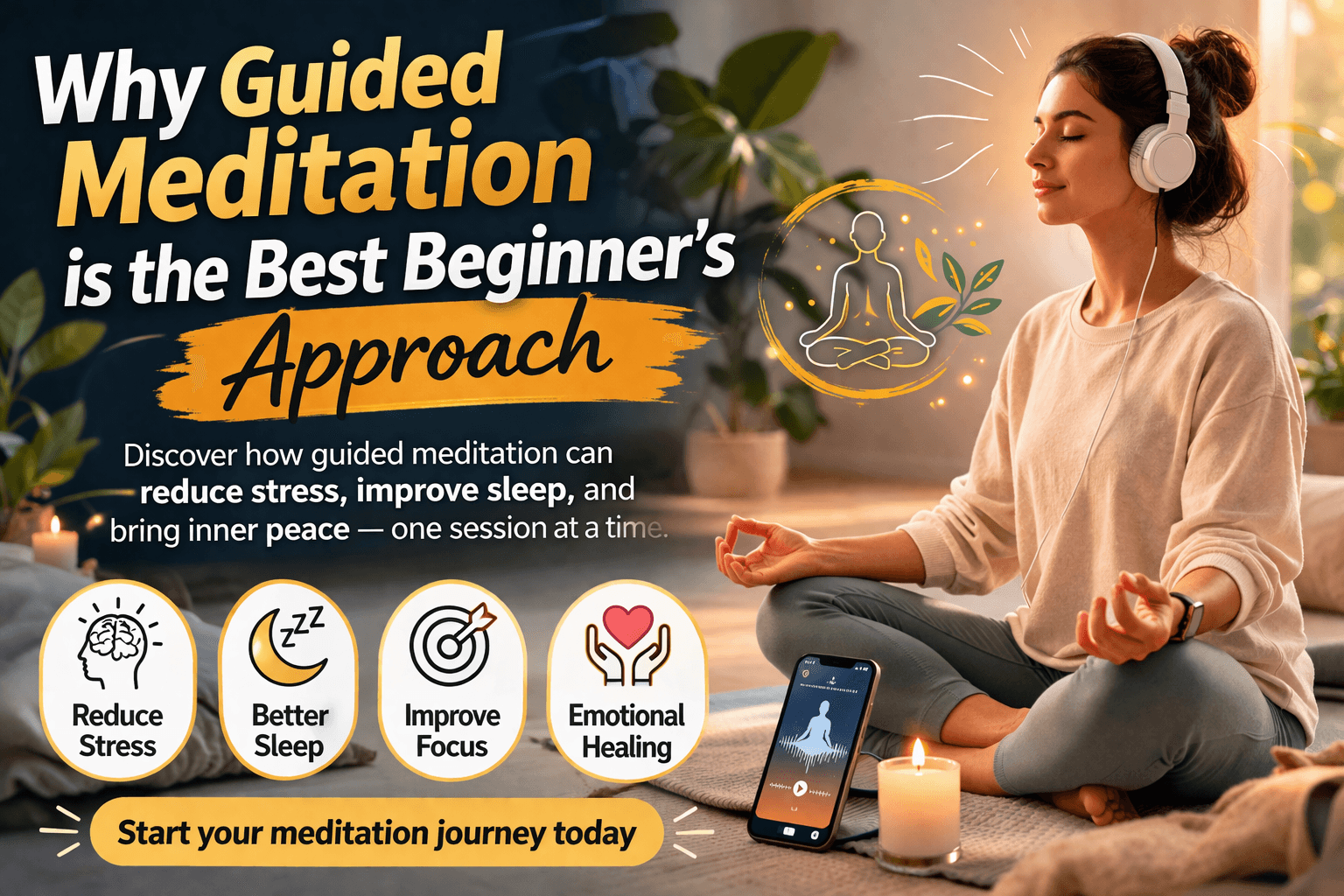
For many, the thought of sitting with their own thoughts in silence can seem daunting — if not impractical. Guided meditation is the transformational tool that comes to your rescue here. As the name implies, guided meditation involves a teacher or narrator or audio recording that walks you through a meditation experience, offering instructions and imagery and cues that keep your wandering mind anchored.
It significantly lowers the barrier to entry on meditation, making the practice available with practically anyone. From corporate executives and physical athletes to spiritual seekers, if you desire stress relief, sleep enhancement, emotional healing or spiritual insight — guided meditation can be one of the most ideal techniques through which the 8-Step Pathway forwards into inner peace is revealed.
What Is Guided Meditation?

Guided meditation is a type of meditation where one listens to the spoken instructions of a guide — whether that be in person, in a class or via recorded audio/video. A guide takes the meditator through a succession of relaxation exercises, breathing techniques, visualizations and awareness practices intended to achieve a particular result.
No contrast to quiet meditation that has the practitioner keep its attention up, guided meditation serves as a constant line of verbal command making it simpler for the mind to stay focused inside and out. That makes this particularly effective for beginners who have not yet developed the mental discipline of meditating without any outside support.
Even seasoned meditators still listen to guided sessions when trying new techniques or diving more deeply into particular aspects of their practice.
Types of Guided Meditation
Guide meditation has its own colored world, with extensive styles and intentions. Body scan meditations systematically lead awareness through various areas of the body, inducing profound relaxation and a sense of embodied presence. Visualization meditations rely on vivid mental imagery — like walking through a peaceful forest or ball of healing light filling the body — to enlist the imagination as an agent of healing and transformation.
Sleep meditations are tailored to gently usher the mind and body into a deep restful state for sleep, with some employing progressive muscle relaxation and gentle hypnotic suggestion.
Chakra meditations take practitioners through the seven energy centers of the body, combining color, sound and breath in order to facilitate energetic balance. Loving-kindness meditations help develop compassion and goodwill toward oneself and others.
The Role of the Guide’s Voice
The teacher’s voice is an essential tool in guided meditation. A good guide is slow, quiet and interspersing a statement with pauses that give the practitioner enough time to follow a loved one indoor crawl instruction and relax deeper levels. The quality of the voice, in terms of pace, tone and resonance, directly affects the meditative experience.
Psychoacoustic study shows that slower speech and deeper tone activate the parasympathetic nervous system, thereby inducing the relaxation response. Which is why a lot of meditation guides speak in such an obviously different register than daily conversation.
With time, a familiar guide’s voice can act as a powerful conditioned cue that allows the mind to swiftly transition into meditation mode.
Benefits of Guided Meditation

Benefits of Guided MeditationSo many benefits. For novices, the immediate benefit is accessibility — guided meditation untangles the question of what and how to do something, so even first-timers can experience its benefits immediately. Research indicates that guided meditation can mitigate stress, anxiety, and features of depression.
It has also been used in clinical contexts to help with pain relief, recovery from addiction, healing traumatic experiences and chronic illness. A meta-analysis in JAMA Internal Medicine found that mindfulness-based meditation programs — many of which are delivered in guided format — lead to moderate improvements for anxiety, depression and pain.
The guided format also enables highly targeted sessions — you can select a meditation tailored for sleep, creativity, confidence, grief or any other particular need.
Guided Meditation Apps and Platforms You May Have Heard Of
Digital revolution is making guided meditation accessible like never before. Apps such as Headspace, Calm, Insight Timer and Ten Percent Happier include thousands of guided meditations led by world-class teachers on topics ranging from five-minute stress relief sessions to monthlong courses on specific aspects of the practice. YouTube is another huge resource, with thousands of free guided meditations accessible any time.
There are also dedicated meditation shows on podcast platforms that can be accessed during time spent commuting or in quiet moments throughout the day. Some of the most respected forces in meditation — including Jack Kornfield, Sharon Salzberg and Thich Nhat Hanh — offer guided sessions through online platforms like Sounds True, Mindful and Tara Brach’s website.
Five Ways to Get the Most from Guided Meditation
Guided meditation is most effective in a cozy, quiet environment where you are less likely to be challenged with distractions. Wear headphones whenever you can, which adds to immersion and blocks out outside sounds. Pick a time when you are alert but not in a hurry — most people say that early morning or before bed is best for them.
Play with guides and then on to other styles until you find what works for you; not every voice or approach will work, and this is all perfectly in order. Abiding by this rule is perhaps more important than overall time — even ten minutes of daily guided meditation will be more beneficial than one hour once per week.
Spend some time maintaining a meditation journal to write down any subtle realizations, feelings or thoughts that come up while practicing, as this also sounds promoting and tracking of yourself over the course of several sessions.
Moving From Guided To Silent Meditation
Most people start with guided meditation, and many eventually get into silent, self-directed practice. This is the natural progression and should be embraced. One way to do this is gradually, starting with a short guided introduction and then sitting in silence for the rest of the session, and then reducing reliance on guidance.
A further approach is to take the tools gained in guidance sessions, as a mental blueprint or structure and apply them during self practice, framing that same sequence yourself. Other practitioners have a mix of guided and silent meditation that they hold for the long term, using each one in different situations and states of mind.
Ultimately, that is the goal of guided meditation — increased awareness, well-being and space — and it’s a wonderful vehicle for the practice.
Guided Meditation for Specific Needs
Guided meditation is so versatile, it’s one of its biggest benefits! For anyone with anxiety, guidance for grounding methods, breath control, and awareness of the moment can help quickly when panic or overwhelm takes over.
Age-appropriate guided meditations for kids and teens help build emotional intelligence, focus, and resilience at an early stage. Guided visualizations aimed at performance can help prepare and recover for athletes.
For anyone mourning a loss, sensitive guided sessions can provide a safe space to feel complicated feelings. No matter what you’re dealing with, there is probably a guided meditation created with your particular experience in mind.
Begin your journey into calmness and clarity with guided meditation today. Make it a simple daily habit and experience reduced stress, better sleep, and improved focus. Support your mental wellness routine with Benvital Five and take a step closer to a balanced and peaceful life.

