
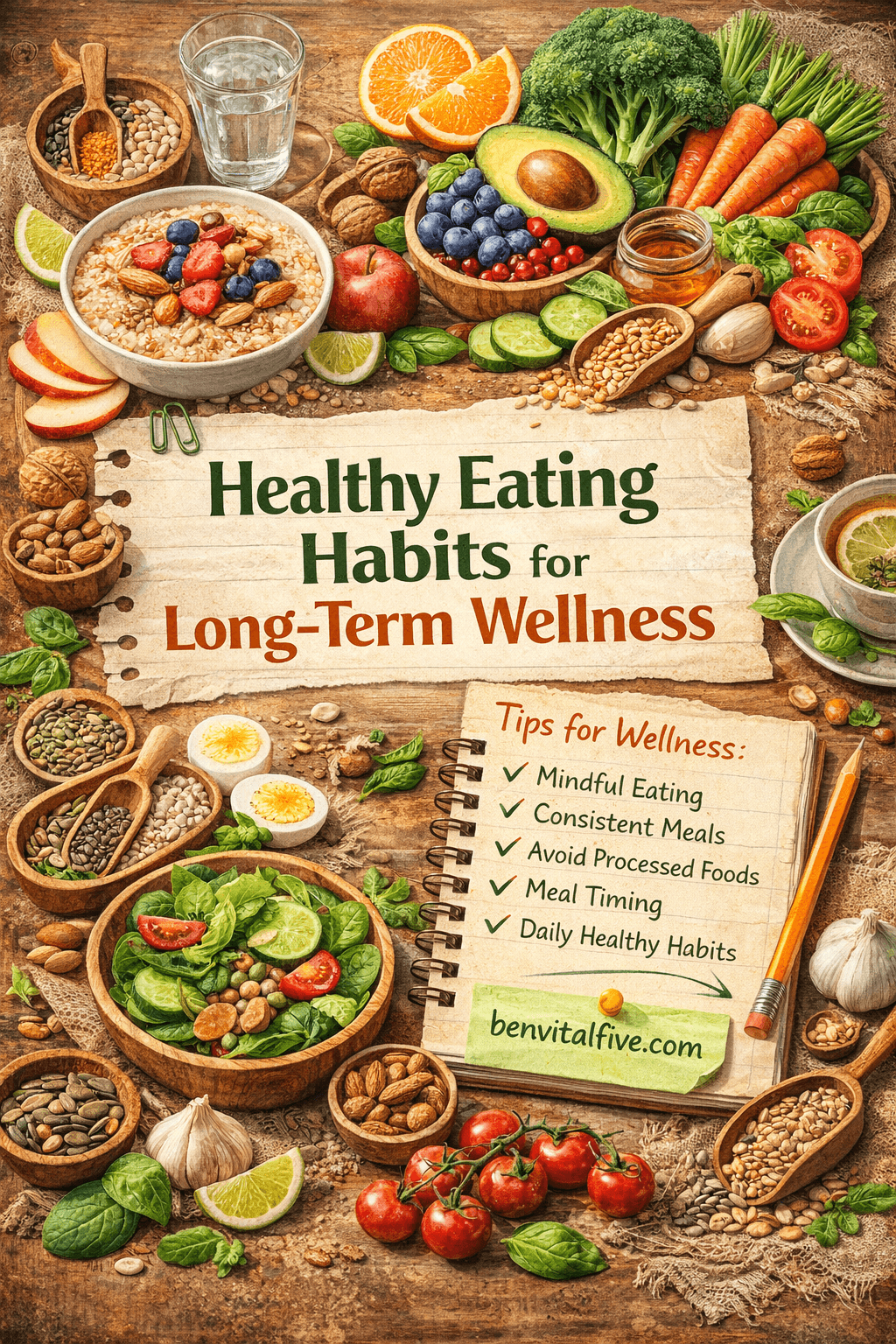
The Best Eating Habits for wellness – LongTerm Wellness Guide
Introduction
A guide to disease prevention through mindful nutrition and metabolic health.
The best eating habits for wellness are not based on diet trends. They come from steady, research-backed eating patterns. These habits support metabolism, immune health, and long-term disease prevention.
Modern dietary environments increasingly favor ultra-processed foods, refined carbohydrates, excess sodium, and irregular meal timing. These patterns are strongly associated with chronic low-grade inflammation, insulin resistance, obesity, cardiovascular disease, and type 2 diabetes.
According to the World Health Organization, unhealthy diets represent a leading global risk factor for non-communicable diseases. Similarly, the Harvard T.H. Chan School of Public Health says long-term eating habits matter most for health. It notes that these habits matter more than short-term restrictive diets. These habits support a longer life and better cardiometabolic health.
Personal Note: I learned this firsthand. Shifting to structured, mindful eating stabilized my energy and cleared my “brain fog.” Science confirms my experience: daily habits are the strongest predictors of long-term health.
This article outlines ten scientifically supported habits that collectively represent the best eating habits for wellness.
1. Prioritize Whole, Unprocessed Foods
Whole foods provide dietary fiber, phytonutrients, essential fatty acids, vitamins, and minerals. Whole foods significantly reduce ultra-processed products.

Frequent consumption is linked to inflammation, obesity, and metabolic disorders.
The Solution:
Focus on “one-ingredient” foods.
Leafy greens and seasonal fruits.
Ancient grains (millet, quinoa, oats).
Legumes and raw nuts.
When I began cooking more meals at home, I noticed better portion control and improved digestion almost immediately.
High-fiber whole foods enhance gut microbiota diversity and improve postprandial glycemic control.
2. Practice Mindful Eating to Improve Metabolic Regulation
Mindful eating enhances interoceptive awareness and improves satiety signaling. Behavioral nutrition research demonstrates that eating without distraction reduces caloric overconsumption and improves digestive efficiency.

Mindful eating means being fully present during meals.
Avoid Distractions: Put away the phone and turn off the TV.
The 20-Minute Rule: It takes about 20 minutes for your brain to register fullness. Slow down and chew thoroughly.
Scientific studies show that mindful eating improves digestion, reduces overeating, and supports weight management.
I personally experienced reduced bloating once I started slowing down during meals.
3. Maintain Consistent Meal Timing to Support Circadian Biology
Human metabolism follows circadian rhythms regulated by hormonal cycles (e.g., insulin, cortisol, and melatonin). Irregular eating patterns disrupt glycemic control and lipid metabolism..
| Goal | Habit |
| Metabolism | Eat breakfast within 1–2 hours of waking. |
| Digestion | Finish your last meal 3 hours before bed. |
| Stability | Maintain 3 structured meals to avoid “grazing.” |
Consistent timing improves:
Nutrient absorption
Hormonal balance
Energy stability
Sleep quality
4. The “Power Plate” Formula
Balanced meals help maintain steady energy and reduce cravings.

Avoid the energy “crash” by balancing your macronutrients. A balanced plate prevents blood sugar spikes.
50% Fiber: Non-starchy vegetables.
25% Lean Protein: Lentils, tofu, eggs, or lean meats.
25% Complex Carbs: Sweet potatoes or brown rice.
Healthy Fats: A drizzle of olive oil or a slice of avocado.
5. Cultivate Your Gut Microbiome
The gut microbiome plays a central role in immune modulation, inflammatory signaling, and nutrient metabolism. Research published by the National Institutes of Health highlights the microbiome’s influence on systemic immune regulation.

For further exploration, see:
Internal Resource: Nutrition for Mental Health and Emotional Wellbeing
6. Stay Hydrated Consistently
Water is the medium for every chemical reaction in your body.
Pro-Tip: Drink a glass of warm water upon waking.
Timing: Hydrate between meals rather than drinking large amounts during a meal, which can dilute digestive enzymes.
Mild dehydration can cause fatigue and headaches.
Aim for 2–3 liters daily depending on activity level. Start your morning with warm water and hydrate between meals rather than during heavy meals
For a focused guide, refer to:
Internal Resource: Nutrition Tips to Boost the Immune System
7. Identify Hidden Sugars and Refined Oils
Inflammation is the root of most chronic diseases. Reducing “added” sugars is the fastest way to lower inflammation markers.
Watch out for “low-fat” snacks (usually high in sugar) and “vegetable oils” (often highly processed seed oils).
Excess sugar increases inflammation and insulin resistance.
Hidden sources include:
Sweetened beverages
Packaged snacks
Refined bakery products
Processed sauces
Gradually reducing sugar intake significantly improves energy stability and reduces cravings.
For a deeper understanding, read:
Internal Resource: The Role of Hydration in Diet and Body Health
Hydration is a foundational component of the best eating habits for wellness because metabolic processes are water-dependent at the cellular level.
8. Reject the “Crash Diet” Mentality
Extreme restriction slows metabolism and disrupts hormones.
Instead of drastic changes:
Make small, consistent improvements.
Focus on sustainability.
Prioritize nourishment over deprivation.
Long-term wellness depends on consistency—not perfection.
9. Plan Your Meals Ahead

Planning prevents impulsive, unhealthy choices.
Simple planning tips:
Prepare weekly grocery lists.
Pre-cut vegetables.
Keep healthy snacks available.
Cook extra portions for the next day.
Meal planning reduces stress and improves mental wellness through diet.
10. Eat for Longevity, Not Just Satisfaction
Long-term healthy eating supports:
Strong immunity
Healthy body weight
Stable metabolism
Clear skin
Reduced chronic disease risk
The World Health Organization consistently reports that balanced diets reduce non-communicable disease risk significantly.
When I shifted from short-term dieting to long-term nourishment, I experienced lasting benefits rather than temporary results
Common Mistakes to Avoid
The “Health Halo”: Overeating foods just because they are labeled “organic” or “gluten-free.”
Liquid Calories: Consuming excess caffeine or “healthy” juices that lack fiber.
Skipping Meals: This often leads to overcompensating with a heavy, late-night dinner.
Moderation and balance remain the foundation of sustainable wellness.
Wellness isn’t achieved overnight; it is built plate by plate. By choosing whole foods and mindful timing, you aren’t just eating—you are biohacking your way to a longer, more vibrant life.
Frequently Asked Questions (FAQ)
What is the single most important eating habit?
Prioritizing whole foods. If you replace processed items with real food, most other nutritional issues (sugar, sodium, fiber) fix themselves automatically.
How long until I feel a difference?
Most people report improved digestion and steadier energy levels within 14 to 21 days.
Does healthy eating have to be expensive?
No. Staples like lentils, oats, and seasonal vegetables are often cheaper than packaged “convenience” meals.
Final Thoughts
Wellness isn’t achieved overnight; it is built plate by plate. By choosing whole foods and mindful timing, you aren’t just eating—you are biohacking your way to a longer, more vibrant life.
When you:
Eat whole foods
Maintain structure
Stay consistent
Support gut health
Avoid ultra-processed foods
You build resilience against chronic disease and support graceful aging.
Wellness is not achieved overnight. It is built plate by plate, day by day.
If you found this research-informed guide valuable:
Follow for more evidence-based nutrition insights
Subscribe for weekly articles on metabolic health and disease prevention
Share this article with someone working toward long-term wellness
Sustainable health begins with informed decisions—made consistently.

