
The Healthy Kitchen: 15 Simple Changes That Make Healthy Eating Easier
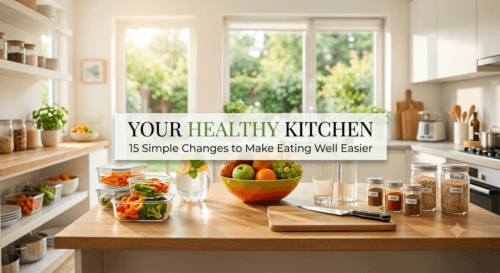
Healthy eating often sounds more difficult than it really is.
Healthy eating often sounds more difficult than it really is.
We hear about meal plans, superfoods, calorie counting, complicated recipes, and strict diets. But sometimes the biggest opportunity is much closer to home: your kitchen.
Think about what happens when you come home tired after a long day. If washed vegetables are ready in the refrigerator, whole grains are available in the pantry, and a simple protein source is ready to cook, preparing a healthy meal feels manageable. But if the refrigerator is disorganized, vegetables need to be washed and chopped, and the only convenient foods are biscuits, chips, or takeaway menus, the easier choice may not be the healthier one.
This is why creating a healthy kitchen can be more useful than relying entirely on willpower. A healthy kitchen isn’t an expensive designer space. It doesn’t require dozens of appliances or a complete overhaul of your lifestyle overnight. It is simply a kitchen designed to make nutritious choices visible, accessible, and convenient.
The World Health Organization’s healthy diet guidance emphasizes that a healthy diet is based on principles including adequacy, balance, moderation, and diversity, with a wide variety of minimally processed foods forming an important foundation.
So instead of asking, “How can I force myself to eat better?”, consider a different question:
“How can I make eating better a little easier?”
Here are 15 simple changes that can help.
Why Your Kitchen Matters More Than Willpower
Every meal involves decisions:
What will I eat?
How much should I prepare?
Do I have time to cook?
Should I order something?
What snack should I reach for?
When these decisions happen while you’re hungry or tired, convenience becomes powerful. That is why your food environment matters.
You don’t have to remove every treat from your home or follow a rigid diet. Instead, create an environment where healthier foods are easier to choose. The [Harvard Healthy Eating Plate] framework recommends emphasizing vegetables and fruits, whole grains, and healthy protein sources while choosing water instead of sugary drinks.
The core principle is simple: Make the healthy choice the easy choice.
15 Simple Changes to Create a Healthy Kitchen
1. Put Healthy Foods Where You Can See Them
One of the simplest healthy kitchen ideas costs almost nothing: change what is visible.
Place fruit in a bowl where you can see it on the kitchen counter.
Keep drinking water within easy reach.
Put healthy snacks in transparent, see-through containers.
Keep washed vegetables toward the front of the refrigerator.
Why does this matter? Because convenience influences behavior. When you’re hungry, you are far more likely to choose something that requires little effort. So make nutritious foods easier to notice and access. Small changes like these reduce decision fatigue and build sustainable [healthy eating habits].
2. Give Your Refrigerator a Healthy Makeover
Your refrigerator should support the way you want to eat. Start by removing forgotten food, checking expiry dates, and cleaning the shelves. Then create simple zones:
Top shelf: Ready-to-eat foods and leftovers
Middle shelf: Yogurt, eggs, and frequently used foods
Vegetable drawer: Fresh green produce
Fruit area: Seasonal fruits
Separate section: Raw ingredients that need special storage or prep
The exact arrangement doesn’t matter as much as making healthy foods easy to find. Ask yourself: “Can I quickly see what I have available?” If the answer is yes, you’re already making healthy eating easier.
3. Build a Healthy Pantry
A healthy kitchen needs a useful pantry stocked with simple ingredients you actually use:
Whole Grains: Oats, brown rice, whole-wheat options, or millets
Pulses & Legumes: Lentils (dal), chickpeas, and beans
Proteins & Fats: Nuts, seeds, and healthy cooking oils
Flavor Boosters: Herbs, spices, and low-sodium staples
For Indian kitchens, traditional staples such as dal, chickpeas, beans, millets, vegetables, rice, and whole-grain foods fit naturally into a balanced eating pattern. According to [WHO recommendations for a healthy diet], healthy diets look different depending on culture, locally available foods, and dietary customs while still following broader principles of variety and moderation. You don’t have to abandon familiar foods to eat healthily.
4. Prepare Vegetables in Advance
One reason people avoid cooking vegetables is simple: preparation takes time. Washing, peeling, and chopping can feel like too much work when you’re already hungry.
Try preparing some vegetables shortly after grocery shopping:
Wash leafy greens and store them dry.
Cut carrots, slice cucumbers, and chop onions.
Prepare beans and wash fresh tomatoes.
The objective isn’t to spend your entire weekend meal-prepping—it’s to remove friction from your future meals. When vegetables are ready to use, adding them to an omelet, stir-fry, dal, soup, salad, or rice dish becomes effortless.
5. Keep Healthy Snacks Ready
Hunger can turn a good intention into a poor choice quickly. Keep nutritious options prepared before hunger makes the decision for you:
Fresh fruit portioned and visible
Unsweetened yogurt
Handfuls of raw nuts and seeds
Roasted chickpeas or makhana
Sliced vegetable sticks with hummus or dip
Limiting processed snacks rich in free sugars, unhealthy fats, and excess sodium keeps your energy steady throughout the day.
6. Make Water the Default Drink
Keep a reusable bottle or water jug somewhere visible in your workspace and kitchen. If plain water feels boring, add natural flavor with lemon, cucumber slices, or mint. Making water your primary choice over sugar-sweetened beverages is one of the most effective daily upgrades recommended by health authorities worldwide.
7. Reduce the Visibility of Highly Processed Snacks
You don’t necessarily need to ban biscuits, sweets, or chips from your home. An extreme approach is often difficult to maintain. Instead, manage their accessibility:
Buy smaller quantities or individual portion sizes.
Keep treats inside cupboards rather than on the counter.
Avoid keeping large open packets near your workspace.
Keep healthier alternatives front and center.
8. Use Portion-Friendly Food Storage Containers
Good storage transforms leftovers into quick, nutritious meals. Clear glass or lightweight food-safe containers help you see what food is available, reduce food waste, and pack lunches easily. Proper storage makes daily [healthy meal preparation] significantly smoother.
9. Make Healthy Cooking Easier With the Right Tools
Equip your kitchen with functional items that save time rather than gathering dust:
A quality chopping board and a sharp kitchen knife
A pressure cooker or air fryer for quick cooking
A blender for smoothies and purees
A steamer basket for rapid vegetable prep
Buy tools for your actual cooking habits, not for clever marketing.
10. Organize Cooking Oils and Spices
Spices and herbs make simple home cooking enjoyable. Keep core spices organized and easy to reach: turmeric, cumin, black pepper, cinnamon, ginger, garlic, coriander, and mustard seeds. While spices elevate flavor and form a part of daily cooking, dietary health depends on overall food patterns rather than relying on spices as quick [natural remedies and everyday wellness] fixes.
11. Create a Simple Meal-Preparation Station
Designate one area of your kitchen for food prep. Keep your cutting board, chef’s knife, measuring tools, and common spices grouped together. Work with a simple routine: Wash → Prepare → Cook → Store → Clean. A predictable layout saves time during busy weeknights.
12. Make Breakfast Easier
Avoid starting every morning by asking, “What am I going to eat?” Keep a few simple breakfasts on reliable rotation:
Oats cooked with fruit and nuts
Eggs scrambled with vegetables
Yogurt topped with seeds and fruit
Whole-grain toast with a protein-rich accompaniment
Removing early morning decision fatigue sets a positive tone for the day. For more recipes and breakfast routines, explore these [simple healthy breakfast ideas] and discover [simple morning routines for better health].
13. Store Leftovers Properly
Leftovers save time and cut waste, but they require safe handling. Make it a habit to:
Use suitable airtight containers.
Label leftovers with dates when helpful.
Consume older prepared food before newer items.
Discard food that appears spoiled or stored unsafely.
Food safety is foundational—healthy food isn’t helpful if it isn’t handled safely.
14. Create a “Healthy Emergency Meal” Shelf
Most people don’t struggle with healthy choices when they have time; they struggle when exhausted. Create a small collection of shelf-stable and quick ingredients to make nutritious choices automatic on busy days:
Quick Dal & Rice: Lentils cook fast and pair with frozen vegetables.
Egg & Toast Combo: Eggs, whole-grain bread, and sliced tomatoes take under 10 minutes.
Chickpea Salad: Canned or boiled chickpeas tossed with cucumber and spices.
Frozen Produce: Keep frozen vegetables stocked—the [WHO guidance on healthy eating] highlights that frozen fruits and vegetables maintain great nutritional value when free of added sugars or excess sodium.
Having these stocked ensures you always have nourishing [healthy foods to include in your daily diet] ready when takeaway looks tempting.
15. Make Your Kitchen a Place You Enjoy
Keep counters clear, improve lighting, and listen to music or a podcast while cooking. Changing the emotional tone around meal preparation transforms cooking from an oppressive chore into a relaxing act of self-care.
Healthy Kitchen Checklist
Healthy Kitchen Mistakes to Avoid
Buying Too Much Fresh Food: Purchase according to your actual weekly consumption to prevent waste.
Overhauling Everything at Once: Start small—organize one refrigerator shelf or one pantry cupboard first.
Collecting Excessive Gadgets: A sharp knife and a sturdy board beat a cabinet packed with unused electrical appliances.
Trusting Marketing Claims: “Multigrain” or “natural” labels can be deceptive; always inspect ingredient lists.
Ignoring Portion Sizes: Even nutritious foods like nuts and oils carry concentrated energy; balance is key.
A 7-Day Healthy Kitchen Reset
If you’re feeling overwhelmed, try this simple 7-day step-by-step challenge:
Day 1: Clean Your Refrigerator – Remove expired items and wipe down shelves.
Day 2: Organize Your Pantry – Move daily staple ingredients to eye-level shelves.
Day 3: Restock Fresh Produce – Purchase fruits and vegetables your family loves.
Day 4: Prepare Healthy Snacks – Wash fruits and portion nuts into quick containers.
Day 5: Organize Food Storage – Group food containers and matching lids together.
Day 6: Stock Emergency Meals – Keep ingredients for three fast 10-minute meals on hand.
Day 7: Review & Adjust – Identify what simplified your week and what needs refinement.
Frequently Asked Questions
What is a healthy kitchen?
A healthy kitchen is a food environment organized to make nutritious foods visible, convenient, and effortless to prepare, focusing on practical storage, real ingredients, and simple routines.
How can I start eating healthy when I’m busy?
Pre-chop vegetables right after shopping, store emergency whole-food ingredients, and rely on [beginner-friendly healthy cooking] methods like one-pot cooking or pressure cooking.
Does healthy eating require eliminating treats completely?
No. Sustainable health focuses on building an overall pattern of nutrient-dense meals while enjoying treats in moderation without guilt.
Conclusion: Build an Environment That Works for You
A healthier diet doesn’t always start with a restrictive plan; it starts with your environment. It begins with what you see when you open the fridge, whether water is within arm’s reach, and whether you have simple ingredients available when you’re tired.
Designing a home environment where whole, fresh foods are accessible connects directly to the core principles of [Food as Medicine: How Everyday Foods Can Support Better Health].
Make your healthy options:
Visible
Accessible
Convenient
Enjoyable
Your kitchen doesn’t need to be perfect—it just needs to make your next healthy choice a little easier.
About the Author
Jesu Raj Athisayam
Founder of BenVitalFive & Wellness Researcher
Jesu Raj Athisayam is the founder of BenVitalFive, a health platform centered on five practical foundations for holistic living: yoga, meditation, physical exercise, continuous learning, and healthy nutrition. As a wellness researcher, Jesu synthesizes evidence-informed practices into accessible, sustainable daily habits to help people lead healthier, more intentional lives.

