
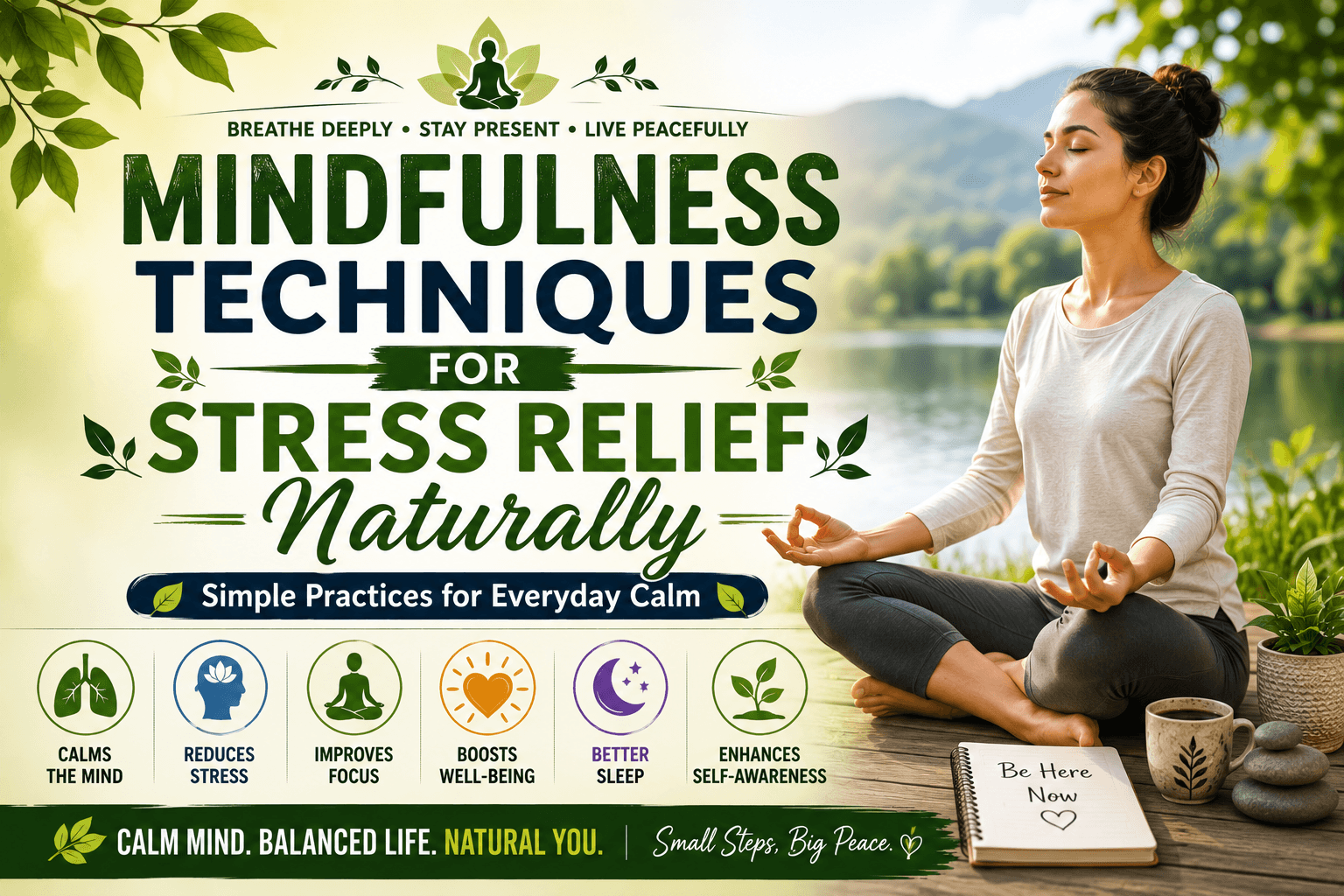
Natural Mindfulness Techniques for Everyday Stress Relief: Simple Practices for Continuous Calm
Introduction
Mindfulness Techniques for Stress Relief Naturally are becoming increasingly popular as more people seek simple, natural ways to manage the pressures of modern life. Work responsibilities, family commitments, financial concerns, and constant digital distractions can leave us feeling overwhelmed and mentally exhausted. While occasional stress is a normal part of life, ongoing stress can affect our physical health, emotional well-being, sleep quality, and overall happiness.
Fortunately, managing stress doesn’t always require complicated methods or expensive programs. Some of the most effective solutions are simple daily habits that help calm the mind and restore balance. One of the most powerful approaches is mindfulness.
Mindfulness is the practice of paying full attention to the present moment with openness, curiosity, and without judgment. Instead of becoming trapped in worries about the future or regrets about the past, mindfulness gently brings your attention back to what is happening right now. Practicing Mindfulness Techniques for Stress Relief Naturally can help you respond to life’s challenges with greater calm, clarity, and resilience.
Whether you’re completely new to mindfulness or looking to strengthen your daily wellness routine, this guide will show you practical Mindfulness Techniques for Stress Relief Naturally that you can begin using today. These simple practices require no special equipment and can easily become part of your everyday life.
Why Mindfulness Techniques for Stress Relief Naturally Work
Mindfulness helps calm both the mind and the body by encouraging you to slow down and focus on the present moment. Instead of reacting automatically to stressful situations, you learn to observe your thoughts with greater awareness and respond more calmly. With regular practice, Mindfulness Techniques for Stress Relief Naturally can support emotional balance, improve focus, strengthen resilience, and contribute to long-term overall well-being.
What Is Mindfulness?
Mindfulness is the intentional practice of being fully present in the current moment. It involves noticing your thoughts, emotions, physical sensations, and immediate surroundings without trying to judge, suppress, or change them.
Many people assume mindfulness means “emptying the mind” or completely stopping all thoughts. In reality, the human mind is designed to produce thoughts continuously. Mindfulness simply teaches us to observe those thoughts without becoming overwhelmed by them.
The River Metaphor: Imagine sitting beside a peaceful river. Instead of jumping into the water and being carried away by the rushing current, you simply sit on the bank and watch the leaves float downstream. In the same way, mindfulness allows you to observe your thoughts as they come and go, without allowing them to hijack your emotions.
At its core, mindfulness is built on four simple pillars:
Awareness: Tuning into your thoughts, feelings, and physical sensations as they arise.
Presence: Focusing entirely on what is happening right now, rather than dwelling on yesterday or anticipating tomorrow.
Acceptance: Recognizing your current experience exactly as it is, without labeling it as “good” or “bad.”
Observation Without Judgment: Noticing your emotional states with kindness and curiosity, rather than criticizing yourself for having them.
Mindfulness is not about achieving perfection. Every time your attention wanders—and it naturally will—your only job is to gently guide it back. That gentle return is the practice itself.
The Science of Stress and Mindfulness
When we experience a stressor, our bodies activate the evolutionary “fight-or-flight” response. This survival mechanism prepares us to respond quickly to danger by spiking our heart rate, sharpening our focus, and releasing a flood of stress hormones like cortisol.
While this response is life-saving during genuine emergencies, modern life keeps this alarm system chronically activated. Tight deadlines, financial worries, and constant digital interruptions mean our nervous systems remain on high alert even when no immediate physical danger exists. Over time, this takes a heavy toll on the body.
Mindfulness directly interrupts this exhausting cycle. By slowing down and grounding yourself in the present, you trigger the body’s natural relaxation response. As your breathing slows and your attention steadies, your nervous system shifts away from a state of constant survival and moves toward balance, recovery, and repair.
Modern scientific research increasingly validates these ancient contemplative practices. To fully appreciate this biological shift, exploring mindfulness exercises for beginners to reduce stress and improve focus reveals how regular practice can actually strengthen brain regions involved in decision-making and emotional balance, while calming the overactive areas associated with chronic worry and mental rumination.
Global health authorities support these findings:
The American Psychological Association (APA) notes that mindfulness helps individuals step away from automatic, reactive behaviors and choose thoughtful responses instead.
The National Center for Complementary and Integrative Health (NCCIH) highlights mindfulness meditation as a valid, evidence-based strategy to support overall quality of life.
The World Health Organization (WHO) explicitly recognizes stress management as a vital component of global health, encouraging practical self-care habits that promote mental well-being.
My Personal Experience with Mindfulness
One lesson I have learned over many years of studying healthy lifestyles is that lasting wellness rarely comes from dramatic, overnight transformations. Instead, it grows from small, consistent habits practiced with genuine intention.
During my years working with rural communities in Tamil Nadu, I noticed something remarkable. Many of the older adults lived simple lives centered around physical activity, meaningful work, close relationships, and time spent outdoors. They certainly faced everyday hardships, yet they carried a quiet, undeniable sense of contentment.
They didn’t use the modern buzzword “mindfulness,” yet they lived it naturally. Whether they were tending to their gardens, preparing meals, walking through the fields, or sharing conversations with neighbors, they were fully engaged in the task at hand. There was very little rushing and far fewer digital distractions than we experience today.
Inspired by these observations, I began incorporating brief moments of focused stillness into my own chaotic mornings. At first, my mind wandered constantly and I felt frustrated. But remembering the patience of the villagers, I stopped judging my distractions and made it a priority to Practice Meditation and Mindful Breathing without expecting immediate perfection.
Within a few weeks, a subtle but profound shift occurred. I found myself approaching daily pressures with much greater patience, felt less reactive during stressful meetings, and began deeply appreciating simple moments—like watching the sunrise or enjoying a quiet cup of tea.
This experience reinforced a core truth: mindfulness is not about escaping life’s challenges. It is about equipping yourself to meet those challenges with awareness and composure. This very philosophy forms the foundation of BenVitalFive, where we believe that lasting wellness is built through five interconnected pillars: mindful movement, meditation, regular physical activity, lifelong learning through reading, and nourishing nutrition.
Benefits of Mindfulness Techniques for Stress Relief Naturally
You do not need to sit in meditation for an hour a day to experience the benefits of mindfulness. Just like planting a seed, watering it for a few intentional minutes each day allows strong, deep roots to develop over time.
When combined with healthy nutrition, regular activity, and quality sleep, a few minutes of daily mindfulness enriches your life in several distinct ways:
1. Supports Emotional Balance
Stressful situations typically trigger automatic, defensive reactions. Mindfulness inserts a brief, invaluable pause between an event and your response. That single pause gives you the cognitive space to choose a calm, constructive reaction instead of an impulsive outburst.
2. Sharpens Mental Clarity
A chaotic mind constantly bounces between tasks and worries, causing cognitive fatigue. Mindfulness trains your brain to focus on one thing at a time. Whether you are working, reading, or studying, this improved focus increases your efficiency and makes your daily activities feel more meaningful.
3. Cultivates Deep Self-Awareness
Mindfulness shines a gentle light on your automatic patterns. Through simple observation, you might begin to notice subtle habits, such as snacking when you’re anxious, rushing through your meals without tasting them, or automatically reaching for your phone the second you feel bored. Recognizing these behaviors is the crucial first step toward changing them.
4. Encourages Healthier Lifestyle Choices
As your self-awareness grows, you naturally begin making choices that honor your body and mind. Cultivating Healthy Eating Habits for Long-Term Wellness becomes much easier when you are mindful, as it intuitively encourages you to eat more slowly, maintain your exercise routines, respect your sleep schedule, and consciously reduce aimless screen time.
5. Facilitates Physical Relaxation
While it won’t erase the demands of your schedule, mindfulness helps your body bounce back from stress more effectively. A few minutes of intentional presence drops your heart rate and loosens physical tension, leaving you feeling genuinely refreshed and resilient.
7 Mindfulness Techniques for Stress Relief Naturally
The beauty of mindfulness is its utter simplicity. You don’t need special equipment or years of experience. These practical techniques can be seamlessly woven into your existing daily routine.
1. Mindful Breathing
Because your breath is always with you, this is the easiest place for beginners to start.
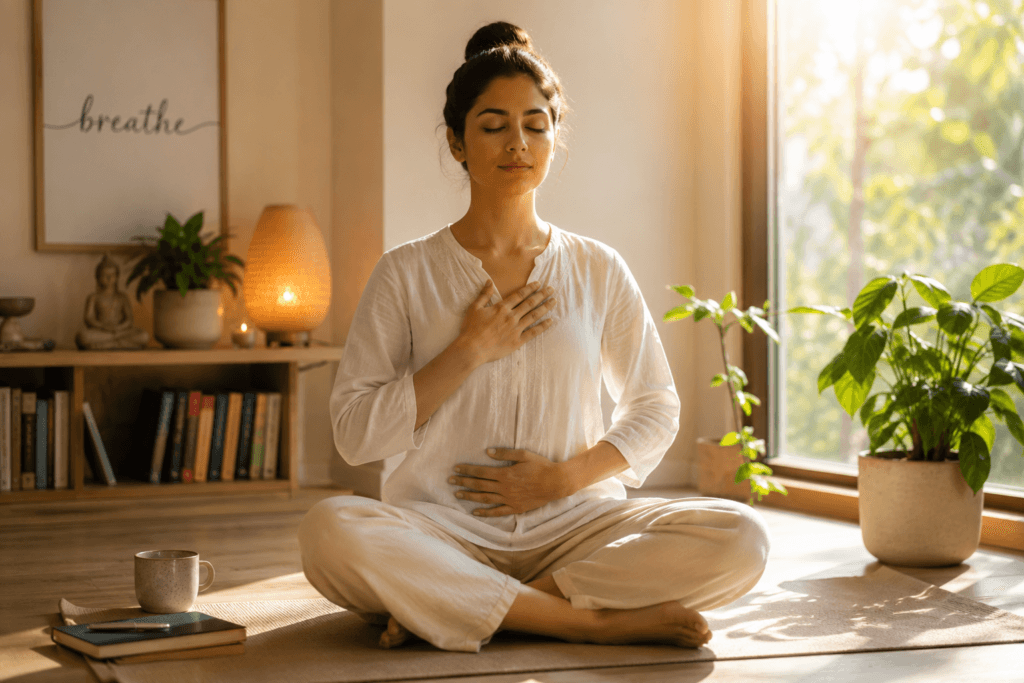
How to Practice: Sit comfortably with your back supported and relax your shoulders. Close your eyes and take a slow, deep inhale through your nose, then exhale gently. Simply notice the natural rhythm of your breath without trying to force or change it. If your mind wanders, gently guide your focus back to the sensation of the air moving. Start with just five minutes each morning.
Real-World Example: Pause for five deep breaths right before you log into a high-pressure meeting or start your workday to clear mental clutter.
Helpful Tip: Try counting your breath. Inhale for four counts, and extend your exhale for six counts. A longer exhale immediately signals your nervous system to relax.
2. Mindful Walking
Walking becomes a mindfulness practice when you focus entirely on the physical experience rather than rushing to a destination.
How to Practice: Leave your phone in your pocket. As you walk, shift your awareness away from your internal monologue and focus outward. Notice the rhythm of your footsteps, the movement of your legs, the feeling of the breeze against your skin, and the ambient sounds of nature or the city around you.
Real-World Example: Turn a ten-minute segment of your lunch break into a mindful walk through a nearby park or quiet street for a total mental reset.
3. Body Scan Awareness
Stress frequently manifests physically—as a clenched jaw, tight shoulders, or a tension headache—long before we recognize it mentally. A body scan brings awareness to these hidden physical holdouts.
How to Practice: Lie down or sit comfortably. Starting at your toes, slowly move your attention upward through your feet, calves, thighs, torso, hands, shoulders, and face. Simply observe any sensations without judgment. If you encounter an area of tightness, consciously breathe into that space and allow the muscles to soften on the exhale.
Real-World Example: Practice a brief body scan right after climbing into bed to help your body transition into a deep, restful evening sleep.
4. Gratitude Practice
Gratitude does not mean ignoring life’s very real difficulties; rather, it balances your perspective by deliberately highlighting the positive experiences that are easily overshadowed.
How to Practice: Each evening, write down three specific things you appreciated about your day. They do not need to be monumental achievements.
Real-World Example: Your list could include enjoying a hot morning tea, a pleasant conversation with a colleague, a beautiful sunset, or hearing birds outside your window. Keeping a dedicated gratitude journal on your nightstand is an excellent addition to your BenVitalFive evening wellness routine.
5. Mindful Eating
Many of our meals are consumed mindlessly while watching television, answering emails, or scrolling through social media. Mindful eating invites you to slow down and rebuild a healthy relationship with your food.
How to Practice: For at least one meal a day, turn off all screens. Eat slowly and intentionally. Notice the varied textures, aromas, and flavors of your food. Express internal appreciation for the journey the food took to reach your plate, and tune into your body’s natural hunger and fullness signals.
Real-World Example: Instead of rushing through lunch in ten distracted minutes, protect a peaceful fifteen-minute window to enjoy each bite. This transforms eating from a chore into a genuinely nourishing pause.
6. Digital Mindfulness
While technology connects us, a non-stop barrage of notifications leads to severe cognitive fatigue. Digital mindfulness is about establishing healthy, conscious boundaries with your devices.
How to Practice: Silence non-essential notifications, set aside designated screen-free blocks of time, and commit to keeping electronic devices away from the dining table. Most importantly, avoid checking your phone first thing in the morning.
Real-World Example: Replace your final fifteen minutes of nightly screen time with reading a physical book, light stretching, or mindful breathing. You will likely find that you fall asleep much faster and sleep more deeply.
7. Nature Observation
Nature naturally coaxes our minds into a state of mindfulness because it operates at a slower, organic pace.
How to Practice: Visit a local park, garden, beach, or your own backyard. Spend a few minutes simply observing the environment without the urge to take a photograph or text a friend. Watch the movement of the leaves, trace the clouds across the sky, feel the warmth of the sun on your skin, and listen to the birds.
Real-World Example: Let nature remind you that slowing down and resting is a normal, healthy part of living.
Recommended Mindfulness Essentials
While mindfulness requires absolutely no equipment to practice, a few thoughtfully chosen tools can make your wellness routine significantly more comfortable and inviting. Consider integrating these items into your space as supportive aids rather than strict necessities:
A supportive meditation cushion to help maintain comfortable posture during seated breathing exercises.
A high-quality, non-slip yoga mat to provide a dedicated space for mindful stretching and floor meditation.
Durable cork yoga blocks to gently support your body during restorative yoga postures.
A beautifully bound guided journal to keep your daily gratitude lists and reflections organized.
A reusable stainless-steel water bottle to keep healthy hydration top of mind throughout the day.
Calming herbal tea blends (like chamomile, lavender, or peppermint) to anchor a peaceful evening ritual.
A contoured, soft eye pillow to help shut out sensory distractions during deep relaxation or body scans.
Noise-reducing headphones to help you immerse yourself in guided meditations when practicing in busy environments.
Designing Your Daily Mindfulness Routine
Mindfulness is incredibly flexible. A few intentional moments seamlessly woven into your existing schedule can gradually solidify into lifelong habits. The secret is consistency over perfection.
The Grounded Morning (10 Minutes)
The way you start your morning sets the emotional tone for the rest of your day. Establishing healthy morning habits for a productive day grounds your energy. Try this gentle sequence:
Wake up just five minutes earlier than usual.
Drink a full glass of water before you unlock your smartphone.
Sit comfortably and practice mindful breathing for five minutes.
Set a single positive intention for the day, such as “Today, I will respond with patience“ or “Today, I will be fully present in my conversations.”
Complete a few minutes of gentle, mindful movement or follow dedicated yoga poses for relaxation and stress relief.
The Midday Mental Reset (5 Minutes)
Busy schedules often leave us feeling mentally depleted by noon. Instead of mindlessly scrolling your phone during a work break, try a brief reset:
Step outside, take three slow, deep breaths, and notice the sights and sounds around you.
Enjoy your lunch completely free from digital distractions.
Take a quick, intentional walk around the building without checking your messages.
The Calming Evening Wind-Down (15 Minutes)
Evenings are your opportunity to consciously shed the accumulated stress of the day, quiet the mind, and explore Natural Ways to Sleep Better:
Turn off your television and put away your phone an hour before bedtime.
Read a few pages of an inspiring printed book. Discovering the benefits of reading for mental wellness can be a profound way to de-stress.
Jot down three things you are grateful for in your journal.
End your night with a brief body scan meditation once you are under the covers.
The 7-Day Mindfulness Challenge
Building a brand-new habit is much easier when you focus on one small, achievable step at a time. Use this simple one-week challenge to jumpstart your personal practice:
Day 1: Focus on Your Breath. Spend five minutes in the morning practicing basic mindful breathing.
Day 2: Take a Mindful Walk. Go for a ten-minute walk without your phone, focusing entirely on your physical surroundings.
Day 3: Practice Mindful Eating. Eat at least one meal today completely free from televisions, computers, or smartphones.
Day 4: Connect with Nature. Spend fifteen minutes outdoors quietly observing the natural world around you.
Day 5: Keep a Gratitude Journal. Write down three specific, simple things that brought you joy today.
Day 6: Enjoy a Digital Detox. Choose one waking hour today to completely step away from all electronic devices.
Day 7: Reflect on Your Week. Take a few quiet moments to ask yourself: What helped me feel the calmest? Which practice did I enjoy the most? What small habit would I like to carry into next week?
5 Crucial Beginner Mistakes to Avoid
As you begin your journey, keep these common misconceptions in mind so you don’t become prematurely discouraged:
Expecting Instant Serenity: Mindfulness is an internal skill, not a quick-fix magic trick. Some days your practice will feel deeply peaceful; other days your mind will feel completely chaotic. Both experiences are completely normal parts of the process.
Trying to Force Your Brain to Stop Thinking: The ultimate goal of mindfulness is never to eliminate thoughts entirely. Your job is simply to notice when your mind has wandered and gently, kindly guide your attention back to the present moment.
Only Practicing When You Are Stressed: If you only practice mindfulness during a crisis, it will feel incredibly difficult. Building the habit during calm, quiet moments ensures the skill is readily accessible to you when life gets hectic.
Comparing Your Journey to Others: Everyone’s internal experience is completely unique. Avoid comparing your progress against friends, family members, or idealized wellness influencers on social media. Celebrate your own small milestones.
Being Too Hard on Yourself: Self-compassion is a non-negotiable part of mindfulness. If you get busy and completely miss a few days of practice, don’t waste energy feeling guilty. Simply show up and start fresh tomorrow.
Frequently Asked Questions
What is the absolute easiest mindfulness technique for beginners?
Mindful breathing is universally recommended as the best starting point. Because your breath is always available to you, it acts as a portable anchor. Spend just five minutes focusing on the physical sensation of breathing, resetting your mind whenever it drifts.
How much time do I need to dedicate to mindfulness each day?
Even five to ten consistent minutes a day yield measurable benefits. As the practice begins to feel like a natural part of your daily rhythm, you may naturally find yourself wanting to extend your sessions.
Is mindfulness exactly the same thing as meditation?
Not quite. Meditation is a structured, formal exercise used to cultivate mindfulness (like sitting down for a dedicated breathing session). Mindfulness, however, is a general state of awareness that can be applied to any activity—including washing the dishes, walking, eating, or listening to a friend.
Can children practice mindfulness?
Absolutely. Simple exercises like asking a child to listen closely to the sound of a ringing bell until it fades, playing outdoor nature-spotting games, or practicing deep “belly breathing” are excellent ways to help children build emotional awareness and focus.
When is the ideal time of day to practice?
There is no single “perfect” time. Some people prefer the morning to set a peaceful tone for the day, others like a midday walk to break up work stress, and many prefer evening gratitude journaling to wind down for sleep. Choose whatever window fits most effortlessly into your current lifestyle.
Final Thoughts
Life will always present us with moments of uncertainty, heavy responsibilities, and unexpected changes. While we cannot always control or remove the external sources of our stress, we always have a choice in how we respond to them.
Mindfulness teaches us to step off the treadmill of constant rushing, take a deep breath, and appreciate the life that is happening right now. At BenVitalFive, we know that authentic wellness isn’t built on extreme, temporary overhauls. It is constructed day by day through small, intentional habits. Mindfulness pairs beautifully with our other core pillars—regular movement, nourishing whole foods, a dedication to lifelong learning, and restorative rest.
As you move forward, remember that progress is measured by your presence, not your perfection. Start right now. Pause. Take one slow, deep breath. Notice the exact room you are sitting in. That single, conscious breath is your first step toward a more peaceful, balanced life.

