
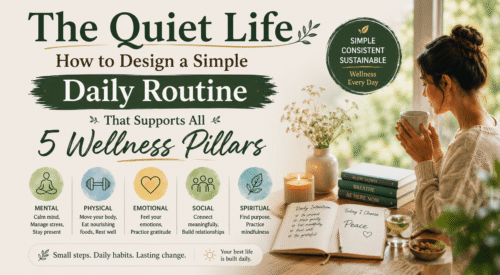
The Quiet Life: How to Design a Simple Daily Wellness Routine That Supports All 5 Wellness Pillars
Wellness does not live only in dramatic transformations. It lives in ordinary hours.
Wellness begins with simple moments. It is found in the way we move our bodies, the food we eat and the thoughts we develop. These are small healthy habits we practice every day.
A healthy lifestyle is not built through one perfect morning, one strict diet, or one intense workout. Real wellness grows slowly through simple daily habits practiced with consistency.
In today’s busy world, we are surrounded by constant notifications, comparisons, and pressure to do more. Many people are now discovering the importance of slowing down and choosing a simpler, quieter way of living.
The quiet life does not mean escaping responsibilities or avoiding ambition. It means designing your day with intention instead of allowing distractions to design it for you.
A simple daily wellness routine combines mindful eating, movement, meditation, natural practices, and lifelong learning. These habits support better physical, mental, and emotional balance.
The BenVitalFive approach is built around five important pillars:
- Healthy Living
- Yoga and Fitness
- Meditation and Mindfulness
- Natural Remedies
- Intellectual Growth through Reading
These five pillars of healthy living combine to form a practical framework for a balanced and meaningful life.
Why Modern Life Needs a Quiet Routine
Modern life offers comfort, but it also creates new challenges.
Many people wake up and immediately check their phones. Before the day even begins, the mind is filled with messages, news, advertisements, and comparisons.
The body may be sitting for long hours.
Meals may become rushed.
Sleep becomes shorter.
The mind rarely receives true silence.
A simple daily routine works because it removes unnecessary decisions. When healthy actions become part of your normal rhythm, you no longer depend only on motivation.
You create an environment where better choices become easier.
Research by Matthew Solan, of Harvard Men’s Health Watch, suggests that repeated small actions help to build healthy habits. And also support long-term behavior change.
The purpose of a wellness routine is not perfection.
The purpose is direction.
Understanding the 5 Pillars of the BenVitalFive Lifestyle
Before creating a daily routine, it helps to understand the foundation.
Pillar 1: Healthy Living
Healthy living includes the basic habits that support your body every day:
- Balanced nutrition
- Hydration
- Quality sleep
- Time outdoors
- Healthy relationships
- Mindful lifestyle choices
A healthy life is not about extreme restrictions. It is about respecting the body and nutrition habits, through daily care to support long-term wellness naturally
Internal Link: Read more about nutrition habits that support long-term wellness naturally.
Pillar 2: Yoga and Physical Fitness
Movement is essential for human health.
The body was designed to move, stretch, bend, and strengthen.
Yoga combines:
- Physical movement
- Breath awareness
- Flexibility
- Balance
- Relaxation
Even a short daily yoga routine can create a meaningful habit of caring for the body.
The goal is not difficult poses.
The goal is consistency.
Pillar 3: Meditation and Mindfulness
The mind also needs mindfulness meditation practices for mental clarity.
Meditation creates a moment to slow down and observe your thoughts.
Simple practices include:
- Breath awareness
- Body scanning
- Mindful walking
- Quiet reflection
Studies suggest mindfulness practices reduce anxiety, depression, and emotional imbalance and also improve good sleep and lower blood pressure. when practiced regularly.
Pillar 4: Natural Remedies and Traditional Wellness Practices
For generations, cultures around the world have used simple natural practices as part of daily living.
Examples include:
- Herbal teas
- Spices in cooking
- Seasonal foods
- Restorative routines
Plants like ginger, turmeric, tulsi, and other herbs have long traditions of use.
Natural remedies should not replace medical treatment, but they can become part of a balanced lifestyle approach.
Pillar 5: Intellectual Growth Through Reading
The mind grows through what it receives.
Daily reading is one of the simplest ways to develop the following:
- Focus
- Creativity
- Knowledge
- Patience
- Reflection
In a world of short digital content, reading a book trains deeper attention.
Twenty minutes that might disappear into endless scrolling can become twenty minutes of personal growth.
Reading for understanding is different from consuming endless information.
Internal Link: Discover the benefits of daily book reading for intellectual growth.
Morning Routine: Starting the Day Quietly
Meditation: 5–10 Minutes
Before the phone.
Before emails.
Before outside noise.
Spend a few minutes simply noticing your breathing.
You do not need to empty your mind. Meditation is not about fighting thoughts.
It is about learning to observe them.
A simple practice:
- Sit comfortably.
- Close your eyes.
- Notice your natural breathing.
- When thoughts appear, gently return attention to breathing.
A calm beginning often influences how we respond to the rest of the day.
Natural Morning Habits: 5 Minutes
Many traditional cultures begin the day with simple rituals.
Examples:
- Warm water
- Herbal drinks
- Soaked seeds
- Gentle hydration practices
Warm lemon water, fenugreek seeds, or ginger tea are not miracle solutions.
They are small practices that encourage hydration, routine, and mindful beginnings.
Consistency matters more than complexity.
Morning Yoga: 15–20 Minutes
A morning yoga routine does not need to be long.
A simple sequence:
- Gentle stretching
- Sun salutations
- Standing balance poses
- Forward folds
- Relaxation breathing
A short routine you follow every day is more powerful than an ambitious plan you abandon.
Movement teaches the body that the day has begun.
Healthy Breakfast: Eating With Awareness
Food is not only fuel.
Eating is also a daily opportunity to practice awareness.
A balanced breakfast may include:
- Whole grains
- Protein
- Healthy fats
- Fruits or vegetables
Examples:
- Oats with nuts and fruit
- Traditional homemade meals
- Eggs with vegetables
- Millet-based dishes
Avoid rushing.
Chew slowly.
Taste your food.
Mindful eating helps rebuild your relationship with nourishment.
Afternoon Routine: Growth and Focus
Reading: 20–30 Minutes
The afternoon is a powerful time for intellectual growth.
Instead of automatically reaching for your phone, open a book.
Choose:
- Philosophy
- Wellness books
- Science
- History
- Personal development
Reading develops a slower and deeper form of thinking.
Many people find the post-lunch period ideal because the body naturally enters a calmer rhythm.
A daily reading habit is an investment in lifelong learning.
Evening Routine: Returning to Calm
Early and Light Dinner
Modern schedules often push dinner late into the night.
A small change can help create a better evening rhythm.
For example:
Eating at 7:30 pm instead of 9:00 pm gives the body more time before sleep.
Choose lighter evening meals:
- Soups
- Vegetables
- Simple homemade foods
- Balanced portions
The goal is not strict timing.
The goal is supporting a comfortable transition toward rest.
Internal Link: Read about natural ways to improve sleep quality through evening routines and relaxation practices.
Evening Herbal Tea Ritual
A warm drink can become a simple signal that the busy part of the day is ending.
Common choices:
- Tulsi tea
- Ginger tea
- Chamomile tea
The quiet moment matters as much as the drink itself.
Slow routines help separate daytime activity from nighttime rest.
Night Routine: Closing the Day Peacefully
Restorative Yoga: 10–15 Minutes
Night yoga is not exercise.
It is relaxation.
Try:
- Legs-up-the-wall pose
- Child’s pose
- Gentle spinal twist
- Deep breathing
During the day, the body collects tension.
A few quiet movements help create a peaceful transition into sleep.
Five-Minute Night Meditation
Before sleeping:
Pause.
Breathe.
Let the day finish.
A simple body scan:
Notice your feet.
Relax your legs.
Relax your shoulders.
Relax your face.
Allow yourself to move from doing into resting.
Example Quiet Life Daily Schedule
6:00 am – Wake and hydrate
6:10 am – Meditation
6:20 am – Gentle yoga
7:00 am – Healthy breakfast
1:00 pm – Balanced lunch
2:00 pm – Reading time
6:30 pm – Herbal tea
7:00 pm – Light dinner
9:30 pm – Restorative yoga
9:45 pm – Breath meditation
10:00 pm – Sleep
How to Adjust This Routine for Your Life
Your routine does not need to match anyone else’s.
A student, working professional, parent, or retired person will have different schedules.
Keep the principles:
- Begin slowly
- Move daily
- Eat consciously
- Learn something
- Create quiet moments
A routine should support life, not control it.
Frequently Asked Questions
What is a simple daily wellness routine?
A simple daily wellness routine is a collection of small habits such as movement, healthy eating, mindfulness, reading, and proper rest practiced regularly.
Do I need hours every day for wellness?
No. Small actions done consistently often create more sustainable results than unrealistic routines.
Why is a quiet lifestyle important?
A quiet lifestyle encourages intentional choices, deeper focus, and greater awareness of daily habits.
Can beginners follow this routine?
Yes. Start with one or two practices and slowly build your routine over time.
Final Thoughts: The Beauty of the Quiet Life
The quiet life is not about doing nothing.
It is about choosing what truly deserves your time and energy.
A meaningful life is often built from simple moments:
A peaceful morning.
A mindful meal.
A few pages of a good book.
A quiet breath before sleep.
When repeated every day, ordinary habits become extraordinary foundations.
Wellness is not somewhere far away.
It is hidden inside the way you live today.

