
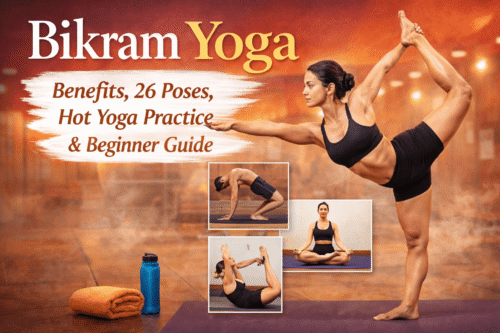
Bikram Yoga: Benefits, 26 Poses, Hot Yoga Practice & Beginner Guide
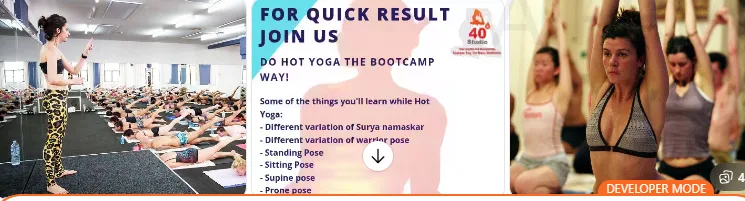
Introduction:
Introduction: Why This “90-Minute Meditation” is Transforming Wellness
Bikram Yoga is far more than a workout in a heated room; it is a disciplined, 90-minute moving meditation designed to systematically restore every system in the human body. Practiced in a room heated to 40°C (104°F) with 40% humidity, this specific sequence of 26 postures and two breathing exercises is engineered to improve flexibility, detoxification, and mental resilience.
At BenVitalFive, we view Bikram as a cornerstone of the “Yoga” pillar—a practice that clears the mental fog and prepares the vessel for deeper meditation and intellectual growth. Whether you are seeking physical relief or a “reset” for your nervous system, this structured framework offers a predictable and measurable path to vitality.
Bikram yoga is a style of hot yoga practiced in a heated room. It is designed to improve flexibility, strength, and mental focus. Researchers from Harvard Medical School studied 65 adults with depression, assigning them to either a hot yoga group. They participated in at least two 90-minute sessions per week for eight weeks, or were in a control group on a waiting list.
The yoga group showed a clear improvement in depression symptoms. About 60% of participants had their symptoms reduced by at least half. In comparison, only 6% of people in the waiting list group saw similar improvement.
The study does not prove that hot yoga is better than other types of yoga for treating depression. It only suggests that hot yoga may help, especially when used along with medication. However, it is important to speak with a doctor before starting, as hot yoga may not be safe for everyone.
Over the years, yoga has evolved into a number of styles. All of them were created to promote physical health, mental clarity and emotional steadiness. Bikram Yoga is one of the most unique and intense yoga styles. Bikram Yoga It improves flexibility, detoxifies the body and strengthens the mind and body.
“Bikram Yoga is not just a workout; it is a disciplined 90-minute moving meditation. Practiced in a room heated to 40°C (104°F). This specific sequence of 26 postures and two breathing exercises is designed to systematically restore every system in the body.”
What is Bikram Yoga
Bikram Yoga is a form of hot yoga practiced in a room heated to approximately 40°C (104°F) with 40% humidity. It follows a fixed sequence of 26 poses (asanas) and 2 breathing exercises, designed to systematically work every part of the body.
The structured format makes it:
- Predictable (same sequence every class)
- Measurable (easy to track progress)
- Accessible for beginners
What Does Research Say?
Why Bikram Yoga is Unique
What sets Bikram Yoga apart is its steady framework and hot environment.
Together, the heat, movement and breathing techniques form a hot practice that tests the body as much as it does the mind.
The well-defined sequence of poses guarantees that each body part is exercised in every session.
With practice, many people find improvements in flexibility, strength, endurance, and focus. Similar to what we discuss in our Yoga for Beginners guide, where consistent practice leads to noticeable mobility gains.
10 Unique Features of Bikram Yoga Speaking Points.
Heated Practice Environment
The temperature of the room is one of Bikram Yoga’s most recognized features. Its temperature is generally around 40°C (104°F), and the humidity is around 40%.
Doing yoga in the heat allows your muscles to loosen up faster and prevents the risk of injury while gaining a deeper stretch.
The warmth also promotes sweating, a natural body temperature regulation and circulation booster.
Fixed Sequence of 26 Poses
The same sequence of 26 postures is done in Bikram Yoga. These are meant to stretch and strengthen every part of the body, including muscles, joints, organs and the nervous system.
In this way, each posture flows into the next, each pose leading to another in a harmonious progression.
Because each class has the same sequence, practitioners can work to improve technique and flexibility over time.
Breathing Exercises
Bikram Yoga also consists of Pranayama, two breathing exercises, in addition to the 26 postures.
With better lung capacity, more oxygen gain and relaxation of the mind through these breathing methods.
Controlled breathing also assists the body through difficult poses and helps keep focus throughout a session.
Mental Focus and Discipline
Bikram Yoga requires a strong mental focus, so practicing it can be challenging. The hot room and physically strenuous sequence invite practitioners to be present with their bodies and commit themselves.
This, in turn, fosters mental resilience and emotional balance over time.
Benefits of Bikram Yoga (Backed by Research)
Bikram yoga helps improve flexibility, strength, balance, and mental focus, while also supporting stress reduction and cardiovascular health.
Physical Benefits
- Improves flexibility and joint mobility
- Enhances lower-body strength
- Boosts balance and coordination
Build a stress-free life with these 10 simple daily yoga habits. Learn how to incorporate easy breathing, stretching, and relaxation into your daily routine.
Metabolic & Health Benefits
Studies suggest Bikram yoga may:
- Improve glucose tolerance
- Support healthy cholesterol levels
- Reduce arterial stiffness
Discover how Vinyasa Yoga for weight loss helps burn calories, build strength, and improve metabolism. Learn the best yoga poses and routines for fat loss.
Mental Benefits
- Reduces stress and anxiety
- Improves mindfulness
- Enhances mental resilience
Also, learn Meditation during your commute helps reduce stress and improve focus.
Scientific Insight:
A 2018 study in the Journal of Alternative and Complementary Medicine found improvements in vascular function and stress reduction among participants practicing hot yoga regularly.
However:
- Limited large-scale randomized controlled trials exist
- More research is needed for chronic disease populations
Safety Tips Before You Start
- Stay well hydrated
- Avoid practice if you have:
- Heart conditions
- Heat intolerance
- Eat light before class
- Stop if you feel dizzy
What are the 26 Bikram Yoga poses?
The 26 Bikram yoga poses include standing, balancing, and floor postures. They are the Oxygenation & Warm-Up Pose, Standing & power poses, the Floor “Restorative” Poses, and the Final Detox. These poses are performed in a specific sequence to work the entire body.
Phase 1: The Oxygenation & Warm-Up
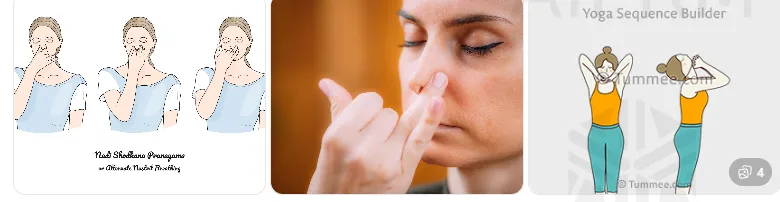
- Pranayama (Standing Deep Breathing):* Focus: Lung capacity and circulation.
Benefit: Expands the lungs and warms the joints from the inside out, preparing the nervous system for the heat.
- Aradha-Chandrasana with Pada-Hastasana (Half Moon with Hands to Feet):* Focus: Spinal flexibility.
Benefit: Provides a 360-degree stretch to the spine, opening the hips and improving kidney function.
Phase 2: The Standing “Power” Series (3-12)
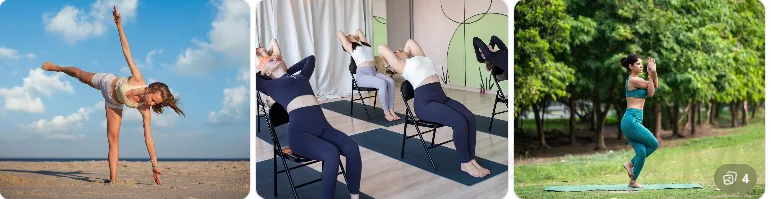
- Utkatasana (Awkward Pose):* Focus: Lower body strength.
Benefit: Deeply tones the legs and helps alleviate chronic cold feet by increasing circulation to the lower extremities.
- Garudasana (Eagle Pose):* Focus: Joint mobility.
Benefit: The only pose that opens the 14 largest joints in the skeletal system. Great for lymphatic drainage in the arms and legs.
- Dandayamana-Janushirasana (Standing Head to Knee):* Focus:Concentration and hamstrings.
Benefit: Uses “compression” to improve digestive organ function while building intense mental determination.
- Dandayamana-Dhanurasana (Standing Bow Pulling):* Focus:Balance and heart health.
Benefit: Moves blood from one side of the body to the other (the “tourniquet effect”), improving cardiovascular elasticity.
- Tuladandasana (Balancing Stick):* Focus:Core and arteries.
Benefit: Clears arterial blockages by sending a “flush” of blood to the heart and brain.
- Dandayamana-Bibhaktapada-Paschimotthanasana (Standing Separate Leg Stretching):* Focus: Sciatic nerve health.
Benefit: Increases flexibility in the pelvis and lower spine. It is referred to as an “internal massage” for the abdominal organs.
- Trikanasana (Triangle Pose):* Focus: Full-body integration.
Benefit: Regarded as the “master pose” of the standing series, it improves every muscle, joint, and organ simultaneously.
- Dandayamana-Bibhaktapada-Janushirasana (Standing Separate Leg Head to Knee): Focus: Metabolic balance.
Benefit: Compresses the thyroid gland to help regulate metabolism and immune system response.
- Tadasana (Tree Pose) & 12. Padangusthasana (Toe Stand):* Focus: Focus and hip mobility.
Benefit: Creates skeletal alignment and helps prevent knee and ankle injuries.
The Floor “Restorative” Series (13–24)

- Savasana (Dead Body Pose):* Focus: Complete relaxation.
Benefit: Performed between every floor pose to allow the blood to circulate freely without resistance.
- Pavanamuktasana (Wind Removing Pose):* Focus: Digestive health.
Benefit: Specifically targets the ascending, descending, and transverse colon to improve elimination.
- Pada-Hastasana (Sit-up):* Focus: Core strength.
Benefit: Re-energises the body and aligns the spine for the next posture.
16–19. The Spine Strengthening Series (Cobra, Locust, Full Locust, Bow): * Focus: Posterior chain strength.
Benefit: These four poses work together to remedy lower back pain and improve slipped discs. And also strengthen the muscles surrounding the spine.
- Supta-Vajrasana (Fixed Firm Pose):* Focus: Knee and ankle flexibility.
Benefit: Helps with sciatica, gout, and varicose veins in the legs.
- Ardha-Kurmasana (Half Tortoise):* Focus: Stress relief.
Benefit: Known as the “natural aspirin,” it assists with headaches and insomnia by bringing blood to the brain.
- Ustrasana (Camel Pose):* Focus: Emotional release and nervous system.
Benefit: A deep backbend that opens the chest and can help regulate the “fight or flight” response.
- Sasangasana (Rabbit Pose):* Focus: Maximum spine stretch.
Benefit: The opposite of Camel; it creates space between the vertebrae and helps with sinus congestion.
- Janushirasana with Paschimotthanasana (Head to Knee with Stretching):* Focus: Immune system and circulation.
Benefit: Balances blood sugar levels and improves circulation to the liver and spleen.
- Ardha-Matsyendrasana (Spine Twisting):* Focus: Spinal detoxification.
Benefit: Effectively “wrings out” the spine, promoting better nerve communication throughout the body.
Phase 4: The Final Detox
- Kapalbhati (Blowing in Firm Pose):* Focus: Internal detoxification.
Benefit: Uses forced exhalation to expel carbon dioxide and toxins, leaving the practitioner energized and clear-headed.
Key Comparison: Bikram Yoga vs Hot Yoga vs Hatha Yoga
| Feature | Bikram Yoga | Vinyasa or Flow-based | Hatha Yoga |
| Temperature | 40°C | 30–40°C | Normal |
| Structure | Fixed 26 poses | Varies | Flexible |
| Difficulty | Medium–High | Medium | Beginner-friendly |
| Focus | Discipline + detox | Variety | Basics + relaxation |
| Best For | Structured learners | Variety seekers | Beginners |
My First Bikram Yoga Class (What It Really Feels Like)
Walking into my first Bikram yoga class was honestly intimidating.
The heat hit me immediately—it felt like stepping into a sauna. Within the first 10 minutes, I was sweating more than I ever had in a workout. My initial thought? “There’s no way I’ll last 90 minutes.”
But something interesting happened.
As the class progressed, I stopped focusing on the heat and started focusing on my breathing. The instructor kept repeating, “Just stay in the room.” That advice alone made a huge difference.
By the end of the session:
- I felt exhausted, but calm
- My body felt lighter and more flexible
- My mind was surprisingly clear
After just a few sessions, I noticed:
- Better posture
- Improved balance
- Reduced stress levels
The biggest lesson?
You don’t need to be perfect—you just need to show up.
Beginner-Friendly Bikram Yoga Routine
Duration: 60–90 Minutes
Step-by-Step Routine
- Warm-up breathing (5 mins)
- Standing series (25–30 mins)
- Short rest (2 mins)
- Floor series (30–40 mins)
- Final breathing (5 mins)
Weekly Plan for Beginners
- Day 1: Light practice (observe + adapt)
- Day 2: Rest or gentle yoga
- Day 3: Full session
- Day 4: Rest
- Day 5: Practice again
- Weekend: Optional recovery/stretch
Pre & Post Practice Tips
Before Class
- Drink 500–700 ml water
- Eat light (fruit or smoothie)
After Class
- Rehydrate with electrolytes
- Stretch gently
- Rest
Why is Bikram Yoga Done in Heat?
Heat helps:
- Increase muscle elasticity
- Improve circulation
- Promote sweating (detox support)
But overheating is a risk → always listen to your body.
Scientific Evidence Summary
Research suggests:
- Improved balance and strength
- Better cardiovascular markers
- Reduced stress levels
Limitation:
- Lack of large randomised controlled trials
- More research is needed in clinical populations
Who Should Avoid Bikram Yoga?
- Pregnant women (unless approved by doctor)
- People with heart issues
- Those sensitive to heat
Pro Tips for Success
- Don’t compare yourself to others
- Focus on breathing, not perfection
- Progress takes time
Final Thoughts: Your Journey to Holistic Health
Bikram Yoga is more than a physical workout; it is a masterclass in discipline, detoxification, and mental resilience. By committing to these 26 poses, you aren’t just stretching muscles—you are recalibrating your entire nervous system and optimizing your metabolic health.
However, physical movement is only one piece of the puzzle. At BenVitalFive, we believe that true vitality is built on a foundation of five essential habits that work in harmony:
- Healthy Living: Fueling your body with natural, ancestral nutrition.
- Yoga: Building strength and flexibility through practices like Bikram.
- Meditation: Cultivating a calm, focused mind to navigate modern stress.
- Natural Remedies: Using the wisdom of traditional herbalism and adaptogens.
- Reading: Prioritising deep, intentional learning over digital distraction.
Integrating a “Hot Practice” like Bikram into your routine is a powerful way to accelerate your progress across all five pillars. It clears the fog, strengthens the vessel, and prepares the mind for deeper meditation and growth.
Ready to Start Your Transformation?
If you found this guide helpful, don’t stop at the mat.
- Explore the Foundation: Visit our [Yoga for Health Pillar Page] to see how Bikram compares to other traditional styles.
- Deepen the Detox: Read our latest research on Brahmi and Neuroscience to learn how to pair your physical practice with cognitive-boosting botanicals.
- Join the Community: Share your first “sweat” experience in the comments below—remember, the goal isn’t perfection; it’s simply to “stay in the room.
FAQ:
1. Is Bikram Yoga good for beginners?
Yes, Bikram yoga is beginner-friendly because it follows the same 26 poses in every class. However, the heat can be intense, so beginners should start slowly, stay hydrated, and take breaks when needed.
2. How many calories does Bikram Yoga burn?
A typical session can burn 300–600 calories, depending on intensity, body weight, and experience level.
3. What is the difference between Bikram Yoga and Hot Yoga?
Bikram yoga follows a fixed sequence of 26 poses in a room heated to 40°C, while hot yoga is a broader term that includes various yoga styles practiced in a heated environment.
4. How often should beginners practice Bikram Yoga?
Start with 2–3 sessions per week and gradually increase as your body adapts to the heat and intensity.
5. Is Bikram Yoga safe?
Yes, but only if practiced responsibly. Stay hydrated, avoid overexertion, and consult a doctor if you have medical conditions like heart issues or heat sensitivity.
6. Do you need to be flexible to start Bikram Yoga?
No. Flexibility improves over time. Beginners often see noticeable improvements within a few weeks.

