
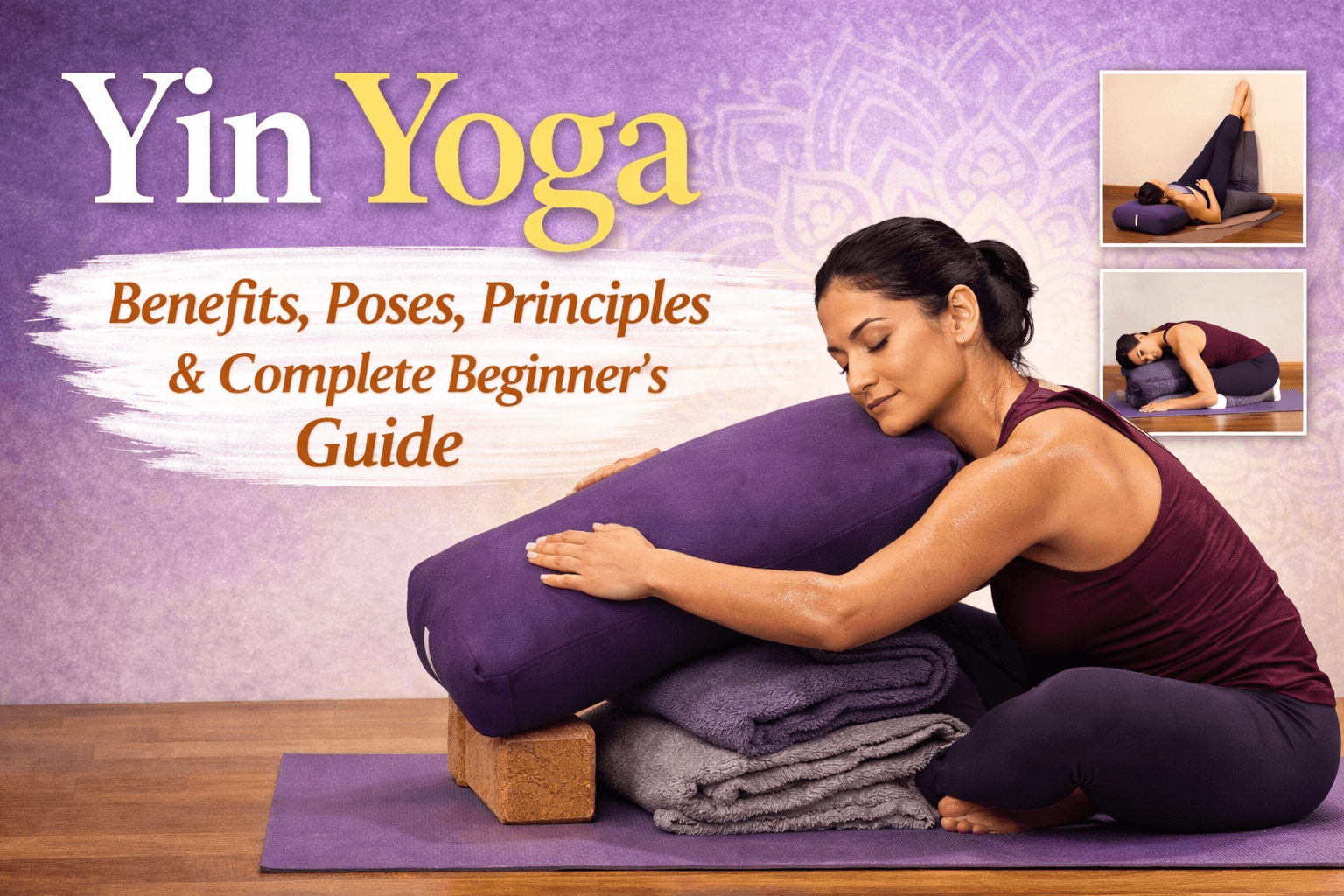
Yin Yoga: Benefits, Poses, Principles & Complete Guide
Introduction
In today’s fast-paced world, most forms of exercise are centered around intensity—burning calories, building strength, and constantly pushing limits. This “more is better” mindset reflects what yoga philosophy calls Yang energy: dynamic, active, and outward-focused.
Yin Yoga offers the essential counterbalance.
Instead of movement and effort, Yin Yoga invites stillness. Instead of intensity, it emphasizes softness. It is a slow, meditative practice designed to calm the nervous system, release deeply held tension, and restore balance to both body and mind.
Unlike dynamic styles such as Vinyasa or Power Yoga, Yin Yoga involves holding passive poses for extended periods—typically between 3 to 5 minutes or longer. These longer holds allow deeper connective tissues like fascia to gradually release, improving mobility and promoting long-term joint health.
For anyone feeling physically tight, mentally overwhelmed, or constantly “on the go,” Yin Yoga provides a much-needed pause.
Explore more styles in your pillar article: Types of Yoga Explained
What is Yin Yoga?
Yin Yoga is a slow-paced, introspective style of yoga that focuses on long-held, passive postures. Rather than targeting muscles through strength and engagement, Yin Yoga works primarily with the body’s deeper connective tissues.
These include:
- Fascia – the web-like connective tissue that surrounds muscles and organs
- Ligaments – tissues connecting bones to other bones
- Joints – improving range of motion and joint health
The practice was popularized in the late 20th century and draws influence from both traditional yoga and Chinese wellness systems.
At its core, Yin Yoga is about balance. In a world dominated by constant activity, stimulation, and stress, Yin provides stillness, introspection, and recovery.
The 4 Key Principles of Yin Yoga
To fully benefit from Yin Yoga, it’s important to understand its foundational principles. These are what distinguish Yin from other yoga styles.
1. Find Your Edge
In Yin Yoga, you are encouraged to move slowly into a stretch until you feel a gentle but noticeable sensation—often called your “edge.”
This is not pain.
It’s a place where you feel resistance, but can still breathe comfortably and remain relaxed. Finding this balance is key to practicing safely and effectively.
2. Resolve to Remain Still
Once you’ve settled into a pose, the goal is to stay as still as possible.
Stillness allows the body to shift from muscular effort into deeper tissue engagement. It also creates space for mental awareness, helping you observe sensations without reacting to them.
3. Hold for Time
Unlike dynamic yoga, where poses are held for seconds, Yin Yoga holds are measured in minutes.
This is because connective tissues respond differently than muscles. They require slow, sustained pressure to adapt and lengthen.
Over time, this can lead to improved flexibility and joint mobility.
4. Release with Care
Coming out of a pose is just as important as entering it.
After holding a posture, the body experiences a “rebound effect”—a rush of blood flow and sensation. Moving slowly helps the body integrate the stretch safely and comfortably
Science-Backed Benefits of Yin Yoga
Yin Yoga is not just a relaxing practice—it also has measurable physical and psychological benefits.
1. Improved Fascial Health and Flexibility
Fascia plays a crucial role in how our body moves. When it becomes stiff or dehydrated, it can restrict mobility and cause discomfort.
Slow, sustained stretching—like in Yin Yoga—may help improve the elasticity of fascia and overall flexibility.
Many practitioners notice:
- Increased range of motion
- Reduced stiffness
- Greater ease in movement
2. Reduced Stress and Nervous System Regulation
Yin Yoga emphasizes slow breathing and stillness, which activates the body’s parasympathetic nervous system—the “rest and digest” mode.
This can:
- Lower stress levels
- Reduce mental fatigue
- Improve emotional regulation
Over time, the practice can feel similar to meditation, helping calm a constantly active mind.
3. Better Joint Health and Mobility
Gentle, sustained loading of the joints encourages circulation and may support joint lubrication.
This is especially important for:
- People with sedentary lifestyles
- Those experiencing stiffness or reduced mobility
4. Enhanced Mindfulness and Mental Clarity
Holding poses for extended periods creates an opportunity to observe thoughts, sensations, and emotions without distraction.
This builds:
- Awareness
- Patience
- Emotional resilience
My Journey: From High Intensity to Stillness
For years, I believed that a workout only counted if it felt intense. My routine revolved around running, strength training, and fast-paced yoga flows.
If I wasn’t sweating or pushing myself, it didn’t feel productive.
But over time, I noticed something strange. Despite staying active, my body felt tight. My hips were stiff, my back often ached, and my mind rarely felt fully at ease.
The Shift
My first Yin Yoga class felt uncomfortable—not physically, but mentally.
Holding a pose for several minutes felt endless. My mind wandered, I fidgeted, and I kept wanting to move.
But something interesting happened when I stayed.
What Changed
Flexibility Improved
My body began to open in ways it never had before. Areas that felt constantly tight—especially my hips and hamstrings—started to release.
Relief from Sitting
After long hours at a desk, Yin Yoga helped undo the effects of poor posture and inactivity.
Mental Stillness
Perhaps the biggest shift was internal. I learned how to sit with discomfort, breathe through it, and remain present.
That skill carried into my daily life—helping me manage stress more calmly and respond rather than react.
Common Yin Yoga Poses for Beginners
Butterfly Pose
A seated posture that opens the hips and stretches the inner thighs and lower back.
Dragon Pose
A deep lunge that targets the hip flexors and groin—great for counteracting long periods of sitting.
Caterpillar Pose
A forward fold that stretches the spine and hamstrings while encouraging relaxation.
Sphinx Pose
A gentle backbend that strengthens the lower back and opens the chest.
Child’s Pose
A restorative pose that calms the nervous system and gently stretches the body.
How to Start Yin Yoga (Beginner Tips)
If you’re new to Yin Yoga, start slowly and mindfully.
- Begin with 1–2 minute holds
- Use props like cushions, blocks, or blankets
- Focus on slow, steady breathing
- Avoid pushing into pain
- Practice regularly for best results
Internal link suggestion: Beginner Yoga Poses You Can Start Today
Yin Yoga vs Other Styles
| Style | Focus | Intensity |
|---|---|---|
| Yin Yoga | Stillness, deep tissue | Low |
| Vinyasa Yoga | Flow and movement | Moderate–High |
| Ashtanga Yoga | Structured sequence | High |
Yin Yoga complements more active practices by improving recovery, flexibility, and balance.
Safety and Contraindications
Yin Yoga is generally safe, but caution is important.
Avoid or modify practice if you have:
- Joint injuries
- Severe back pain
- Hypermobility conditions
Always:
- Avoid sharp or intense pain
- Use props when needed
- Consult a professional if unsure
Why Yin Yoga is Unique
What makes Yin Yoga truly unique is its emphasis on doing less, not more.
It creates space—not just in the body, but in the mind.
In a world that constantly demands action, Yin Yoga teaches the value of stillness, patience, and awareness.
Conclusion
Yin Yoga is more than just stretching—it is a practice of slowing down, tuning in, and creating space within both body and mind.
By holding poses for longer durations and focusing on breath, it supports flexibility, joint health, and emotional balance.
Most importantly, it reminds us that progress doesn’t always come from pushing harder.
Sometimes, the most powerful transformation happens when we pause
Ready to begin your Yin Yoga journey?
Read: Essential Yoga Props for a Home Practice
Explore: 90-Day Wellness Transformation Plan

