
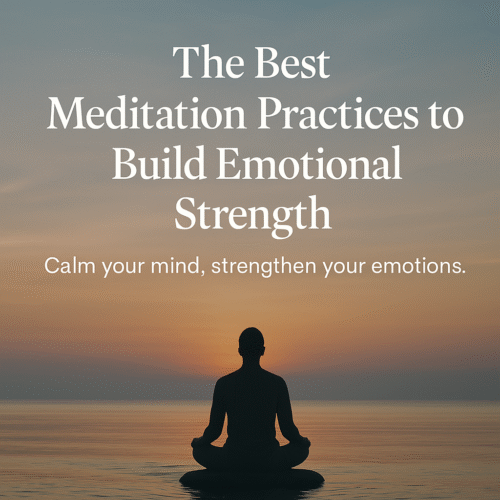
The Best Meditation Practices—Key Insights
1. Meditation builds emotional strength gradually but powerfully.
Regular practice strengthens the prefrontal cortex (decision-making, emotional control) and calms the amygdala (stress and fear center).
2. Emotional strength means awareness, stability, and calm—not suppression.
It’s the ability to stay grounded and respond mindfully, not react impulsively.
3. Mindfulness is the foundation of emotional resilience.
It improves self-awareness, reduces overthinking, and helps you stay present during emotional triggers.
4. Loving-Kindness Meditation heals emotional wounds.
It softens anger, resentment, and self-criticism while increasing compassion.
5. Breathwork is the fastest way to calm emotional stress.
Techniques like box breathing and 4-7-8 breathing immediately lower anxiety and regulate emotions.
6. Body Scan Meditation releases emotional tension stored in the body.
Stress often lives in the shoulders, chest, and jaw — this practice brings relief.
7. Visualization helps reprogram emotional patterns.
Guided imagery creates a sense of calm, hopefulness, and mental strength.
8. Meditation can be tailored to specific emotional challenges.
Different techniques help with stress, anger, burnout, fear, and overthinking.
9. Consistency is more important than duration.
Even 2–5 minutes a day builds emotional resilience over time.
10. Meditation is not about stopping thoughts.
It’s about observing them without getting pulled into emotional chaos.
11. Your emotional strength grows every time you choose presence over panic.
Small daily moments of stillness create long-lasting emotional stability.
12. Creating a meditation routine boosts long-term results.
A calm space, habit pairing, and meditation apps make it easier to stay consistent.
Introduction
Meditation Practice, the kind that truly strengthens your emotional core, doesn’t require intricate rituals or esoteric knowledge. These are straightforward techniques, backed by research, and they’re within reach for everyone – even you. Over time, I’ve come to understand that emotional strength isn’t about being tough. Instead, it’s about having a steady sense of self-assurance when facing life’s challenges. Meditation has become my most helpful tool for staying centred during difficult times. It helps calm my mind, soothe my emotions, and reminds me that inner peace is something I can create. Feeling stressed, drained, or quick to anger? This might be the perfect time to explore how meditation can help you bounce back. Suggested Image Placement:
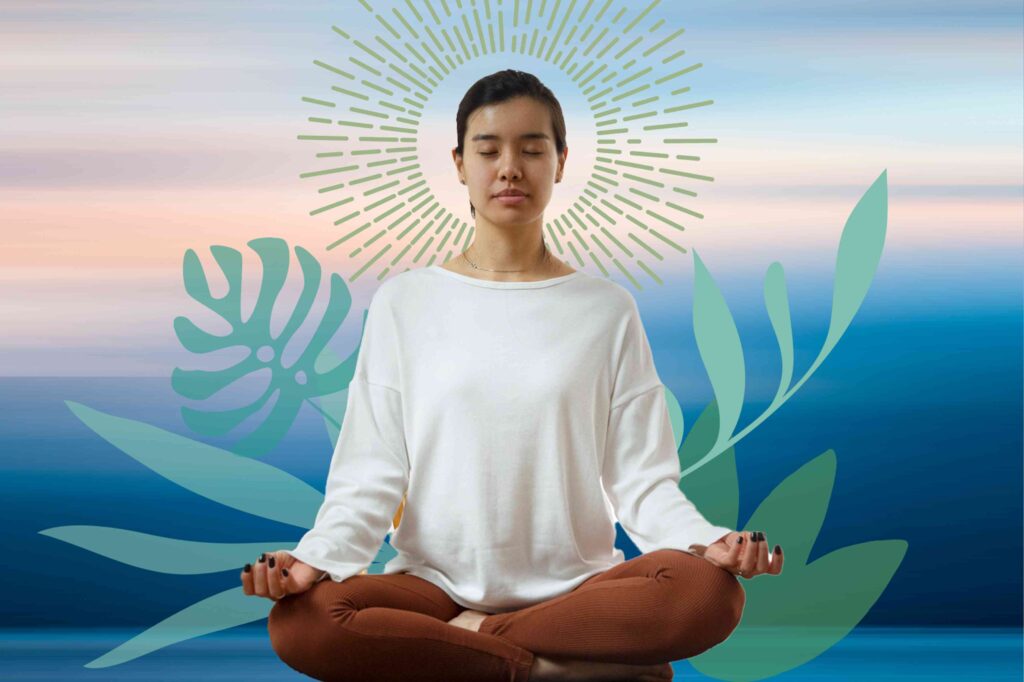
What does it mean to be emotionally strong?
Initially, I thought it meant never showing vulnerability, never shedding a tear. But through meditation and my own path of self-discovery, I came to understand emotional strength differently. It’s about recognising your feelings and their impact, and then managing them skilfully so you can stay composed, even when everything feels like it’s falling apart.
For me, emotional strength looks like this:

Staying calm, not panicking. Responding thoughtfully, not reacting impulsively. Accepting my feelings, rather than trying to suppress them. Being gentle with myself, even when things are hard. It’s about maintaining your equilibrium, even when the seas are rough.
Research indicates that the strength of our emotional responses is connected to the prefrontal cortex, the part of the brain responsible for higher-order functions. Science suggests that the strength of one’s emotional states is linked to the prefrontal cortex – the area of the brain responsible for emotional regulation, decision making, and resilience. Meditation can strengthen this area as well as soothe the amygdala (which triggers stress and anxiety).
Simply stated: You become less reactive and more responsive. Your emotion-induced setbacks tend to resolve more quickly when managed properly via this medium.
Finally, the web provides space that fosters peace instead of discord.
At its heart lies its greatest beauty: meditation is not something you are born with but can learn. Every breath, moment of mindfulness, and meditation session changes your emotional system over time.
How Meditation Enhances Emotions (Science-Backed)
Initially, I didn’t anticipate anything remarkable when I began meditating. But gradually, a subtle yet significant change unfolded within me: stress ceased to affect me in the same way, and my emotions became easier to navigate. For the first time, I truly understood what emotional fortitude felt like. And the best part? Science backs up these changes. Here’s how meditation can bolster emotional resilience at the neurological level:
1. Meditation reshapes your brain
It’s a process called neuroplasticity. Researchers have found that meditation actually changes the brain’s physical structure. The prefrontal cortex, for example, shows improvement with regular practice. This area is responsible for decision-making, controlling emotions, rational thinking, and self-awareness. As these functions strengthen, people tend to become more centred, patient, and emotionally stable.
2. It deactivates Your Stress Centre of Your Brain (Amygdala).
Harvard MRI research shows meditation reduces amygdala activation and increases emotional resilience.Your amygdala functions as your fight-or-flight button, and when it’s overactive, you may experience: According to a Harvard study, even eight weeks of meditation practice can significantly reduce amygdala size and activity, leading to significant improvements in emotional state—that is, maintaining focus rather than losing it emotionally.
3. Meditation can increase feel-good neurotransmitters in your brain.
NIH research confirms meditation changes brain structure through neuroplasticity. The study investigates the long-term effects of meditation on brain networks by analysing functional resting-state brain activity in Vipassana meditators using magnetoencephalography. Results indicate significant topological changes, notably in the theta band, where meditators exhibited increased centrality in the right hippocampus compared to control subjects. This finding suggests that meditation may enhance brain connectivity, particularly in areas related to memory, and could play a preventive role against age-related cognitive decline and Alzheimer’s disease.
Its effects include:
Serotonin (a mood stabilizer)
Dopamine (motivation + positivity)
GABA (calmness and relaxation)
These chemicals have the power to boost your emotional resilience, making you feel secure and safe.
4. The parasympathetic nervous system is stimulated.
The digestive and relaxation systems, which work against stress-related modes, are one way to activate it.By lowering heart rates, cortisol levels, and inner turmoil, meditation enables you to face life with grace rather than fear.
Self-Reflection and Emotional Awareness Can Be Improved
Through meditation,

- you can become conscious of your feelings without letting them control you.
- Recognise that an emotion is just a feeling rather than a reality.
- “Don’t be concerned. This emotion will eventually go away.
- “I can handle it.” Just this statement has the power to drastically change your feelings.
- Individual Observation: While it didn’t solve every issue I had, meditation did make me stronger.
The Best Meditation Techniques for Developing Emotional Resilience
I’ve practiced a variety of meditation techniques throughout my life, from basic breathing techniques to deep spiritual exercises. These are my top picks if I had to choose the best strategies for genuinely boosting emotional fortitude and resilience. They have all assisted me in different ways, helping me to maintain composure, self-assurance, and concentration during emotional upheavals.
1 Meditation with awareness
If the foundation of your emotional intensity was mindfulness, that’s it. I was able to stay in the moment and avoid dwelling on “what could have been” or regrets from the past thanks to mindfulness.
What it accomplishes:
Stopping emotional overreactions, increasing self-awareness, relieving stress and anxiety, and maintaining composure in the face of triggers
How I put it into practice: I take a seat, focus on my breathing, and then watch my thoughts as if they were clouds in motion. There is no condemnation. Don’t chase. Presence is all you need.
Take this action.
Sit comfortably and unwind.
Ten deep breaths.
Don’t react; instead, be conscious of your thoughts.
This easy exercise can transform your mental world.
Stay present by reading: Mindfulness and Breath Awareness
2 Meditation on Loving-Kindness (Metta)
My heart and soul were released by the meditation in unexpected ways. As I engaged in loving-kindness exercises, I discovered that I was more patient with both myself and those around me.
What it accomplishes:
Recover from emotional wounds
It improves empathy and compassion, lessens anger, resentment, and self-criticism, and increases emotional adaptability.
Basic Metta expressions:
“May I rest in peace.”
“May I be secure.”
“May you be strong.”
“May all be well with others.”
More than any book, the daily repetition of these exercises changed my emotional patterns.
3. Body Scan Meditation
This exercise alone made me realise how much emotion is stored in our bodies. Tight jaw? Heavy chest? Stiff muscles? They are signals of emotion.
What is its function?
releases the body’s stored emotional tension
improves the relationship between the mind and body and lessens stress and anxiety
What I do is lie on my back, slowly scan my entire body from head to toe, and then let my body relax.
It resembles a detox of emotions.
4. Meditation and Breathwork
Breathing is the first thing I do when I’m stressed.
What it accomplishes:
relieves emotional distress in a few minutes.
lessens rage, panic, and anxiety
There is an activation of the parasympathetic nervous system.
You’ll feel rooted right away.
Try these choices:
Box Breathing Pattern: 4-4-4-4 4-7 Inhale 4, hold 7, exhale 8, and use diaphragmatic breathing to unwind.
Your entire emotional state can change in just five minutes.
5. Meditation with Guided Visualisation
I need help sometimes. I use guided visualisations on YouTube or other apps at this point.
What it accomplishes:
increases emotional self-assurance
Increases optimism
aids in ending harmful thought patterns
Perfect for those who tend to overthink things
Visualisations that I adore:
Picture me strolling through the forest.
Unwinding by the sea
Imagining my “stronger future self”
The optimism and emotional clarity are enhanced by these pictures.
6. Mantra Meditations
I can keep in mind that strength comes from within by repeating a mantra.
How is it beneficial?
lessens mental noise
maintains your emotional focus
establishes internal stability
Perfect for people whose minds are racing.
“Om Shanti,” “I am enough,” and “Peace starts with me” are powerful mantras.
“Let go”
Just a few minutes can bring an emotional pause.
7 Zen (Zazen) Meditation
My discipline improved as a result of the practice. I get a sense of inner strength and patience when I’m in a quiet room with good posture.
What is its function?
develops emotional self-control
increases clarity and focus
increases patience and imparts the value of control and stillness.
Zazen is simple yet profound; it’s similar to strength training for the mind.
8 Chakra Meditation (Solar Plexus & Heart)
At first, I had my doubts about energy practices, but the solar plexus and heart meditations have transformed my outlook on life.
Heart Chakra Meditation
- Reduces Emotional Anguish
- cultivates self-love
- Let’s let go of past emotional wounds
- Confidence is boosted by Solar Plexus Meditation
- builds inner fortitude
- lessens anxiety and self-doubt
- For emotional healing, these meditations are especially beneficial.
9 Walking Meditation
I take a meditation walk if I can’t sit still or feel calm.
How is it beneficial?
You are able to control your feelings.
lessens tension and annoyance,
re-establishes your connection to your body and breath
All you need to do is walk slowly, breathe deeply, and pay attention to each step. It’s easy and revitalising.
Reduces irritation and tension
Reconnects you to your breath and your body
The only thing you have to do is stroll, take deep breaths, and be aware of every step. It’s simple and rejuvenating.
Explore nature mindfully: Discover the Nature of Walk
Quotes to Support Emotional Strength Through Meditation
Whenever I feel emotionally drained or disconnected, I turn to powerful words that remind me of my inner strength. These quotes have guided me through difficult phases, helped me stay centred, and encouraged me to return to meditation even on days I didn’t feel like it.
Feel free to use them as journal prompts, social media captions, or daily affirmations.
1. “You cannot control the waves, but you can learn to surf.” — Jon Kabat-Zinn
This quote taught me that emotional strength isn’t about removing problems — it’s about learning how to move through them with grace.
2. “Within you, there is a stillness and a sanctuary.” — Hermann Hesse
Meditation helps me return to that quiet inner space whenever life feels chaotic.
3. “The more tranquil a man becomes, the greater is his success.” — James Allen
This reminds me that emotional calmness is real power — not loudness, anger, or force.
4. “Meditation is the art of letting go.” — Thich Nhat Hanh
Letting go is a form of emotional strength, not weakness.
5. “What you think, you become. What you feel, you attract. What you imagine, you create.” — Buddha
My emotional patterns changed the day I understood the depth of this message.
6. “Peace comes from within. Do not seek it without.” — Buddha
This quote reminds me that true emotional strength starts internally, not from external situations.
7. “Calm mind brings inner strength and self-confidence.” — The Dalai Lama
A calm mind sees solutions — not obstacles.
8. “Silence is not empty; it is full of answers.” — Unknown
Meditation creates that silence where clarity appears.
Conclusion
Meditation didn’t just help me calm my mind — it helped me transform my emotional life. The best meditation practices to build emotional strength are simple, accessible, and deeply healing. They teach us how to pause before reacting, breathe before breaking, and observe before getting overwhelmed.
Emotional strength is not the absence of emotions.
It’s the ability to move through them with awareness, compassion, and resilience.
Every time you sit down to meditate — whether it’s for two minutes or twenty — you’re teaching your mind to stay steady. You’re building habits of calmness instead of chaos. You’re choosing peace over panic. And slowly, without even noticing, you become emotionally stronger than you ever imagined.
If there’s one thing meditation taught me, it’s this:
Strength does not come from avoiding the storm — it comes from learning how to stand in it without losing yourself.
Start small. Stay present. Keep breathing.
Your emotional strength grows with every mindful moment

