
Introduction
Adequate hydration is one of the simplest yet most overlooked foundations of long-term health and disease prevention.
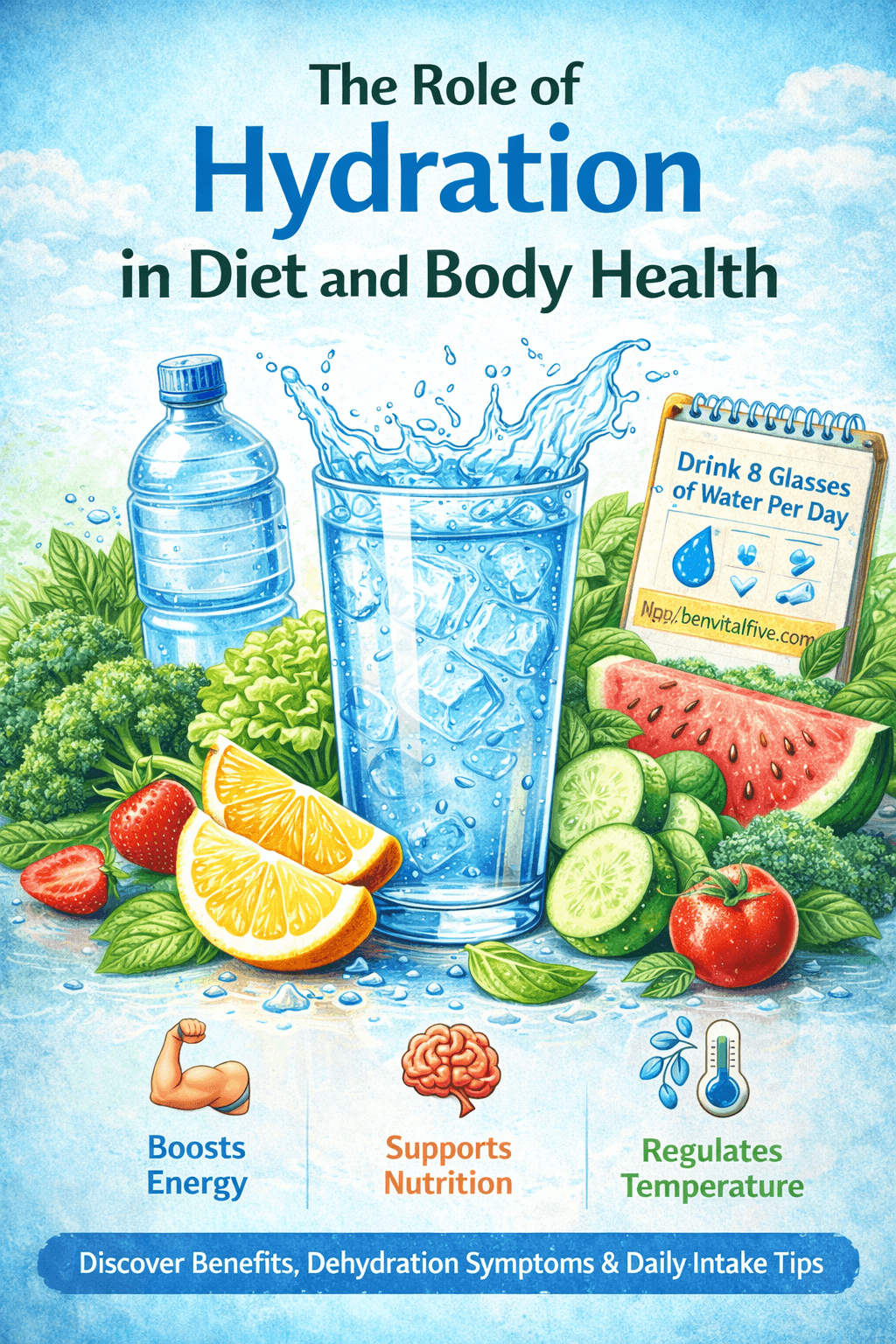
The role of hydration in diet and body health is fundamental to human survival and optimal functioning. In today’s fast-paced lifestyle, many people focus on food quality but overlook water intake. This imbalance affects digestion, nutrient absorption, energy levels, and overall health.
Water supports every cell, tissue, and organ in the body. Even the most balanced diet cannot function effectively without adequate hydration. From regulating body temperature to supporting detoxification and metabolism, hydration remains essential for maintaining long-term health and nutritional balance.
This guide explains how hydration supports nutrition. It covers water’s health benefits. It lists symptoms of dehydration. It outlines daily water needs. It shares practical ways to stay hydrated.
Explore more in detail: The 5 Pillars of Healthy Living—Holistic Wellness Guide
Understanding Hydration as a Transport System
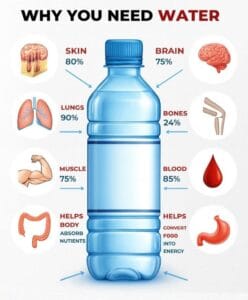
If food provides the “bricks” for building health, water is the “conveyor belt” that delivers them. Without adequate fluid, your body cannot effectively use the high-quality nutrients you consume.
How Water Powers Your Nutrition:
Solubility: It dissolves vitamins (like B-complex and C) and minerals so they can enter the bloodstream.
Thermogenesis: It regulates body temperature, ensuring enzymatic reactions happen at the optimal $37°C$ ($98.6°F$).
Cellular Logistics: It transports nutrients into cells and carries metabolic waste out.
Research Note: According to the Harvard T.H. Chan School of Public Health, even mild dehydration—often before you feel “thirsty”—can impair cognitive function and physical endurance.
Holistic Benefits: Why Water is Your Best Supplement
Proper hydration isn’t just about quenching thirst; it’s a systemic upgrade for your body.
| System | Benefits of Optimal Hydration |
| Metabolism | Supports enzymatic reactions and helps break down macronutrients. |
| Brain Health | Prevents “brain fog” by maintaining blood volume and oxygen flow. |
| Detoxification | Allows kidneys to filter waste efficiently (preventing stones). |
| Joint Health | Acts as a lubricant (synovial fluid) to reduce stiffness and “creaky” joints. |
| Skin Integrity | Maintains the “barrier function,” improving elasticity and glow. |
Identifying the Red Flags of Dehydration
Dehydration occurs when fluid loss exceeds intake. Symptoms may range from mild to severe.
Common symptoms include:
- Dry mouth and lips
- Dark yellow urine
- Fatigue or dizziness
- Headaches
- Muscle cramps
- Dry skin
- Reduced urine output
- Rapid heartbeat
According to the National Institutes of Health, chronic dehydration increases the risk of kidney stones, urinary tract infections, low blood pressure, and digestive problems.
How Much Do You Actually Need?
The “8×8 rule” is a fine starting point, but optimization requires a personalized approach.
Men: Aim for 2.5–3 liters per day.
Women: Aim for 2–2.5 liters per day.
The “Plus” Factor: Increase intake if you are consuming high protein (which requires more water for urea processing), drinking caffeine, or living in high humidity.
Factors That Influence Hydration Needs
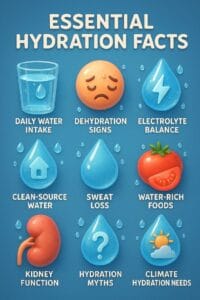
Several factors affect daily fluid requirements:
- Physical activity levels
- Environmental temperature and humidity
- Diet (high salt or protein intake increases needs)
- Health conditions
- Pregnancy and breastfeeding
- Alcohol and caffeine consumption
Listening to thirst signals and monitoring urine color help maintain hydration balance.
Hydrating Foods That Support Nutrition
Hydration does not come only from drinking water. Many foods contribute significantly to daily fluid intake.
Water-rich foods include:
- Watermelon
- Cucumber
- Oranges
- Strawberries
- Lettuce
- Tomatoes
- Coconut water
- Zucchini
These foods also provide vitamins, minerals, and antioxidants that support hydration and nutrition simultaneously.
Tips to Stay Hydrated Every Day
Consistent habits make hydration easy and sustainable.
Practical strategies include:
- Start the day with a glass of water
- Carry a reusable water bottle
- Drink water before meals
- Add lemon or mint for flavour
- Eat water-rich fruits and vegetables
- Set hydration reminders
- Choose herbal teas or buttermilk
- Increase intake during workouts
Regular intake maintains fluid balance more effectively than large, infrequent consumption.
Hydration and Physical Performance
Hydration directly affects endurance, strength, and recovery.
Adequate fluid intake:
- Improves exercise performance
- Reduces muscle fatigue
- Supports electrolyte balance
- Speeds post-exercise recovery
The Centers for Disease Control and Prevention highlights that dehydration impairs physical performance and increases the risk of heat-related illness.
Hydration and Mental Wellness
Water intake also influences brain function and mood.
Dehydration may lead to:
- Poor concentration
- Mood changes
- Increased anxiety
- Brain fog
- Memory difficulties
Maintaining hydration supports cognitive clarity and emotional stability.
Long-Term Benefits of Proper Hydration
Consistent hydration supports long-term health outcomes, including:
- Stronger immune function
- Improved digestion
- Healthy kidney function
- Clearer skin
- Balanced metabolism
- Reduced fatigue
- Better detoxification
- Lower risk of chronic disease
The World Health Organization recognises adequate hydration as a foundational component of disease prevention and public health.
Final Thoughts
Nutrition provides the building blocks of health, and hydration enables those nutrients to function effectively. Together, they form the foundation of physical and mental well-being.
Monitoring hydration status, consuming water-rich foods, and responding early to dehydration symptoms significantly improve energy levels and overall health.
For a comprehensive approach to balanced eating and wellness, explore the pillar guide on Healthy Living: A Practical Guide to Daily Nutrition & Lifestyle Habits
Disclaimer
This article is for educational purposes only and does not replace professional medical or nutritional advice. Always consult a qualified healthcare provider for individual health concerns.
About the Author:
Jesuraj is a wellness researcher and health optimization specialist focused on the intersection of modern neuroscience and traditional herbalism. Dedicated to evidence-based wellness, Jesuraj spends many hours reviewing clinical trials and third-party lab reports. He gives readers clear, objective, and fluff-free analysis. By linking ancient plant wisdom with modern brain science, Jesuraj helps people boost mental clarity and energy. He does this by using adaptogens and targeted supplements in a smart way. Everything is clear and professional for an affiliate and health-focused website.

