
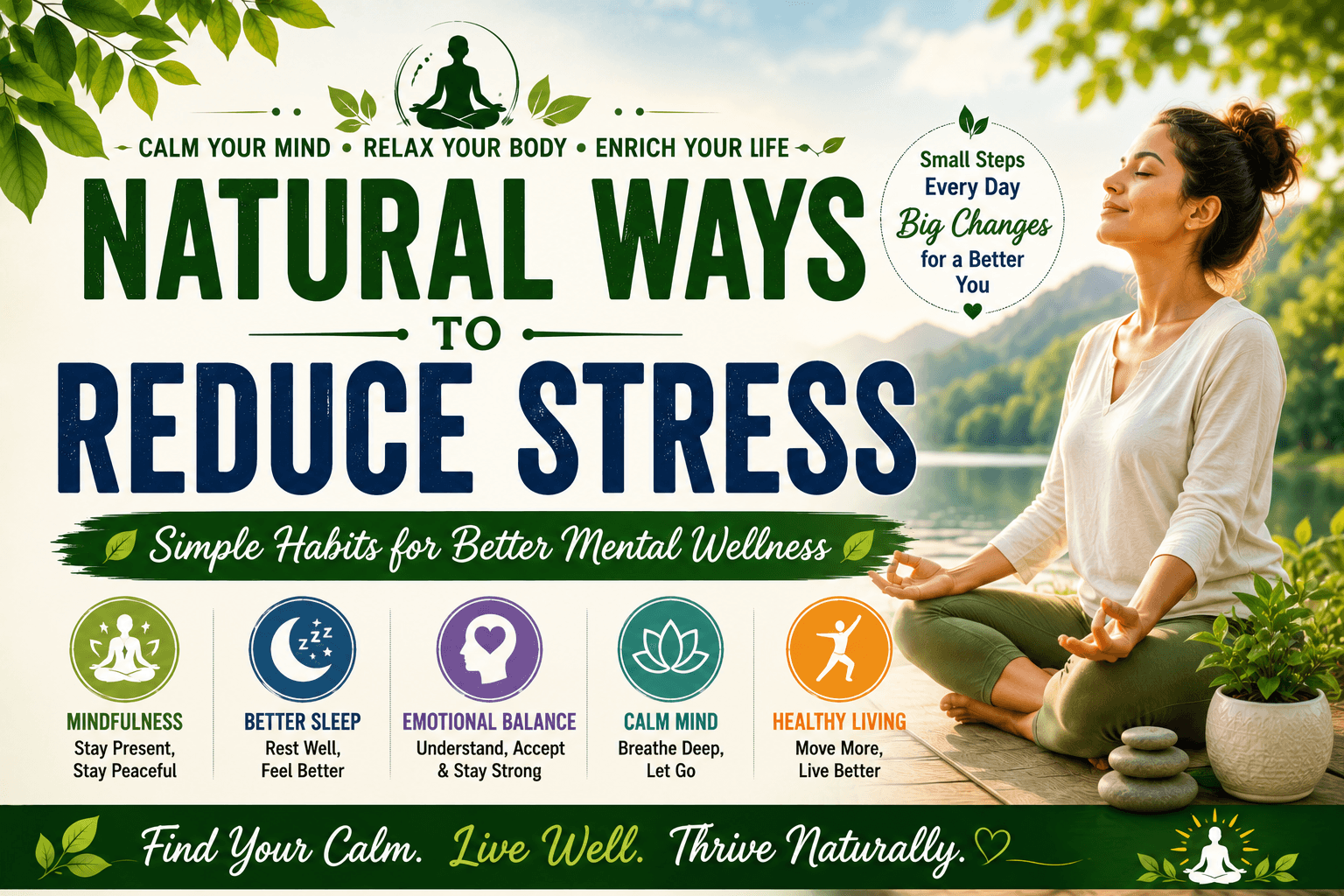
Stress has become a common part of modern life. Work deadlines, financial concerns, family responsibilities, and constant digital connectivity can leave many people feeling overwhelmed. While some stress is normal, prolonged stress can affect overall well-being and quality of life.
Fortunately, there are many natural ways to reduce stress that do not require complicated routines. Small daily habits can support mental wellness, emotional balance, and a healthier lifestyle.
In this guide, we’ll explore practical and natural strategies that can help you manage stress and cultivate greater calm in your daily life.
Understanding Stress
Stress is the body’s natural response to challenges and demands. Short-term stress can help people stay alert and focused, but chronic stress may impact physical and emotional well-being.
Common signs of stress include:
- Feeling overwhelmed
- Difficulty concentrating
- Irritability
- Low energy
- Trouble sleeping
- Feeling mentally exhausted
Recognizing stress is the first step toward managing it effectively.
1. Practice Deep Breathing
Breathing exercises are one of the simplest natural ways to reduce stress.
Try this:
- Inhale slowly through the nose for 4 seconds
- Hold briefly
- Exhale slowly for 6 seconds
- Repeat for several minutes
Benefits:
- Encourages relaxation
- Promotes mindfulness
- Helps calm the mind
2. Take Daily Walks
Walking is an accessible wellness habit that supports both physical and mental health.
Benefits:
- Encourages movement
- Provides a mental reset
- Supports emotional balance
- Creates time for reflection
Even a 20-minute walk can become a valuable stress-management tool.
3. Spend Time in Nature
Nature encourages mindfulness and relaxation.
Simple ideas:
- Walk in a park
- Sit outdoors
- Observe trees and birds
- Enjoy fresh air
Nature can help create moments of calm away from daily distractions.
4. Practice Mindfulness
Mindfulness involves paying attention to the present moment.
Activities:
- Mindful breathing
- Meditation
- Mindful walking
- Gratitude journaling
Mindfulness helps reduce mental clutter and encourages awareness.
5. Improve Sleep Habits
Quality sleep supports emotional resilience and overall wellness.
Tips:
- Maintain a regular sleep schedule
- Limit screen exposure before bed
- Create a relaxing evening routine
Better sleep often contributes to lower stress levels.
6. Move Your Body Regularly
Physical activity can be a valuable part of stress management.
Examples:
- Yoga
- Stretching
- Walking
- Cycling
Consistent movement supports both physical and mental well-being.
7. Reduce Digital Overload
Constant notifications and screen exposure may contribute to mental fatigue.
Healthy habits:
- Schedule screen-free time
- Turn off unnecessary alerts
- Take regular breaks
Digital balance can improve focus and reduce stress.
8. Stay Connected With Others
Supportive relationships play an important role in emotional wellness.
Ways to connect:
- Spend time with family
- Talk to trusted friends
- Participate in community activities
Meaningful connections can help people navigate stressful periods.
9. Create a Gratitude Habit
Gratitude helps shift attention toward positive experiences.
Daily practice:
Write down three things you appreciate each day.
This simple habit can encourage a more positive mindset.
10. Build a Healthy Daily Routine
Consistency creates stability.
A balanced routine may include:
- Hydration
- Movement
- Nutritious meals
- Mindfulness
- Quality sleep
Small daily habits often have a significant long-term impact.
Simple Daily Stress-Relief Routine
Morning
- Drink water
- Practice deep breathing
- Stretch or walk
Afternoon
- Take movement breaks
- Spend a few minutes outdoors
Evening
- Limit screen time
- Reflect on the day
- Prepare for restful sleep
Common Mistakes to Avoid
Expecting Instant Results
Stress management is a long-term practice.
Ignoring Self-Care
Regular wellness habits matter.
Overcomplicating Routines
Simple habits are often the most sustainable.
Comparing Yourself to Others
Everyone’s wellness journey is unique.
Natural ways to reduce stress do not require dramatic lifestyle changes. Simple habits such as mindful breathing, walking, spending time in nature, improving sleep, and practicing gratitude can support mental wellness and emotional balance.
The key is consistency. Small positive actions repeated daily often create meaningful improvements over time.
By incorporating natural stress-management techniques into your routine, you can build a healthier, calmer, and more balanced life.

