
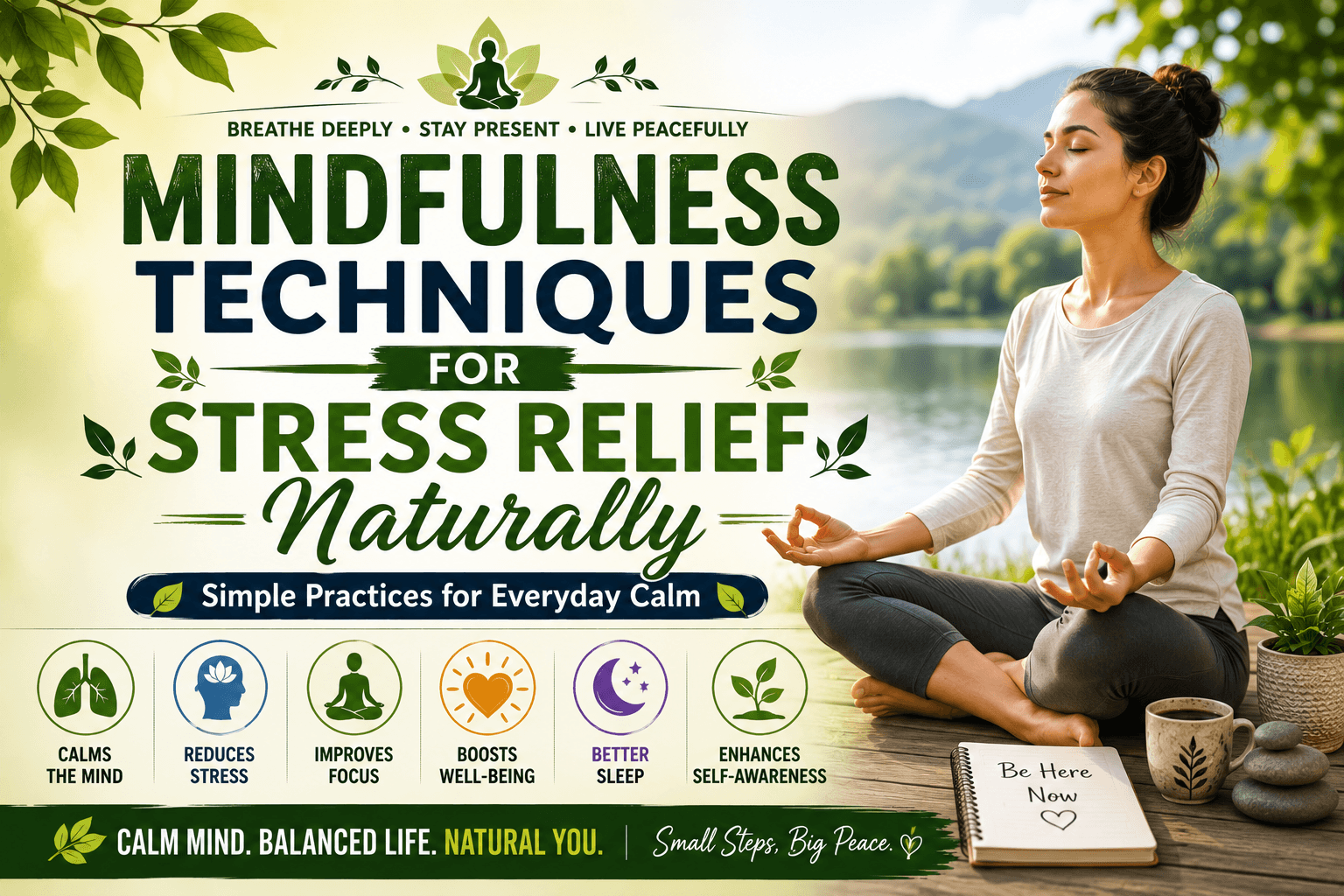
Stress has become a common part of modern life. Work responsibilities, family commitments, financial concerns, and constant digital distractions can leave many people feeling overwhelmed. While occasional stress is a normal part of life, chronic stress can affect both physical and emotional well-being.
Fortunately, there are natural ways to manage daily stress. One of the most effective approaches is mindfulness. Mindfulness is the practice of paying attention to the present moment with awareness and without judgment. It helps individuals become more conscious of their thoughts, emotions, and surroundings.
These mindfulness techniques for stress relief naturally can be practiced almost anywhere and require no special equipment. With consistency, they can become valuable tools for creating a calmer and more balanced life.
What Is Mindfulness?
Mindfulness means focusing your attention on what is happening right now instead of dwelling on the past or worrying about the future.
It involves:
- Awareness
- Presence
- Acceptance
- Observation without judgment
Mindfulness does not require perfection. It is simply the practice of returning your attention to the present moment.
Benefits of Mindfulness for Daily Wellness
Regular mindfulness practice may help support:
- Emotional balance
- Mental clarity
- Better focus
- Improved self-awareness
- Healthy daily habits
- Relaxation and calmness
Mindfulness is often included in holistic wellness routines because it supports the connection between mind and body.
1. Mindful Breathing
Breathing is one of the simplest mindfulness practices.
How to practice:
- Sit comfortably.
- Close your eyes if desired.
- Focus on your breathing.
- Notice each inhale and exhale.
- Gently return your attention whenever the mind wanders.
Even five minutes of mindful breathing can create a sense of calm.
2. Mindful Walking
Walking can become a mindfulness exercise when performed with awareness.
Try:
- Walking slowly
- Observing your surroundings
- Feeling each step
- Paying attention to your breathing
Mindful walking combines movement and relaxation naturally.
3. Body Scan Awareness
A body scan encourages awareness of physical sensations.
Steps:
- Sit or lie comfortably.
- Bring attention to each part of your body.
- Notice areas of tension.
- Relax muscles gradually.
This practice may help release accumulated stress.
4. Gratitude Practice
Gratitude shifts attention toward positive experiences.
Daily habit:
Write down three things you appreciate each day.
Examples:
- A supportive friend
- Good health habits
- A peaceful moment outdoors
Small moments of gratitude can create a more positive mindset.
5. Mindful Eating
Many people eat while distracted.
Mindful eating encourages:
- Eating slowly
- Appreciating flavors
- Paying attention to hunger signals
- Enjoying meals without screens
This practice supports awareness and healthier habits.
6. Digital Mindfulness
Technology can be useful, but constant notifications may increase stress.
Simple strategies:
- Take screen breaks
- Turn off unnecessary notifications
- Spend time outdoors
- Create device-free moments
These habits encourage mental rest.
7. Nature Observation
Spending time in nature naturally supports mindfulness.
Observe:
- Trees
- Birds
- Sunlight
- Wind
- Natural sounds
Nature encourages present-moment awareness and relaxation.
Creating a Daily Mindfulness Routine
Morning:
- 5 minutes of mindful breathing
Afternoon:
- Short mindful walk
Evening:
- Gratitude journaling
- Reflection time
Small practices performed consistently can become powerful wellness habits.
Common Mistakes to Avoid
- Expecting instant results
- Trying to eliminate all thoughts
- Practicing only when stressed
- Comparing your experience to others
Mindfulness is a skill that develops over time.
Mindfulness techniques for stress relief naturally provide a simple and accessible way to create greater calm and balance in everyday life. By practicing mindful breathing, walking, gratitude, and present-moment awareness, individuals can build healthier responses to daily stress.
The goal is not to remove all challenges from life but to develop the awareness and resilience needed to navigate them more calmly.
Small moments of mindfulness practiced consistently can lead to meaningful improvements in overall wellness and quality of life.

