
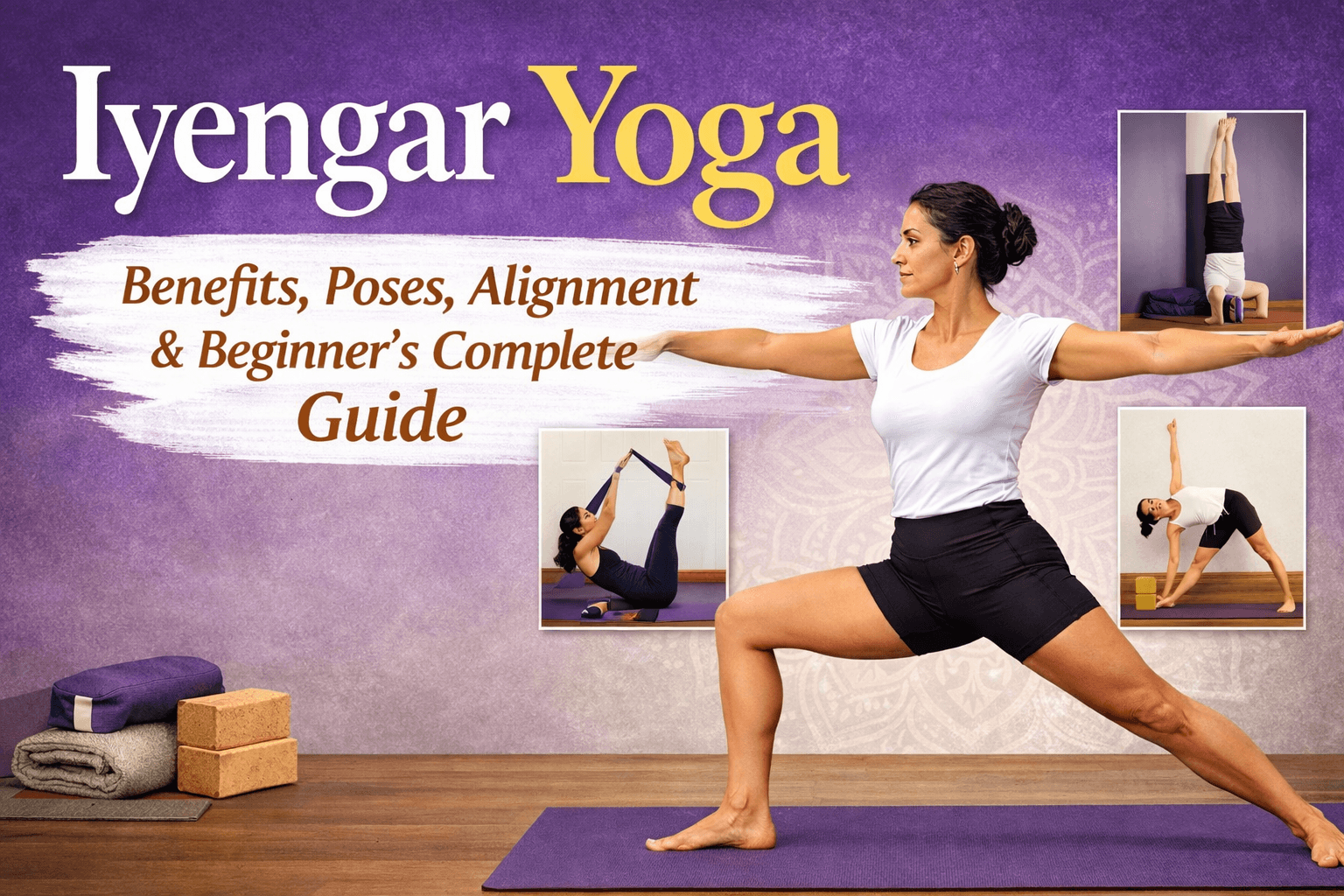
Over the years, many forms of Yoga emerged with different benefits for the body and mind. Of those styles, Iyengar Yoga is characterized by precision, alignment and detailed attention. This style of yoga focuses on the correct and safe practice of the postures, therefore making it suitable for beginners as well as more experienced yogis.
Iyengar Yoga emphasizes proper posture and breath within the body, and uses props to help practitioners as they attempt and sustain poses. This style helps to build strength, flexibility, balance and body awareness.
For further reading of the multitude of yoga types and how it aids in overall wellness, visit our featured Yoga for Health pillar page that outlines what each type’s pros to both body and mind!
What is Iyengar Yoga

Iyengar Yoga is a style of Hatha Yoga that was developed by the legendary yoga teacher B.K.S. Iyengar. This type of yoga focuses on perfecting every pose and realigning.
B.K.S. Iyengar developed this approach to make yoga accessible for all people, no matter the age or physical capability. The most important aspect of Iyengar Yoga is the use of props such as blocks, sticks, bolsters and covers in the yoga class. Bodhi prop clients into alignment and facilitate safe practice of yoga poses.
In contrast to faster-paced types of yoga, Iyengar Yoga invites those practicing to hold poses longer. This allows the body to gradually build strength and flexibility that assists with focus and awareness.
Iyengar Yoga is often recommended for individuals recovering from injuries or those looking to improve body posture and body alignment thanks to its thorough and orderly approach.
Key Principles of Iyengar Yoga
Let me explain, Why Iyengar Yoga is different than others.
Alignment
Proper Alignment (of body) – This is one of the major rest of Iyengar Yoga. Every pose is performed with exceptionally precise focus on the alignment of your body.
Correct alignment prevents injuries and allows the muscles and joints to work correctly. In time, this not only helps one to improve posture but also develop body awareness.
Precision
Iyengar Yoga tries to bring the precision in every act/Jeremiad and Asan. Practitioners are encouraged to notice where hands and feet go, how the spine twists, whether the shoulders roll.forward or back.
All of this attention to detail enhances balance, coordination and overall control of the body.
Use of Props
The use of props is one of the hallmarks of Iyengar Yoga. Props like yoga blocks, straps, chairs and blankets are often used in practice.
These props are used to support the body in such a way that it is easier to enter into poses and hold them correctly. They also enable newcomers to develop flexibility and strength slowly without strain.
Holding Poses
Iyengar Yoga is a slower paced style of practice in which poses are often held for longer periods of time, especially compared to the more flowing dynamic yoga styles. It builds strength and endurance, while allowing practitioners to concentrate on breathing and alignment.
Holding the poses also helps the practitioner focus and become aware through practice.
Benefits of Iyengar Yoga
Usually, you gain many wonderful physical and mental health benefits from regular practice of Iyengar Yoga. This sort of yoga is very helpful for developing postures and strength in the body due to its emphasis on alignment and accuracy.
Improves Posture
Iyengar Yoga corrects poor postures by strengthening the muscles that support the spine. Numerous poses emphasize proper spinal alignment, which leads to less back pain and better overall posture.
This is especially helpful for individuals who work long hours, use chairs or issue tables.
Increases Flexibility
Holding poses for more prolonged periods over time can promote flexibility. Muscles and joints get freer and more mobile with time.
Props allow you to expand the body safely, without ever going beyond your own limits.
Builds Strength
Iyengar Yoga strengthens the various muscle groups of the entire body. Being engaged in a pose is an intentional use of your muscles, so it helps you develop not only balance but also strength.
Regular exercise improves muscle tone and stamina.
Enhances Concentration
Iyengar Yoga is super detailed and asks for all of your attention. Practitioners emphasize breathing, alignment and posture.
Mindfulness: Working on this mental focus has also helped me to concentrate better and be more mindful in my day-to-day.
Reduces Stress
Like other styles of yoga, Iyengar Yoga quiets the mind and releases tension. Movement paired with controlled breathing and mindfulness creates a sense of tranquillity and emotional stability, like yoga does.
Regular practitioners say they have greater mental clarity and less anxiety.
Common Iyengar Yoga Poses
Iyengar Yoga includes many of the traditional yoga postures, but they are performed with an emphasis on alignment and precision.
Mountain Pose (Tadasana)

Mountain Pose (Tadasana) Tadasana is a basic standing pose that teaches students to stand properly and with balance. Practitioners stress standing upright with evenly distributed weight, an aligned spine.
This pose is helpful for developing ease and awareness in the back, body alignment and posture.
Triangle Pose (Trikonasana)
Utthita Trikonasana is a standing pose that focuses on opening the legs, hips, and spine. It also has advantages for balance and flexibility.
Blocks can be utilized to prop the lower hand up in alignment.
Adho Mukha Svanasana (Downward Facing Dog)

This all-over yoga stretch expands everything from the shoulders and hamstrings to the spine.
Iyengar Yoga people focus mindfully on their arms and legs so they can be squared.
Bridge Pose (Setu Bandhasana)
Bridge Pose strengthens the muscles in the back while opening up the chest. It’s most commonly done while using yoga blocks or bolsters as props.
This pose helps to improve the flexibility of the spine, relieving tension in your back.
Starting Iyengar Yoga — Here is What You Need to Know
Iyengar Yoga is especially beneficial for a beginner due to its gradual progression in the postures and focus on alignment. On the other hand, you are the expert, and anyone can start with diligence and patience.
Here are some things you beginners should know.
Symptoms, chronic pain: Iyengar Yoga classes withγκς.
In practice and even at home, I always encourage the use of props for support and alignment.
Make sure each pose incorporates slow, steady breathing.
Avoid hurrying through the asanas, instead practice each and every movement slowly and familiarize by moving.
Regular practice improves flexibility, stamina and balance.
Iyengar Yoga is all about the safety and alignment of every position, so it’s a fantastic option for both newcomers to yoga classes and people with physical restrictions.
How Iyengar Yoga Is Different From Other Kinds of Yoga
Iyengar Yoga differs from popular yoga, or Hatha styles in several ways.
For example, in Vinyasa Yoga the poses are linked continously through the breath as they flow together. This is much more motor driven and physically engaged.
Ashtanga Yoga is a fast-paced and vigorous practises carried out in such a way that there are set order of postures.
Iyengar Yoga, conversely, emphasizes slow, gradual movement and precise alignment. Props help practitioners to practice postures safely and comfortably.
That’s why Iyengar Yoga is so often prescribed for therapeutic and rehabilitative conditions.
Why Iyengar Yoga is Unique
Another reason Iyengar Yoga is unique is its emphasis on detail and alignment. This style encourages practitioners to learn the reasons behind every pose and how it impacts the body.
Props make yoga accessible to all ages, fitness levels and physical abilities, she said.
By encouraging practitioners to concentrate on their breath and body alignment, Iyengar Yoga also embraces mindfulness.
In addition, practice makes you physically stronger and more flexible, improves posture and increases mental sharpness.
Conclusion
Iyengar yoga is a form of Hatha yoga that focuses on precise alignment. The longer holds and a lot of props to assist them can help practitioners build up strength, flexibility and balance in a safe way.
It’s particularly good for those new to yoga, seniors and others looking for a safe, steady way into yoga practice.
Regular practice of Iyengar Yoga balances the mind and emotions.

