
Introduction
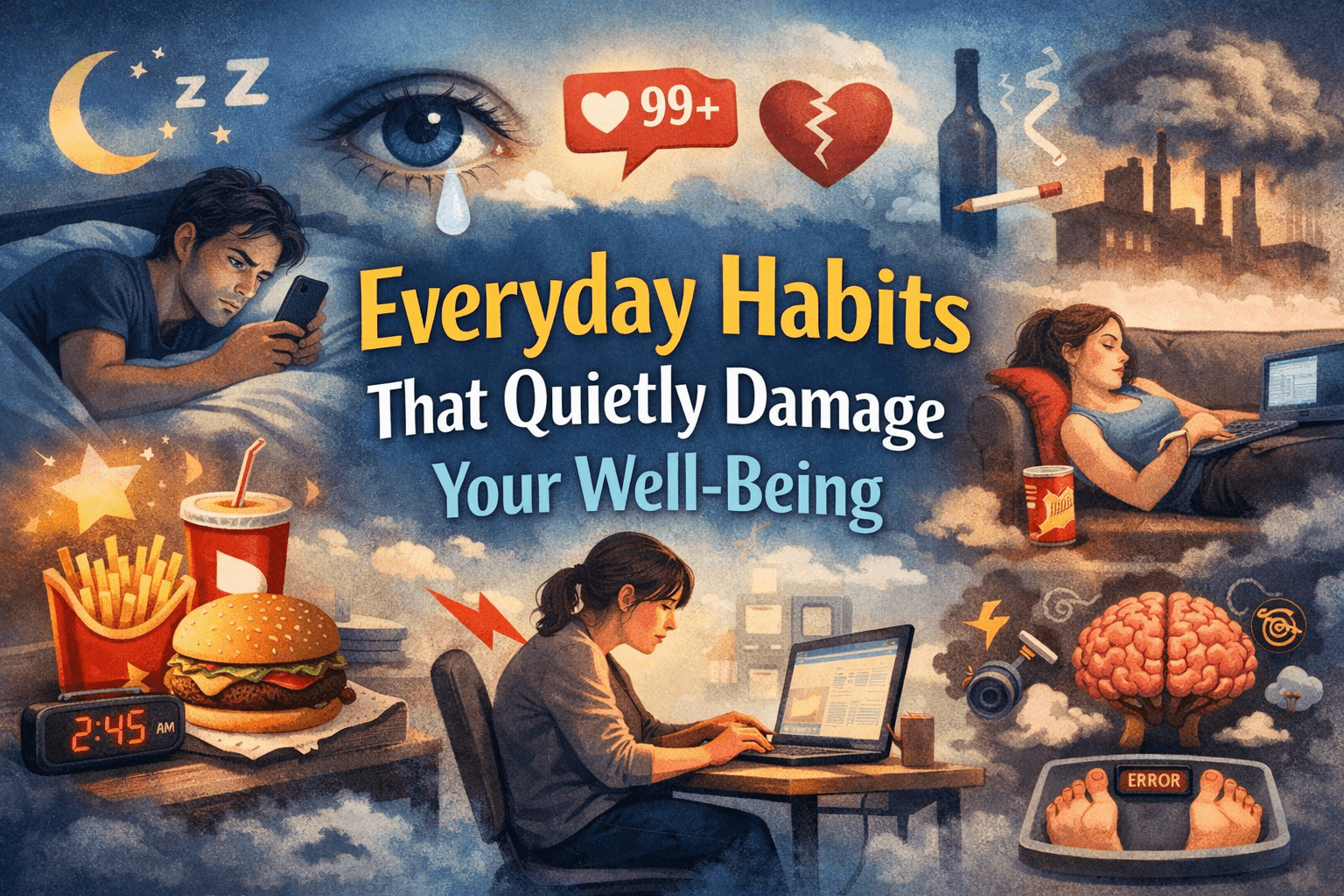
Most people think health problems come from major mistakes, but in reality, it’s the everyday habits we repeat without noticing that slowly damage our overall well-being. These habits feel normal—until they start affecting your energy, mood, and long-term health.
The good news is that awareness alone can help you change them.
“Small habits practised daily decide your future health.”
Why Daily Habits Have a Big Impact on Health
Your body responds to what you do consistently, not occasionally. Ignoring small unhealthy habits can lead to:
- Constant tiredness
- Poor digestion and sleep
- Increased stress levels
- Reduced focus and motivation
Fixing these habits early helps you improve health naturally.
Everyday Habits That Harm Your Well-Being
Ignoring Body Signals
Feeling tired, stressed, or unwell and pushing through it can worsen health over time.
Better approach:
- Rest when needed
- Address discomfort early
- Listen to your body
This supports long-term physical and mental health.
Eating Too Fast or Without Attention
Mindless eating affects digestion and portion control.
Problems caused:
- Poor digestion
- Overeating
- Low satisfaction from meals
Slow, mindful eating improves digestive health naturally.
Lack of Sunlight and Fresh Air
Staying indoors all day limits natural energy balance.
Effects include:
- Low mood
- Weak immunity
- Vitamin deficiency
Spending time outside supports healthy lifestyle habits.
Poor Posture Throughout the Day
Slouching while sitting or using phones strains muscles and spine.
Long-term risks:
- Back and neck pain
- Reduced circulation
- Fatigue
Good posture protects musculoskeletal health.
Overworking Without Proper Breaks
Constant work without rest increases burnout.
Healthy fixes:
- Short breaks every hour
- Stretching or walking
- Mental pauses
Rest improves productivity and mental well-being.
Skipping Self-Care Completely
Ignoring self-care doesn’t save time—it costs health.
Simple self-care ideas:
- Quality sleep
- Hydration
- Stress management
Self-care supports overall body and mind balance.
Final Thoughts
Health doesn’t decline suddenly—it fades through repeated habits. By correcting these everyday habits that damage well-being, you can protect your body, improve energy, and prevent future health problems.
Small changes today lead to a healthier tomorrow.
FAQs
- What everyday habits damage your well-being?
Everyday habits that damage your well-being include poor sleep, lack of movement, unhealthy eating, bad posture, and unmanaged stress. - How do daily habits affect long-term health?
Daily habits affect long-term health by slowly impacting energy levels, immunity, mental health, and overall body function. - Can small lifestyle changes improve well-being?
Yes, small lifestyle changes like better sleep, hydration, movement, and stress control can greatly improve well-being. - What are common unhealthy habits people ignore?
Common unhealthy habits people ignore are sitting too long, skipping self-care, excessive screen time, and overworking. - How can I improve my well-being naturally?
You can improve your well-being naturally by building healthy routines, listening to your body, and managing stress daily.

