
Introduction
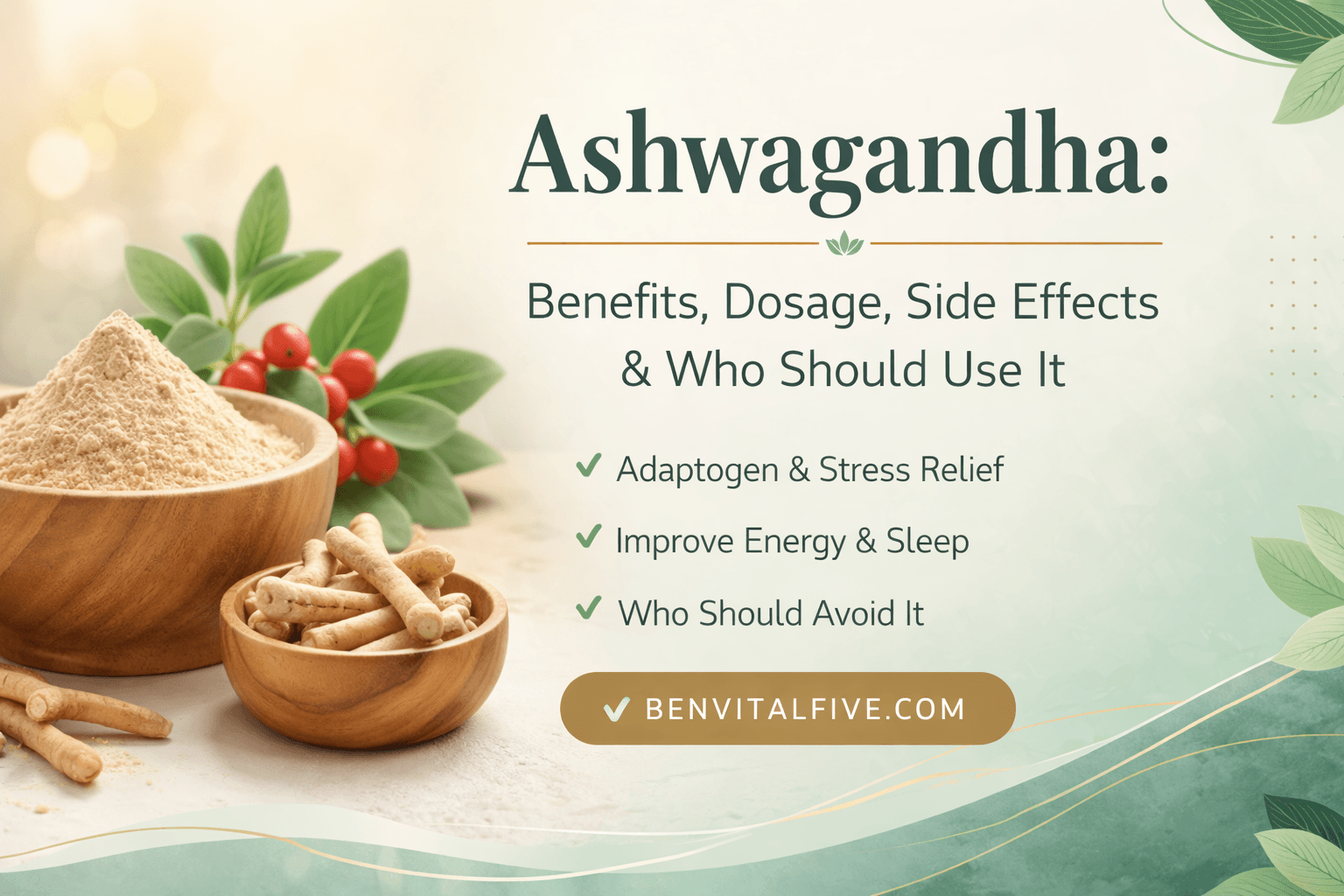
Few herbs in the Ayurvedic tradition carry as much scientific weight as Ashwagandha. Known botanically as Withania somnifera and colloquially as Indian ginseng or winter cherry, Ashwagandha has been used in traditional medicine for over 3,000 years. Today, it is one of the most studied adaptogenic herbs in the world.
In this guide, I will cover exactly what Ashwagandha is, what the research actually says about its benefits, how to use it safely, and who should avoid it. I will not exaggerate its effects. My goal is to give you honest, evidence-based information you can use to make your own informed decision.
What Is Ashwagandha?
Ashwagandha is a small shrub native to India, North Africa, and the Mediterranean. Its roots and berries have been used in Ayurvedic medicine for millennia. The name comes from Sanskrit and means ‘smell of horse,’ referring to its distinctive aroma and the traditional belief that it imparts the strength and vitality of a horse.
It belongs to a class of herbs called adaptogens — plants that help the body adapt to physical, mental, and environmental stress. Unlike stimulants, adaptogens work by modulating the stress response rather than forcing the body into a heightened state.
What the Science Says: Evidence-Backed Benefits
1. Reduces Cortisol and Stress
This is Ashwagandha’s most well-documented benefit. A double-blind, randomized controlled trial published in the Indian Journal of Psychological Medicine found that participants taking 300mg of Ashwagandha root extract twice daily experienced a 27.9% reduction in cortisol levels compared to the placebo group. Participants also reported significant reductions in perceived stress scores.
2. Improves Sleep Quality
A 2019 study in PLOS ONE found that participants who took Ashwagandha root extract reported improved sleep quality, reduced sleep latency (time to fall asleep), and greater feelings of mental alertness upon waking.
3. Supports Thyroid Function
Emerging research suggests Ashwagandha may support thyroid hormone production in people with subclinical hypothyroidism. A 2018 study in the Journal of Alternative and Complementary Medicine found meaningful improvements in TSH, T3, and T4 levels in participants taking Ashwagandha.
4. Enhances Physical Performance
Studies published in the Journal of the International Society of Sports Nutrition show that Ashwagandha supplementation significantly improved VO2 max, muscle strength, and recovery time in healthy adults engaged in resistance training.
5. May Support Cognitive Function
A 2017 study in the Journal of Dietary Supplements found that Ashwagandha root extract improved memory, attention, and information-processing speed in adults with mild cognitive impairment.
Dosage: How Much Should You Take?
The clinically studied dosage range for Ashwagandha is 300mg to 600mg of standardized root extract per day, taken with meals. Most studies use a concentration of at least 5% withanolides (the active compounds).
It is not an overnight herb. Most research shows meaningful benefits appearing after 6 to 8 weeks of consistent use. Start at a lower dose and observe how your body responds before increasing.
Side Effects and Safety
Ashwagandha is generally considered safe for most adults when used at recommended doses for up to 3 months. However, there are some important considerations:
- It may cause mild digestive discomfort in some people — take it with food
- Large doses may cause nausea, diarrhea, or stomach upset
- It has a mild sedative effect — avoid driving or operating machinery if you feel drowsy
- Rare cases of liver injury have been reported with very high doses over extended periods
Who Should Avoid Ashwagandha?
- Pregnant women — it may stimulate uterine contractions
- People with autoimmune conditions (rheumatoid arthritis, lupus, Hashimoto’s) — it may stimulate the immune system
- People on thyroid medication — it may alter thyroid hormone levels
- People scheduled for surgery — stop use at least 2 weeks before surgery
- Children — insufficient safety data exists for use in minors
Always consult your doctor before starting Ashwagandha, especially if you take any prescription medications.
How to Take Ashwagandha
Ashwagandha is available in several forms, each with its own considerations:
- Root powder (churna): The traditional Ayurvedic form. Mix with warm milk and honey. Absorption is good but standardization of active compounds is variable.
- Standardized root extract capsules: The most reliable form for consistent dosing. Look for KSM-66 or Sensoril branded extracts, which are the most studied.
- Liquid tinctures: Convenient but often less standardized.
Ashwagandha in the Context of BenVitalFive’s Natural Remedies Pillar
At BenVitalFive, we view Ashwagandha as one of India’s greatest herbal gifts to the world. It represents the wisdom of Ayurveda validated by modern science. However, we always emphasize that no herb replaces the foundational habits of good sleep, nourishing food, daily movement, and stress management. Ashwagandha works best as a complement to these practices, not a shortcut around them.
Key Takeaways
- Ashwagandha is one of the most research-supported adaptogenic herbs, with strong evidence for stress reduction and sleep improvement
- The effective clinical dose is 300 to 600mg of standardized extract daily for at least 6 to 8 weeks
- It is safe for most adults but should be avoided during pregnancy and by those with autoimmune conditions
- Quality matters — choose standardized extracts (KSM-66 or Sensoril) over raw powders for consistent results

