
Affiliate Disclaimer
This post contains affiliate links. When you buy through these links, I may earn a small commission at no extra cost to you.
Table of Contents
ToggleIntroduction
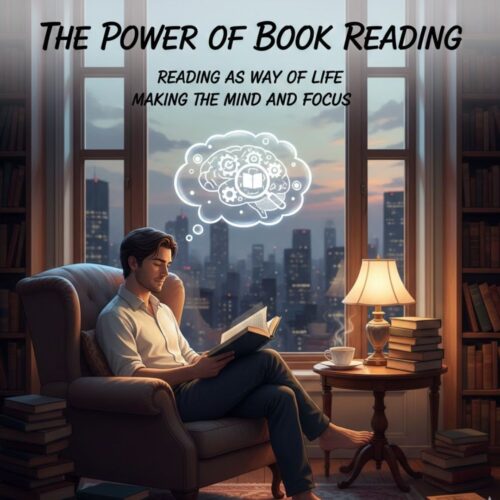
Book reading benefits go far beyond entertainment. In a world dominated by endless scrolling, short videos, and constant notifications, reading books remains one of the strongest habits a person can cultivate. It supports mental clarity, emotional balance, and long-term brain health.
Unlike fast digital content, books invite deep focus, structured thinking, and emotional awareness. They slow the mind down, allowing space for reflection, understanding, and meaningful engagement.
In simple terms, book reading benefits include improved memory, sharper focus, stronger emotional intelligence, and reduced stress. Reading activates multiple regions of the brain. It strengthens neural connections while calming the nervous system and supporting lasting mental clarity.
Why Book Reading Is Still Important in the Digital Age
The modern digital environment trains the brain for speed rather than depth. Social media feeds, reels, and notifications condition the mind to switch constantly, weakening attention span and increasing mental fatigue.
Books work in the opposite direction.
Reading books gently trains the brain to:
Maintain attention
Follow logical sequences
Visualize scenes
Process emotions
Store information meaningfully
This deep cognitive engagement is something short-form digital content rarely offers. Research from leading universities consistently shows that long-form reading improves comprehension, memory, and critical thinking.
Reading books is part of a deeper lifestyle of mindful living, not just a hobby. Reading becomes a potent mental training tool with movement and awareness exercises like Yoga Beyond the Mat.
How Reading Books Changes the Brain
When you read, multiple brain regions activate simultaneously:
- Language centers
- Visual imagination
- Memory networks
- Emotional processing
- Analytical thinking
Neuroscience research from Emory University shows that reading stories boosts brain connections for days after finishing a book
This means:
Reading books physically strengthens the brain.
Long-term readers’ experience:
- Better memory
- Faster learning
- Higher emotional intelligence
- Slower cognitive aging
How Reading Improves Focus and Attention
One of the strongest benefits of reading is the ability to concentrate.
Unlike digital platforms that constantly interrupt, books require sustained attention. Each page strengthens the brain’s ability to stay with one task. Just like rhythmic movement improves attention, mental focus improves when the brain is trained through deep reading. This complements practices such as 6-6-6 walking. which also calms the nervous system and sharpens concentration.
Over time, this leads to:
- Improved productivity
- Stronger decision-making
- Less mental fatigue
- Greater mental control
According to the University of Sussex, reading reduces stress by up to 68%. It is also helping the brain enter a focused and relaxed state.
Reading Books and Mental Health
Reading books is one of the most effective natural tools for emotional balance.
It works because:
- Stories calm the nervous system
- The mind enters a meditative state
- Emotional tension is released
- Anxiety decreases
Psychologists refer to this as bibliotherapy, the use of books to improve emotional health.
According to the American Psychological Association, reading lowers cortisol levels and reduces symptoms of stress and depression.
How Reading Builds Emotional Intelligence
Fiction reading, in particular, improves:
- Empathy
- Emotional awareness
- Perspective-taking
- Social understanding
When you follow characters through struggles, your brain practices emotional navigation, making you more understanding in real life.
This is why regular readers often have:
- Better relationships
- Stronger communication skills
- Greater emotional resilience
Why Reading Is Essential for Lifelong Learning
Books allow deep learning that digital content cannot replicate.
They provide:
- Structured knowledge
- Logical progression
- Context and reasoning
- Long-term memory formation
Reading keeps the brain curious, flexible, and intellectually young well into old age.
How to Build a Daily Reading Habit
The reading habit is deeply connected with self-control. Reading habit is closely related to self-control. Self-discipline and procrastination techniques help to influence long-term success.
You do not need hours.
Just 10–20 minutes of reading per day can significantly improve:
- Focus
- Memory
- Emotional stability
Simple habits:
- Read before bed
- Carry a book
- Replace scrolling with reading
- Choose books you enjoy
Consistency matters more than speed.
Reading Support Tools for Better Focus & Habit Building
If you want to turn reading into a powerful daily habit, the right tools make a major difference.
1. Kindle Paperwhite (Distraction-Free Reading)
Why it converts:
E-ink removes eye strain and distractions.
Perfect for:
Readers who struggle to focus on phones.
Key Benefits
- No social media or notifications
- Adjustable warm light
- Weeks of battery life
- Stores thousands of books
Check today’s Kindle Paperwhite deal
2 . Audible Audiobooks (Reading for Busy Minds)
Why it converts:
People who don’t have time still want knowledge.
Perfect for:
Commuters, walkers, multitaskers.
Key Benefits
- Turn driving, walking & chores into reading time
- Improves learning without screen use
- Huge library of non-fiction & fiction
Start your free Audible trial
3. Blue-Light Blocking Reading Glasses
Why it converts:
Many people stop reading due to eye strain.
Key Benefits
- Protects eyes
- Reduces fatigue
- Improves nighttime reading
- Helps sleep
View the best-selling blue-light glasses
4. Reading Tracker Journal
Why it converts:
Tracking builds consistency.
Key Benefits
- Habit reinforcement
- Motivation
- Reading goals
- Memory improvement
Get your reading habit journal
Frequently Asked Questions
Is reading better than watching videos?
Yes. Reading actively engages the brain, improves memory, and strengthens focus, while videos encourage more passive consumption.
How long should I read daily?
Just 15–20 minutes a day is enough to experience cognitive and emotional benefits.
Does reading improve intelligence?
Yes. Reading improves vocabulary, comprehension, reasoning skills, and emotional intelligence.
Can reading reduce stress?
Yes. Research shows that reading lowers stress levels more effectively than many other relaxation activities.
Conclusion
Book reading is not outdated—it is more important than ever.
In a distracted digital world, reading books builds:
- Mental clarity
- Emotional balance
- Strong focus
- Lifelong intelligence
Every page strengthens your mind.
Every chapter builds emotional strength.
Every book shapes a better version of you.

