

Introduction
Meditation during your commute is one of the simplest ways to reduce stress, improve focus, and stay emotionally balanced without adding extra time to your day. Micro-meditations—short mindfulness practices lasting just 2 to 5 minutes—help busy professionals turn daily travel into moments of calm and clarity.
In a fast-paced world filled with deadlines, family responsibilities, traffic, and constant digital distractions, finding time for long meditation sessions feels unrealistic. This is where micro-meditation for busy people becomes a practical and powerful solution.
Why Micro-Meditations Work for Busy Schedules
Traditional meditation often requires silence, extended sitting, and uninterrupted time. While effective, it can feel out of reach for people with demanding routines. Micro-meditations remove this barrier by integrating mindfulness into moments you already have—like commuting.
Instead of adding a new task, you transform existing time into a mental reset.
Key Benefits of Micro-Meditation
- Reduces stress and anxiety
- Improves mental clarity and concentration
- Enhances emotional awareness and control
- Trains the mind to stay present in everyday activities
Get the mind trained to be present even in scenarios that are normally stressful or dull, like a traffic jam or overcrowded transportation.
How to Practice Meditation Safely During Your Commute
Before beginning, set a gentle intention, not an expectation of perfection. Micro-meditation is about awareness, not performance.
Safety First
- If driving: Keep your eyes open and attention on the road
- Focus on breath, posture, or body sensations
- Avoid closing your eyes or doing deep visualizations
On Public Transport
- Sit comfortably
- You may gently close your eyes
- Reduce distractions by silencing notifications
Even 3–5 minutes of mindfulness during your commute can positively influence your entire day.
Best Micro-Meditations to Practice While Commuting
Micro-meditations are short, practical mindfulness techniques designed to fit naturally into your daily commute. The best micro-meditations to practice while commuting include breath awareness, body scan, mindful listening, visual awareness, visualization, mantra repetition, and gratitude meditation. These short mindfulness practices take 2–5 minutes. it helps reduce stress, improve focus, and create calm during daily travel.
1. Breath Awareness Meditation (Best for Driving)
Breath awareness meditation involves gently focusing on natural inhalation and exhalation while keeping the eyes open. This practice calms the nervous system, reduces anxiety, and improves focus. This is the safest and most effective micro-meditation for commuting and driving.
Breath awareness is one of the most effective commuting meditation techniques.
Best for: Stress relief, mental clarity, beginners
Safe for: Driving (eyes open)

How to practice:
- Notice your natural inhale and exhale
- Feel the air passing through your nostrils or the rise and fall of your chest
- When the mind wanders, gently return attention to the breath
This practice calms the nervous system and anchors the mind in the present moment.
Why it works:
Focusing on the breath calms the nervous system and anchors your awareness in the present moment, reducing anxiety caused by traffic or time pressure.
2. Body Scan Meditation: Best after work
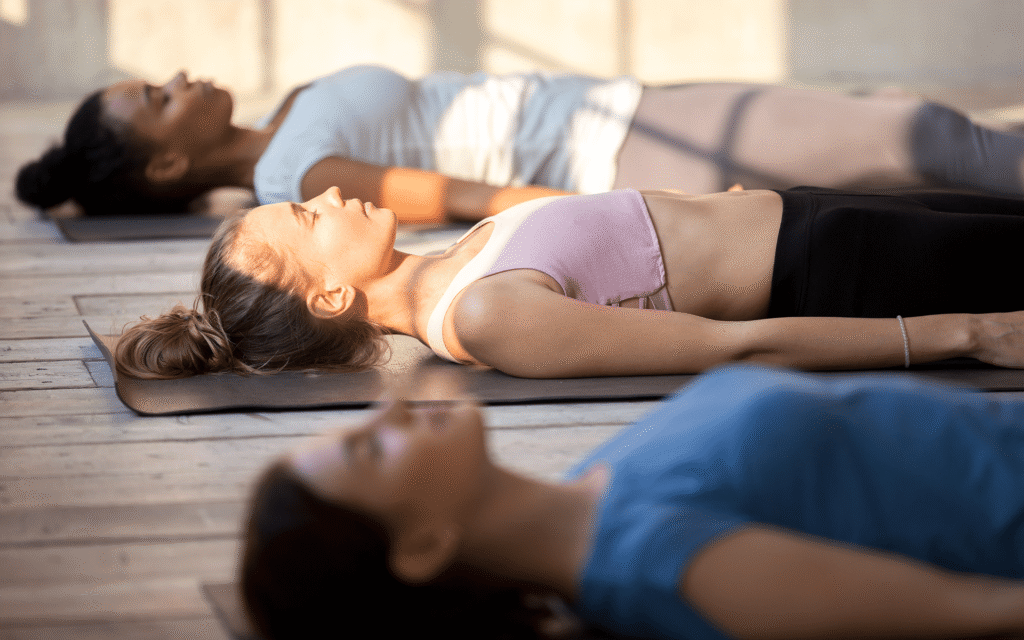
A body scan meditation involves noticing physical sensations without judgment. Body Scan Micro-Meditation (Best After Work)
The body scan and micro-meditation help release physical tension. It brings awareness to sensations in the body without judgment. It is effective during commutes after long workdays, easing tightness in the neck, shoulders, and back caused by stress or prolonged sitting.
How to practice:
- Bring attention to your shoulders, neck, jaw, and hands
- Notice tension, stiffness, or fatigue
- Simply observe—awareness itself often releases tension
This method is especially helpful after long workdays or stressful commutes.
3. Mindful Listening Meditation (Best for Overthinking)
Mindful listening meditation involves focusing on surrounding sounds without labeling or judging them. This practice anchors attention in the present moment. It also reduces mental chatter and prevents overthinking, making it ideal for noisy or crowded commutes. Instead of letting thoughts spiral, choose one sensory experience to focus on.

Examples:
- Sounds around you
- The movement of the vehicle
- The sensation of your feet on the floor
Mindful observation prevents overthinking and keeps the mind grounded in the present.
4. Visualization for Stressful Commutes: (Eyes Open)
Visualization meditation involves imagining a peaceful place or calming scene while breathing slowly. This technique helps shift emotional states, reduce frustration. It activates the body’s relaxation response during stressful or delayed commutes.
Visual awareness Meditation uses sight as an anchor by observing colors, movement, and light without analysis. This technique promotes calm alertness while maintaining full awareness, making it especially suitable for driving or walking commutes. Visualization helps shift emotional states quickly.
How to practice:
- Imagine a peaceful place (nature, water, open sky)
- Or silently repeat a calming phrase like “I am safe and calm.”
This technique is particularly useful during traffic jams or emotionally charged moments.
5. Mantra or Affirmation Micro-Meditation
A mantra micro-meditation uses a short, calming phrase repeated silently with the breath. It helps stabilize emotions, quiet racing thoughts, and maintain mental balance during complicated or emotionally charged commuting situations.
6. Gratitude Micro-Meditation (Mood Booster)
Gratitude micro-meditation focuses on appreciating one or two positive aspects of life during the commute. This practice improves mood, reduces stress, and helps start or end the workday with a sense of calm and emotional balance.
Benefits of Meditation During Your Daily Commute
Practicing mindfulness during your commute consistently leads to noticeable improvements in daily life. Practicing micro-meditation during your commute reduces stress, improves focus, enhances emotional regulation, and promotes mental clarity. These short mindfulness practices help transform daily.
Real-World Benefits
Meditation during your daily commute offers multiple benefits, including reduced stress, improved emotional regulation, and enhanced mental clarity. Practicing short mindfulness techniques consistently transforms commute time into a restorative experience that positively impacts both work performance and overall well-being.
Reduces Commute-Related Stress
Micro-meditations calm the nervous system by shifting attention away from traffic, delays, and mental pressure, helping lower stress levels during daily travel.
Improves Focus and Mental Clarity
Short mindfulness practices refresh attention and reduce mental fatigue, allowing you to arrive at work or home feeling more focused and mentally present.
Enhances Emotional Regulation
Micro-meditation helps manage frustration, impatience, and anxiety by creating awareness of emotional responses rather than reacting automatically.
Builds Consistent Mindfulness Habits
Because micro-meditations fit easily into daily routines, they encourage consistency, which is more effective than occasional long meditation sessions.
Improves Overall Well-Being
Regular mindfulness during commuting supports better mood, patience, and resilience, positively influencing both professional and personal life.
Research highlighted by Mindful and Harvard Health Publishing supports the effectiveness of short mindfulness practices in lowering stress and improving cognitive performance.
Common Mistakes to Avoid When Meditating on the Go
Common mistakes when meditating on the go include closing the eyes while driving, forcing relaxation, multitasking excessively, and expecting instant results. Avoiding these errors ensures that micro-meditation remains safe, effective, and sustainable as part of a daily commuting routine.
Avoid these errors to keep your practice safe and effective:
- Closing eyes while driving
- Forcing calm instead of observing naturally
- Expecting immediate results
- Multitasking excessively during practice
Micro-meditation works best when practiced gently and consistently.
FAQs: Meditation During Commute (People Also Ask)
Frequently asked questions about meditation during commutes address safety, effectiveness, duration, and suitability for beginners. Understanding these common concerns helps commuters practice mindfulness confidently, safely, and consistently while traveling for work or daily responsibilities.
Can I meditate while driving safely?
Yes, as long as you keep your eyes open and attention on the road. Focus on breath awareness or posture rather than deep visualization.
How long should a micro-meditation last?
Most micro-meditations last between 2 and 5 minutes, making them ideal for commuting.
Is meditation during commute effective?
Yes. Research shows even short mindfulness practices can reduce stress and improve focus when done consistently.
Can beginners practice micro-meditation?
Absolutely. Micro-meditation is beginner-friendly and requires no prior experience.
Final Thoughts: Turn Your Commute Into Calm Time
Turning your commute into calm time is possible through simple micro-meditations practiced consistently. By using brief moments of mindfulness during daily travel, you can reduce stress, improve focus, and arrive at your destination feeling balanced, refreshed, and mentally prepared for the day ahead.
Your commute doesn’t have to be a source of frustration or exhaustion. With micro-meditation during your commute, you can transform daily travel into a powerful mental reset—one breath at a time.
Start small. Stay consistent. Let mindfulness become part of your everyday movement.
