
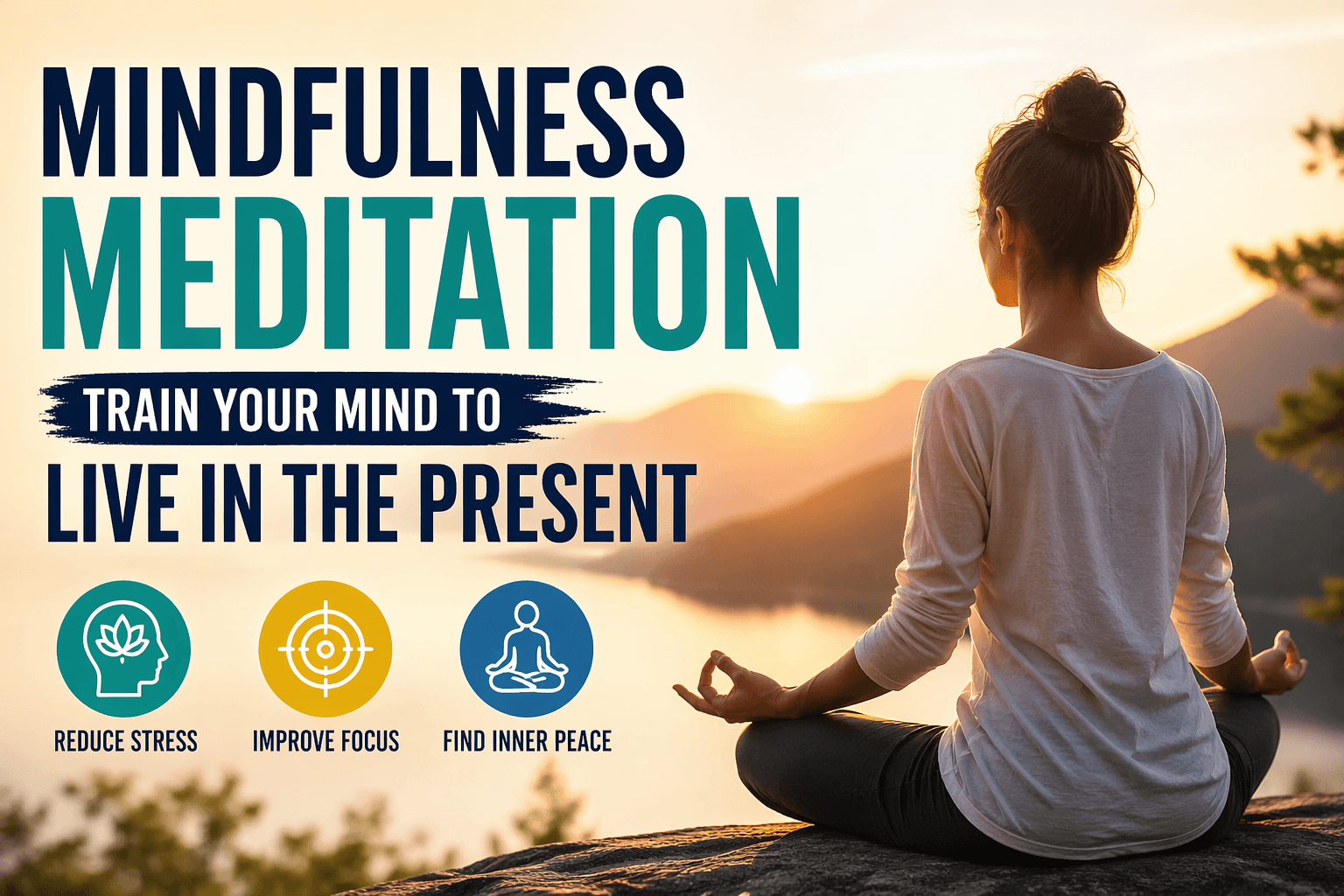
Introduction:
Our lives are busy and can often feel like they demand our attention on more than one front, which is understandable. You constantly have notifications on, deadlines hanging over your head and your mind jumps from regret of the past to worry of the future. And this is precisely where mindfulness meditation can really impact your life.
Mindfulness meditation is not about becoming a monk overnight or shutting off your mind. Rather, it is about making you more aware of what is going on in your mind and body—without judgment. So the big idea here is that when you practice mindfulness, little by little you learn to respond instead of react. Making this quick switch could help you focus more, limit stress and make your day feel less chaotic.
What Mindfulness Meditation Means For You

Mindfulness meditation is fundamentally being here with whatever moment you find yourself in. To elaborate, this translates to being mindful with our breath, holding your body or even sounds around us.
If you go ahead and do this, experiment as such, one thing you will soon realize is that your mind does not stop moving. It keeps wandering. You might think about work, conversations, problems or just a random memory. This is completely normal. There is no fault in what you do.
The actual practice itself is in realizing that your mind has wandered and bringing it back gently. What you are doing each time that is, every time whenever you do this you are training your mind. You can imagine it as the way of making a small exercise for your brain. Slowly this trains your focus, calmness even in times of stress.
Why Mindfulness Meditation Actually Works
You may ask if something so simple can truly be effective. The answer is yes—and science backs it up.
Mindfulness, practiced regularly, rewires your brain. According to a meta-analysis from 2010, it boosts the areas associated with attention, cognition and memory while suppressing regions related to stress and anxiety. As a result, you could discover that over time you are better able to manage stress and regulate your feelings and so think more clearly.
In addition to mental effects, mindfulness may enhance your physical health. People sleep better, have reduced anxiety, increased concentration and even better health. The magic is consistency — not perfection.
Start Mindfulness Meditation Today

The greatest thing regarding mindfulness meditation is that you do not need anything special to get started. A perfect environment, expensive tools and experience are not required. You only need a spare few minutes and the desire to give it a go.
Begin with a specific time in your formation. Morning is often the best time as your brain is still fresh and less clouded. Find a place to sit: You can take a seat in a chair or on the ground. Your back needs to be straight but quite relaxed
You close your eyes and turn your awareness to your breath. Observe the air entering and leaving your body. Observe yourself breathing. Observe your chest rise and fall. Breathe without controlling it—simply watch.
Your mind will drift within seconds. When it does, just observe it and return your attention to the breath. Keep doing this again and again in a non-frustrating way. This is the practice.
You can start with 5 to 10 minutes of your day. If you do it regularly, you might feel it’s small, but you’ll slowly realize a transformation of the way of thinking and feeling.
Common Challenges You Might Face
You become convinced that when you start mindful meditation, you are not doing it correctly. This misconception is why a lot of people quit early.
A restless mind is one of the biggest struggles. You might feel like your thoughts are multiplying where all that you want is to reduce. However, this is a huge positive — you are becoming more conscious.
I believe we also under-estimate the time needed to make anything happen. Mindfulness, although not a quick fix The process is slow, making it a little like muscle building The more you practice this, the more clearly will you process.
You might also think you are not having enough time. However, it is not about hours a day or weeks of days. It’s about showing up time and again.
Integrating Mindfulness Into Your Life Daily

Mindfulness meditation must become a habit If you want it to feel like it actually helps. And the best way to do this is to tie it back to something that you are already doing in your life everyday.
For example, you could meditate for a couple of minutes immediately after brushing your teeth or meditating right before going to bed. This is easier to recall and follow routinely.
There are also guided meditation apps like Insight Timer or Headspace. If you are a beginner, there are apps that can guide you through every step.
Another helpful practice is journaling. At the end of almost every session pen down a few sentences regarding your observations. This will help you understand your thoughts, and emotions over time.
Final Thoughts
Mindfulness meditation does not change who you are. Its about getting to know yourself better. It forces you to be in the moment, mindful and more present with how you process life events.
You don’t need to be perfect. You only need to be consistent.
Soon you will see meaningful changes low, you are less stressed, more focused and your mind is calmer. And Before long, these trivial adjustments will shift the way of you live a day to day existence.

