
Introduction
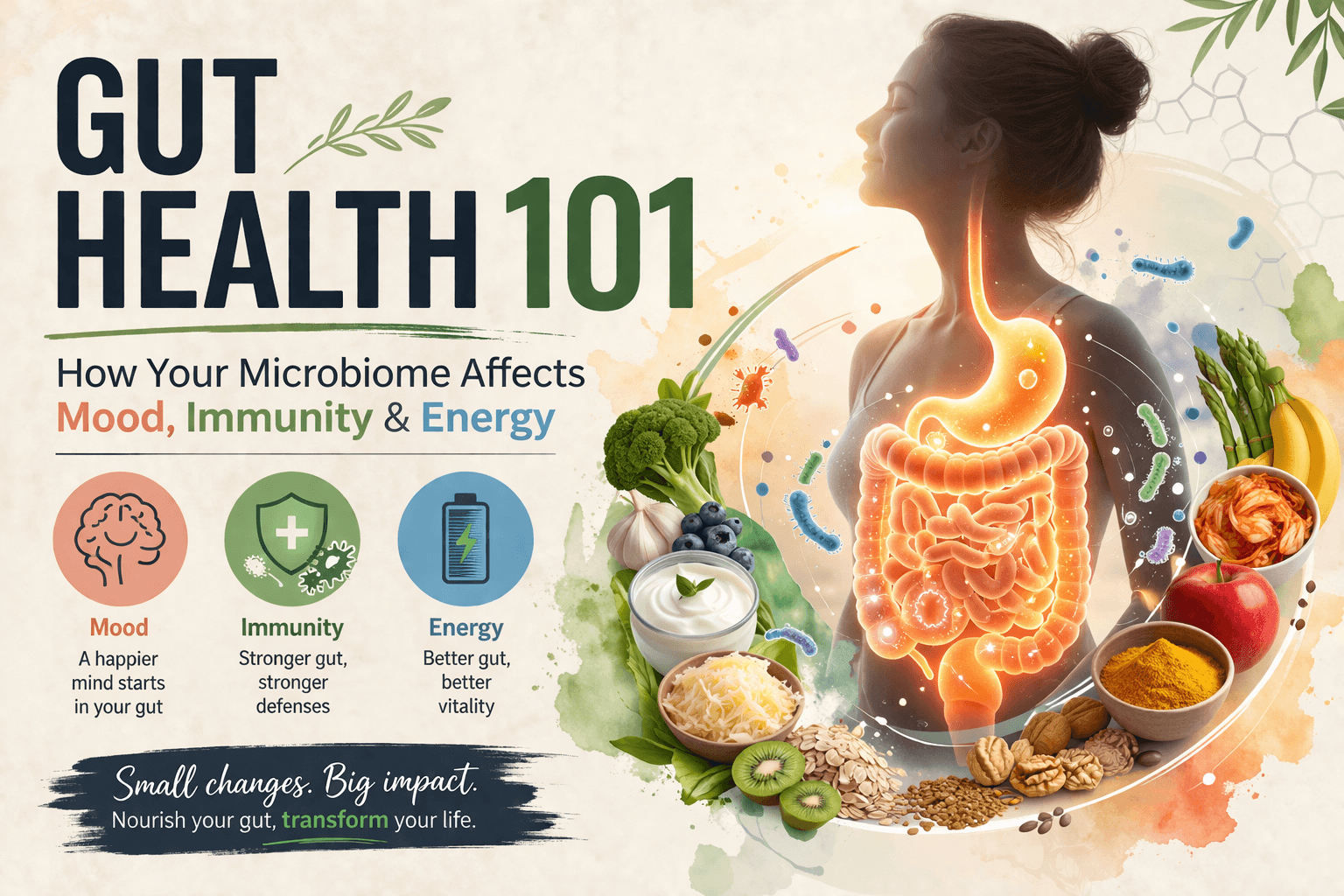
Modern medicine is catching up to what traditional wisdom has known for centuries: the gut is not just a digestive organ. It is the foundation of almost every aspect of health.
In the rural communities of Tamil Nadu where I spent years observing natural health patterns, people instinctively prioritized digestive health. Fermented foods, digestive spices, regular mealtimes, and periods of gut rest were embedded into daily life — not as a health strategy but as a cultural norm. The result was a community with remarkably low rates of the lifestyle diseases that plague modern populations.
Today, the science of the gut microbiome has transformed our understanding of human health. In this guide, I will explain what the microbiome is, how it influences your mood, immunity, and energy, and what practical steps you can take to nurture it.
What Is the Gut Microbiome?
Your gut microbiome is the community of trillions of microorganisms — bacteria, fungi, viruses, and other microbes — that live in your gastrointestinal tract, primarily in the large intestine. Far from being passive passengers, these microorganisms are active participants in your health.
Research from the Human Microbiome Project estimates that the gut contains over 38 trillion microbial cells — roughly equal to the number of human cells in the entire body. These microbes collectively encode over 3 million genes, compared to the approximately 23,000 genes in the human genome. In effect, your microbiome is a second genome, profoundly influencing your physiology.
How the Gut Affects Your Mood: The Gut-Brain Axis
The connection between the gut and the brain is one of the most exciting frontiers in health science. The gut and the brain communicate bidirectionally through the vagus nerve, the immune system, and the endocrine system — a communication pathway known as the gut-brain axis.
Key findings include:
- Approximately 90% of the body’s serotonin — the neurotransmitter most associated with happiness and emotional stability — is produced in the gut, not the brain
- Gut bacteria produce or regulate numerous neurochemicals including GABA, dopamine precursors, and short-chain fatty acids that directly influence brain function
- A 2019 study in Nature Microbiology found that certain bacterial species (particularly Coprococcus and Dialister) were consistently lower in people with depression, regardless of antidepressant use
- Research from the APC Microbiome Institute showed that probiotic supplementation significantly reduced anxiety and depression scores in healthy volunteers
How the Gut Affects Immunity
Approximately 70% of the immune system resides in or around the gut. The gut lining is a critical barrier between the external environment and the internal body. A healthy microbiome maintains this barrier, trains immune cells, and prevents the overgrowth of harmful pathogens.
When the microbiome is disrupted — a condition called dysbiosis — the gut lining can become permeable (sometimes called leaky gut), allowing bacterial fragments and food particles to enter the bloodstream and trigger chronic inflammatory responses. This low-grade systemic inflammation is now recognized as an underlying driver of conditions ranging from allergies and autoimmune disease to cardiovascular disease and type 2 diabetes.
How the Gut Affects Energy
Your gut bacteria play a central role in nutrient absorption. They produce key vitamins including B12, K2, and several B vitamins that are essential for energy metabolism. They ferment dietary fiber into short-chain fatty acids (SCFAs) — particularly butyrate — which serve as a primary fuel source for intestinal cells and have systemic anti-inflammatory effects.
A disrupted microbiome impairs nutrient extraction, contributes to blood sugar instability, and produces metabolic by-products that create brain fog and fatigue. Many people who report chronic tiredness despite adequate sleep and nutrition have significant microbiome imbalances.
Signs Your Gut Microbiome May Need Support
- Frequent bloating, gas, or irregular bowel movements
- Food sensitivities or intolerances that have developed over time
- Persistent fatigue despite adequate rest
- Mood instability, anxiety, or depression
- Frequent colds or infections
- Skin issues such as eczema, acne, or psoriasis
- Brain fog or difficulty concentrating
How to Nurture Your Gut Microbiome
1. Eat a Diverse, Fiber-Rich Diet
Gut bacteria thrive on dietary fiber — specifically prebiotic fiber found in plants. A landmark study published in Cell Host & Microbe found that people who ate more than 30 different plant foods per week had significantly more diverse microbiomes than those who ate fewer than 10.
South Indian traditional diets naturally achieve this through a combination of rice, lentils, vegetables, coconut, and spices. Foods particularly rich in prebiotic fiber include:
- Cooked and cooled rice (produces resistant starch)
- Lentils and legumes
- Raw onions and garlic
- Bananas, especially slightly unripe ones
- Oats and barley
2. Eat Fermented Foods Daily
Fermented foods are natural sources of probiotics — live bacteria that directly replenish the gut microbiome. Traditional Indian cuisine is beautifully rich in fermented foods:
- Idli and dosa batter (lacto-fermented rice and lentil batter)
- Kanji (fermented rice porridge, especially common in Tamil Nadu)
- Homemade pickles (naturally fermented, not vinegar-preserved)
- Buttermilk (moru in Tamil) — a daily staple in South Indian diets
- Yogurt / curd (thayir) — ideally made at home from full-fat milk
3. Minimize Ultra-Processed Foods
Ultra-processed foods are among the most damaging influences on the gut microbiome. They contain emulsifiers, artificial sweeteners, refined sugars, and preservatives that disrupt microbial balance and damage the gut lining. A 2022 study in The BMJ found a strong inverse relationship between ultra-processed food consumption and microbiome diversity.
4. Manage Stress
Chronic psychological stress alters the composition of the gut microbiome through cortisol’s effects on gut motility and immune function. This creates a damaging cycle: stress disrupts the gut, and a disrupted gut amplifies the stress response. Practices like yoga, pranayama, and meditation — core pillars at BenVitalFive — directly interrupt this cycle.
5. Sleep Consistently
The gut microbiome has its own circadian rhythm. Irregular sleep patterns disrupt microbial cycles, reduce diversity, and impair the production of gut-derived neurotransmitters. Consistent sleep and wake times are one of the simplest yet most effective gut health interventions.
Key Takeaways
- The gut microbiome is a vast ecosystem that profoundly influences mood, immunity, energy, and long-term disease risk
- 90% of serotonin is made in the gut — gut health is mental health
- Eating 30 or more different plant foods per week is the most evidence-backed strategy for improving microbiome diversity
- Traditional South Indian fermented foods are among the most microbiome-supportive foods in the world
- Stress, poor sleep, and ultra-processed foods are the primary disruptors of gut health

