
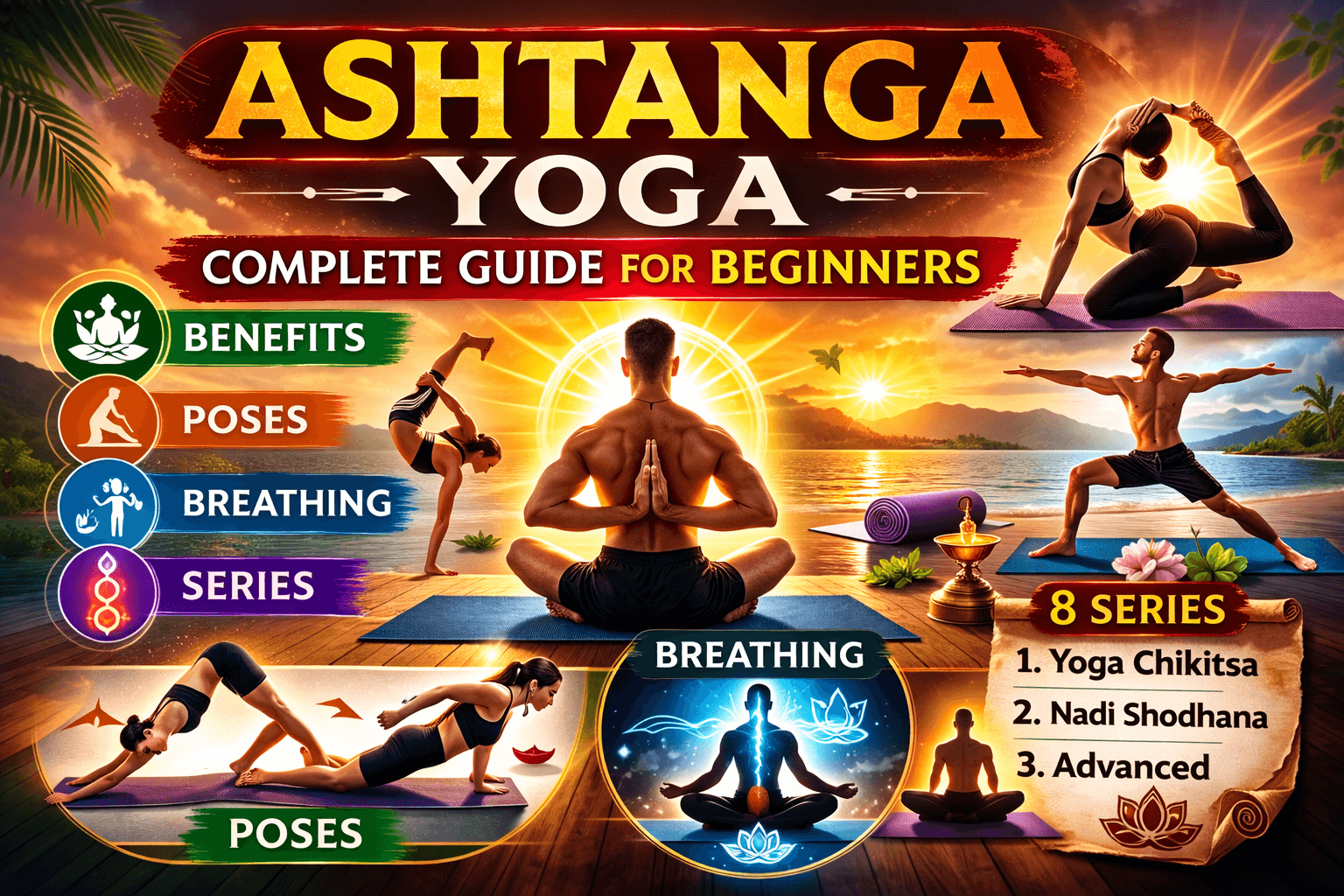
Ashtanga Yoga: A Complete Guide for Strength, Discipline, and Mind-Body Balance
Introduction
Yoga has evolved into a wide range of styles. Each offering unique benefits for physical health and mental well-being. Among these, Ashtanga Yoga stands out as one of the most structured and disciplined practices.
It is a dynamic and physically demanding style that combines strength, flexibility, breath control, and concentration. Unlike slower yoga forms, Ashtanga follows a fixed sequence of postures performed in a continuous, flowing manner.
This approach makes it an ideal practice for those seeking both physical challenge and mental focus.
New to yoga? Explore our complete guide: Yoga for Health: A Complete Guide to Mind-Body Wellness. Learn how yoga supports overall health, builds strength, and enhances the mind-body connection.
What is Ashtanga Yoga
Ashtanga yoga is a structured and dynamic style of yoga. It follows a fixed sequence of postures synchronized with breath, designed to build strength, flexibility, and mental focus.
Ashtanga Yoga is a traditional system of yoga popularised in the 20th century by K. Pattabhi Jois. It is rooted in ancient yogic philosophy and emphasises a holistic approach to well-being.
The word “Ashtanga” comes from Sanskrit and means “eight limbs,” referring to the eight components of yoga:
Yama (ethical discipline)
Niyama (self-discipline)
Asana (postures)
Pranayama (breath control)
Pratyahara (withdrawal of senses)
Dharana (concentration)
Dhyana (meditation)
Samadhi (absorption)
In modern practice, Ashtanga Yoga primarily focuses on synchronized movement and breath, creating a rhythmic and meditative flow.
The Six Series of Ashtanga Yoga
Ashtanga Yoga follows a structured progression of sequences known as series, each increasing in difficulty.
1. Primary Series (Yoga Chikitsa)
Focus: Detoxification and alignment
Benefits: Builds flexibility and strength
Ideal for: Beginners and foundational practice
2. Intermediate Series (Nadi Shodhana)
Focus: Nervous system purification
Includes: Deeper backbends and advanced postures
Benefits: Improves balance, control, and energy flow
3. Advanced Series (Sthira Bhaga)
Focus: Strength, grace, and control
Highly demanding and physically intense
Requires years of consistent practice
Key Principles of Ashtanga Yoga
Ashtanga Yoga is built on three essential elements:
1. Breath (Ujjayi Pranayama)
A controlled, audible breathing technique that:
Maintains rhythm
Builds internal heat
Enhances focus
Learn more about breathing techniques: Mindfulness and Breath Awareness Enhance Yoga Practice
2. Drishti (Gaze)
Each pose has a specific focal point to:
Improve concentration
Support balance
Deepen mindfulness
3. Bandhas (Energy Locks)
Subtle muscle contractions that:
Stabilize the body
Protect the spine
Enhance energy flow
Benefits of Ashtanga Yoga
Ashtanga yoga, if practiced regularly, gives tons of physical and mental health benefits. It is a dynamic and physically rigorous workout that improves overall fitness while honing laser focus.
Improves Strength and Endurance
Ashtanga Yoga features many postures utilizing bodyweight for strengthening. Regular practice develops the arms, legs, core, and back. Transitioning from one pose to the next also helps in building stamina and endurance.
Increases Flexibility
Going through the series of stretches several times will help increase flexibility over time. Their muscles loosen over a while, and their joints bend more easily.
Enhances Concentration
Ashtanga yoga demands serious concentration, since every movement is synchronized with a breath. This helps practitioners reach heightened alertness and mental clarity.
Promotes Detoxification
Moving, breathing, and sweating all help one detoxify. It helps get the blood pumping and is beneficial all-around for physical health.
Learn more about overall benefits: Slow Living Benefits: How a Calm Lifestyle Improves Mental and Physical Health
Reduces Stress
While physically demanding, the synchronized breathing and rhythmic movements of Ashtanga Yoga can soothe the mind. This reduces stress and anxiety, which work naturally through breathing, mindfulness, and gentle movement for mental calm.
Assumptions in Asana Ashtanga Yoga Practice
Essential Principles of Ashtanga Yoga Below are the principles taken from the book ‘Yoga Mala’ by Pattabhi Jois.
Breath Control
Breath, a key element in Ashtanga Yoga, is a large part of the practice. The Breath control technique (called pranayama) used is called Ujjayi breathing, which causes the breath to become slightly audible. Because of this, it helps maintain the rhythm and energy throughout the entire practice.
Drishti (Focus Point)
Drishti is the gaze/focal point that one knows to focus on in each pose. The eyes focus on a single point, which helps practitioners concentrate and maintain balance.
Bandhas (Energy Locks)
Bandhas are locks, or internal muscle contractions to help keep the energy flowing in the body. They also provide stability and help protect the spine in challenging poses.
All three come together to cultivate a mindful, powerful yoga practice.
Common Ashtanga Yoga Poses
It is a sequence of asanas performed at the training in the order of difficulty. And here, a few of the most common poses:
Sun Salutations
Customized moving sequences done at the beginning of a practice, like Sun Salutations. They get blood circulating through the body and prepare the muscles for deeper poses.
Standing Poses

Standing poses build strength and stability in the legs and improve balance and posture.
Seated Poses
For seated postures, deep stretches emphasize increased flexibility in the hips, hamstrings and spine.
Backbends
Backbends strengthen the spine and stretch the chest, two things that are pretty crucial for posture and energy.
Finishing Poses
The practice closes with gentle poses and relaxation techniques that help the body recover.
How to Start Ashtanga Yoga (Beginner Guide)
Starting Ashtanga Yoga can be challenging, but a gradual approach makes it manageable.
Beginner Tips:
Join beginner-friendly classes
Focus on breathing techniques
Start with Sun Salutations
Avoid forcing advanced poses
Practice consistently
If you prefer a slower start, read: Hatha Yoga for Beginners: Benefits, Poses, and Complete Guide
Comparison: Ashtanga Yoga vs. Other styles
Ashtanga Yoga is a much more physically demanding type of yoga than slower classes like Hatha Yoga.
Hatha Yoga focuses on seated or balance poses held in the body for a long time with no movement at all—bringing the muscles into physical relaxation. It is recommended for beginners in need of a gentle introduction to yoga.
Unlike Ashtanga, kundalini yoga does not involve a fixed series of movements, practiced in stillness and with only breath as the movement. It’s ideal for those who prefer a more structured practice that develops strength, endurance and flexibility.
Each has its own unique advantages, and many practitioners combine the two, based on their fitness needs.
Explore fat-burning yoga: Vinyasa Yoga for Weight Loss: The Complete Fat-Burning Yoga Guide
The Appeal of Ashtanga Yoga for Practitioners
The reason why Ashtanga has been kept in popularity is because of the ocean makes which Health expert Niki Bonto once known as a structured. The sequence is static, so practitioners can gauge personal growth over time.
It also helps develop self-discipline and mental toughness. The union of challenging the body and purposeful breathing helps create a strong connection between the body and mind.
Ashtanga Yoga is a great choice for anyone who prefers not only physical exercise when they select a type of yoga, but also mental focus.
Support your practice with healthy habits: The 5 Pillars of Healthy Living
Conclusion
Ashtanga Yoga is an intensive and disciplined form of yoga that combines strength with flexibility. It also offers energising workshops that promote health and wellbeing while enhancing productivity and mental clarity.
You may find it a challenge in the start but these become all endurance, flexibility and self confidence with regular practice. Ashtanga Yoga will transform your physical health and mental state over time.
To read about all the different types of yoga for health, click here to visit our complete Yoga for Health guide. It describes how yoga can help balance life and provide a better body and mind.
FAQs
Is Ashtanga Yoga good for beginners?
Yes, beginners can start with the Primary Series and progress gradually.
How often should you practice Ashtanga Yoga?
Traditionally, it is practiced 5–6 days a week, but beginners can start with 2–3 sessions.
Is Ashtanga Yoga good for weight loss?
Yes, its dynamic and continuous flow helps burn calories and improve metabolism.

