
Introduction
In this century, many people face stress. Long work hours and sedentary lifestyles are now common problems. As a result, many people experience poor posture, body stiffness, and mental fatigue.
In recent times, yoga has become one of the most popular means to stay fit, manage stress, and improve flexibility. Yoga offers a natural and holistic solution to these challenges. Yoga combines physical movements, breathing techniques, and mindfulness to improve overall health. Yoga is probably the easiest way to heal the body-mind.
One of the greatest advantages of yoga is its accessibility. You don’t need expensive equipment or a gym membership to begin. With just a yoga mat and a few minutes each day, anyone can experience the benefits.
One of the best aspects of yoga is that it can be practised by everyone. It doesn’t need expensive equipment, a gym membership, or years of practice. If you fetch a yoga mat and practice on it for just a few minutes, you will feel its advantages.
According to Harvard Medical School, yoga and meditation may improve executive functions. such as reasoning, decision-making, memory, learning, reaction time, and accuracy on tests of mental acuity.
This guide explores what yoga is, its key health benefits, different types of yoga, and practical tips for beginners.
What is yoga?
Yoga is an ancient mind-body practice that originated in India more than 5,000 years ago. It combines physical postures (asanas), breathing techniques (pranayama), and meditation to promote balance between the body and mind.
Yoga is different from other types of exercise. Yoga focuses on mental awareness, emotional stability, and relaxation as well as physical fitness.
Each yoga pose is designed to improve different aspects of physical health, such as strength, flexibility, balance, and posture.
Many people believe yoga is simply stretching. However, yoga is much more than that. It strengthens muscles, improves breathing, enhances concentration, and helps calm the mind.
Science-Backed Yoga Benefits
Over the past few decades, researchers and health professionals have increasingly studied the effects of yoga on health. Many studies suggest that regular yoga practice can provide significant physical and psychological benefits.
According to research on the therapeutic benefits of yoga. Regular yoga practice can improve flexibility, reduce stress, and support overall well-being. Let’s explore the most important yoga benefits.
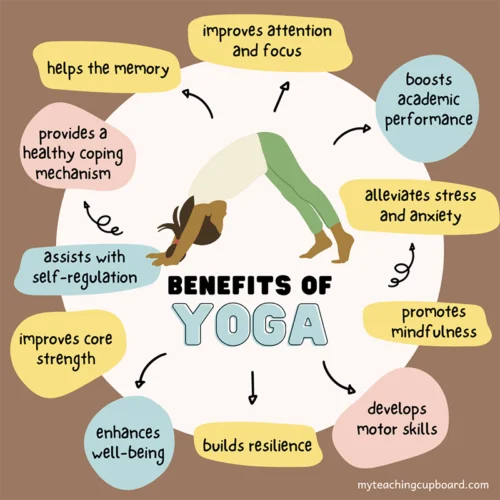
1. Improves Flexibility
One of the most well-known yoga benefits is improved flexibility.
Many people begin practicing yoga because they want to become more flexible. Yoga poses gently stretch muscles and gradually increase the range of motion in joints.
Over time, consistent practice helps loosen tight muscles and improve body mobility.
Improved flexibility can:
Reduce muscle stiffness
Prevent injuries
Improve posture
Increase physical performance
Even beginners who start with limited flexibility often notice improvements within a few weeks of regular practice.
2. Builds Strength and Muscle Tone
Although yoga may appear gentle, it can significantly improve muscular strength.
Many yoga poses require supporting body weight in different positions, which engages various muscle groups simultaneously.
For example:
Plank pose strengthens the core and arms
Warrior poses strengthen the legs
Chair pose strengthens thighs and glutes
Unlike traditional weight training, yoga strengthens muscles while also improving flexibility and balance.
This combination creates a more balanced and functional form of fitness.
3. Improves Posture and Spinal Health
Poor posture has become a widespread problem due to prolonged sitting, smartphone use, and desk work.
Over time, poor posture can lead to neck pain, back pain, and muscle imbalances.
Yoga helps correct posture by strengthening the muscles that support the spine.
Certain yoga poses specifically target posture improvement, including:
Mountain Pose
Cobra Pose
Cat-Cow Stretch
Bridge Pose
These movements help realign the spine, strengthen core muscles, and reduce strain on the back.
As a result, yoga can significantly improve posture and spinal health.
4. Reduces Stress and Anxiety
Stress is one of the most common health concerns in modern life. Work responsibilities, financial pressures, and constant digital distractions can contribute to chronic stress.
Yoga is widely recognized for its ability to reduce stress and promote relaxation.
Breathing exercises and mindful movements activate the body’s parasympathetic nervous system, which helps calm the body and mind.
Regular yoga practice may help:
Lower cortisol (stress hormone) levels
Improve emotional balance
Reduce anxiety symptoms
Promote relaxation
Many yoga sessions end with relaxation techniques such as Savasana. This pose allows the body to release tension and fully relax.
5. Supports Mental Health and Emotional Well-Being
Another major yoga benefit is improved mental well-being.
Yoga encourages mindfulness and present-moment awareness. By focusing on breathing and movement, individuals learn to quiet mental distractions and improve concentration.
Studies suggest that yoga may help:
Improve mood
Reduce symptoms of depression
Increase mental clarity
Boost overall emotional resilience
For many people, yoga becomes not just a workout but also a powerful mental wellness practice.
6. Improves Balance and Coordination
Balance naturally declines with age, increasing the risk of falls and injuries.
Yoga includes many poses that strengthen stabilizing muscles and improve body awareness.
Balance-focused poses include:
Tree Pose
Warrior III
Eagle Pose
Half Moon Pose
Practicing these poses helps develop coordination and stability.
Improved balance benefits people of all ages, especially older adults.
7. Helps Manage Weight
Although yoga is not always as intense as traditional cardio workouts, it can still support healthy weight management.
Certain styles of yoga—such as Vinyasa, Power Yoga, and Ashtanga Yoga—involve continuous movement that increases heart rate and burns calories.
In addition, yoga promotes mindfulness and body awareness, which can lead to healthier lifestyle choices.
Many people find that yoga helps them develop better eating habits and maintain a balanced lifestyle.
Different Types of Yoga
There are various types of yoga, after all, and each has its own benefits.
Hatha Yoga
Hatha yoga is one of the most beginner-friendly styles. It focuses on basic poses, gentle movements, and breathing exercises.
Because the pace is slow and controlled, it is ideal for beginners who want to learn fundamental yoga techniques

The most beginner-friendly styles include hatha yoga. It focuses on simple poses and breathing exercises. The movements are so slow and controlled that it’s great for yoga novices.
Vinyasa Yoga
Vinyasa yoga involves flowing movements that connect one pose to another through breathing.
This style is more dynamic and helps build strength, flexibility, and endurance.

Vinyasa yoga includes movements that flow into each other, so you seamlessly transition from one pose into the next. It is an ever-changing style that build strength, flexibility, and endurance.
Ashtanga Yoga
Ashtanga yoga follows a fixed sequence of poses performed in the same order each time.
It is more physically demanding and requires discipline and consistency.
Restorative Yoga
Restorative yoga focuses on deep relaxation and recovery.
It involves holding gentle poses supported by props such as cushions, bolsters, or blocks.
This style is excellent for reducing stress and promoting calmness.
Yin Yoga
Yin yoga involves slow, passive stretches held for longer durations.
It targets deep connective tissues and improves joint mobility.
Yin yoga is particularly beneficial for improving flexibility and reducing muscle tension.
10 Best Yoga Poses for Beginners
If you are new to yoga, starting with simple poses is the best approach.
Here are ten beginner-friendly yoga poses:
1. Mountain Pose
Improves posture and body awareness.
2. Downward Dog
Strengthens arms, stretches hamstrings, and improves flexibility.
3. Child’s Pose
A relaxing pose that gently stretches the back and hips.
4. Cat-Cow Stretch
Improves spinal flexibility and relieves back tension.
5. Cobra Pose
Strengthens the lower back and opens the chest.
6. Warrior I
Builds strength in legs and improves balance.
7. Warrior II
Strengthens the lower body and improves stability.
8. Tree Pose
Enhances balance and concentration.
9. Bridge Pose
Strengthens glutes and improves spinal flexibility.
10. Seated Forward Fold
Stretches hamstrings and calms the mind.
Practicing these poses regularly can help beginners build strength, flexibility, and confidence.
Focus on breathing deeply and going at your speed. Use that to supply yourself with more fresh information.
Even 10 or 15 minutes a day will accumulate over time.
A Simple 10-Minute Daily Yoga Routine
If you have a busy schedule, even a short daily yoga routine can provide significant benefits.
Here is a simple 10-minute routine:
Warm-Up (2 minutes)
Cat-Cow Stretch
Shoulder Rolls
Standing Poses (4 minutes)
Mountain Pose
Warrior I
Warrior II
Stretching (2 minutes)
Downward Dog
Seated Forward Fold
Relaxation (2 minutes)
Child’s Pose
Savasana
This routine helps stretch the body, improve circulation, and reduce stress.
Yoga for Back Pain Relief
Back pain is one of the most common health issues worldwide. Prolonged sitting, poor posture, and weak core muscles often contribute to this problem.
Yoga can help relieve back pain by strengthening spinal muscles and improving posture.
Helpful yoga poses for back pain include
Cat-Cow Stretch
Child’s Pose
Cobra Pose
Bridge Pose
These poses improve spinal flexibility and release tension in the lower back.
However, individuals with severe back conditions should consult a healthcare professional before beginning yoga.
Some people are experiencing back pain due to prolonged sitting and bad posture. It turns out yoga can help relieve back pain by strengthening the muscles around your spine.
Gentle yoga poses release tight muscles and improve spinal alignment. Doing so over time alleviates the tension in your lower back as well as corrects your posture.
Many practitioners will recognize that regular yoga practice decreases stiffness and increases mobility in the back.
Yoga for Stress and Mental Wellness
Yoga is not only beneficial for the body but also for mental health.
Through breathing exercises and meditation, yoga helps calm the mind and improve emotional balance.
Breathing techniques such as deep diaphragmatic breathing can help slow the heart rate and relax the nervous system.
Practicing yoga regularly may lead to:
improved sleep quality
better focus and concentration
reduced anxiety levels
improved mood
For many people, yoga becomes a powerful tool for managing everyday stress.
Common Beginner Yoga Mistakes
When starting yoga, beginners sometimes make mistakes that can lead to discomfort or injury.
Here are some common mistakes to avoid:
Forcing Flexibility
Never push your body beyond its natural limits.
Holding Your Breath
Breathing should remain slow and steady during yoga practice.
Skipping Warm-Ups
Always warm up muscles before attempting deeper stretches.
Comparing Yourself to Others
Yoga is a personal practice. Focus on your own progress.
Poor Alignment
Practicing with proper form helps prevent injuries.
Listening to your body is one of the most important aspects of yoga.
Best Time to Practice Yoga
Yoga can be practiced at any time of day. However, different times offer different benefits.
Morning Yoga
Morning yoga helps energize the body and prepare the mind for the day.
Benefits include:
increased energy
improved focus
boosted metabolism
Evening Yoga
Evening yoga helps release stress and tension accumulated during the day.
Benefits include:
relaxation
improved sleep
reduced stress
Choose the time that best fits your lifestyle and schedule.
Tips for Practicing Yoga Safely
Practicing yoga regularly and safely can work wonders for your body.
Start with basic poses, then work your way up to more advanced postures as your body gets stronger and more flexible.
Some helpful tips include:
Warm up before starting yoga
Focus on proper breathing
Lay Off the Poses You Can Barely Do
Find a comfortable yoga mat to practice on
Stay consistent with your routine
Probably the most important part of a yoga practice is listening to your body.
Final Thoughts
Yoga is one of the most effective and accessible practices for improving overall health and well-being. The combination of physical movement, breathing exercises, and mindfulness creates a powerful system for strengthening the body and calming the mind.
From improved flexibility and posture to reduced stress and better mental clarity, the yoga benefits are both wide-ranging and long-lasting.
The best part about yoga is that anyone can start—regardless of age or fitness level. Even a few minutes of daily practice can gradually improve physical health, mental balance, and overall quality of life.
Recent clinical research on yoga reviews how yoga poses affect many mental and physical health conditions. These include anxiety, depression, pain syndromes, heart issues, autoimmune disorders, and pregnancy. It discusses yoga’s physical benefits, like lower heart rate and blood pressure. It also covers weight loss and stronger muscles.
By practicing regularly, yoga can support a healthier, more balanced life.Pay attention to your body as you practice.

