
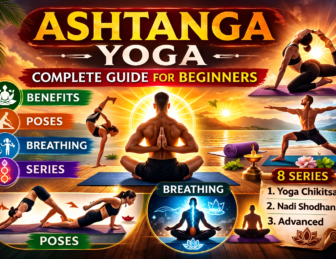
Ashtanga Yoga: A Complete Guide for Strength, Discipline, and Mind-Body Balance
- Post author:Jesuraj
- Post published:March 18, 2026
- Post category:Healthy Living/Yoga & Functional Fitness
- Post last modified:March 18, 2026
Ashtanga Yoga: A Complete Guide for Strength, Discipline, and Mind-Body Balance
Introduction
Yoga has evolved into a wide range of styles. Each offering unique benefits for physical health and mental well-being. Among these, Ashtanga Yoga stands out as one of the most structured and disciplined practices.
It is a dynamic and physically demanding style that combines strength, flexibility, breath control, and concentration. Unlike slower yoga forms, Ashtanga follows a fixed sequence of postures performed in a continuous, flowing manner.
This approach makes it an ideal practice for those seeking both physical challenge and mental focus.
New to yoga? Explore our complete guide: Yoga for Health: A Complete Guide to Mind-Body Wellness. Learn how yoga supports overall health, builds strength, and enhances the mind-body connection.
What is Ashtanga Yoga
Ashtanga yoga is a structured and dynamic style of yoga. It follows a fixed sequence of postures synchronized with breath, designed to build strength, flexibility, and mental focus.
Ashtanga Yoga is a traditional system of yoga popularised in the 20th century by K. Pattabhi Jois. It is rooted in ancient yogic philosophy and emphasises a holistic approach to well-being.
The word “Ashtanga” comes from Sanskrit and means “eight limbs,” referring to the eight components of yoga:
Yama (ethical discipline)
Niyama (self-discipline)
Asana (postures)
Pranayama (breath control)
Pratyahara (withdrawal of senses)
Dharana (concentration)
Dhyana (meditation)
Samadhi (absorption)
In modern practice, Ashtanga Yoga primarily focuses on synchronized movement and breath, creating a rhythmic and meditative flow.
The Six Series of Ashtanga Yoga
Ashtanga Yoga follows a structured progression of sequences known as series, each increasing in difficulty.
1. Primary Series (Yoga Chikitsa)
Focus: Detoxification and alignment
Benefits: Builds flexibility and strength
Ideal for: Beginners and foundational practice
2. Intermediate Series (Nadi Shodhana)
Focus: Nervous system purification
Includes: Deeper backbends and advanced postures
Benefits: Improves balance, control, and energy flow
3. Advanced Series (Sthira Bhaga)
Focus: Strength, grace, and control
Highly demanding and physically intense
Requires years of consistent practice
Key Principles of Ashtanga Yoga
Ashtanga Yoga is built on three essential elements:
1. Breath (Ujjayi Pranayama)
A controlled, audible breathing technique that:
Maintains rhythm
Builds internal heat
Enhances focus
Learn more about breathing techniques: Mindfulness and Breath Awareness Enhance Yoga Practice
2. Drishti (Gaze)
Each pose has a specific focal point to:
Improve concentration
Support balance
Deepen mindfulness
3. Bandhas (Energy Locks)
Subtle muscle contractions that:
Stabilize the body
Protect the spine
Enhance energy flow
Benefits of Ashtanga Yoga
Ashtanga yoga, if practiced regularly, gives tons of physical and mental health benefits. It is a dynamic and physically rigorous workout that improves overall fitness while honing laser focus.
Improves Strength and Endurance
Ashtanga Yoga features many postures utilizing bodyweight for strengthening. Regular practice develops the arms, legs, core, and back. Transitioning from one pose to the next also helps in building stamina and endurance.
Increases Flexibility
Going through the series of stretches several times will help increase flexibility over time. Their muscles loosen over a while, and their joints bend more easily.
Enhances Concentration
Ashtanga yoga demands serious concentration, since every movement is synchronized with a breath. This helps practitioners reach heightened alertness and mental clarity.
Promotes Detoxification
Moving, breathing, and sweating all help one detoxify. It helps get the blood pumping and is beneficial all-around for physical health.
Learn more about overall benefits: Slow Living Benefits: How a Calm Lifestyle Improves Mental and Physical Health