
Introduction
Life today feels rushed.
People eat fast, work fast, scroll fast — and rest very little.
Over time, this constant speed creates stress, mental fatigue, and poor physical health.
This is where slow living quietly makes a difference.
Slow living is not about doing less.
It’s about doing things with awareness and balance.
What Is Slow Living?
Slow living means choosing a calmer, more mindful way of living — without pressure to always hurry.
It focuses on:
- Simplicity
- Balance
- Being present
- Respecting your body and mind
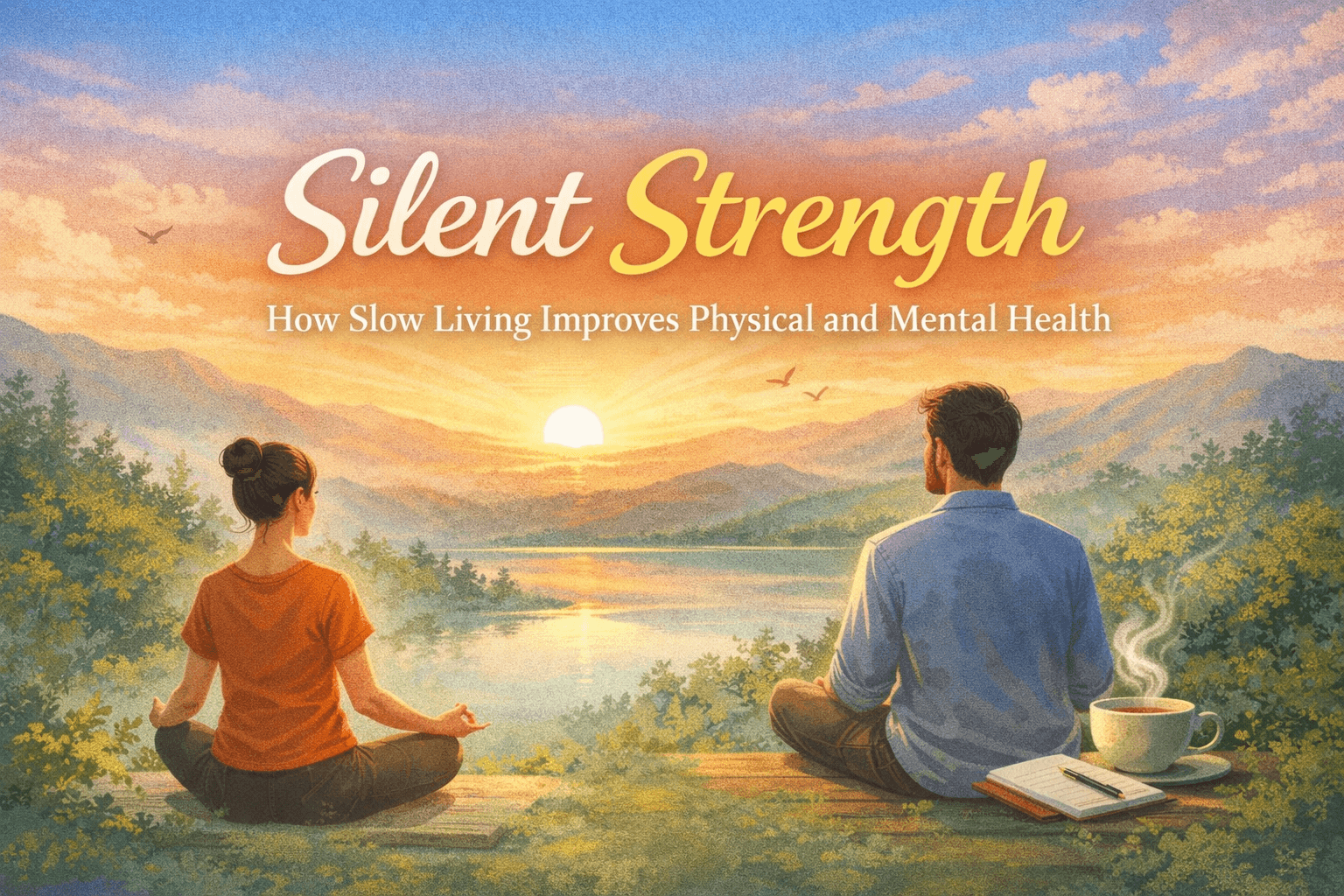
“Slow living is not weakness—it is silent strength.”
Why Fast Living Hurts Health
Living in a constant rush affects both body and mind.
Common problems caused by fast living:
- High stress levels
- Poor mental health
- Low energy levels
- Digestive issues
- Constant tiredness
- Lack of focus
The body needs pauses to repair and reset.
How Slow Living Improves Physical Health
When you slow down, your body functions better.
Physical benefits of slow living:
- Better digestion
- Improved sleep quality
- Reduced body tension
- Balanced energy levels
- Support for long-term healthy living
Simple actions like eating calmly or walking daily can improve physical well-being.
How Slow Living Supports Mental Health
A slower pace helps the mind feel safe and relaxed.
Mental health benefits include:
- Reduced anxiety and stress
- Improved mental clarity
- Better emotional balance
- Stronger focus and attention
Slow living supports mental well-being by lowering constant mental noise.
Simple Ways to Practice Slow Living Daily
You don’t need to change your entire lifestyle.
Start small.
Easy slow living habits:
- Eat without screens
- Walk instead of rushing
- Do one task at a time
- Take deep breaths during breaks
- Spend quiet time daily
These habits help restore mind-body balance.
Slow Living Is a Long-Term Health Tool
Slow living is not a trend.
It’s a lifestyle habit that supports both physical health and mental health over time.
It helps prevent burnout and supports overall wellness naturally.
Final Thought
In a loud and fast world, slowing down is powerful.
Silent strength comes from calm choices made every day.
When you slow your life, your body and mind finally get the space to heal.
FAQs
- What does slow living mean?
Slow living means choosing a calmer lifestyle that supports physical health, mental health, and daily balance. - How does slow living reduce stress?
Slow living reduces stress levels by lowering mental overload and encouraging mindful daily habits. - Can slow living improve mental health?
Yes, slow living supports mental well-being by improving focus, emotional balance, and calmness. - Does slow living affect physical health?
Yes, it improves digestion, sleep quality, and natural energy levels over time. - How can beginners start slow living?
Beginners can start by eating mindfully, reducing screen time, and doing one task at a time daily.

