
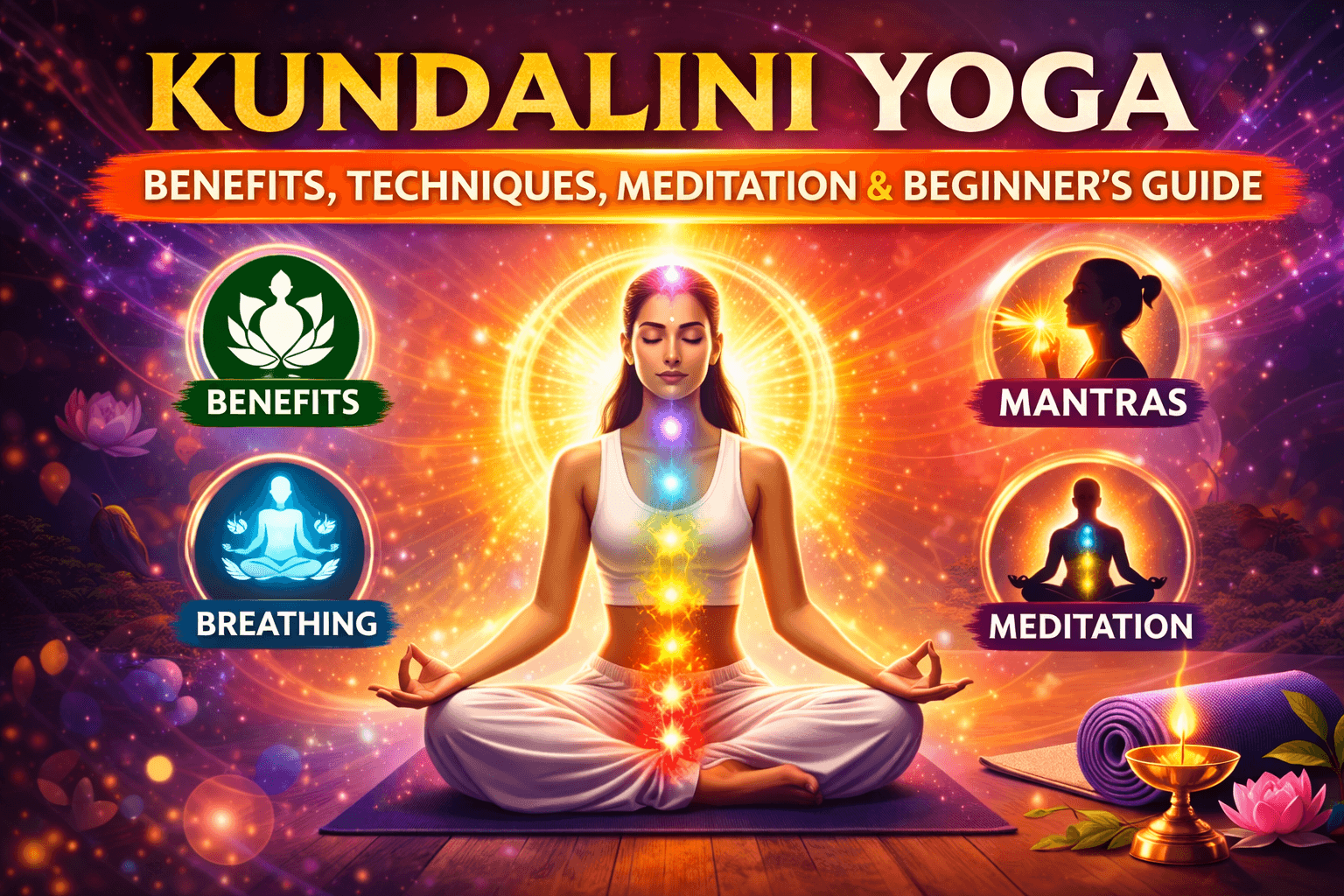
Kundalini Yoga: Benefits, Techniques, Meditation & Beginner’s Guide
Introduction
Over the years, yoga has evolved into many styles, each offering unique benefits for physical health, mental clarity, and emotional balance. Among them, Kundalini Yoga stands out as one of the most powerful and spiritually focused practices.
Often called the “Yoga of Awareness,” Kundalini Yoga combines breathwork, movement, meditation, and chanting to awaken inner energy and expand consciousness.
Unlike many modern yoga styles that emphasize physical postures, Kundalini Yoga focuses on the integration of mind, body, and energy, helping practitioners:
Build self-awareness
Reduce stress
Enhance emotional balance
Experience a deeper sense of well-being
If you are keen to explore other yoga styles, consider linking to your “Yoga for Health” pillar page here for better.
What is Kundalini Yoga?
Kundalini Yoga is a spiritual and energetic practice. It aims to awaken dormant energy believed to reside at the base of the spine (root chakra).
The word “Kundalini” comes from Sanskrit, meaning “coiled snake,” symbolizing this latent energy. When activated, it is said to rise up the spine. It passes through energy centers called chakras. This can lead to greater awareness and vitality.
Modern Kundalini Yoga was popularized in the West by Yogi Bhajan in the late 1960s. Today, it is practiced worldwide for both personal transformation and holistic wellness.
Key Elements of Kundalini Yoga
Kundalini Yoga is a combination of various techniques that awaken energy and balance the mind and body. All of these components combine to enable a complete yoga experience.
Kriyas (Yoga Sets)

Kriyas are set sequences of movement and breath work paired with meditation for certain ends. Different kriyas address varying components of physical well being, emotional balance and spiritual evolution.
Some kriyas are designed to fortify the nervous system, others seasonal digestion stress relief or an energy boost.
Pranayama (Breathing Techniques)
Kundalini Yoga has a lot of breathwork in it. Different styles of breathing work to control the movement of energy in the body.
Breath of Fire is one of the most widely practiced forms of breath work that may be done in Kundalini Yoga. This quick-breathing technique increases oxygen flow, energizes the body through stimulating the nervous system and clears mental fog.
Meditation

Meditation is integral to Kundalini Yoga. It helps practitioner to quiet the mind, focuses attention and build a connection with their self.
Meditation practices in Kundalini Yoga often incorporate breath control, visualization and chanting to heighten awareness.
Mantras (Chanting)
Mantras: These are sound or phrase repeated during meditation. That takes your mind off distractions, and creates a vibration that heightens awareness.
Common mantras such as “Sat Nam” are used to focus the mind and awaken inner truth and consciousness.
Benefits of Kundalini Yoga
One again benefiting your mental and physical health is the regular practice of Kundalini Yoga. This is awesome for your general wellbeing, keeps you balanced and helps you maintain healthy levels of energy.
Reduces Stress and Anxiety
Kundalini Yoga is known for reducing stress and calming the mind. The breathing techniques and meditation practices activate the parasympathetic nervous system, which relaxes the body.
Many practitioners report that after regular practice, they feel calmer and emotionally more balanced.
Improves Mental Clarity
Meditation and Breathing Exercise Increases Focus and Concentration. Kundalini Yoga teaches the mind to remain in the present moment, this trains and hones mental clarity and productivity.
This makes it particularly advantageous for people with busy lives and mental fatigue.
Boosts Energy Levels
In contrast to relaxing yoga styles, Kundalini Yoga is energizing for the body. Energetic flowing breathing patterns and movement sequences encourage energy to flow and instigate greater vitality.
Exercising regularly can help reduce feelings of fatigue and improve energy levels.
Strengthens the Nervous System
Kundalini Yoga is also perfect for building a strong and resilient nervous system. As a result, the body can better cope with stress and maintain optimal psychological balance.
A more resilient nervous system also enhances the body’s adaptability to stressors and promotes health.
Enhances Emotional Balance
Kundali namaste seeks your awakenings and mental healing too. Meditation and mantra chanting aids the release of negative emotions and the manifestation of positivity.
With time, practitioners become more emotionally stable and achieve a greater sense of inner peace.
Common Kundalini Yoga Practices
Kundalini Yoga is a holistic approach to practice that includes a variety of practices working together for the cultivation of energy and well-being.
Breath of Fire
Breath of Fire is an energizing breathing technique used to awaken the body and cleanse the mind. It consists of fast, rhythmic inhalations through the nose while contracting the abdominal muscles.
This technique increases lung capacity, and creates a stimulus for the nervous system.
Spinal Flex
Spinal Flex is a Kundalini Yoga posture that helps to loosen the spine and awaken energy at the base of the spine.
It is done by flexing the spine back and forward while sitting cross-legged, synchronizing the movement with the breath.
Sat Kriya

Sat Kriya is one of the most powerful practices to awaken Kundalini. It incorporates chanting the mantra “Sat Nam” along with rhythmic movement and breath control.
This kriya builds core strength and harmonizes the energy body.
Meditation with Mantras
Kundalini Yoga practices mantras, which are widely practiced in spiritual centers worldwide. Reciting mantras while concentrating on breath brings about a calm mindset and increased focus.
It facilitates emotional healing and spiritual growth.
How to Get Started with Kundalini Yoga
Kundalini Yoga can be practiced by both beginners and experienced practitioners. But, you can take it a step back and learn the basics in detail.
- Here are some tips for beginners:
- Look for classes or guided sessions suitable for beginners.
- Condition your breath.
- Practice meditation regularly for improved mental focus.
- Hear the signals from your body and know when not to go further than you can.
- Practice regularly & you will see long-term benefits.
Kundalini Yoga is less about physical prowess than inner transformation, quite in contrast to the physically intense yogas. Over time and with practice, people notice an improving in the body as well as happiness.
Comparing Kundalini Yoga with Other Styles of Yoga
Kundalini Yoga is quite different from more common styles of yoga.
As an example Hatha Yoga centers around sustaining physical postures and improving flexibility. Slow pace is often recommended for beginners.
Ashtanga Yoga2, by contrast, is a relatively rigid series of repetitive poses designed to build strength and endurance that are physically exhausting.
Kundalini Yoga emphasizes energy activation, breathwork, meditation and spirituality over physical movement.
Practitioners often incorporate other yoga types into Kundalini Yoga, as they want to have both mental and physical strength.
Why Kundalini Yoga is Unique
Kundalini yoga classes are unique in their emphasis on awakening the inner energy and raising consciousness. It transcends mere physical fitness and propels profound self-discovery.
The breathing, meditation, movement and chants unite a strong practice that engages and evolves the whole physical being.
Both Kundalini Yoga: a form of yoga that affects the energy centers in the body and creates a sense of peace for many practitioners, making them feel closer to themselves and their surroundings.
Conclusion
This form of Yoga is a very powerful and can be used to transform the body by awakening the potential energy. It enhances mental clarity, emotional balance and physical health through breathing exercises, meditation, chanting and movement.
Far from the guise of a modern-day spirituality this style inquires to provide literal entry ways like tools into what is now needing for all lifestyles, specifically stress management as well as improving focus and energy.
And for more on the benefits of other styles—and how a regular yoga practice supports your overall health and well-being—visit our full Yoga for Health pillar page to find out how certain types of yoga can work best for your lifestyle!

