
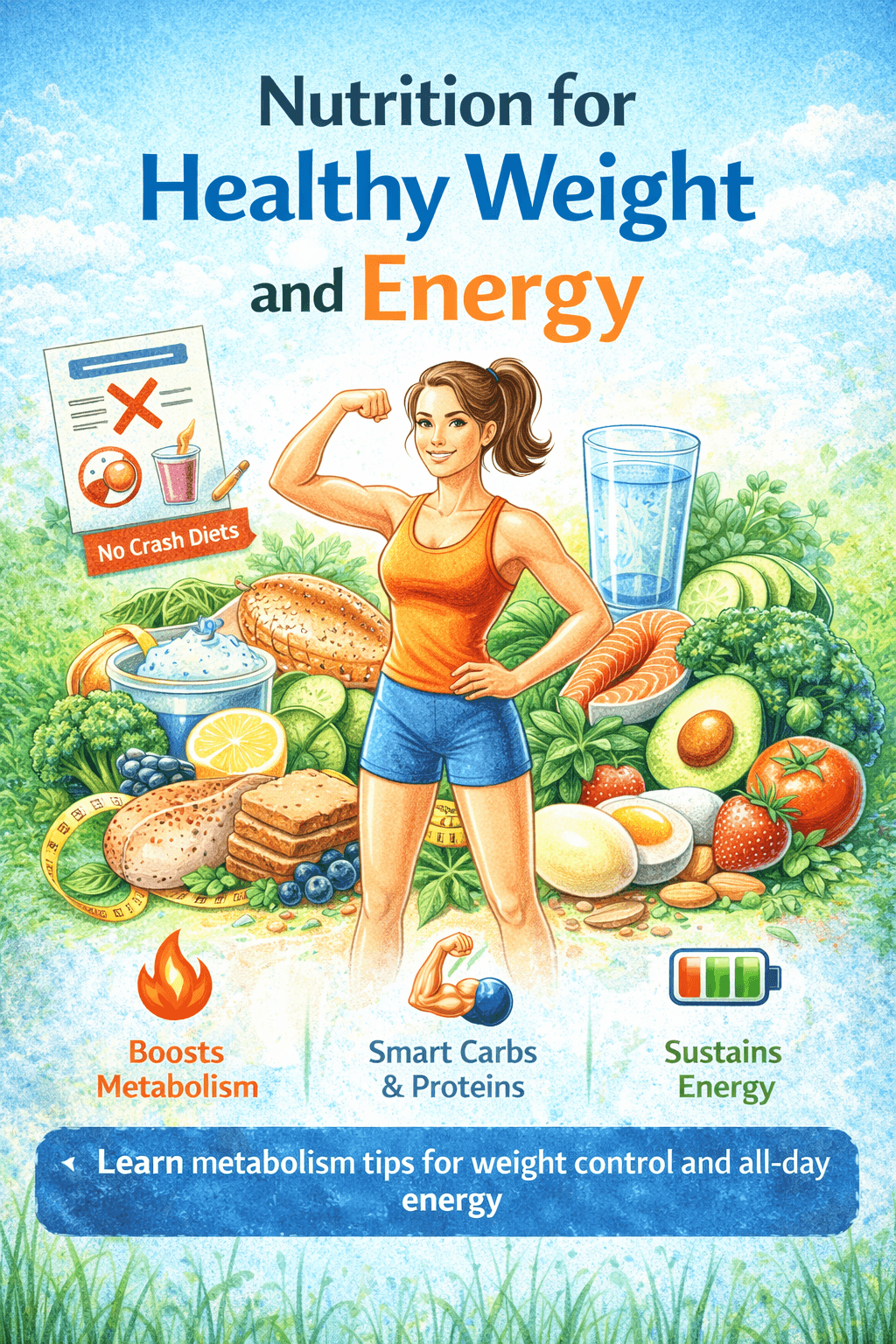
Staying at the ideal body weight and keeping energetic and active throughout your day is by far one of a modern human’s largest health concern. Most people either zero in on losing weight or simply increasing energy levels, not realising that both are deeply intertwined. The key is adhering to the best nutrition for healthy weight and energy.
Food is not just the sum of its calories — it’s fuel for your metabolism, muscles, brain and hormones. When you consume balanced meals, it’s easier for your body to efficiently burn fat and retain muscle mass while avoiding the kind of roller-coaster energy that causes highs and lows throughout the day.
In this post we analyze how metabolism functions, the importance of smart carbohydrates and proteins, and just why you never ever go on a crash diet plan if long term fat burning is your goal.
Metabolism – What it is and its Role in Weight & Energy
Metabolism includes all of the chemical processes that take place in the body to convert or use energy, known broadly as catabolism and anabolism. It influences how quickly you burn calories, store fat and use nutrients.
A healthy metabolism supports:
• Efficient calorie burning
• Stable body weight
• Sustained energy levels
• Hormonal balance
• Better digestion
Slowed metabolism stores more fat and produces less energy in your system causing you to feel tired and gain weight.
Ways Nutrition Supports Metabolism
Eating right for maintaining healthy weight and energy also helps enhance metabolic efficacy:
• Regular meals avoid energy crashes
• You burn more calories from protein
• Fiber improves digestion
• Hydration supports metabolic reactions
• Micronutrients aid enzyme function
A balanced metabolism is the cornerstone for your weight management and energy.
Smart Carbohydrates for Sustained Energy
Carbs tend to have a bad rap when it comes to weight loss. But not all carbs are bad. But the type you eat is crucial to energizing and fat balance.
What Are Smart Carbs?
“When I refer to smart carbohydrates, these are carb sources that not only include fiber such as vegetables, fruits and whole grains but they also have less of a tendency to spike blood sugar levels,” he says.
Examples include:
• Brown rice
• Oats
• Millets
• Quinoa
• Whole wheat
• Sweet potatoes
• Fruits
• Vegetables
These foods help to steer clear of unexpected spikes in blood sugar level and stay full for longer.
Benefits of Smart Carbs

Here are just a few of the benefits of incorporating smart carbs into your nutrition for healthy weight and energy:
• Provides long-lasting energy
• Reduces sugar cravings
• Supports brain function
• Improves workout performance
• Prevents overeating
Refined carbs like white bread, pastries, and sugary drinks cause energy crashes and promote fat storage, however.
Protein And Weight Loss Benefits
Protein is one of the most effective aids for weight control and energy stability.
It supports:
• Muscle growth
• Fat burning
• Appetite control
• Metabolic rate
• Tissue repair
Because muscle burns more calories than body fat, more protein can indirectly contribute to faster metabolism.
High-Protein Food Sources

Include these in your weight and energy management diet:
• Eggs
• Lean chicken
• Fish
• Paneer
• Greek yogurt
• Lentils
• Chickpeas
• Tofu
• Nuts & seeds
And protein will keep you fuller longer, minimizing unwarranted snacking.
The Missing Energy Nutrient: Finding Healthy Fats
It’s common for people to eliminate fats altogether in an effort to lose weight, but healthy fats are critical for sustained energy and hormone regulation.
Good fat sources include:
• Avocados
• Almonds
• Walnuts
• Flaxseeds
• Chia seeds
• Olive oil
• Fatty fish
Healthy fats drive brain function, reduce inflammation and aid in the absorption of fat-soluble vitamins A, D, E and K.
Balance of fat in foods is important for upright nutrition and a person’s healthy body weight and energy.
How Crash Diets Make You Fat & Impair Energy
Crash diets guarantee a quick weight loss with a lot of end up doing more harm than good. They require massively restricted calories, elimination of huge food groups or living on nothing but liquids.
Problems with Crash Dieting
• Slows metabolism
• Causes muscle loss
• Leads to nutrient deficiencies
• Triggers fatigue
• Weakens immunity
• Causes weight regain
As the body feels starved, more fat is stored as a natural reaction.
Don’t crash diet but eat for life through balanced meal and proper portioning, for healthy weight and energy.
Meal Timing and Energy Balance
As much as what you eat, when you eat matters.
Ideal Meal Pattern
• Break fast 1-2 hours after waking
• Balanced lunch with carbs + protein
• Light evening snacks
• Early, lighter dinner
Eating at consistent intervals:
• Maintains blood sugar
• Prevents overeating
• Supports metabolism
• Stabilizes energy
If you skip meals, you’re likely to binge and have energy crashes.
Foods That Boost Energy Naturally
There are some foods that improve power and boost fatigue.
Include:
• Bananas – fast natural fuel
• Oats – slow-release energy
• Nuts (healthy fats + protein)
• Spinach-iron for oxygenation
• Eggs – protein + B vitamins
• Dark chocolate while enjoying sex – enhancement of mood & energy
Such foods reinforce its connection with dieting for healthy weight and energy.
Hydration and Weight-Energy Connection

Water is a silent weapon for weight management and endurance.
Benefits include:
• Improves fat metabolism
• Flushes toxins
• Prevents overeating — thirst is often mistaken for hunger
• Enhances workout performance
• Maintains focus
Strive for 2 – 3 liters per day (adjusting according to climate and physical activity).
Life Style Guide to Healthy Weight & Energy
Pair nutrition with supportive habits:
• Get a minimum of 30 minutes of exercise a day
• Mix cardio and strength training
• Sleep 7–8 hours
• Manage stress levels
• Avoid processed foods
• Limit sugar & soft drinks
Long-term outcomes depend on consistency.
Long-Term Benefits
Proper nutrition for healthy weight and energy leads to:
• Sustainable weight management
• Higher productivity
• Better mood stability
• Improved metabolism
• Reduced lifestyle diseases
• Stronger immunity
• Enhanced physical endurance
This isn’t a short-term diet — it’s a lifelong way of wellness.
Final Thoughts
It is not eating less to achieve this balance, it is the right fit of food. Good carbohydrates, lean protein, healthy fats and small meals eaten frequently all help keep your metabolism running on high speed-and no one wants fatigue on race day (or any other).
Don’t crash diet, opt for the slow burn of making good decisions that your body can depend on.
If you want to learn how to build a well rounded diet plan then our pillar page is here: Nutrition for Health and Wellness
This pillar article includes tips for healthy diet planning, proper hydration, lifestyle factors and approaches to get rid of long-term health naturally.

